Software
Houzz Logo Print
steiger1235

1930's house purchase/reno help?

6 years ago
last modified: 6 years ago
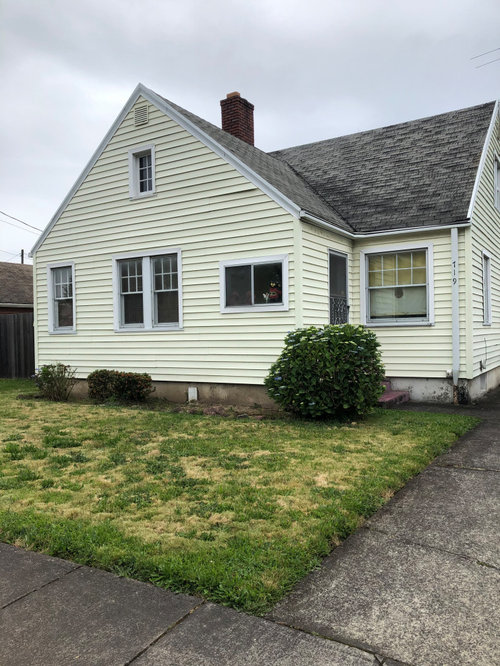
hi- we're contemplating buying my grandmothers home to keep it in the family. its a 1.5 story ( I think that's the correct term) with a full, unfinished basemen,t house in the Northwest, built in 1939. She bought it in 1960 and has done no remodeling. its original plaster, moldings, hardwood, kitchen and bathroom. The electric and plumbing is original. Its had a new furnace and new hot water heater in the last 6 months, as well as a new back porch. she added vinyl siding at some point, maybe 30 ish years ago. We are out of state so we'll be flying up for a long weekend to meet with contractors to make sure we can afford to take it on and redo everything safely. We'd like to retain as much of the character as possible.

Can ya'll help me make my list for our meeting with the contractor?

Things on my list to discuss are,

updating the electric and plumbing,

eventually adding a second bathroom (either in the basement or on the second floor) and probably a new kitchen,

new roof,

adding AC

ability/costs to finish the basement and make it usable space, (its concrete, has an exterior and interior door) is dry and has space for ceilings with a minimum 7 feet of clearance.

Figuring out what to do about lead paint? we don't have little kids, but we have teenagers. I doubt anything has been painted since the 70's. Most of the paint appears totally in tact except for a few windows and places where doors bump into things etc.

windows are original, all open and close and have storm windows. I think they have been reglazed or cleaned up about 10 years ago but will verify.

what am i missing? Its not ideal to be doing all of this ahead of time, from two states away during a pandemic. I know i'm going to forget stuff.

grandmas house · More Info


Comments (14)

  • 6 years ago

    Wow-- a mint condition bungalow? Cool! Are you having a home inspection or just meeting a contractor? A home inspection might be worth it as they go through the house with a fine tooth comb and give you a report of what needs to be fixed. But here are some more things to consider:


    grading-- any water issues, leaks around windows, any evidence of mold or water in the basement or at low lying points around the house?


    foundation? In good shape? cracks?


    structural issues? wonky floors? beams twisting?


    Gutters? when is the last time they were cleaned? do downspouts take water away from the house?


    wood rot around windows (assuming they are wood) and last time they were painted?


    Bugs/mice? evidence of wood destroying insects?


    insulation? does the house need to be wrapped or foam sprayed? is it hard to heat or cool?


    septic, well or city water and sewer?


    gas lines? are there any old ones that are capped off and can be used or working ones in the house?


    water heater? how old is it? what powers it? is it leaking? at the end of its usable life?


    After that you can get into all the fun stuff like adding rooms or redoing the layout. Of course your own list should be included. Electrical, plumbing and roof are the big three expensive items on any house and windows ain't cheap either. I would look into solar panels if they are available in your area.

  • 6 years ago
    last modified: 6 years ago

    How exciting!

    Get an inspection, definitely. Including a radon test. Have the chimney checked - doe it need repointing, are the flues in good shape, is there a screen to keep animals out?

    With teenagers, lead is less of an issue. Undisturbed lead should be fine. Doorways and windows are the main trouble spots. You can spot check with the 3M kits you get at the hardware store; if you have a professional lead inspection using an x-ray device, you may then legally be on the hook for very expensive professional remediation, whereas doing the 3M test doesn't incur any such liabilities.

    Get the house air sealed and insulated ifnit isn't already.

  • 6 years ago

    Thank you both! I had thought of a home inspection now and i'll add it to the list.

    The house is on city water and sewer.


    It had a new furnace installed in the last 6 months. To put in the furnace, they added gas to the house. no old gas lines that we're aware of, but there is an old oil drum they emptied when they put in the furnace, i better add that to my list. there doesn't appear to be anything wonky with things being out of level, sagging etc. doors and cabinets all open and close smoothly, no evidence of mold or leaks that I'm aware of in the house. My mom is sending me pics currently until i can get up there. I think my great grandfather maintained it all pretty well until he passed about 15 years ago. I know at one point there was water getting into the basement but that was because the storm door failed on the outside stairs. That has all been replaced.


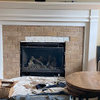
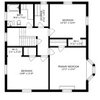
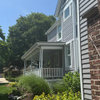
    Here are a few more random pics they've sent me. I haven't looked at it as anything but grandmas house my whole life. So i'm trying to look at it differently now. :-)


    grandmas house · More Info


    grandmas house · More Info


    grandmas house · More Info


    grandmas house · More Info


    grandmas house · More Info


  • 6 years ago

    Make sure the inspection includes the sewer lines. My son recently bought a house of the same vintage, from a little old lady who lived alone, and who assured him everything worked fine. She was no nice, he skipped the inspection. As soon as four people started using the shower and laundry, the sewer backed up and flooded the basement. He had to replace all the pipe from the house to the curb, to the tune of $8000--after just paying the down payment and closing costs. He's OK with it--they love the house and the location, but it was a shock.

  • 6 years ago

    This may not be welcome advice, but as much as we want to hold on to happy memories, the house may not provide the same feeling of warmth and security as it did when your grandmother was there. Just be sure that the location and home itself is truly suited to your needs. If this will be a second home for you, then all the considerations of a second home will apply including increased property taxes each year, double the maintenance costs with two homes, and extra security measures for both homes since you will be absent from one or the other for long periods. Also make sure that no other family members are guilting or pressuring you into this decision, especially if it involves taking on a mortgage to make the investment.

  • 6 years ago

    all advice is welcome. :) This would become our primary home. The neighborhood and location are ideal, we’d like to relocate there to be near family. we are just trying to make sure that we can afford to do everything that needs to be done. We don’t want to end up upside down by the time we pay for the house and rehab. It’s become a very trendy neighborhood in recent years. We will have a decent budget to renovate.

  • 6 years ago

    I recognize that kitchen floor! Both houses I’ve bought has had it!

  • 6 years ago

    Have someone check for asbestos. I see some spots on ductwork that could be asbestos wrapping.

  • 6 years ago

    As for budget, a lot can be done for less by doing things yourselves and selecting lower-cost supplies. However, if you want mid-grade finishes and cabinetry, the costs can spiral so easily. I did a ton of research for my recent bathroom and kitchen renovation and was really shocked at how high the prices were for good quality from reputable suppliers. My quotes for quality cabinetry for just 8 kitchen cabinets came in between $20K to $30K USD from 4 quality brands, and that was without installation for all but one of the lower quotes. If you have time to get some quotes on the various projects you have in mind, that will help target your budget better. A whole-house renovation for even a small home can easily reach $100K USD in the blink of an eye, and that is with economy finishes.

  • 6 years ago
    last modified: 6 years ago

    I have a 1920 house. I can tell you the wishes to add will add up to over 100 if you do it with permits and hire out. Here is the breakdown of our costs over the 15 years we owned our house.

    Finished the basement ourselves, materials alone were 10k

    New appliances,sink, lighting bacsplash, added outlets to code and kitchen counters only no gutting or layout changes 16k. 15 years later we are getting quotes on a true remodel these are between 50k and 110k dependant on layout and brands.

    Adding a master bath above an existing first floor sunroom above 50k

    New driveway and landscape because upgrading plumbing for bath meant tearing through the drive way 12k

    Upgraded electric 8k

    New high effeciancy boiler 10k

    Adding ac 22k

    Our new quotes to do the roof are 8k but we only have a single roof layer if there are multiple layers the price is substantially higher.

    It looks like you need new siding I do not know the cost for that but we paid 4k to tie our new addition siding into our existing. It was an 8×13 foot structure.

    We will recoup our investments if we were to sell because we have owned long enough to do so and it sounds like you are acquiring this to keep in the family so it may very well be worth doing. However, I find shows showing how to turn a fixer upper into a showcase on budgets smaller than 120k very misleading and dangerous.

    It would have been much cheaper and quicker to have listed rather than to love it but my location and neighbors are too important to us and the older character is special. But these came at a large cost.

    Good luck with your restorations.

  • 6 years ago

    This is just a charming little house. I see SO much potential. Shutters, window boxes, little porch over the door with a sweet railing-- you could make it in to a little cottage dollhouse. And better yet that its a family home. I say go for it! It won't be cheap and maybe you could have gotten a new build for the same amount with more space, but the materials used today are mostly awful. This place was built to last, and has, and will continue with the right owners who care about her.

  • 6 years ago

    Thanks for all the info and ideas! I’d like to keep the initial budget to 100k but we will have a good chunk more set aside for emergencies or if we go way over. We would update the electric and plumbing, rip out the couple rooms of carpet, and paint everything before moving in. The furnace is new and can have AC added as soon as the electric is updated. The kitchen and bath are functional and we can live with them while we decide on how we want them redone. Im okay with budget versions on most things and splurging on the few things I find important.

  • 6 years ago

    Sounds like you have a reasonable approach! Be mindful of flooring - a lot of houses have asbestos based flooring - check inspectapedia for help identifying it. Fortunately it can be coming blbered easily in most cases.


    Be sure to check out www.retrorenovation.com to see others who have renovated older houses while staying true to the original architecture; their focus is the 50s-60s but there are some pages that deal with older houses.

  • 6 years ago

    In general, houses built in this timeframe were constructed well, and if there is no foundation or water problems most other parts of the house can be fixed or upgraded. You also have an excellent source of information (your Grandmother) about what works and does not work, which is much better than when you buy from someone else.

    Many have posted about checking for lead paint, asbestos, etc., but don't get too worried at this point. Proper abatement is relatively expensive, but it is unlikely there is anything in this house that is going to immmediatly kill you (your grandmother has been there for 60 years!), so you have some time to check around and find out the best remediation solution.

    We purchased our 1940 home in 2012, and it had not been "molested" by earlier renovation. The house was priced as a fixer-upper, so we started out with a reasonable loan. We made significant changes to the first floor kitchen and dining room layout, finished the basement, added A/C and a new boiler, and then finally rebuilt the side porch into a new two story structure. It has definitely been worth it; however, there is significant stress when when you renovate a house while still living in it. We are ready to stop renovating.

    Bruce