Software
Houzz Logo Print
nmbexcuse

Tree branches crashed down on a Philodendrum

5 years ago
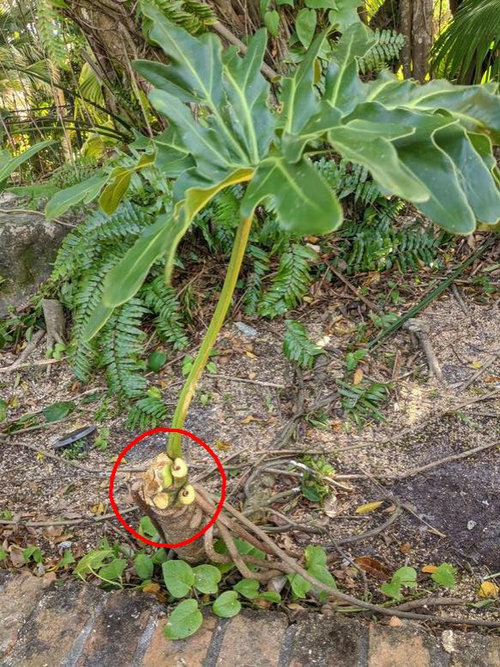
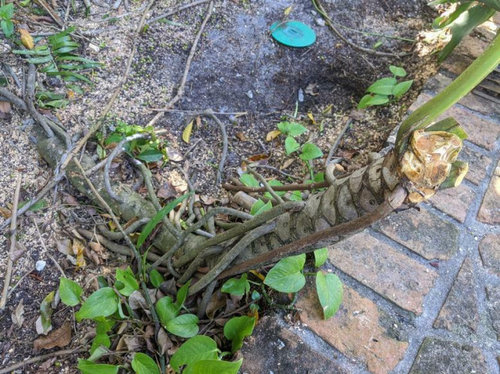
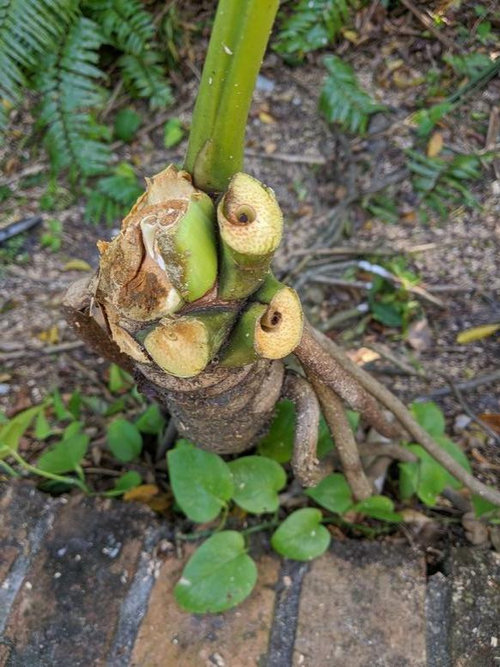
I recently had my large ficus tree trimmed, and when the crew made cuts the branches came down hard and crashed into a philodendron so hard it broke off all of the stems except one.


I think this is a hope philodendron, it's been there for a few years. The trunk is about 3" in diameter. I then used a garden shear to cleanly cut the broken stems. No damages to the roots.


Any permanent damages?


Anything I can do to stimulate the re-growth?


Comments (11)

  • 5 years ago

    Water.

    Miami Cuse thanked four (9B near 9A)
  • 5 years ago

    So it is now a Thaumatophyllum bipinnatifidum. Thank you, The new name is much harder to pronounce!


    I hope it will recover before long.


    Every time I had tree trimming I have damages to the property and plants. Besides this plant I also had one busted motion light (but luckily the branches missed the roof inches away) and one section of fences with broken pickets. Seems when I hire a company to do 4 hours of tree trimming I spend 18 hours afterwards to pick up debris and deal with damages.

  • 5 years ago

    I feel for you! I use the same company each time; maybe that helps them be more responsive/responsible. When they ruined (I had to point it out to them that they had done so) a cheap metal arbor, they asked what could they do ... would I like them to bring and spread a load of fresh mulching chips? ("Yes!) so now I remember the much needed mulch on my sandy area rather than the destruction.


    The plant... if it happened to mine that is just like yours, I would water and expect it to carry on. Love that plant!


    Miami Cuse thanked irma_stpete_10a
  • 5 years ago

    I have used the same company each time, until they did what I considered excessive and careless damages, then I switch to another company. May be it's my luck, and may be it's just the nature of the work. This is actually less damages then "usual".


    I do a major trim once a year.


    Two years ago a branch came down and crashed on my wrought iron fence and crushed it all bent and twisted and impossible to repair. I told the tree company before the job started that the fence is something to be careful about because it's not replaceable due to building code changes in 2008, new fences now have to placed three feet inside of the property line instead of 4" back, so if it's damaged I have to move the fence back, where the tree trunks are. Then the entire branch 16" diameter 8' long came down crashing. They said to me "it happens". Nothing was offered to remedy.


    Last year another company did the job. This time they dropped a branch down to my fish pond. BAM!!! At the bottom of the pond is a 3" PVC pipe for the pond pump in take line. The pipe was hit and cracked. To fix this I had to catch all the fish and set them aside into a kiddie pool, drain the pond, then fix the pipe. The company said accidents do happen and in my contract I acknowledged this and signed waivers and hold harmless.


    So this damage to the singular plant is actually minor considering the other episodes. Just this one has been there for a long time and hopefully it will recover soon.

  • 5 years ago

    Boooo! on those companies!

  • 5 years ago

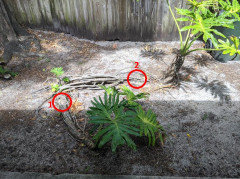
    Fast forward to now I have another one of these Thaumatophyllum plant that is suffering from natural damages.


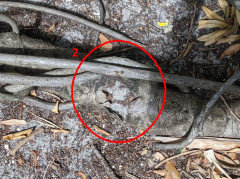
    This one is damaged at two spots where I circled in red annotated as 1 and 2.


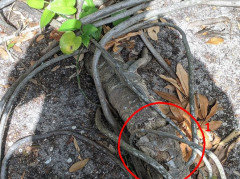
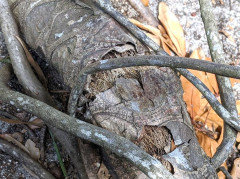
    Not sure what happened but these two spots seems to have rotted and dried out. A close up look at 1 it actually broke open.


    The short broken section is completely dried and broken.


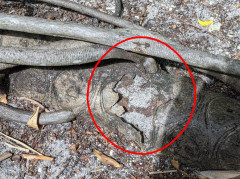
    Here is a closer look at 2:


    Since it's broken in two spots I expected some parts to die out, but strangely enough the plants seems to be growing fine as three separate plants each with it's own roots.


    Should I leave it be? Or should I trim the plants where the broken/rotten sections are and cut it back to where there is healthy tissues?


  • 5 years ago
    last modified: 5 years ago

    If you can make sure that some of aerial roots are in the ground and the trunk has enough roots holding it up then cut where the rot/ breaks are or even shorter and then trim the left over trunk part on the ground. if the roots are not sufficient to hold them up, you might need to ’staple’ the horizontal trunk to the ground or hold it down somehow. they naturally creep like that, but better if they have some support.

    i see that at the base it sprouted a new trunk already already. they would look better without unsightly roots and long horizontal trunks. and more new trunks might come up from the base.

    even if you were to cut all trunks to near base they usually resprout .

    Miami Cuse thanked petrushka (7b)
  • 5 years ago

    You might also stake the trunks unril they get stronger: so they don’t fall.

    Miami Cuse thanked petrushka (7b)
  • 5 years ago

    should I feel around the trunk to find where the rotting ends then cut it there?

  • 5 years ago
    last modified: 5 years ago

    It would be easier to do several cuts near the rotting spot until you finally see a clean cut.

    but then you might have several rotting areas, you don’t need a long trunk on the ground once it’s cut. the main consideration is whether it’s rooted along the length. you want to preserve some healthy roots, of course.

    Miami Cuse thanked petrushka (7b)