Software
Houzz Logo Print
karaintn

Best Cattura Downdraft- no air moving

5 years ago
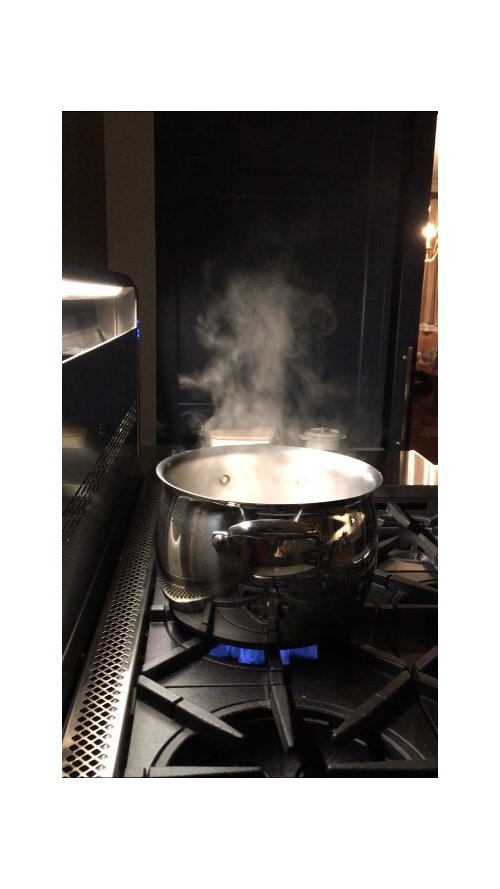
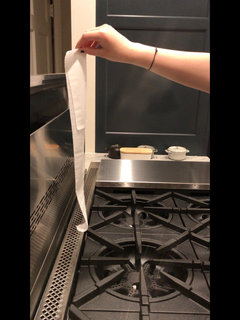
I just had this downdraft installed last week behind a new range. I tried to use it for the first time tonight and while I can hear a fan running, I don’t feel any air moving. Also, from this pic you can see that the steam from boiling water is just going straight up, not being drawn into the downdraft at all. And in this pic the downdraft had already been running on high for several minutes. I’ll have the HVAC guys out later this week, but wondering if y’all have any ideas of what’s wrong.

Comments (29)

  • 5 years ago

    Can you feel any air flow outside where the ducting exits the house?

  • 5 years ago

    Downdrafts, backdrafts and sidedrafts are about 10-20% as effective as a good updraft range hood. They are an expensive last resort and just don't work well. Having said that, you should be getting some removal of steam from your setup. You may need and indoor air recovery setup of some sort to help, as well as an efficient ducting of the vent itself. Can you feel any air being exhausted from the outdoor vent?

  • 5 years ago

    Do you have windows open for make up air. Are you willing to purchase an inexpensive vanometer to measure air flow?

  • 5 years ago

    @Sammy and @sktn77a - yes, I can feel a pretty strong airflow outside blowing out of the vent. I am very aware that a downdraft isn’t nearly as effective as a hood. But having said that, there should be at least minimal air movement near the intake. I could hold a feather in front of it and there wouldn’t even be a flutter.
    @Jim Mat - no windows open . . . . Is that necessary? I’m going to let the HVAC guys take a look before I purchase anything like a vonometer.

  • 5 years ago
    last modified: 5 years ago

    Open a window and try your feather test. And, try a 1” x8” strip of toilet paper.


    If you have exhaust but no intake at the stove, you may have a leak in your ducting. If you have do have not make up air to replace the air being vented....how does that work, thus the window suggestion.

  • 5 years ago

    This is with a window open directly across from the downdraft vent. This downdraft has 5 speeds and I have it on the most powerful speed. I don’t totally follow you about the window and make up air. Are you saying we’d need to have a window open every time we use it?

  • 5 years ago

    How is the tp reacting with the fan on, window closed?

  • 5 years ago

    What are the cfms of the downdraft?

  • 5 years ago

    @vinmarks - 1,500 CFM. It’s a 48” Best Cattura Downdraft. http://www.bestrangehoods.com/PDF/Catalogs/BEST_Downdraft_Brochure.pdf

  • 5 years ago
    last modified: 5 years ago

    That is a lot of air. (CFM). Do you know about Make Up Air (MUA)?


    Are you using it in the upright position?


  • 5 years ago

    Well something is obviously wrong with it but do you have a makeup air system?

  • 5 years ago
    last modified: 5 years ago

    So, the blower is pulling air from somewhere to make the big draft at the exterior where the ducting exits the house. Do you know how the ducting was plumbed and where the blower is located? (I see several different options shown in the link you provided.) Since the blower is not pulling air from the vent intakes above the counter and behind the range, is there, perhaps, a strong airflow beneath the range when the blower is running? Can you find where the air is being drawn into the blower? What happens if you put the tp down in front of the range at floor level. (If you get a draft there, then the ducting from the riser has gotten (or was left) disconnected.) Can you access the blower to see from where it is pulling air? Do you have long, flexible probe that you could poke down into the riser to see if somebody left packing material in the riser (blocking the airflow from there). Otherwise, it would seem that the installers failed to connect the blower to the riser or else some connection got knocked apart when the range was slid back into place.

  • 5 years ago
    last modified: 5 years ago

    Just an MUA 1.01 comment for the OP. No air leaves the house that doesn't get replaced. If the house is sealed then the cooking exhaust is gagged. Either air is pulled through walls and window cracks, or back-drafts combustion appliances (along with carbon monoxide), or requires an open window (doesn't meet code), or it is supplied by a deliberate system comprising at a minimum a duct and a damper, but in many cases duct, damper, blower, filter, and diffuser or register. There are so many possible variants that reviewing threads here with "MUA" as a search term may be necessary to provide insight into residential MUA successes and difficulties. For commercial systems from which the modern upgraded kitchen ventilation is derived, see: https://www.tagengineering.ca/wp-content/uploads/2015/02/KVSApplDesign_catalog.pdf

  • 5 years ago

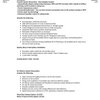
    As shown in the specifications sheet, there are a myriad of ways to install the hood, blower, and duct work. Somebody made an installation error. For example, someone could have forgotten to attach a duct to the hood or could have forgotten to attach the blower to the duct that's connected to the hood. Such errors would lead to an operational blower but no air pulled from the hood.

    Note the available range trim kit (though this has nothing to do with the air flow problem) but is mentioned on page 4 of the specifications sheet.

    P.S. Depending on how the hood is installed, various pieces of the hood have to be removed to allow air to flow out and into the attached duct. If, for some reason, a required piece wasn't removed, air from the hood would be blocked. Seems unlikely but you never know!

  • 5 years ago

    re installation error. Could be that no make up air for 1500 cfm pulled the ducting apart.


    the OP may have left the discussion.

  • 5 years ago
    last modified: 5 years ago

    I believe that one can have a blower rated for 1500 CFM at zero static pressure. I have one on my roof. It is made by Broan for Wolf. But it won't actually move 1500 CFM when there are pressure losses. I don't know what the effective aperture of a Cattura is, but I bet it is a lot smaller than the 50% baffle space under my 10 sq. ft. of Wolf hood aperture (presently pulling about 1100 CFM with no other exhaust blowers operating). So the blower's likelihood of eking out high flow rate through the Cattura would seem to be to be low.

    However, even if one only had house leakage instead of a real MUA system, this blower should be able to move tissue paper. I place my bet on the blower intake being disconnected from the pop-up riser assembly.

  • 5 years ago

    "I place my bet on the blower intake being disconnected from the pop-up riser assembly."


    An interesting speculation.

  • 5 years ago

    UPDATE: The HVAC guys came and found that where the fan motor attaches to the duct at the back of the unit had come apart, and there was an inch or so gap all across. This is part of a renovation, and I assume when the cabinet guys were putting shelves they knocked it loose. So, they reattached it and put silver tape all around. This improved the performance a bit, but it's not as powerful as I expected, or as advertised. So . . . . just did some research and found that there are multiple External Blower options to go with this downdraft, and apparently I have the least powerful one. When we purchased the downdraft, the appliance guy said "oh, and you need to purchase the blower separately" and he added it to the order. Shame on me for not researching if there were multiple blower options. So, I'll follow up on that now. Do y'all agree that a stronger blower would increase the suction of the vent at the cooktop?

    The options are 600, 900, 1200, and 1500 CFM. My purchase order shows I go the 600 CFM one. Earlier in this thread I said had 1500 - I was mistaken. Another question - why do they sell multiple options? Why would someone want a less powerful one?

  • 5 years ago

    You will need makeup air.

  • 5 years ago

    "This improved the performance a bit, but it's not as powerful as I expected, or as advertised."

    Why not use it awhile to see how it performs before changing anything?

  • 5 years ago
    last modified: 5 years ago

    Another question - why do they sell multiple options? Why would someone want a less powerful one?

    One reason would be quieter operation. The higher the air flow, the louder the noise. The second is the amount of make up air. The air that is being pushed out has to enter the house. You either have to open a window, or have a device that let's air into the house when you turn on the fan. Keeping the air flow low avoids that problem. The third reason is there is not necessary to have additional air flow. How often will you have 6 pots of boiling water going at the same time?

  • 5 years ago

    @wdccruise - agree the entire ductwork and assembly may need to be reviewed. Also, we did get the range trim kit. Were you just mentioning that to show there are multiple options with this unit?

  • 5 years ago

    @User and @vinmarks and others - several in this thread have mentioned the need for a MUA system. I mentioned that to my HVAC guy and he said it's not needed for my house - that the 600 CFMs aren't enough to need it, and my house is large enough (kitchen is a good size and is open to the living room). I did some googling and found that most appliance sites say that it's usually not needed for residential. Interesting that the people on this thread are for it, while external sources seem against it (or at least neutral).

  • 5 years ago
    last modified: 5 years ago

    Kara Barkley where I live it is code that make up air is needed for range hoods with cfm's over 400. It also has nothing to do with how large your kitchen and living room are. I have a large kitchen open to great room and dining room. I still need makeup air for my 1200 cfm hood.

  • 5 years ago

    Re MUA, perhaps your external sources have reason for usually not needing it, and those responding to your post have “needed it”.


    MUA can be expensive If code requires it to be “conditioned“, vs opening a window.

  • 5 years ago
    last modified: 5 years ago

    If you want 600 CFM to leave the house via the kitchen hood (or via the Cattura) the 600 CFM has to be exactly replaced, or "made up." Hood blowers can only pull to a tiny fraction of an atmosphere before being gagged. House leakage can only supply so much MUA at small differential pressures, and the air pulled is not necessarily healthy.

    You blower will likely need to be rated at 1000 CFM to get 600 CFM through a hood with passive MUA. Less is likely with the Cattura, if it is even possible with recommended blowers. Does Best publish a pressure resistance curve for the Cattura, or can one be weaseled out of them? If we had one we could estimate what their blower can actually do.

    You need your HVAC to assure you that with whatever MUA you end up with, you do not exceed the allowed negative pressure for operation of any combustion appliances you might have. All of this has been written about here in many threads, so some review is in order, in my opinion.

  • 5 years ago
    last modified: 5 years ago

    Old houses (i.e., leaky houses) can usually handle a blower rated at moving 600 cfm just fine without a dedicated mua system—or even opening a window. It’s the newer energy-efficient building practices found in new construction that are generally responsible for these codes (and for the requirement to conform to the codes).

  • 5 years ago

    What pressure difference do you expect pulling 600 CFM through this baseline old house? Give me a value and I'll comment on its effects on combustion appliances and on a Broan blower fan curve.