Software
Houzz Logo Print
jason_carlton26

Japanese barberry (Berberis thunbergii)

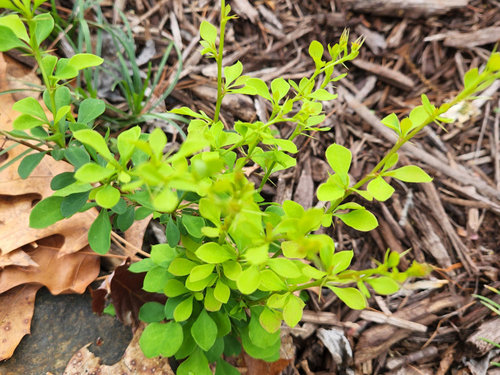
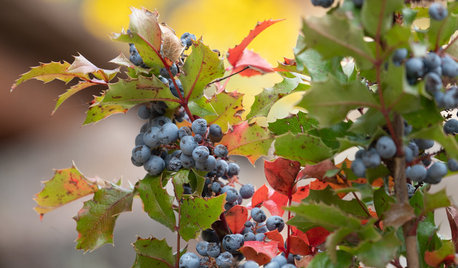
I have this little bush coming up under my dogwood:


It's about 1' tall at this point, and my plant app decided that it's a Japanese barberry:


https://bwwellsassociation.wordpress.com/2014/09/03/distinguishing-north-carolinas-wild-barberries/


That article says that it "can" be invasive, but it's not targeted for eradication.


My front yard has a perimeter of about 400' that's open to wildlife, so I'm always on the prowl for pretty, tough, and easy-to-propagate bushes to fill in. Would this be an attractive bush to relocate and encourage?


Other bushes I have are Sunshine Ligustrum, Ever Red Fringe Flower, butterfly bushes (Buddleja, much larger than the others), and 4 varieties of azaleas. I also have rhododendron, but I've not had great success with propagating them at all.

Comments (29)

  • 4 years ago

    Berberis thunbergii, Japanese barberry, is on your state's official listing of invasive species. So no, it is NOT a plant you should be encouraging. And I would strongly recommend removal of the one you have and any other seedlings popping up on your property.

    We all need to do our part in curbing the spread of invasive species.

    North Carolina Invasive Plants Council

  • 4 years ago

    it's popping up because seed got carried there--that's how it's invasive.

  • 4 years ago

    Barberry and butterfly bushes are highly invasive. As a property owner you should feel some responsibility to preserve native habitat. Kill them both.

  • 4 years ago

    Thanks for the link, @gardengal48 (PNW Z8/9). Shoot, at least half of those plants are for sale right now at Lowes!


    That's rough. No wonder they're all a problem if they're cheap and readily available :-(

  • 4 years ago

    I have several growing in my yard in Maryland, but they have red leaves. They have little yellow flowers that are barely visible. They also have thorns. I only have them because of the red leaves. With green leaves, there's really no point in having them. Mine don't spread at all.


    Our unkept land around here is nothing but invasive species, so it seems kind of pointless to care. You would just be replacing invasive species A with B. And I would much rather have japanese barberry than kudzu, bradford pear, tree of heaven or rosa multiflora. Lots of people grow it around here and I don't think I've ever seen it growing in the wild.

  • 4 years ago

    "I don't think I've ever seen it growing in the wild."

    You may not have seen it personally but there is ample evidence online of it doing so. invasive.org has over 500 images of it in natural settings throughout the east coast and the midwest. And one rarely ever finds evidence of an invasive species bad behaviour within one's own garden. Mulching, cultivating and weeding tend to prevent that but that doesn't stop birds and other wildlife or wind and rain from dispersing seeds over a very wide area.

    Gardeners with such a cavalier attitude towards knowingly growing invasive species provide very little credence to any other gardening advice they may offer.

  • 4 years ago
    last modified: 4 years ago

    I certainly have barberry gowing invasively on my property, and I live in a spot where I cannot see another house, and I don’t think that there are any at homes that I pass on my road (which has at least a half mile of woodland to either side behind the houses), so yes it is invasive. I have good bird habitat and the birds bring in seeds of invasives such as barberry and Asian bittersweet.

  • 4 years ago

    Nandinas grow like crazy for me and pop up everywhere in Raleigh. They aren't real tall but they are very happy growers.

  • 4 years ago

    In the last 20 years I have seen woodland and open fields taken over by barberry, Russian olive, tartarian bush honeysuckle, garlic mustard, and stilt grass. We don't have kudzu here. Yet.

  • 4 years ago

    I volunteer my leisure hours on weekends to remove invasive species from public lands. Kidhorn's comments infuriate me. Thank you for responding to him GardenGal. If I had responded my words would've gotten me kicked off the Forum.

  • 4 years ago

    Never mind, just saw Nandinas are on the invasive species list. They most certainly are invasive in my yard!

  • 4 years ago

    Cecily,

    If you lived near me, you would become enraged. Thousands of Bradford Pears and lots of neighborhoods with them planted along the road. Sometimes the tree of heaven overwhelms them because they grow taller.

  • 4 years ago

    Multiple states have banned the sale of callery pears. Most states have current (regularly updated) invasive species lists. Progress is being made. When invasive species are removed (with follow up of course), native flora returns. Education is the key component. As long as persons such as yourself are growing barberries, migrating birds will drop seeds and the problem will persist. So why are you calling me out by name baiting me?

  • 4 years ago

    Same here, @charles kidder. I'm convinced that a lot of it here is due to poor advertising and little-to-no regulations on businesses. I see Bradford Pears for sale at Lowes for cheap, so people see that and assume it MUST be OK! In their minds, Lowes wouldn't sell it if it wasn't OK.


    This was the first time I heard of Butterfly bushes being invasive, now I have a tough decision to make. I have entire gardens designed around them! Digging up bushes that I've worked on for so long feels like blasphemy, and replacing them with a Crape Myrtle or something is going to cost about $1000 and take several years to look good again :-/

  • 4 years ago

    This is not the first time that you heard that butterfly bushes are invasive, you were informed of that fact at least a month ago when you described your master plan for an orchard with hedges of buddleia. You simply chose to ignore the facts. Wilful ignorance is the problem.

  • 4 years ago

    As with virtually ANY invasive species, location makes a huge difference! What is considered invasive in one part of the country may behave perfectly well in another. Many plants that are recognized invasives in the eastern half of the country are not in the western half and vice versa. Climate and geography play a big role.

    Butterfly bush - Buddleia - is only considered invasive in a few isolated states, mostly on the west coast. Some varieties are not hardy enough to winter over in colder zones. And there are a number of sterile cultivars on the market now that nullifies any invasive issues.

    Because this is such a major ecological and economical issue, every state has its own invasive species monitoring authority, sometimes broken down into regional or even county listings. It is always a sound move to check against the local listings - or become familiar with them - before buying and planting something new to your garden. Although most quality nurseries do not carry or promote the planting of invasive species, not all retailers follow that philosophy so it is always going to be a case of caveat emptor - buyer beware!!

  • 4 years ago

    This is not the first time that you heard that butterfly bushes are invasive, you were informed of that fact at least a month ago when you described your master plan for an orchard with hedges of buddleia.


    @cecily 7A, maybe I should have said "it's the first time that I remember hearing it" ;-P


    I went through all of my threads for the last year, though, and the only one that came close to what you described is this one:


    https://www.houzz.com/discussions/6241312/designing-a-small-orchard-with-complementary-plants


    You briefly referred to something being invasive, but when I asked for clarification you didn't reply. I suspect that you meant to reply but didn't.


    There's no need to be rude to me, I'm trying to learn and doing the best that I can :-) We're all friends here, right?

  • 4 years ago

    GardenGal, please take another look - I believe butterfly bush is invasive in Maryland, Pennsylvania and New Jersey. It's a species to watch in Virginia.

  • 4 years ago

    @gardengal48 (PNW Z8/9), NC State Extension gives very mixed information on the butterfly bush:


    https://plants.ces.ncsu.edu/plants/buddleja-davidii/


    The whole page seems to love it, except for that little disclaimer at the top! LOL It's not clear what the state thinks I should be doing with it, but I just saw it for sale at the local nursery a few weeks ago so I know it's not being restricted. Yet.

  • 4 years ago

    cecily, please reread what I said......"a few isolated states, mostly on the west coast". I never made any claims it was not listed elsewhere.

    The point I was attempting to make was that simply because a plant is considered invasive in one location does not mean it is considered invasive everywhere else. Check locally first. And there are sometimes non-flowering or fruiting forms or sterile cultivars that will not be invasive and can generally be planted without concern. Even in Oregon, where Buddleia davidii is prohibited from sale, seedless or sterile forms can still be purchased and planted.

  • 4 years ago

    Yes, I did read what you said. The mid-Atlantic region isn't a few isolated states on the west coast. Jason's climate is quite similar to the mid-Atlantic and apparently it is listed as invasive in NC as well.

  • 4 years ago
    last modified: 4 years ago

    Jason, that is only an info sheet, not a recommendation :-) The plant has been demonstrated to be invasive in NC so the responsible homeowner should not plant more. Unless you pick one of the newer, sterile forms.

    btw, deadheading the butterfly bush as soon as the flowers go over will prevent even the fertile, invasive species from setting seed and spreading themselves all over everywhere. But most people can't be bothered so the problems persist.

  • 4 years ago
    last modified: 4 years ago

    cecily, I am not going to get in an argument with you. Check the Invasive Plants Atlas, the only national compilation and mapping of invasive species I am aware of. It lists butterfly bush as invasive in only a handful of east coast states. There is really no need to make this into more of a big deal than it is already.

  • 4 years ago

    @Jason, zone 7A, near Greensboro NC I'm in Raleigh and have had a butterfly bush for over 12 years and I have never seen another one pop up anywhere else. I do cut it back severely in the winter. It was part of a landscape design installed by a person who graduated from NC State and is a licensed landscape architect so perhaps she selected one of the sterile forms.

  • 4 years ago

    @tozmo1, I've never seen one pop up, either. I've propagated mine with cuttings.


    But looking at the link @gardengal48 (PNW Z8/9) gave before:


    http://nc-ipc.weebly.com/buddleja-davidii-butterfly-bush.html


    (which is supposedly the NC Invasive Plant Council, but it's on a free Weebly site so I'm not sure how official that is)


    the only problem discussed is:


    Although butterflies use this plant as a nectar source, their larvae cannot survive on it. By replacing native larval food sources, butterfly bush can have a negative impact on wildlife.


    This makes me think that maybe it's not "invasive" in the sense of over-spreading, but just that it has a negative impact on butterflies?


    Either way, I emailed the local coop extension for clarification. I know that they rue the day someone on here first suggested that I contact them, I bug them to death now! LOL

  • 4 years ago

    Sorry, it is invasive because it spreads. And spreads freely. Butterflies (and hummingbirds) love this shrub but the ONLY negative impact in that regard is that the shrub could outcompete native larval sources. Few if any plants act as both larval and adult food sources so you do need a mix.

    btw, one rarely sees a proliferation of invasive species within one's own garden for a variety of reasons. And that is really not the concern. The concern is their spreading into uncultivated or natural areas and overwhelming the native plants.

  • 4 years ago

    I heard from the local coop, she said that it's not considered a "noxious" weed in NC, but she strongly discouraged any non-sterile Buddleja.


    I further read that the non-sterile ones spread by seed. Considering that mine has been here for 10+ years and I haven't seen ANY others crop up anywhere (including the wild woods and several miles of road near my house), I'm going to have to assume that mine is sterile. So while not actually invasive, it's also not good for native pollinators so not something to purposefully cultivate.


    Butterflies (and hummingbirds) love this shrub but the ONLY negative impact in that regard is that the shrub could outcompete native larval sources.


    Are you suggesting that I surround my (hopefully) sterile Buddleja with native larval and adult food sources?


    Any suggestions?