Software
Houzz Logo Print
webuser_268755758

Do you like this??? ..... yes or no??? Polling the audience

4 years ago
last modified: 4 years ago
Ok, so we've all heard before, "tall ceilings make it cooler in the room, because hot air rises and cool air sinks."

Well, just how true is this saying?


Do you reeeealllly notice that much difference?


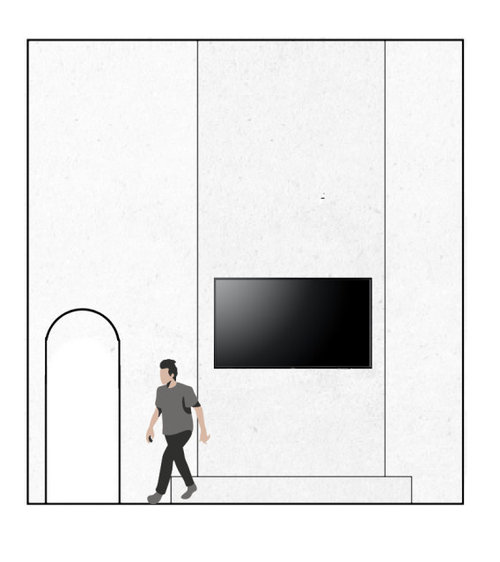
Here is an elevation of a home my architect designed, open-air Hawaii home, featuring 20 ft ceilings for "extra cooling."

No Air Conditioning on property.


Anybody have personal experience to share, especially in the warm summertime? I've never lived in a house with this tall ceilings, so I don't know if the high ceilings help that much.


Yes, it makes a noticeable difference!
No, the difference isn't enough to cry home about.

Comments (20)

  • 4 years ago

    I do not vote, but your reasoning is luducris. 20' ceilings will cost you big in heating, assuming you will heat.

  • 4 years ago

    No one heats homes in Hawaii. Many places we’ve stayed have actually been two floor loft types and I will say the main floor that open is quite cool and lovely but more important is the cross breeze from well placed doors and windows. Upstairs in the loft, despite a fan it’s roasting.

    Elizabeth Williams thanked WestCoast Hopeful
  • 4 years ago

    Thank you for your kind response, West Coast Hopeful!

  • PRO
    4 years ago

    Hot air rises and cool air sinks. Depending on the design of the structure, the temperature of the air at the floor may be 74 degrees and the temperature at the ceiling may be 74.5 degrees, or at the floor may be 78 degrees and the temperature at the ceiling may be 84 degrees, or some other combination. The high ceiling does not cool the air in the room it just gives "hotter" air a limited place to go. Whether you design the home or your "architect" designs the home, there needs to be a greater understanding of building design to address climate.

  • PRO
    4 years ago

    What type of lighting does your 'architect' recommend?

  • 4 years ago

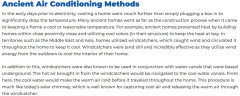
    If you have an adventuresome architect, you might look into some very old technology too.


    https://duckduckgo.com/?q=images+modern+windcatcher&t=ffab&atb=v181-1&iar=images&iax=images&ia=images

    Elizabeth Williams thanked decoenthusiaste
  • 4 years ago

    I can't wrap my head around no a/c (in new construction) in hawaii although I confess to never having been there. All I see is what the weather shows me which is currently (In Honolulu and I do realize there are various microclimates) is 78 degrees with 76% humidity. That is not pleasant to me for sleeping and the high is 87 today/tomorrow.

    I suspect that when you do 20 foot ceilings, you have bigger windows, less ability to overhang and thus greater solar gain that negates the minor advantage of the tall ceiling in termperature stratification.

    The cost saved by not going to 20 feet would probably cover enough solar panels to zero out the energy used in the home - with a/c. You could debate the environmental cost of that but it would be a debate and not a slam dunk.

    Alas, I realize some people just hate a/c. And you can get used to anything. I love an open window and an ocean breeze. Just not 76% humidity. And not 80 degrees for sleeping - since you never will get to the 78 outside.

  • PRO
    4 years ago

    Ok, so we've all heard before, "tall ceilings make it cooler in the room, because hot air rises and cool air sinks."

    Well, just how true is this saying?


    Not true in terms of the modified comment: "tall ceilings alone make it cooler in the room."


    Sure you can argue hot air rises, but that doesn't make the lower part of the room cool simply because of that argument.


    Sized cooling is calculated by including the volume of air to be "conditioned" --- that term simply means that whether you are cooling or heating the air the volume of air to be treated (conditioned) is a part of that calculation. The higher the volume of air the more conditioning of the air that is needed.


    For Hawaii, that isn't going to mean much but more than it would be for a smaller home with lower ceilings.


    Interesting... I've never heard that saying before. What is said on the island, stays on the island. LOL.


    I've never been there either, maybe one day soon.... Aloha!

  • PRO
    4 years ago

    Tall ceilings will not fix a design deficit in which passive solar principles are ignored. Big windows are likely to increase the solar gain, making the interior much hotter than the exterior. If you want a home without conditioning the interior, you look to the vernacular architecture. Shorter ceilings, with larger roof overhangs creating shade, and multiple windows in every room wall, which creates a cross breeze option. Even high celings with a home in full shade will not eliminate the high humidity mugginess and dampness that create mold and mildew.

  • PRO
    4 years ago

    Within limits, taller ceilings can indeed make it cooler in a room, but not because of the room volume. Rather, because taller ceiling heights demand taller windows and doors for aesthetic reasons, which allow for enhanced natural ventilation.


    If you're investing in the design and construction of a custom home which will make use of natural ventilation, I think you'll benefit from a design review by an experienced professional.

  • PRO
    4 years ago

    In keeping a room cool, a large deciduous tree properly located will have a greater positive effect than a tall ceiling. I think you'll benefit from a design by an experienced professional.

  • 4 years ago

    David many homes have AC in bedrooms for sleeping.

  • 4 years ago

    And many don't. We've stayed in countless condos, in smaller, upscale buildings (not the massive developments) that had nothing more than ceiling fans and windows with louvers. During summer visits, it would take a few days to acclimate but on all but the very hottest days, it was comfortable.

    For those of you giving advice who've never been there, Hawaii has a very consistent climate from month to month through the year, temperature wise. With little variation. In most locations, the daily high will be in the low to mid-80s and it cools overnight.

    A summer day at most coastal Hawaiian locations bears no relationship to the same thing in the US Midwest, South, or Mid-Atlantic. In Hawaii, it will be less hot, less humid, and the trade winds blow pretty consistently to keep things comfortable and to keep air moving through homes with adequate ventilation. It gets hot only from time to time and or when the air is still.

    Some friends of ours began their retirement by moving (from our mild climate region) to Hawaii. They lived there for 5 years before island fever brought them back. We visited them in their older home several times. It wasn't air conditioned, and it was perfectly comfortable.

  • 4 years ago

    We built a home in Hawaii and situated the home for best use of the prevailing trade winds. As West Coast Hopeful posted, the cross breezes are essential. The only rooms that need a fan are those that have only one widow.

  • 4 years ago

    I've owned homes in cold and warm climates with flat ceiling heights of 8 ft, 9 ft and vaulted ceilings of 12 ft to 20 ft. We built in FL this past year and most of the house has 12 ft ceilings. Very happy with that height. All our multi-slide doors are 10 ft tall and we have large windows proportional to the ceiling height.

    For a house that will not have AC in Hawaii, I would probably go with 14 ft ceilings. Giving you plenty of space for large overhead fans and air movement. We lived in LA and many of the older homes built in the 1920s had ceilings in the 12 ft range, with no AC when they were built.

  • PRO
    4 years ago

    I live hwere it gets very hot in the summer but we have a1956 ranch with 8' ceilings and huge overhangs on the South and West walls these are a god send in the summer we have huge windows and honestly the sun never hits the windows in the summer we have great cross ventilation and open the doors and windows early in the morning then 2 very small air conditioners coolo the house the rest of the daty after closing the windows and doors. If you have 20' ceilings they are IMO a huge waste of space and really the temp in the human space does not change it only gets hotter up top.

  • PRO
    4 years ago

    A nine foot high ceiling with an exhaust fan in the ceiling would work just as well if not better; and it would be easier changing light bulbs in the ceiling fixtures.

  • 4 years ago

    Your architect has 20' ceilings. What ventilation is included in the design? That's more important than ceiling height.

  • 4 years ago
    last modified: 4 years ago

    "We lived in LA and many of the older homes built in the 1920s had ceilings in the 12 ft range, with no AC when they were built"

    Bischak's comment triggered memory of my own experience. I grew up in the LA coastal basin (not in the SF or SG Valley) in the 50s and 60s, in a two story house with no air conditioning. The house I lived in until finishing high school was built in 1915 (info from Zillow just now). As the youngest kid and precociously tall, I was the designated light bulb changer. The ceiling downstairs was a bit higher than upstairs, it required me to stand on the third rung of a small step stool to reach the flush style fixtures. Upstairs, it was the first or second rung. I'm going to go with 9 feet for ceilings downstairs and 8 feet upstairs.

    It wasn't a Spanish style house, those did have higher ceilings. But rarely ceiling mounted fixtures light fixtures in rooms with high or arched ceilings.

    PS - there were hot days with terrible smog conditions in the 50s and into the 60s, when eyes burned and you couldn't help but cough. Emission controls on cars and fixes to polluting sites (like the oil refineries) made a huge difference, especially in the inland valleys where air was trapped even when the onshore winds blew. .