Software
Houzz Logo Print
thedoarway

Loba Supra AT issue

3 years ago
last modified: 3 years ago
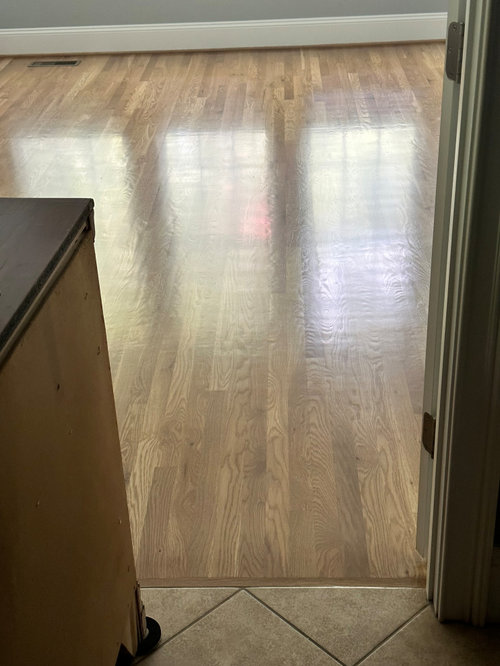
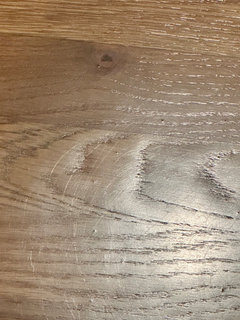
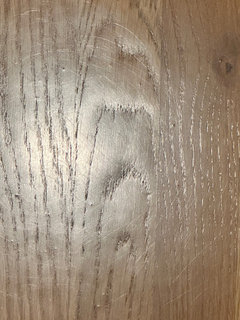
We just had our floors refinished.. The contractor used Duraseal stain, Easyprime, 1 coat of Easyfinish gloss and 1 coat of Supra AT satin. The result was beautiful but there was a lot of debris and clear globs in the finish. He came back and did a buff and recoat with Supra AT satin. This coat is much smoother and has filled the wood grain much better, but it has lightened the overall look and, most bothersome, looks very milky blue in daylight if you're viewing it at any kind of angle. Our back bedroom was fine, so they stopped the 3rd coat at the door, which has given us a great "before and after" comparison (it has 1 coat of AT satin). What could've caused this and what's the solution? I should note that rhe milkiness is a bit hard to fully capture because my iphone adjust the images.


Comments (12)

  • PRO
    3 years ago
    last modified: 3 years ago
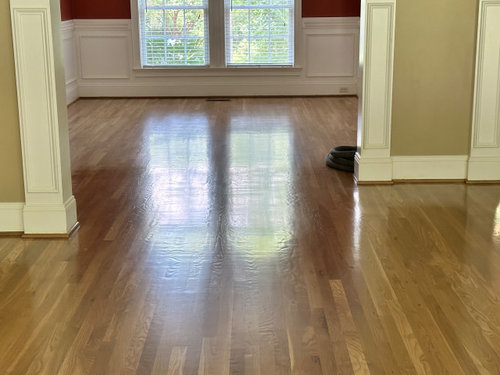
    Flatteners in the satin finish will provide a very very small measure of opacity to the finish. This is why they used gloss first. It's clearer without the flatteners. There is no cure. It's part of the consequence of choosing a satin finish.

    Lea thanked DeWayne
  • 3 years ago

    Part of the difference might be due to more windows in your main living area vs. the bedroom.

    Lea thanked Mary Elizabeth
  • 3 years ago
    last modified: 3 years ago
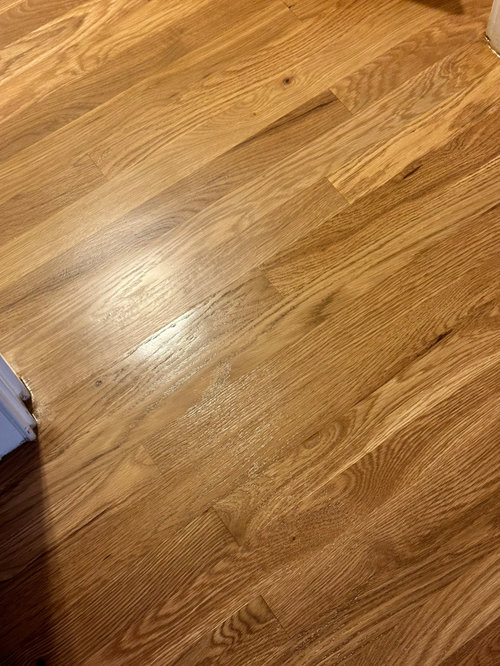
    @G & S Floor Service, i was wondering about that. That didn't look right to me. This has been a nightmare process. The floors were refinished in Jan 22 after some water damage with Bona Traffic HD by a supposedly very reputable company. There were a few blemishes in the 2nd coat so a 3rd was applied. That coat never hardened, so the contractor just redid the floors last month using Loba products. Loba reps were actually onsight for the 2nd coat. It ended up with excess debris, so another coat was applied which led to the milky look. The Loba rep was here for that as well. What would your recommendation be?

  • PRO
    3 years ago
    last modified: 3 years ago
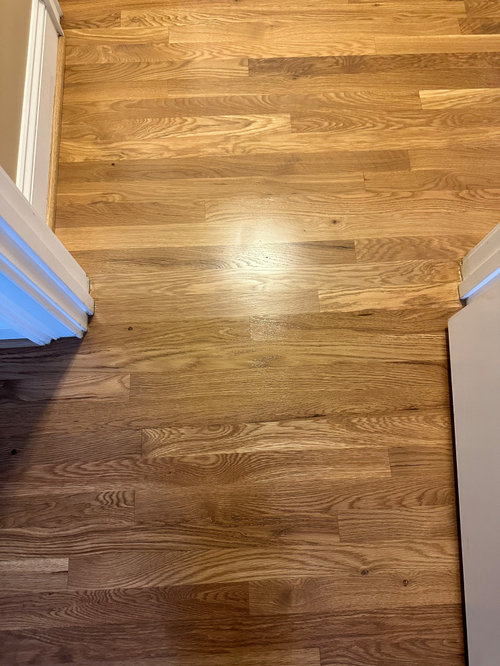
    The milky blue sheen looks to be a reflection from outside. At least that's what i see. Perhaps another image of what you are seeing.

    A possible cause maybe because of finish contamination. Most common way to contaminate a new finish is reusing old applicators. Old applicators contains remnants of previous finish. That previous finish may not be compatible with what you are currently using.

    Debris and particles usually means there is a cleaning issue. This can be from vacuuming inefficiently.

    Assuming the vacuum being used is performing at it's peak. Causes of cleaning issues - uneven surfaces : waves, chatter, gouges and dishouts. Low spots like these makes it difficult to remove fine dust. The vacuum loses suction power and is inefficient because low spots creates gaps with the floor cleaning tool. Fine dust is left behind.

    Finisher then coats over fine dust mixing it in with coating. Resulting in particles and bubbles in finish.

    Fix the sanding and the cleaning will fix itself.

    Also, finisher should not be reusing applicators. Applicators will pick up dust and particles, then redeposit it in a another location. Finishers shooting themselves in the foot reusing applicators.

    Lea thanked G & S Floor Service
  • 3 years ago
    last modified: 3 years ago

    G & S Floor Service, I've taken a closer look at some of the uneven spots. Most appear to be related to grain patterns in the wood. Is this just poor sanding or have these areas absorbed more finish than the more "plain" sureounding wood, leaving a height difference? The floor has now been sanded 3 times since original installation so I'm trying to undersrand how there could be uneven areas like this. Your feedback is so helpful! Thanks so much for taking the time to do this!


  • PRO
    3 years ago

    Low spots in the grain is called "dish outs". Wood have a portion that is hard and soft. For oak, the grains is where the soft wood is located.


    Dishouts is caused by unawareness and lack of knowledge/experience. When you sand wood with equipment that has soft pads. The soft pads will press against the soft wood more. Therefore softwood is removed more rapidly compared to the hardwood.


    You want to use a hardplate system to eliminate this issue. Equipments like the Trio, Spider, Epoch or Power Drive are designed to remove and eliminate dishouts. These sanders have multi steel heads that help remove waves, chatter, gouges, side cuts and prevent dishouts. The steel plates will not push down on the softwood. It will focus on removing hardwood first.


    Another cause is skipping grits.


    Example: Skipping from 20 to 60 to 100 is not acceptable, when sanding a wood floor. The 60 grit will not clean up all the sanding marks a 20 grit creates. And a 100 grit will certainly not clean up and remnants from a 20 grit. So, what does the refinisher do? Add more pressure to the drum sander.


    Adding more pressure to the drum sander will cause the soft drum pads to push into the wood more, digging out more softwood than intended. To prevent this issue, using a sanding sequence of 40, 60, 80 and 100 is more ideal. It will cost more labor, time and money, but will yield better results.


    If, your refinisher was to present this work for a product certfication. They will fail, over and over again. Absolutely, not acceptable.

    Lea thanked G & S Floor Service
  • 3 years ago

    We can't thank you enough for your help! We saw all the undulations and didn't like them but assumed it was normal. Just to confirm, this is substandard enough to request that it be corrected, right? The chatter, waves and dishouts are everywhere and are really pronounced :/

  • PRO
    3 years ago

    Yes, that is correct.

    Lea thanked G & S Floor Service
  • 3 years ago
    last modified: 3 years ago

    G & S Floor Service, are there any published standards or best practices re: sanding that address dishouts and waves? The Loba rep came out and was saying he's seen worse and it's not terrible (but can't comment on the installer's work). I feel like i need something to back up our claims that the floors aren't right when we talk to the company that we paid to refinish the floors.

  • PRO
    3 years ago

    You would need to check with NWFA sand and finish guidelines. It's all in there.

    Lea thanked G & S Floor Service
  • PRO
    3 years ago
    last modified: 3 years ago

    If that has been sanded 3x by that idjut, and looks like that, you may need to replace it. The life of a floor only has so many sandings in it before it is too thin. You've had enough life removed out of that floor that even if a pro were to correct it, it has lost substantial value and future usability.

    A finish company is not going to make real comments about the physical prep of the floor. It's not really their place to do anything but assure their product is used correctly. Even if it's over something sub standard.

    You need an neutral 3rd party certified inspector, and to pay for that inspection, to get a court accepted document, to sue to get your money back from your floor person. But, you cannot get blood from a stone. Something like that only works if you have a real pro, who cares about producing quality results and won't just file bankruptcy. A real pro wouldn't have produced those results to begin with. https://www.woodfloors.org/certified-inspector.aspx


    https://industryguide.hardwoodfloorsmag.com/professional-search?professionalTypes=1913

    Lea thanked DeWayne