Software
Houzz Logo Print
lorimbee

Is this area causing my chimney to leak into the basement?

last month

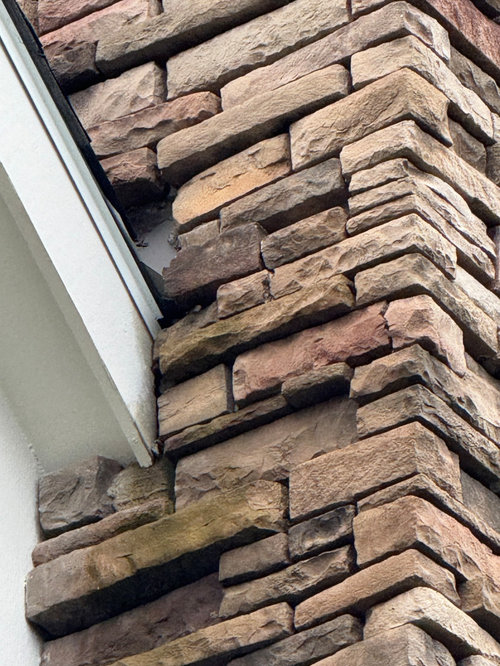
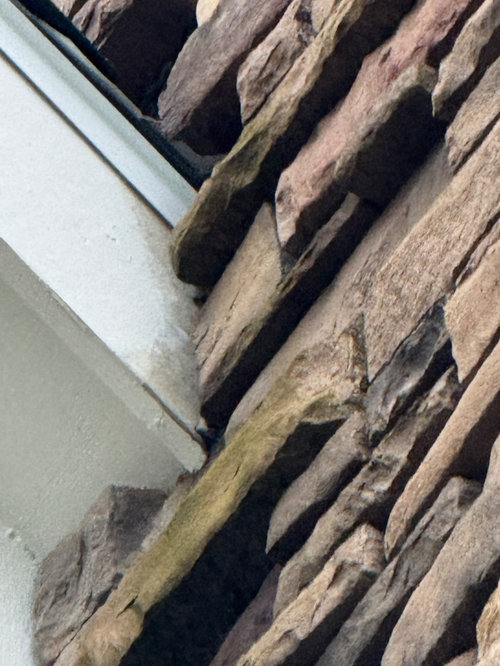
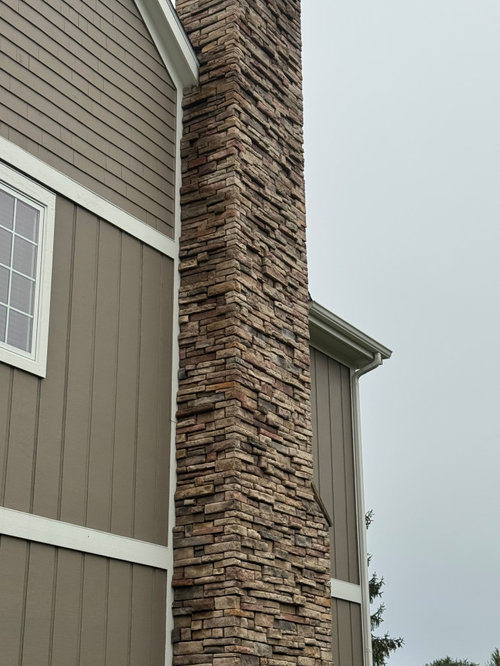
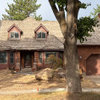
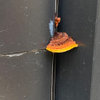
Last week we had an unprecented 3” of rain in 1 1/2 hours. We heard water running down the chimney vents the direct gas fireplace. There was rain coming into the basement under the chimney area. We had a new chimney cap installed last year and a new roof. The area shown in the pics seems to allow water to run down the roof towards the side of the chimney. The chimney rock was wet on that side which was also the side where we saw water coming into the basement. This had happened in the past, but we regraded the landscape and thought that was the cause. When the new roof was installed, they removed brick to flash that area but I am guessing its part of the problem? Roofer came back to inspect but havent heard word of the “solution”. Chimney crew coming tomorrow to check on new cap in case we have 2 problems.


Comments (19)

  • PRO
    last month

    I don't like that chimney flashing detail. Looks like it's dumping water behind the stone veneer.

    Lori B thanked Joseph Corlett, LLC
  • last month

    I don't have special expertise in this area, however - I had to deal with a leak related to incorrect flashing when my roof was replaced. The area you've photographed looks like it definitely should be inspected.


    Plus, Joseph Corlett is knowledgeable in MANY areas outside of the specialty focus area of his company. He knows something about basically every area inside and outside of a house + how various systems work.

    Lori B thanked dani_m08
  • last month

    Its clearly dumping down the side of the veneer too. whats the fix? I cant see how they could put in a cricket?….

  • last month

    This is the culprit. The picture does not show if a cricket exists on top, but looks like no. There is no kickout flashing (a big "fin" so when water drops off the roof, it drops away from the chimney surface). It appears the rake board is already rotting from the lack of these.

  • last month

    @3onthetree yes, the roofer is now going to put one up there. The chimney people found holes with OSB exposed in the stone by that wet board so the roofer will get their mason up there too. They didnt do enough when they put the new roof on!

  • PRO
    last month

    That stone veneer is going to all need to be removed if it's set on OSB. This is a systematic design failure on a large basis. Patching is not the appropriate response here. A redesign and redo IS.

  • PRO
    last month

    Full chimney rebuild needed. With associated rotten wood and framing investigated after the demo.

  • last month
    last modified: last month

    Wow!

    @Minardi is right, this is a systemic design failure.

    OSB turns to wet cardboard when it gets wet and stays wet. You are going to take this apart and find a bunch of rotten OSB.

    It looks like you have a chimney that's OSB wrapped in Tyvek covered in what is designed to look like dry stack stone veneer. Here's the thing: There must be a primary water shedding layer that prevents water from getting to the Tyvek - and unless there's a backing behind the veneer (like concrete board) there's nothing keeping the water away from the Tyvek. Both the primary water shedding layer and the Tyvek need to be able to drain. The photo isn't great, but it looks to me like they broke through the backing board - which would be the primary water shedding layer and directed water into the Tyvek. I don't see how that's fixable short of starting over.

    In an normal chimney there should be metal flashing on the outside of the chimney that goes up at least 6 inches from the roof. It should have head flashing, step flashing, and then counter flashing.

    The thing is, I can't see any way this ever works - even with a backing board behind the veneer and external flashing. You can't make the external flashing water tight when the backer board is your primary water shedding layer. Water will get to the backer board above the flashing, and then run behind and beneath any external flashing. This junction will always leak.

    At this point I believe your chimney has been damaged and isn't reparable. I think the OSB has been exposed to too much water and is rotten. The Tyvek can't be properly repaired. The backer board has been broken through and can't be made rain tight again.

    Any attempt to repair this will just postpone the eventual tear down and redo long enough that the roofers won't be responsible. It will also likely cause much more water damage and issues such as mold.

    Again, I can't see any way that this "dry stack look" wouldn't leak in this application so it would be foolish to rebuild it the same way.


  • last month

    Incorrect, this chimney is not an anchored stone veneer (meaning an air space behind veneer). And a WRB (e.g. Tyvek) is fully designed to shed water to begin with.

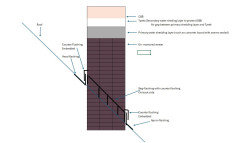
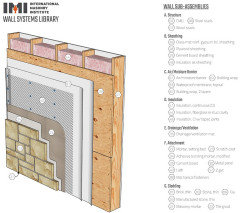
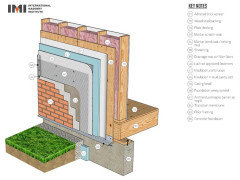
    This chimney is an adhered stone veneer (meaning "glued" on). Here is the correct method of how a wall assembly of this type should look:


  • last month
    last modified: last month

    @3onthetree

    I stand behind what I said, and this diagram is showing what I said - thank you for posting it.

    There is the veneer (G), a backer board (F), an air gap (E), Tyvek (C) and OSB (B). I left out the insulation layer (D) because it wasn't relevant. I understand that the veneer is being adhered to the backer layer.

    Building wrap is intended to be the secondary drainage plane - never the primary. Siding, stone, etc should repel the majority of the water and the building wrap protects against any minor leaks.

    That said, it presumes that the building wrap is high quality to begin with and that it was installed properly and wasn't damaged. There are plenty of videos online showing rotten OSB behind building wrap - so much so that builders are moving to a fully adhered membrane or the ZIP system.

    This video shows a water test of Tyvek vs big box store brand of building wrap. The results aren't good at all for the store brand. Virtually all of the water soaks through in 10 minutes.

    All of the points that I made stand: Once the backer layer (F) was broken by the roofers, water was directed into the building wrap and OSB. The water would have destroyed the OSB. There is no way to fix the OSB, the building wrap, or the backer board and make them water tight at this point without rebuilding the chimney.

    There's also no way to properly flash the outside of this that will prevent water from entering the backside of the flashing. It will always leak.

  • last month

    No, again, no air gap. Thus, the "glued on" visualization, not a wythe.

    Anyways, I don't know how all these comments are suggesting a complete tear down. I cannot clearly see what's going on or determine how it was built from that single close up photo, because I don't have x-ray vision.

    The grey color looks to be flashing, where a small kick out lip was directing water into the side of the stone, and the mortar squeeze is sitting right over top the flashing so probably water running down gets behind it. But, there could be WRB overlapping the flashing up higher behind a couple courses, who knows.

    The only tidbit of info by OP is there were "holes" by the rake board, they could be from the WRB (if it has any) cut around the subfascia if the OSB is rotten, which wasn't indicated either. It could be a gap (holes could have been wrong choice of words by roofer or miscommunication) between plywood and subfascia if the chimney was placed after the rake subfascia.

  • last month

    @3onthetree


    "E" in your diagram "drainage and ventilation". That can be an air gap, a drainage mat, a dimpled sheet that allows drainage, but there must be a way for the water and water vapor that gets behind the primary water barrier to drain and water vapor to vent and dry out. This is true of all cladding types where the wall is designed to dry to the outside. Otherwise things will rot. House wrap is permeable to allow water vapor to pass to the outside - that means that there must be some level of ventilation between that and the cladding to allow that out.


    I agree, X-ray vision is limited. I have to base my informed opinion and what the OP is telling us and what I know about the materials and methods I believe to be involved. She's saying "Exposed OSB" and I can see what appears to be house wrap in the first photo. If the construction is significantly different from what you and I have both posted, then that might change things. If that was exterior grade plywood instead of OSB, for example. If they didn't punch through the backer board could also change things.


    That said, there's no way that I know of to make that connection water tight.

    If they didn't punch through the backer board, it might not leak at into the chimney structure, but it's going to leak at the roof because you can't properly flash that roof to chimney junction.


  • last month

    Jake, the Masonry Institute detail does not have an air space. This is appropriate construction for an adhered stone on an unconditioned, isolated chimney enclosure. The detail Key merely lists all possible ingredients for all of their details, but the actual drawing only picks what pertains and has no #35 (under 'E') as it is not necessary.

    For a different type of wall assembly for adhered masonry, here is another detail which shows #35 Drainage Mat, in combination with #58 Weep Screed, which allows a drainage plane and exit path for the water. Including #41 Insulation, this detail could be chosen against a conditioned part of house, not a requirement for a chimney enclosure.


  • last month
    last modified: last month

    @3onthetree

    Okay - so that contradicts everything I know about proper building techniques. I hear you that it's the Masonry Institute - but I wouldn't do that on my own home. I'd absolutely require an air gap of some kind.

    I know that brick/stone absorbs a lot of water when it rains, and then when the sun comes out and heats up the exterior, it can drive a tremendous amount of water vapor into the wall. That "dry stack look" has a much greater amount of surface area to absorb water than a standard brick or stone veneer.

    But I'm not sure that changes anything for the OP - or that they built the chimney to these spec's. The point is that it LOOKS as if the roofer broke through the primary water barrier and directed roof runoff into the OSB/Building paper - enough that it showed up in the basement. The OP is saying that OSB is visible there. I can't imagine any way to fix the damage that's anything other than a half-assed patch. And I bet that the OSB is rotten.

    And the chimney design (dry stack look) precludes effective flashing - which isn't the roofer's fault... but is a problem for the OP.

    The roofer should have passed on this job. It just wasn't worth the liability that this chimney introduced. The roofer shouldn't have owned this problem - but they do now.

  • PRO
    last month

    This is a dry-stacked stone; if it's improperly installed and flashed, there are many voids that will allow water to penetrate beyond and cause serious damage to the structure over time.

    Must follow the manufacturer's specifications to a T and use experienced installers.


    Someone needs to come out and evaluate the installation and flashing at all adjoining points.


  • last month
    last modified: last month

    @GN Builders L.L.C

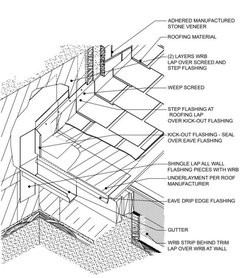
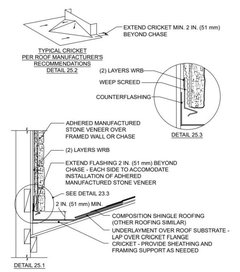
    Thanks for that flashing diagram.

    I'm unclear on exactly how this was built. Was this manufactured as panels with the veneer attached or was this built on site - adhering the stone to a backer board as it was dry stacked?

    The only thing that makes sense if you are going to make that watertight is to have the flashing behind the backer.

    However: That works when you are building the chimney the first time (assuming it was flashed properly originally - which doesn't look likely based on what little we can see).

    But it doesn't seem to work when you are replacing the roof and have to redo the flashing because you have to get the flashing behind the panels.

    If it's made from manufactured panels, do you start at the top of the chimney and disassemble those panels so that you can re-flash it properly? That seems crazy.

    And you still have the issue of the roofer breaking into the panels and directing water into the OSB and how you can fix any of that.

    As @3onthetree mentioned - our x-ray vision glasses aren't working so well and the only one with eyes on this is the roofer. I don't think the roofer knew what he was dealing with (at least not the ones on the roof).

    At this point I'd recommend a third party who has the ability to evaluate the condition of the OSB, the building wrap, the flashing, etc. This should not be the roofer who has an interest in minimizing things. Since you must follow manufacturer's recommendations to a "T" then it would first involve identifying the manufacturer and getting those instructions.

  • PRO
    last month

    @Jake The Wonderdog, It looks like this is individually stacked stone, not panels. The first picture shows that flashing is improperly done. They also filled the joint along the rake board with mortar, which will last for no time and crack, eventually falling out.

    The stone above where the roof meets the chimney seems too low, and it looks like they ran it straight into the slope; they should have cut it following the roof line. I'm not sure what the other corner is like, but there is a definite flashing failure.


    We just did a job with a similar situation, but with the brick. It was improperly flashed on where roof ran into the corner if the 2nd floor and ran along the face of the veneer, and it was leaking for years.

    The new homeowners, after being in the house a few years, decided to replace the flooring on the second floor, and when they lifted up the original flooring, everything was moldy. After further investigation was done and sheetrock was removed, the damage continued to the 1st floor, the sheeting had deteriorated and was almost gone in some places.

    Brick had to be removed from the roof down to the 1st floor, sheeting, etc, had to be replaced, everything had to be fixed, reflashed, and brick reinstalled.


    It's a big job (not to mention not many contractors will do these types of repairs), and it's the worst type of leak because you don't know until it's too late, and by that time, you have extensive damage to everything beyond the surface.


  • last month
    last modified: last month

    @GN Builders L.L.C

    That's crazy.

    I see an amount of that type of thing though. Unfortunately the original builders are often long gone by the time it comes to light.

    I think we have a really crappy residential building inspection system - particularly in my locality. Inspectors here are not knowledgeable, and don't really care about durability issues at all while it's being built. Home inspectors when a house is being purchased are a crap shoot and I've seen them miss (or bury) major structural issues.

    If I were building an expensive home, I'd want an independent inspector who knew what he was doing on-site the entire time.