Software
Houzz Logo Print
jeannie_nguyen

Houzz Live Chat: Tips for Green/Sustainable Living

13 years ago
Welcome to Houzz Live! Today we are talking about tips on how to live a more green and sustainable life. Please welcome some of our professionals:


Nils Finne of Finne Architects
http://www.houzz.com/pro/nilsfinne

Richard Loosle of Kube Architecture
http://www.houzz.com/pro/rico99

Nathan Kipnis of Kipnis Architecture + Planning
http://www.houzz.com/pro/kipnisarch


In addition, all community members are invited to jump in and participate by answering the questions posted.

The format is as follows: We will post questions as comments to this discussion thread. Each question will be prefaced by the question number, for example “Q1)”. For every answer to a particular question, you should use a corresponding label to attribute it back to the question you are answering, for example “A1)”.

Remember to refresh your page to see new questions and answers.

Most importantly, have fun!

Comments (127)

  • PRO
    13 years ago
    last modified: 13 years ago
    A7) It seems that the geothermal costs are still a budget buster here in Big D. Every time we explore that option, it's the one item that gets tossed out. So, we resort to our second best... 2-stage units and multi-zoning + installing the best insulation option the budget will allow.
  • PRO
    13 years ago
    All the strategies listed by FINEE are great...harder to do thermal in the city ..but i have seen it done..almost got shut down by neighbors..the noise : non stop from drilling ! ...
  • PRO
    13 years ago
    A7) job specific integration. It's hard to renovate green if your existing home is an energy pig without stripping the house to the bones to fix all of the air leakage issues.
  • PRO
    13 years ago
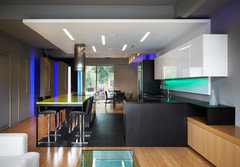
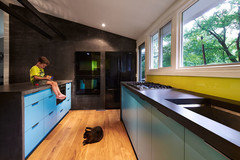
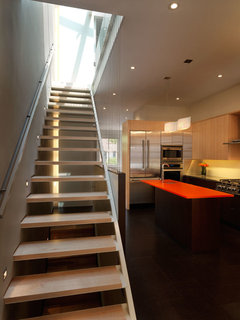
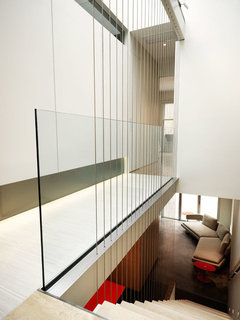
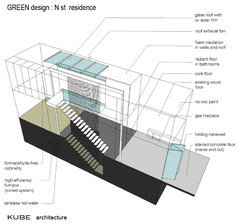
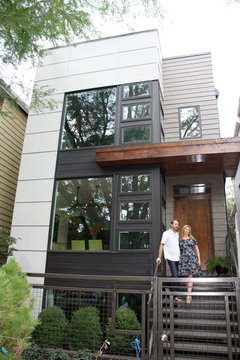
    A7) usually cost... i remember finding a great counter top material made of recycled paper...but the cost to ship from washington state was almost twice the cost of the counter top itself......... reclaimed woods, re-cycled glass tiles .. all can be at least double the cost of their “new” counter parts ... attached photos show affordable green materials such as concrete counter top, viroc wall /storage-- laminate cabinets, LED lighting - bamboo floors - and no-voc paints .. just have to know where to look and how to use materials creatively ....
  • PRO
    13 years ago
    A7) Cost. There are many who would also sacrifice green / sustainable for appearance.
  • PRO
    13 years ago
    @Watermark, I completely agree. We stopped using geothermal about 7 years ago. The systems actually use a lot of power, have way too many parts, and are expensive. I would rather use that money for really great passive techniques.
  • PRO
    13 years ago
    A7) You also need to be very careful on the building science front also. Sealing up a house that has been relying air leaks to breathe could cause more issues like mold or rot due to moisture build-up.
  • PRO
    13 years ago
    A7) Cost is a big factor, but higher up-front costs must be considered relative to lower life-cycle costs. Many energy-conserving strategies are not very expensive. We focus on what we call “Smart Sustainable,” see http://www.finne.com/smart_sustainable/

    As a sidebar, there has been an interesting development in the area of photovoltaic panels. Since the initial cost of the panels can run as much as $30K, the new development has been the growth of leasing companies. You lease the panels, you don’t own them, and the lease payments are roughly the same as the cost savings in electricity. So, you break even right away.

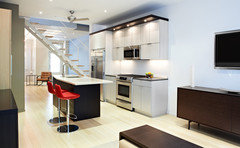
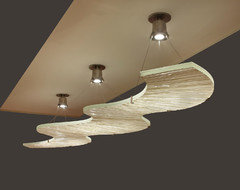
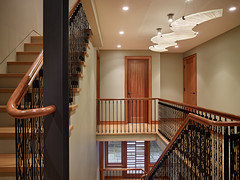
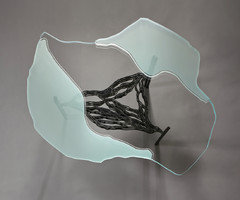
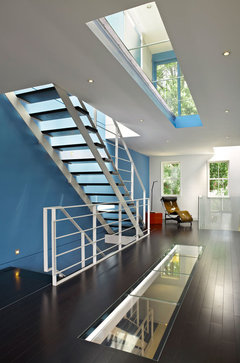
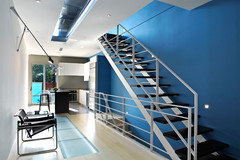
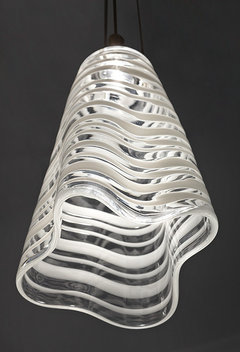
    On a similar note, in the world of LED lamps, costs are coming down and the lamps improve steadily every year. I am attaching photos of a custom LED fused glass light fixture, the SKLI Max light. I designed and fabricated the fixture for the stairwell of one of our projects......
  • 13 years ago
    All these projects are so beautiful! Love it. :)
  • 13 years ago
    Q8) For homeowners trying to cut back on their gas/electricity usage, how can you design a home to make the warm and cold months more bearable?
  • PRO
    13 years ago
    last modified: 13 years ago
    A8) We stress that our clients focus their money on 1) structural integrity (solid foundations), and 2) energy efficiency (insulation, windows, HVAC systems). We tell them all the time.. you can change all other "niceties" later.. you don't want to have to change out windows and AC units, or shore up foundations.
  • PRO
    13 years ago
    A8) The things that will keep a home really comfortable are air sealed perimeter walls, low ‘E’ coated insulated windows, zoned mechanical systems and very high efficiency mechanicals.


    Air sealing the perimeter essentially means making a home air-tight. When a home is designed like that, drafts are nonexistent. You need to mechanically ventilate the building so fresh air is brought in in a controlled and efficient manner.


    Low ‘E’ glass is glass with a coating that ‘heat’ sees as a ‘mirror’. At heats wavelength, the heat is reflected off of the glass. It helps keep heat in the winter and out in the summer.


    Zoning a home’s mechanical system lets you control the conditioning of the space more precisely. Each zone would have its own thermostat.


    Really efficient mechanical systems are obvious, but the best systems for forced air, for example, have two or more stages that the blower works at. So it can provide a lower speed fan for the majority of the time, and only kick into a higher speed when needed. This reduces the apparent movement of the air, reduces dust being moved around and reduces sound associated with the system.


    We have found that radiant floors, while fun to have, are significantly more expensive and not thermally responsive enough for super insulated solar homes.
  • PRO
    13 years ago
    A8) Proper site orientation and passive solar design is always the best, but sometimes very difficult on smaller in-fill lots. The use of natural light and proper roof overhangs can go a long way as noted earlier in the conversation. Having good thermal mass and proper insulation for your climate is another great way to combat this.
  • PRO
    13 years ago
    last modified: 13 years ago
    A8) For new design-builds, it's everything from site orientation to envelope construction and efficient systems. For existing homes, it's attic ventilation, adding or upgrading insulation, window replacement, HVAC upgrades to newer, more efficient higher SEER, multi-stage packages, adding window treatments that have purpose... these are a few.
  • PRO
    13 years ago
    A8) As I have said earlier, it makes great sense to focus on improving the performance of your house’s exterior envelope. We are currently investigating the so-called “Passive House” idea, where you have a high-performance building envelope and no mechanical system at all!

    Here are some suggestions for homeowners:

    1. Insulate, insulate, insulate. We insulate 40-50% above code. We use closed cell foam wherever possible. Do a “Blower-Door” test to reduce air exfiltration, which can be the cause of up to 30% of a home’s heat loss.
    2. Replace all single-pane windows with insulated glass units,
    3. Replace furnace or boiler with high-efficiency units, at least 90% efficiency rated.

    Regarding geothermal heat exchange systems, the last system we installed here in Seattle reduced our clients' heating bills by 90%!
  • PRO
    13 years ago
    A8) reducing the amount of thermal bridging and properly design the HVAC system are other really good practices.
  • PRO
    13 years ago
    @Fine, that is impressive savings! I would imagine Seattle has higher natural gas prices and very low electric costs from hydroelectric which help geothermal make sense there. Each area of the country has its energy equation to take into account.
  • 13 years ago
    Q9) Any key things to avoid in designing your home if greener living / sustainability is a priority for you?
  • PRO
    13 years ago
    A9) It’s not about ‘green bling’ or impressing your neighbors. Its about performance, comfort and reducing CO2. So I wouldn’t get caught up in the ‘Mr. Potato Head’ syndrome that I described in A5.

    I would also be very careful who is on your team. Please find professionals that know what they are doing. Paying someone for their learning curve is not a recommended practice. The best laid plans can be completely blown by a contractors mistake.
  • PRO
    13 years ago
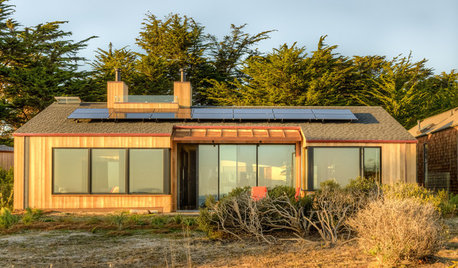
    A8) .... designing using passive design is the best, most affordable and “natural” method to design ... solar orientations, ventilations systems, natural shade systems and so on.... tromb walls, focused views ( you dont have to have a full wall of glass ) ...... zoning the mechanical system, ......the attached photos show house w/ ‘solar chimney”...and other green features...
  • PRO
    13 years ago
    A9) avoid sacrificing design for “green fad” .. just because a material is “called” green, doesn’t mean you have to use it ....
  • PRO
    13 years ago
    Here in Dallas, we built a new 2,000sf home using standard shingle roof, encapsulated attic system (fully foamed), foamed walls, foam sheathing, 2-stage HVAC w/ gas furnace, vinyl windows, tankless water heater..., and her summer electric bills have not gone over $75.00 per month.
  • PRO
    13 years ago
    A9) Avoid fancy gimmicks! Build at a high quality level. You cannot talk about cost without talking about value. We have all had the moment of buyer’s remorse when we say “what a waste of money that thing was.” I strive to avoid “throw-away-ism,” which is rampant in our culture. If you can build a 75-year house, that is a huge benefit to the environment as compared with a 15-year house. The parallel question to “what does it cost” must always be “will it last?”

    If we consume less, but make sure that we do choose thoughtfully designed, well-crafted objects and environments, we are on the path to a sustainable future.
  • PRO
    13 years ago
    A9) Avoid excessive spaces, don't build rooms that you won't be using. ABC's of green building and design : Allergy Free (indoor air quality) , Barrier Free (universal design), Clutter Free (plenty of storage)
  • 13 years ago
    Great chat so far! Here's the last question:

    Q10) What was your favorite “Green Project” you’ve worked on recently? Do you have any photos or details to share?
  • PRO
    13 years ago
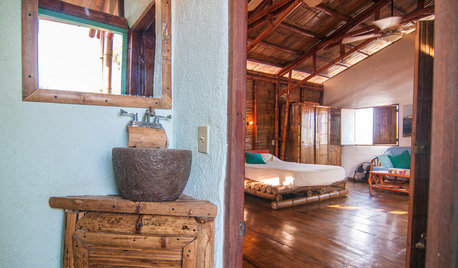
    A10) on my email signature, besides RA ( registered architect) .. i have ‘KUBE green” ... because we believe all our projects are as green as we can make them within the budget and wishes of the client ... so for any one of our projects we can list a series of “green” items or issues .... latest house, believe it or not is green because of bamboo floors...tons of natural light- LED lighting - cross ventilation - no-voc paint - and so on ....
  • PRO
    13 years ago
    A9) the key is to produce a design that is "flexible", so that if the current budget will not allow all the "bells and whistles", that at the very least, systems can be expanded or added to later for low cost. Not always the case, but this is where an experience architect, design-build team will help guide the client through the process and still achieve many of the initial goals, if not all.
  • PRO
    13 years ago
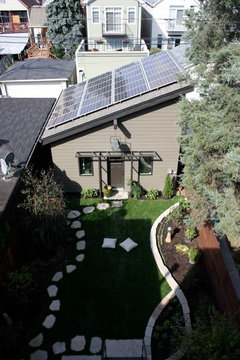
    A10) My favorite green project is, of course, our next one ; ) However, there are two. The Net Zero home in Chicago that we just finished features an enormous array of solar panels for generating electricity, more than enough to provide power for the house on an annual basis, plus partially charge their electric car. The interior materials that were used are really great. I’ll be posting final photos of that in a week or two once the photos are back from the photographer.

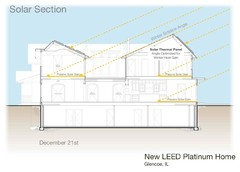
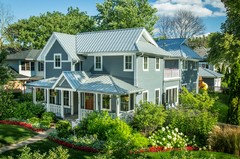
    The other is our LEED Platinum home that we did in Glencoe. The entire roof is designed to do many things. It is asymmetrically arranged to funnel storm water onto the green roof and down to rain barrels below. It therefore has two distinct roof angles for solar panels, one set steeper for solar thermal panels to be efficient with the low winter sun, and the other a shallower section of roof for the solar PV panels to maximize there electric production in the middle of summer to reduce peak power demands. There is also a section of the roof for natural ventilation. The void in the middle of the roof is the green roof that is actually at a location that can be viewed by the people in the building - its not at an inaccessible location that can’t be seen.


    Like all of our green homes, it not just about the performance, but the integration of the green elements into a holistic design - High Design/Low Carbon™!
  • PRO
    13 years ago
    last modified: 13 years ago
    A10) This was probably my most recent favorite.
  • PRO
    13 years ago
    @watermark...agree..cant stress enough flexability ... in design..in green-issues- in function ...
  • PRO
    13 years ago
    last modified: 13 years ago
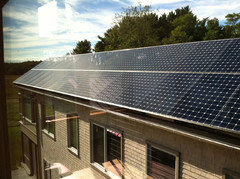
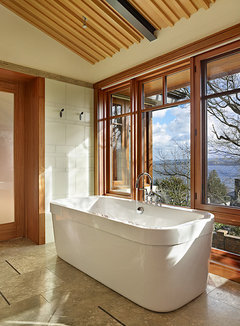
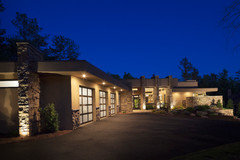
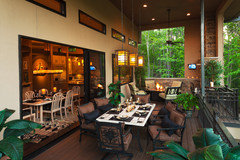
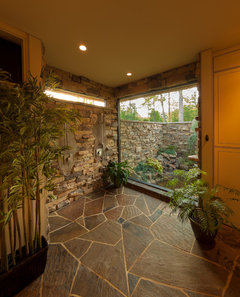
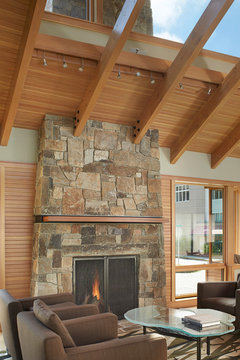
    A10) Here is the interior of the home we did in Sturgeon Bay, Wisconsin.
  • 13 years ago
    Awesome chat, everyone! Lots of useful information. :) I hope everyone enjoyed today's chat, and a big thank you to the Pros for participating! I'll see you all next week for another Live Houzz Chat! ;)
  • PRO
    13 years ago
    last modified: 13 years ago
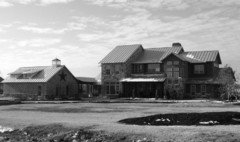
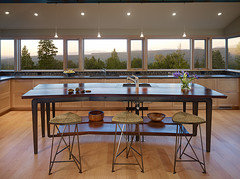
    A10) (Older PIC) - This 4,700sf AC area home in north Dallas generates an electric bill that is half the cost of the other neighboring smaller homes built by so-called "custom" builders. This homes efficiency is attributed to the many systems that work in concert with one another.
  • PRO
    13 years ago
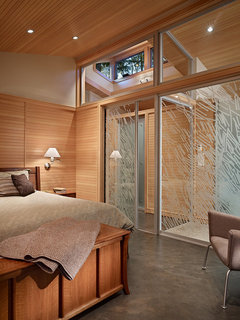
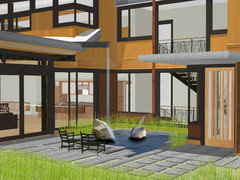
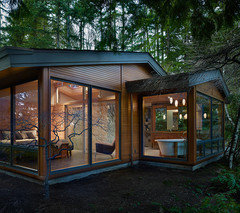
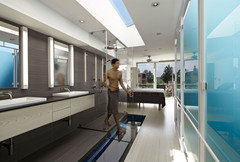
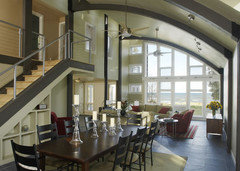
    A10) All our projects are designed to be sustainable from the start. We do not “add it in.” I have attached some examples.

    1. Port Ludlow
    2. Lake Forest Park
    3. Dorffel
    4. CS Reading Room
    5. SKLI Max LED fused glass light fixture
    6. Fall City Renovation

    I have been practicing sustainable design for thirty years. Natural light and natural ventilation are both critical; we always insulate about 50% more than code requires; we use highly sustainable, natural materials; and we design and detail our houses to last for many, many years.

    Sustainable design is not simply creating a laundry-list of green materials; rather, it is creating enduring building form and construction with appropriate long life-cycle, low-energy consuming materials.
    Many of our projects also include active systems such as ground source geothermal heat exchangers and photovoltaic panels.

    For more information on our “Smart Sustainable” approach, see:
    http://www.finne.com/smart_sustainable/
  • PRO
    13 years ago
    thanks all...i learned a lot today! ;) rich
    Jeannie Nguyen thanked KUBE architecture
  • PRO
    13 years ago
    Great conversation everyone!!
    Jeannie Nguyen thanked KDH Residential Designs
  • PRO
    13 years ago
    thank you, Jeannie, for inviting me to participate today....this was great fun!
    --Nils
    Jeannie Nguyen thanked FINNE Architects
  • PRO
    13 years ago
    @FINNE - I agree... it's not "added"... it's part of the design... from the very start of programming and onward.
  • 13 years ago
    Oh, and you may all speak freely now. :P
  • PRO
    13 years ago
    Thank you Jeannie
  • PRO
    13 years ago
    Thanks for the talk Jeannie!
    Jeannie Nguyen thanked WaterMark design.build.remodel
  • PRO
    13 years ago
    If you'd like to learn how Dura Supreme Cabinetry works with sustainability go to:
    http://www.durasupreme.com/sustainability

    Also when choosing cabinetry, choose Sustainable Materials like Lyptus or Bamboo...
    http://www.durasupreme.com/sustainability/sustainable-materials
  • 13 years ago
    last modified: 13 years ago
    @Dura Cabinetry - As a tree farmer with an American Tree Farm System Sustainable Yield Certification, and speaking as both a forest steward and green building enthusiast (currently with two strawbale insulated post & beam dwellings under construction using 90% onsite materials including clay/soil based plaster), I would disagree with the narrow assessment of what is sustainable cabinet material (citing of lyptus or bamboo). From our own forest we sustainably harvest Douglas Fir, Cedar, Hemlock, Birch, several varieties of Pine, Grand Fir and more. And if our dimensioned lumber is used locally, there's next to no embodied energy (versus FSC plantation grown bamboo or Brazilian lyptus) for the transport or extraction. Since this is a thread dedicated to Green/Sustainable building, it had to be respectfully included.
  • PRO
    13 years ago
    We often use locally produced Douglas Fir and Cedar (Seattle-area), and can avoid the 15% extra cost usually associated with FSC certification.
  • 12 years ago
    I would like to see more Adobe, rammed earth or natural stone, Wood should be limited to reused surplus, http://sustainablesolutionstoday.blogspot.com
  • 12 years ago
    @Sustainablesolutionstoday: I must respectfully disagree with your assertion that only recycled wood should be used. Not true. Fact is, when harvested, milled and used locally, lumber that originates in an American Tree Farm System (ATF) or SFI (Sustainable Forest Initiative) certified sustainable yield forest IS every bit as green as what you suggest. And often, new wood (grown, harvested and used locally) is MORE environmentally respectful.

    I cringe when I see someone on the West Coast singing praises (as if GREEN) because their new exposed timbers were salvaged from an old pier in the Great Lakes or another highly remote location (from their home). The energy to extract and transport can trump the benefit of the timbers being re-used. That's unless they were re-used LOCALLY.
  • 12 years ago
    When you did not have mills, saws and trucks, California was built with adobe. Never hot or cold.
  • 12 years ago
    Find good homes at greenbuilders.com
  • 12 years ago
    These days, staying in green living environment is very beneficial. Living in natural, energy-efficient and healthier homes will definitely attract anyone towards it. By seeing great demand of such homes, renowned firms like http://www.albanesebuilders.com/green-builders.php and others continuously work on this theme that helps people in both financial incentives and lifestyle benefits too.
  • PRO
    9 years ago
    I thought this was a good discussion, and I wanted to get in going again. You should purchase organic bedding. You spend about a third of your day in bed.
    You want it to be a happy and healthy place to be.