
Search results for "Extracts" in Home Design Ideas




 DAS Studio
Photos: DAS Studio;
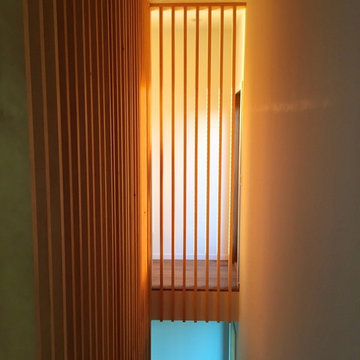
Open staircase. The railing is created from vertical wood slats continuing from the first floor to the ceiling of the second floor.
Find the right local pro for your project

 The Artists Hands - Faux Finishes
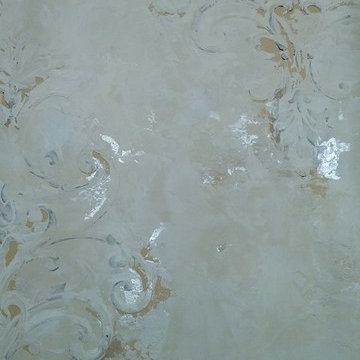
Our soft, subtle multi layered plaster finish provided a beautiful backdrop to this stunning powder bathroom. Copyright © 2016 The Artists Hands
Bathroom - large shabby-chic style 3/4 multicolored tile and porcelain tile porcelain tile bathroom idea in Houston with an undermount sink, marble countertops, a two-piece toilet, multicolored walls, furniture-like cabinets and white cabinets
Bathroom - large shabby-chic style 3/4 multicolored tile and porcelain tile porcelain tile bathroom idea in Houston with an undermount sink, marble countertops, a two-piece toilet, multicolored walls, furniture-like cabinets and white cabinets
 JM Carpets
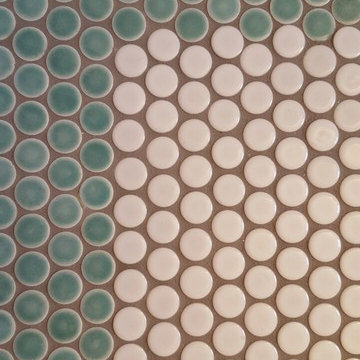
Example of a mid-sized transitional 3/4 mosaic tile floor bathroom design in Milwaukee with shaker cabinets, white cabinets and yellow walls

 Betty Wasserman Art & Interiors: The Hamptons
A large 2 bedroom, 2.5 bath home in New York City’s High Line area exhibits artisanal, custom furnishings throughout, creating a Mid-Century Modern look to the space. Also inspired by nature, we incorporated warm sunset hues of orange, burgundy, and red throughout the living area and tranquil blue, navy, and gray in the bedrooms. Stunning woodwork, unique artwork, and exquisite lighting can be found throughout this home, making every detail in this home add a special and customized look.
The bathrooms showcase gorgeous marble walls which contrast with the dark chevron floor tiles, gold finishes, and espresso woods.
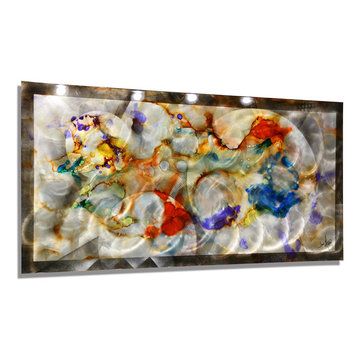
 Jon Allen Fine Metal Art
'Rhythm' by Jon Allen is a stunning hand-painted piece on aluminum. This highly reflective abstract metal wall art will complement any contemporary or modern, decor.
Number of Pieces: 1
Dimensions: 48" x 24" x 1.5" off the wall
Care & Cleaning: Clean with a soft cloth and plain soap & water
Other Features: Hardware is pre-installed for simple hanging
 Raina Henderson Interior Design, LLC
Alex Strazzanti
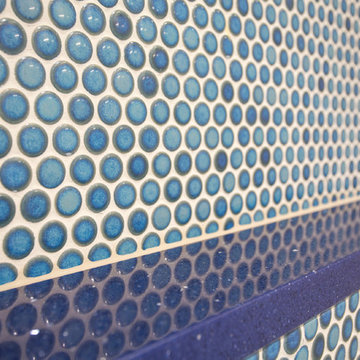
Wet room - small modern master blue tile and porcelain tile porcelain tile wet room idea in Seattle with shaker cabinets, gray cabinets, a two-piece toilet, gray walls, an undermount sink and quartzite countertops
Wet room - small modern master blue tile and porcelain tile porcelain tile wet room idea in Seattle with shaker cabinets, gray cabinets, a two-piece toilet, gray walls, an undermount sink and quartzite countertops

 gardenaar
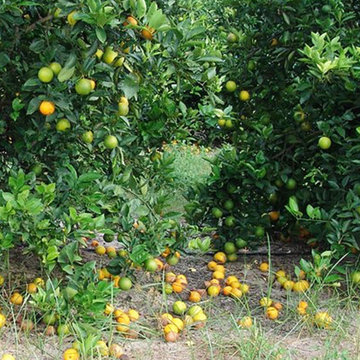
Does your orange tree drop its fruit before it reaches full size, or worse, does it drop flowers before the fruit starts to form?
Trees photosynthesize to produce carbohydrates like sugar which they store as a source of energy. They can maintain a limited amount, which is used to drive the growth of new leaves, branches, roots and stem. Fruitfulness requires the tree to divert its limited energy sources away from these vital functions to the production of flowers, blossoms and fruits.
Fruit development involves maturity followed by fertilization, growth, maturity and maturity. This process takes between 6-7 months in warmer climates, which requires a large number of tree energy sources as a result.
Trees are able to manage their resources, and will also divert them to emergencies ...
Fruit Drop and Crop Depression
In regions where oranges produce one crop per year, they go through a series of growth stages as follows:
Sprout formation and flower launching (mid-winter)
Flowers and fruit set (early spring)
Fruit growth - cell division (late spring to early summer)
Fruit growth - cell proliferation (mid-summer to early autumn)
Fruit ripening (autumn to late winter)
The difference is in the regions where most citrus crops are produced year-round. In these cases, the different stages of development will take place simultaneously.
The orange tree can handle its plant load well, and it will bear as much fruit as we can support. It is natural for all citrus trees to produce too little fruit and too little flowers in early spring to prevent overproduction. There is no need to worry too much about flowering, as an orange tree needs only 1% to 2% of flowers to produce a good crop, and sometimes even less than 1% is enough.
If a tree is depressed because it does not get enough water in hot, dry weather, and if it dies of nitrogen starvation because it is not given enough fertilizer, fruit set will be very difficult in the spring. There may also be a small number of fruit losses in the summer under stressful conditions.
Solution: Provide enough water, and water often in hot weather and strong winds. Orange feed with moderate fertilizer in early spring (September in Southern hemisphere, March in the Northern Hemisphere)
Fruit Drop and Lack of Potassium Nutrient
When orange trees are heavy, the decline in fruit can be exacerbated by low potassium levels.
Potassium, also known as potash (represented by the chemical mark K on fertilizer labels meaning N-P-K or nitrogen-phosphorus-potassium ratio) is a major macronutrient needed for flowering and fruit formation. Next to nitrogen, plants absorb more potassium than any other nutrient. Without potassium, the trees stop flowering and fruiting, which is what happens if they are not fed regularly.
Before any smug horticulturist declares to you that potassium has no direct effect on flowering and fruit set, let me say that as a horticulturist and biochemist, plant chemistry, like the chemistry of all living things is complex, but some input it is necessary to produce certain results. , and the references I have made to the end of this article support what I am saying!
Entering science, Potassium (K) is essential for water, nutrients and the movement of carbohydrates in plant tissues. It also activates enzymes that facilitate the synthesis of complex chemicals within the plant - such as starch, protein and adenosine triphosphate (ATP) production. The role of ATP is to transport the energy needed for all cellular metabolic activities to all living things, and in plants ATP production can regulate the level of photosynthesis.
Potassium also helps regulate the opening and closing of stomata, holes or cavities under which oxygen and carbon dioxide are exchanged with the atmosphere, and respiratory losses are controlled. It increases root growth which increases the absorption of nutrients and improves drought resistance, and increases resistance to frost, pests and diseases. High potassium levels produce similar maturity and fruit growth rate, as well as better nutritional quality, taste and range.
Agricultural extension agencies suggest that large amounts of potash are needed in many crops, and that potassium deficiency or macronutrient deficiency leads to reduced crop growth and reduced yields, and that potassium levels not only affect yield, but fruit size, juice. quality and shelf life.
Since potassium plays an important role in water regulation, deficiency can clearly increase the pressures associated with the declining fruit mentioned in the previous section.
Solution: Make sure that the orange trees are fertilized with the right fertilizer as previously discussed. Extra potassium can be brought in using seaweed extract (which is not a fertilizer but contains a good amount of potassium), wood ash (used in small quantities only as it is very alkaline), or potash sulphate (potassium sulphate) - all this is guaranteed. as acceptable in a natural garden.
Never use potassium chloride as it can be harmful to plants, it is a very inexpensive alternative to fertilizer manufacturers to save money!
Even if there are sufficient levels of potassium in the soil, it may not be accessible to plants, unless we make some improvements.



 Rhodes Architecture + Light
Exterior forms are emphasized with glass and fiber-cement panels at the top level, soaring over and sheltering containers clad in tougher, leathery Corten Steel at the ground level. Exposed concrete walls and rock-filled gabion retaining was selected to anchor the partially day-lighted basement level and garages to the land. Materials were chosen to be low-maintenance, relatively inexpensive, and to contrast the volumes that express the interior spaces.
 VEAinterior
aluysia
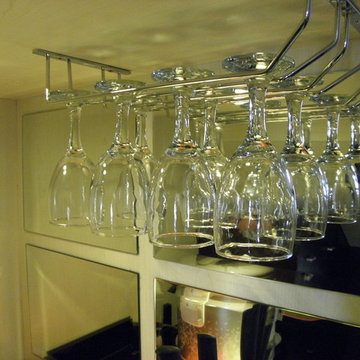
Example of a small minimalist l-shaped ceramic tile kitchen pantry design with a single-bowl sink, flat-panel cabinets, dark wood cabinets, granite countertops, metallic backsplash, mirror backsplash and stainless steel appliances
Example of a small minimalist l-shaped ceramic tile kitchen pantry design with a single-bowl sink, flat-panel cabinets, dark wood cabinets, granite countertops, metallic backsplash, mirror backsplash and stainless steel appliances
 User
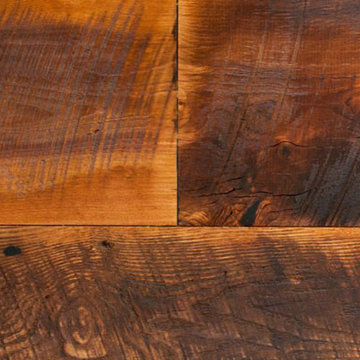
UserJewett Farms + Co’s Reclaimed Antique Historic Wide Plank flooring is harvested from century old barns and wooden industrial structures. Antique historic plank truly captures the feel of reclaimed flooring material. With a rich mixture of hardwoods these boards are wonderfully eye catching and make for a unique floor, wall or ceiling solution.
Our Reclaimed Antique Historic Plank flooring features a blend of band and circular saw marks and the marks of many years of use. The blend of species results in a rich mixture of grain and varied light and dark colors. These characteristics are seen in addition to the more common reclaimed traits of sound knots, cracks, saw kerfs, insect marks and nail holes.
Jewett Farms + Co’s Reclaimed Antique Historic Wide Plank flooring is available to be shipped throughout the United States from our New England headquarters.




 JAUREGUI Architecture Interiors Construction
Piston Design
Inspiration for a transitional staircase remodel in Houston
Inspiration for a transitional staircase remodel in Houston

37