
Search results for "Frequency" in Home Design Ideas

 NILES
NILESThis 2022 project was a fully custom mix and writing suite designed for multi-Grammy and Dove Award–winning producer and songwriter Kyle Lee. The goal was to create an environment that mirrors his creative workflow—quiet, natural, highly accurate, and intentionally crafted for long sessions of collaboration and focused work.
The layout is compact but feels open thanks to high ceilings, soft daylight from the surrounding windows, and a palette of warm textures and natural materials. The room maintains a clean, grounded aesthetic without sacrificing technical performance, balancing style and acoustical precision in a way that supports both creativity and accuracy.
Acoustic isolation was a core priority. The suite is fully separated from the rest of the home using sound-reducing wall assemblies, custom bass management including a full soft-ceiling trap and a false rear wall trap, and full-lite doors designed for controlled leakage. The result is a private, self-contained environment that integrates seamlessly with the home’s flow yet transforms into a focused creative space the moment the doors close.
Monitoring was built around Kyle’s preferred ATC SCM45A loudspeakers, paired with Dynaudio subwoofers and calibrated specifically to the room’s frequency response. Every treatment, material, and speaker position was selected to ensure what Kyle hears while mixing precisely translates to the final master.
The finished suite delivers an effortless feel with professional-grade performance—an inspiring, accurate, and dependable space built to support Kyle’s work at the highest level.

 amore beaute
CLICK HERE TO VISIT OUR ONLINE STORE
https://casaamore-international.com/products/400tc-cotton-blend-duvet-cover-with-two-shams
Luxury hybrid cotton and polyester blend duvet cover with two shams. The low wrinkle duvet cover set has convenient zipper closure. The fabric is 55% cotton and 45% polyester that gives it a smooth feel, easy to wash and iron and high durability. The duvet cover set is perfect for high frequency washes and low maintenance as it does not wrinkle easily.
 Diamond Case Designs
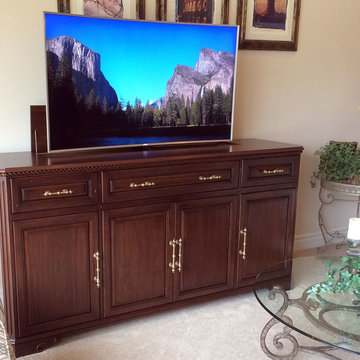
This cabinet is in our Phoenix series of motorized TV lift cabinets. It was designed to accommodate a Samsung 65" Curved Ultra 4K HDTV television. In addition to the TV the furniture housed a Sonos PlayBar, Samsung Blu-Ray DVD player, and Cable box. The electronics were hidden inside the furniture yet fully operational through the use of a color screen radio frequency remote control.
Steve Hartfelder
Find the right local pro for your project
 Lighting EVER
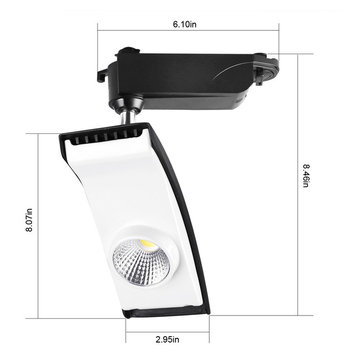
High CRI. CRI is over 95, R9>85.
More vivid and natural lighting.
Save electricity bill.
Replace 100W halogen bulb by 15W LED track light. Save over 85% on electricity bill of lighting.
Ideal for accent lighting applications.
Beam angle is 30 degrees. Narrow spot beam.
Flexible to use. Adjustable spot head.
Reduce re-lamp frequency.
Life expectancy is over 50000 hrs. Save effort and maintenance costs on changing lights frequently.
Instant full light. The starting time is less than 0.5 s, no need to wait for warming up the lamp.
Eco-Friendly. No lead or mercury.
Solid State. Shockproof and vibration proof.
No Hazardous Emissions. No UV or IR Radiation.
Accessories optional (not included)
3 Wire Track Lighting. Please search '5000061'.

 Laughing Waters, Inc
The customers desired a secluded environment for retreat at the end of a long workday. The project began with stone selection. We desired an organic stone that would age beautifully over time, and shape the walls and features of the space.
Our team faced major logistics challenges throughout the project. The wooded property sloped away from the house dramatically making difficulty bringing in large materials and machinery needed to complete the job. Tree protection and a temporary road were constructed for the duration of the project.
Stone placement was key to success for this project. We hand-selected each boulder for the project and assembled the stones by similar grain patterns and colors to create authenticity. The idea was to give the illusion that these natural limestone formations existed on the property before the home and landscaping was created adding a great mystery to the overall feature.
The viewer is surrounded by large stone walls with cascades of water that have shaped the stone over time. The viewer is given the illusion that the source of water comes from the distance of the property and cascades into a secluded area. We designed an underground cistern to hold rain water run-off allowing the water feature to naturally filter the water for re-use.
The pump system is run on a Variable Frequency Drive for programmable automation, allowing the customer to run the waterfall at different flow rates at different times of day allowing for operation cost savings, and low energy consumption.
Linda Oyama Bryan
 CLOSET FURNISHINGS & CABINETRY
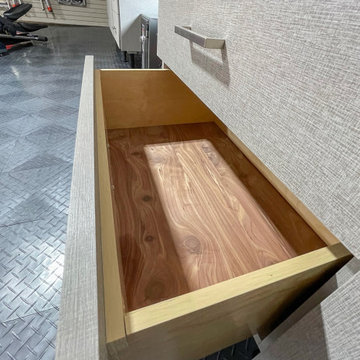
Complete makeover of concrete masonry unit space with center floor drain presenting cracked and sprawled concrete.
Project required thin coat of polymer added concrete surface repair, three push peers to stabilize south east corner of masonry wall on bedrock and new windows. Makeover includes taupe HandiWall wall, matching taupe paint to ceiling, frequency cabinet material, 11 foot long one-piece maple butcher block top, over counter flush mounted LED lighting and snap down floor with diamond pattern tiles on perimeter and free flow open weave tiles in center for snow melting and water runoff of cars to drain under floor while top surface stays clean and dry. One piece pulled down screen retractable door by advance screen works.
 Vox Audio Visual Elite Services
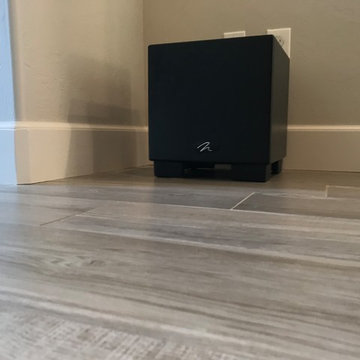
Corner installed subwoofer for playback of bass/low frequency sounds in A/V System
Inspiration for a modern open concept living room remodel in Oklahoma City with a wall-mounted tv
Inspiration for a modern open concept living room remodel in Oklahoma City with a wall-mounted tv
 Planika Fires
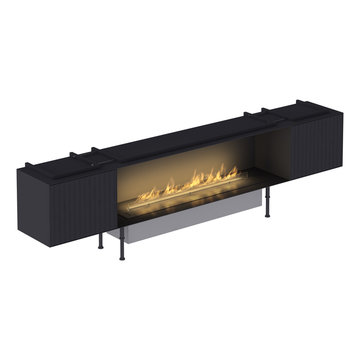
FLA XT is a fully automatic bio fireplace equipped with an external fuel tank and a control panel. It emits no smell and no smoke. The fireplace can be operated with a single remote control or mobile devices. Connected to any given Smart Home System installation, FLA XT allows the customers simple use and gives unlimited control.
FLA XT in a stylish black colour fits both modern and classic interiors. Its external fuel tank is hidden in the tailored BOX XT and can be easily pulled-out for replacement or refuelling. This efficient solution reduces the frequency of refuelling and significantly elongates the burning time

 User
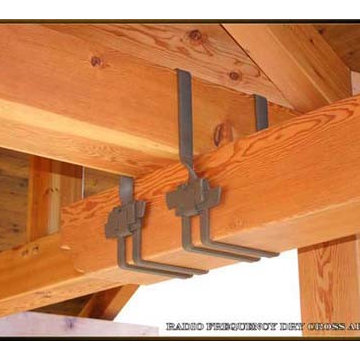
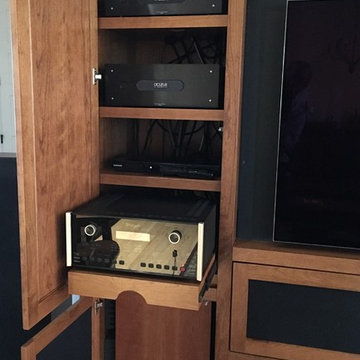
UserAnother view of the audio/ video gear area with adjustable shelving and the rollout tray for the McIntosh preamp/ processor that allows easier access for gear changes or repairs.
The down-firing subwoofer is below and mounted on an Auralex Subdude isolation platform to minimize interaction with the cabinet. Sub area also includes extensive acoustic foam for minimum cabinet reflection and better low frequency clarity.
In front of the sub is an air intake for max airflow to the gear cooling fans below the rollout tray. Warm air from the gear is routed through the top of the cabinet via a hidden vent behind the upper shelves.

 Ladd Suydam Contracting, LLC
Ladd Suydam Contracting, LLC
Inspiration for a timeless exterior home remodel in St Louis
Inspiration for a timeless exterior home remodel in St Louis
 NILES
NILESThis 2022 project was a fully custom mix and writing suite designed for multi-Grammy and Dove Award–winning producer and songwriter Kyle Lee. The goal was to create an environment that mirrors his creative workflow—quiet, natural, highly accurate, and intentionally crafted for long sessions of collaboration and focused work.
The layout is compact but feels open thanks to high ceilings, soft daylight from the surrounding windows, and a palette of warm textures and natural materials. The room maintains a clean, grounded aesthetic without sacrificing technical performance, balancing style and acoustical precision in a way that supports both creativity and accuracy.
Acoustic isolation was a core priority. The suite is fully separated from the rest of the home using sound-reducing wall assemblies, custom bass management including a full soft-ceiling trap and a false rear wall trap, and full-lite doors designed for controlled leakage. The result is a private, self-contained environment that integrates seamlessly with the home’s flow yet transforms into a focused creative space the moment the doors close.
Monitoring was built around Kyle’s preferred ATC SCM45A loudspeakers, paired with Dynaudio subwoofers and calibrated specifically to the room’s frequency response. Every treatment, material, and speaker position was selected to ensure what Kyle hears while mixing precisely translates to the final master.
The finished suite delivers an effortless feel with professional-grade performance—an inspiring, accurate, and dependable space built to support Kyle’s work at the highest level.
 Alberghini Architect Inc.
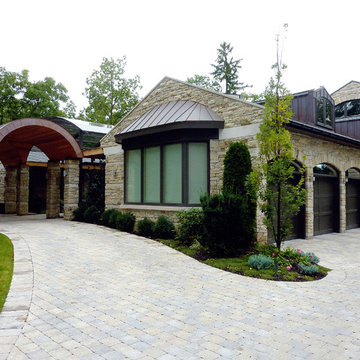
This private residence in Toronto has the distinction of being the first building in North America to be conceived and built from the ground up using the principles of BioGeometry®.
Built to the highest standards, it is a true “green” building, green in the context of being true to nature and sensitive to Earth’s demands. The application of BioGeometry® has created a habitat that promotes a frequency of optimum health and well-being for the occupants.
Blending with the neighbouring houses (as required by the Building Department) and built with natural materials, this home is a beacon of health, affecting the surrounding neighbourhood. The BioGeometric principles used in the design and construction allow the house to have a positive effect on pollution and on any deleterious EMF emissions caused by high-tension wires and cellphone towers.
 Fireclay Tile
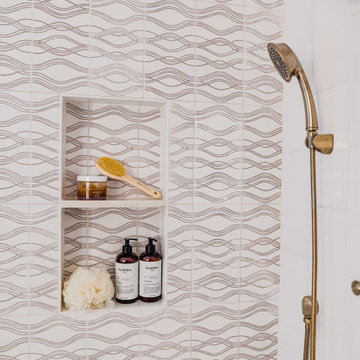
Find your flow in this contemporary custom shower. Handpainted Ripple Tile in Neutral Motif draws calming waves across the walls and built-in niche of this shower with a frequency that lets you turn down the volume on the world outside.
DESIGN
Stonewood Kitchen and Bath
PHOTOS
Megan Gery
TILE SHOWN
Hand-painted Ripple in Neutral Motif
 DL Solutions inc.
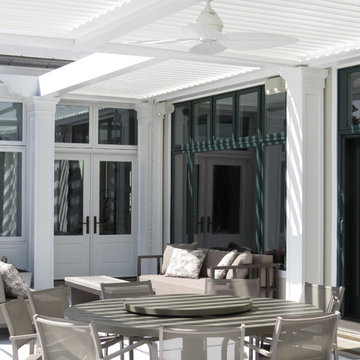
DL solutions inc. managed the design and installation of a motorized louvered roof system within a newly constructed pergola. Working with the contractor for the pergola throughout its design and construction, we were able to ensure compatibility with the louvered roof system. The finished product has exterior powder coated, operable louvers to block or expose sun as desired, and also provides protection against rain; all controlled via keypad and a radio frequency remote.
 Bravas Minnesota
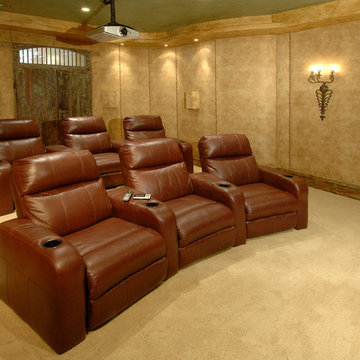
This a room that really flows and was created on a very strict budget. The soffit and walls combine to deflect acoustic standing waves while upholstery over 1" high density foam absorbs first reflections at higher frequencies. Acoustically matched towers and hidden in-wall center speaker match perfectly to the faux painted surrounds while tiered seating provides a great picture for the entire audience.
 safe ZOnea
Every year, the same thing happens. The first real snowfall arrives, demand for de-icing materials spikes overnight, and the businesses that waited too long find themselves scrambling for supply at the worst possible moment. Facility managers, property owners, contractors, and municipalities all depend on a steady supply of salt and ice melt to keep their properties safe and operational through winter. The ones who plan ahead sail through. The ones who don't pay more, wait longer, and take on real risk.
Sourcing de-icing materials well is not complicated, but it does require thinking ahead and understanding the options. The choices you make about what to buy, how to buy it, and who to buy it from have a direct effect on your costs, your reliability, and your ability to keep people safe when conditions turn dangerous. This article lays out what matters.
Why Your Choice of Supplier Matters More Than You Think
It is easy to treat de-icing material as a commodity, something you grab whenever you need it without much thought about where it comes from. That works fine until the moment it doesn't, usually in the middle of a storm when everyone needs supply at once and the casual sources have run dry. At that point, the relationships you built before the season become the difference between staying stocked and being stuck.
Reliable supply is the whole game in winter operations. A property that runs out of ice melt during a storm faces safety hazards, liability exposure, and disruption, none of which can wait for a back-ordered shipment. This is why establishing relationships with dependable rock salt suppliers before the season starts is one of the smartest moves a facility manager or contractor can make. It locks in supply, often locks in better pricing, and removes a major source of mid-winter stress.
The lesson here is to treat sourcing as a planning decision rather than a last-minute errand. The businesses that come through winter smoothly are almost always the ones that secured their supply chain early, chose suppliers who could actually deliver when it counted, and never had to gamble on finding material during a shortage. Reliability bought in advance is far cheaper than scarcity paid for in a crisis.
Bagged or Bulk: Matching the Material to the Job
One of the first practical decisions is whether to buy de-icing material in bags or in bulk, and the right answer depends entirely on the operation. Each format has clear advantages, and many operations end up using both for different purposes.
Bagged material offers convenience, control, and easy storage. It is simple to handle, easy to distribute to different locations or crews, straightforward to store without special equipment, and convenient for spot application by hand. It suits smaller properties, businesses without bulk storage, and situations where portion control and tidiness matter. Bulk material, on the other hand, tends to make sense for large operations that go through high volumes, where buying in quantity lowers the per-unit cost and the operation has the equipment and space to store and handle it. The tradeoff is between the convenience and flexibility of bags and the volume economics of bulk.
For many operations, the right approach is a mix: bulk for the high-volume core of the work and bags for flexibility, spot treatment, and locations where bulk handling is impractical. The key is to match the format to how the material will actually be stored, moved, and applied, rather than defaulting to one or the other out of habit. Thinking this through in advance avoids both the waste of over-buying bulk you can't handle and the expense of relying entirely on bags for a large operation.
Rock Salt Is Not Your Only Option
Rock salt, or sodium chloride, is the workhorse of winter de-icing for good reason. It is effective, widely available, and cost-efficient, which makes it the default choice for most operations most of the time. But it has limits, and understanding the alternatives helps you choose the right material for the conditions you actually face.
The most important limitation is temperature. Rock salt becomes less effective as temperatures drop, and in genuinely cold conditions it can struggle to do the job at all. This is where alternatives come in. Calcium chloride, for instance, works at much lower temperatures than rock salt and acts quickly, which makes it valuable when conditions are severe or when fast melting matters. Operations that face hard freezes or need dependable performance in extreme cold often keep calcium chloride for sale on hand for exactly those situations, using it alongside rock salt rather than instead of it.
The practical approach is to understand the conditions your property faces and stock accordingly. For many operations, rock salt handles the bulk of the work while a faster, colder-rated material like calcium chloride covers the extreme days when ordinary salt falls short. Matching the material to the temperature and the urgency of the situation is what separates an operation that stays ahead of winter from one that is constantly reacting to it.
Securing Your Supply Before the Season
Knowing what to buy is only half the equation. The other half is making sure you can actually get it when you need it, which means securing your supply before winter arrives rather than after it has already started. Timing is one of the most underrated factors in winter operations.
The logic is simple. Demand for de-icing materials is highly seasonal and spikes sharply during storms, when everyone needs supply simultaneously. Prices and availability both move against the buyer at exactly those moments. By contrast, planning ahead, estimating your needs and arranging supply before the season, puts you in a far stronger position. Working with established rock salt suppliers ahead of time means your material is accounted for before the rush, often at better pricing and with the confidence that it will be there when the first storm hits.
This kind of planning also lets you think clearly rather than react under pressure. You can estimate your seasonal needs based on your property and past winters, decide on the right mix of materials and formats, and arrange storage in advance. Operations that do this consistently spend less, worry less, and never find themselves making frantic calls during a storm. The effort of planning ahead is modest, and the payoff in reliability and cost savings is substantial.
Storing and Handling What You Buy
Securing supply is not much use if the material degrades before you can use it, which makes proper storage and handling an important and often overlooked part of the equation. De-icing materials are sensitive to moisture, and poor storage can turn a good supply into a clumped, hardened mess that is difficult to apply.
The fundamentals are straightforward. Keep material dry and protected from moisture, since salt and ice melt readily absorb water and can harden if exposed. Store it in a way that suits the format, whether that means a proper bulk storage area or a dry space for stacked bags. Keep it accessible, so crews can get to it quickly when a storm hits and time is short. And handle it with the right equipment for the format and volume, which protects both the material and the people working with it. None of this is complicated, but neglecting it can undermine even a well-planned supply.
Good storage practices protect the investment you made in securing supply early. There is little point in arranging your materials ahead of the season only to have them degrade before use. Treating storage and handling as part of the overall plan, rather than an afterthought, ensures that the material you secured is actually usable when the moment comes. It is the final link in a supply chain built to perform under winter conditions.
Estimating How Much You Actually Need
One question trips up operations of every size: how much de-icing material to buy. Order too little and you risk running short during a storm. Order too much and you tie up money and storage space in material you may not use. Getting the estimate reasonably right is a meaningful part of sourcing well.
Several factors shape the answer. The size and type of the areas you treat, sidewalks, lots, entrances, and drive lanes, set the baseline for how much material each application consumes. The local climate matters too, since colder regions and those with frequent snowfall go through far more material than milder ones. Application frequency depends on how often storms hit and how quickly surfaces need to be cleared, which varies with the kind of property and the expectations of the people who use it. And the type of material plays a role, since different products are applied at different rates.
Past experience is often the best guide. Operations that track what they used in previous winters, adjusted for the size of the property and the severity of the season, can estimate their needs with reasonable confidence. For newer operations without that history, it helps to plan conservatively and to work with a supplier who can replenish stock reliably, so that a low estimate does not turn into a mid-storm shortage.
The goal is not perfect precision but a sound, slightly cautious estimate paired with a dependable supply relationship. That combination lets an operation keep enough material on hand to handle the season without over-committing to volume it cannot store or use. Thinking this through before winter, rather than guessing during it, is one more way that planning ahead pays off when the snow starts to fall.
The Bottom Line
Sourcing de-icing materials well comes down to a few straightforward principles: plan ahead, choose reliable suppliers before the season, match your materials and formats to your actual needs and conditions, and store what you buy properly. The operations that follow these principles move through winter with confidence, while those that improvise pay more and take on needless risk.
Winter is predictable in one respect: it arrives every year, and demand for de-icing material spikes the moment it does. The businesses that prepare for that reality, rather than being surprised by it, are the ones that keep their properties safe, their costs controlled, and their operations running no matter what the season throws at them. A little foresight before the first snowfall pays off through every storm that follows.



 HomerWood Premium Hardwood Flooring
Appalachian White Oak is meticulously crafted into quality engineered hardwood floors that are complimented by combining trending matte color choices with a distinct visual style. Our Prime grade White Oak features natural inherent characteristics that we've taken special care to limit the size, amount and frequency to give the floor a cleaner appearance overall. The result is a durable and stylish floor at an affordable price.
 Alberghini Architect Inc.
This private residence in Toronto has the distinction of being the first building in North America to be conceived and built from the ground up using the principles of BioGeometry®.
Built to the highest standards, it is a true “green” building, green in the context of being true to nature and sensitive to Earth’s demands. The application of BioGeometry® has created a habitat that promotes a frequency of optimum health and well-being for the occupants.
Blending with the neighbouring houses (as required by the Building Department) and built with natural materials, this home is a beacon of health, affecting the surrounding neighbourhood. The BioGeometric principles used in the design and construction allow the house to have a positive effect on pollution and on any deleterious EMF emissions caused by high-tension wires and cellphone towers.
15