
Search results for "Remove soil" in Home Design Ideas
 Vinci Design
...Wheelie bin photo bombs me in the wind.
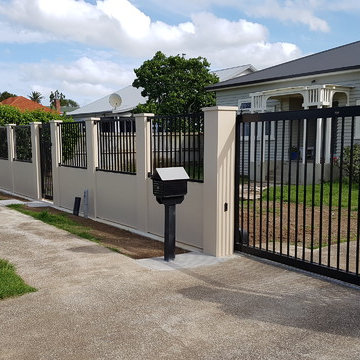
This turned into quite a project when the old fence was removed. The foundations were deep which left us with little soil left for our posts, to start our new fence at our new height, we poured a large foundation with a mowing strip included to tie it all together.
wWth electric sliding Main gate and center Personal gate makes it a very versatile and a great look.
 Evergreen Construction
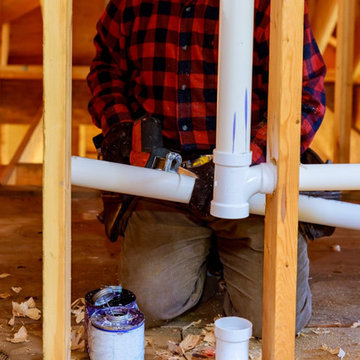
Drainage and erosion management systems play an important role in preserving and safeguarding damage to your home and property. The drainage system's goal is to collect and direct the unwanted amount of water to a suitable location. This will help prevent the landscaping and lawn from being muddy and soggy and remove excessive streams of water during heavy rains that cause erosion of the soil.

 Tellurian Construction
Inspiration for a mid-sized traditional full sun front yard retaining wall landscape in Portland.
Find the right local pro for your project

 Southern Living Plant Collection
Large rose-form flowers are a blend of pinks resembling Camellia japonica flowers. Dark foliage on an upright, dense, conical form. Use as a specimen or intermediate hedge.
FEATURES
Bloom/Feature
Plant Type Shrubs
Evergreen or Deciduous Evergreen
USDA Zones 7, 8, 9
Zone Detail Hardy to 5°F USDA zones 7-9
Key Features
Use
Exposure Full sun to part shade. Best bloom performance in light shade
Bloom Season Blends of pink blooms in the fall
Dimension 4-6 ' H x 3-4' W
Growth Rate Slow to moderate
CARE
Water Regular water
Soil Type Rich, acidic, moist, well-drained soil
Fertilizer Early spring
Pruning Shape in early spring
PLANTING INSTRUCTIONS
• water before planting
• plant in full sun to part shade
• dig hole 3X the width of pot
• backfill and plant 1”-2” above soil level
• water and add more soil if needed
• mulch plants”



 EcoGreen Landscaping
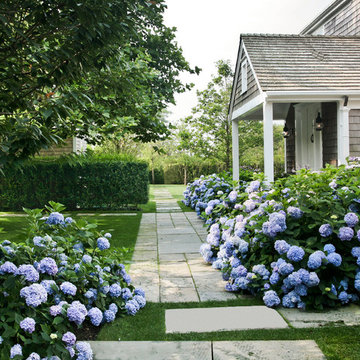
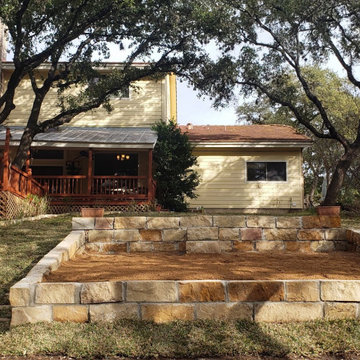
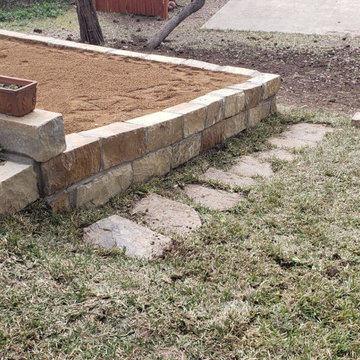
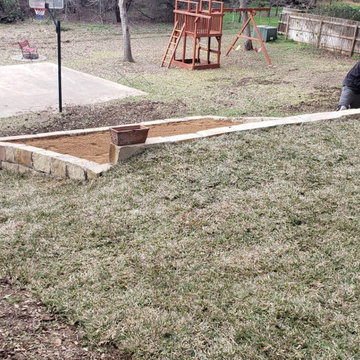
To transform this backyard from weeds to a family-friendly place to relax together, we removed trees and enlarged the usable space. We also brought in better quality soil and re-graded, installed the walkway and patio with fire pit and sitting wall. We finished off with plants and new sod, put in the natural stone walkways, and completed the project with mulch. In addition, during an earlier phase, we installed new plants in the front yard. The owners were so pleased they had this to say “Thank you so much for the awesome job you did. We love it and look forward to making many memories in our new backyard! You rock!”


 Five Star Tree Care
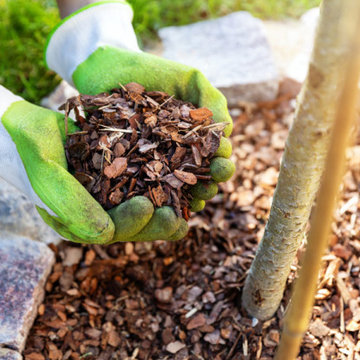
Adding woodchips underneath your trees has many benefits. Some of these benefits include:
-soil moisture retention
-nutrient leaching when decomposing over time
-smother weeds and invasive plants
But before you add any woodchips to your gardens and trees, it’s important to make sure you aerate the root zone. Doing so improves the oxygen supply and leaching to the roots. You will see more growth when there is more oxygen. Our team at Five Star Tree Services has come up with a guide on how you can use woodchips in your gardens.
Where To Place Woodchips
Even though there are many benefits for your trees, there is a right and wrong way to use them. If used incorrectly, you can actually end up hurting your tree instead of helping it. This can happen when there is an excessive amount piled up around a tree, its roots, and the trunk. Woodchips should never touch the trunk of a tree for extended periods of time. What happens is that moisture is retained in the chips and will eventually cause the tree to rot. The end result is death if not caught in time.
An indication of rot and decay is fruiting bodies or mushrooms. It is important to keep an eye out for these indicators by taking a good look at your trees. To avoid this situation, make sure to evenly and carefully spread out the chips around the root zone. Clear any chips away from the trunk by an inch or two.
When applied correctly; you will see your trees thrive and prosper. They will stay healthy and vivacious from the moisture retention and gradual organic leaching.
Soil Compaction
Soil compaction can dramatically affect your trees. This is often an overlooked issue for many landscapers. Due to things like foot traffic, large amounts of rain, construction, and the use of heavy machinery, are all factors that result in soil compaction. Things like water and nutrients can’t saturate through the soil when it becomes too compact. This results in soil that is without minerals and dry. When this happens, tree roots struggle to push through the soil, resulting in stressed trees.
Preventing Soil Compaction
If a tree is left in compacted soil, it will eventually die. One way to avoid this if you are having any construction done in your yard is to set up a Tree Protection Zone, or TPZ. Fences are used to create a barrier where heavy equipment and machinery can’t go in. When heavy machinery is used, this creates extremely compact soil and has been known to crush roots.
How Five Star Tree Services Can Help
Using woodchips is a great way to help your gardens thrive. But it is vitally important to use it properly, otherwise you will end up hurting your trees, instead of helping them. If you require any Richmond Hill Tree Care Services, don’t hesitate to give us at Five Star Tree Services a call at (416) 990-3355!

 Southeast Technical Institute
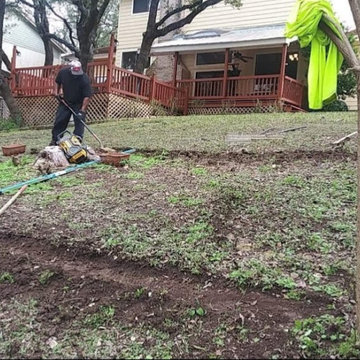
This area used to be a garden, flat, and not landscaped. For the project, we removed the existing plant material, leveled the area, and brought in new soil to build up the center island. The next step was building the small rock wall and placing the plant material and rock. The end product isn't as formal as some projects, it has a rustic charm that is appealing to the eye.


 Barbara Wilson Landscape Architect, LLC
Back yard slope replanted with perennials that could handle shallow soil conditions on top of existing ledge outcropping.
Photo of a large traditional drought-tolerant and partial sun hillside landscaping in New York.
Photo of a large traditional drought-tolerant and partial sun hillside landscaping in New York.
 Homefront Farmers
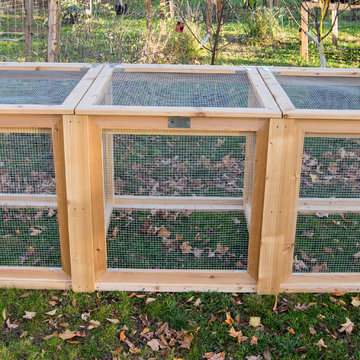
Compost is a natural, long-lasting way to feed your soil, and a wonderfully sustainable way to dispose of kitchen and garden waste. This triple bin is big enough to fit plenty of vegetable scraps as well as lawn clippings and leaves. Bins are made entirely of rot-resistant cedar and enclosed on all sides with sturdy wire mesh that allows air to flow to and through the compost. Removable front panels and hinged lids make for easy access. Systems are available in triple, double, and single bin configurations. Comes with the classic book about composting Let it Rot!: The Gardener's Guide to Composting by Stu Campbell.

 Randy Angell Designs
This organic modern design is built in an area known for having notable issues with ground movement. After speaking with the developer and reviewing the soil report with our Structural Engineer, we made our recommendations to the client.
Since the budget for a full-blown pier and beam structure with void boxes under the pool was well beyond the comfort level of our client, they elected to have us utilize a float shell construction method.
For this, we over-excavated the hole and placed a 12" layer of gravel beneath the shell of the pool. Drain lines lead from the deepest point under the pool down into a culvert, placed off to the side of the pool. A sump pump removes any excess water from the culvert as it accumulates.
For the shell of the pool, we utilized a double matt of steel and increased the wall thickness to a minimum of 12". This gave added strength to withstand the volatile soil.
The elements of fire, water, wood and stone were very important in creating the organic modern feel of this design. The layered effect along the back wall creates a visual stimulation across the length of the yard, without overwhelming the senses.
Rather than creating walls only of hard materials, we used Ipe wood to create horizontal screen walls of a more organic nature. At either end, the raised wall and the fire feature are finished in a large-scale porcelain tile, with the look of stained concrete.
Custom stainless steel scuppers, made by a local fabricator, create a soothing sound of falling water. The low wall at the center of the project is faced in natural ledgestone, and carries a color palette that set the tone for the entire project.
Behind this wall and in front of one of the Ipe screens are three Desert Steel Giant Agave sculptures. The unique fire feature isn't quite a fire place, nor is it a fire pit. It is a linear fire burner, surrounded by a 4" thick cantilevered Leuder limestone hearth, with a backdrop wall of blue glazed clay tile.
Although the pool was initially planned as a plaster pool, as the project began to take shape, the client elected to go all the way and finish it in a beautiful blue glass mosaic.
Custom fabricated stainless steel cannon jets send a delicate arch of water over this deep blue, and draw attention to the three square wok planters on the far side of the yard.
For the decking on this project, we elected to work with Mother Nature rather than against her. Two and a half inch thick concrete pavers, set on a bed of compacted, decomposed granite allow for movement around the pool that is easily fixed. If an area of deck moves around, we can simply lift the affected areas, re-level with DG bed, and re-set the pavers.

 Earth Essence Designs
This is an example of a mid-sized traditional partial sun backyard mulch retaining wall landscape in DC Metro.
 Rain Garden Nursery LandscapeMakeoverDesignStaging
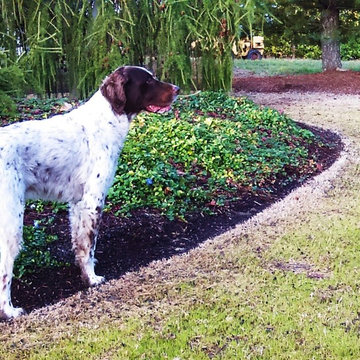
Scott & Catherine Buley, HTT&T, High Tech Turf & Trees, LandscapeMakeover.biz, Rain Garden Nursery. Even this area that was our major pathway to dispose of removed thatch and soil, germinated well. After driving over it no less than 20 times with our compact tractor, we took one last pass with both machines, and it germinated uniformly too.
8