

Does 'Low-E' have to = tinted glass?
Contemplating new windows on this big old house and several companies have showed me their "low-e" windows--but I never realized how "tinted" they look. I just want windows that are as clear as possible--are there any out there or do low-e windows have to look tinted?
Sarah
Comments (171)
 4 years agolast modified: 4 years ago
“I think the "green tint" concerns are mostly overblown. Your experience validates that assertion.”
I really think your statement is very dismissive to those who find the green tint very objectionable (along with the other negative aspects of these windows which make them hard to live with….the high reflectivity as another example). Maybe you are just not that discerning. To to say it is overblown is truly your own personal opinion. For every 100 individuals who are not bothered by it, I can show you 100 that ARE.- 4 years ago
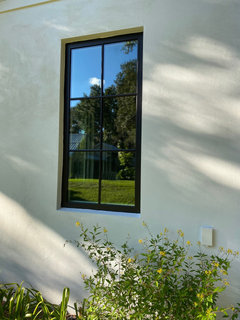
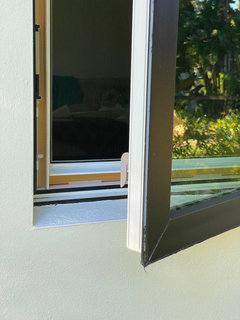
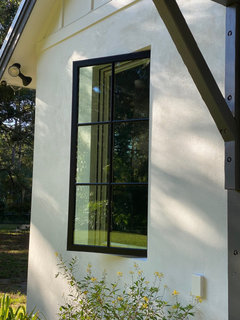
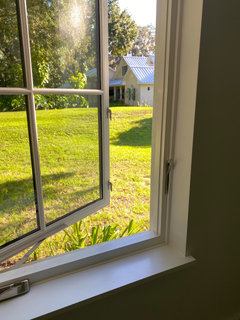
@nidnay - I also was very concerned before building. I drove the neighborhoods and hated the look of the green windows. And I noticed that some house windows seemed more green than others. very green; more so than others. Not sure if there is more noticeable difference with white frames or w different window companies.
I can detect a difference in mine between no glass and glass, but not dramatic.
Related Professionals
Lake City General Contractors · Charleston General Contractors · Youngstown General Contractors · Clearlake General Contractors · Longview General Contractors · Belleville Home Remodeling · Pittsburgh Home Remodeling · Columbia Interior Designers & Decorators · Toms River Interior Designers & Decorators · Cedar Rapids Interior Designers & Decorators · Grand Rapids Interior Designers & Decorators · Rutland Interior Designers & Decorators · Victorville Interior Designers & Decorators · Yakima Interior Designers & Decorators · Cowansville Interior Designers & Decorators- 4 years ago
Even more troubling than the green tint is the fact that it is EXTREMELY difficult to see clearly out of the windows due to the high reflectivity. Some of my rooms have windows on three sides and the glare and reflection is so intense that is impossible to see clearly out the window…..it’s really horrible.
- 4 years agolast modified: 4 years ago
Reflectivity index of clear glass over clear glass IGU is 15% out and 15% in
Reflectivity index of LoE 366 coated glass over clear glass IGU is 11% out and 12% in
The coated glass is less reflective than clear glass
I can detect a difference in mine between no glass and glass, but not dramatic.
Agree and also looking out an open window next to coated glass results in a more dramatic difference than looking through a clear glass IGU and a coated IGU in the same setting, especially when the coated glass is at an angle from the observers perspective rather than looking straight on at the glass.
 PRO4 years ago
Allow me to quote my actual words so that the record can accurately reflect what I actually said.- I think the "green tint" concerns are MOSTLY overblown.
Please note the bolded section that says "mostly". Note, I did not use a descriptor like: entirely, totally, completely, etc.
I said mostly. Which would imply that the majority of folks do NOT find issue with the green tint associated with a properly specified Low-e range. If you will read over my previous posts in this thread, you will note that I have validated the concerns of some posters with regards to tint/hue and stressed that folks look at sample versions of the glass before making a decision. For those that are light and color sensitive, the difference between a 2 and 3 coat Low-e CAN BE enough to aggravate those sensitivities.
As to your assertion of:- For every 100 individuals who are not bothered by it, I can show you 100 that ARE.
That is conjecture and without ANY evidence to back of that statement. Short of your supplying some data to validate that claim, I am going to place that in the "not validated" and "unconfirmed" category. Having done what we do for nearly 20 years, I can tell you that I have personally dealt with clients on this concern on exactly three (3) occasions. Extrapolating that math, that leaves us at about a 5000:1 ratio vs. your claimed ratio of 1:1. I am sure my actual observed and validated ratio of 5000:1 is NOT accurately representative of the number of folks that would have concerns about the tint because we educate and work with our customers on glass selection, however, I can bet you that your claimed and not data validated number of 1:1 is far more inaccurate.
 4 years agolast modified: 4 years ago
@Windows on Washington Ltd What would be your recommendation to me, for the type of Low-E to be used on my Hawaii home ? My home has a 10' long overhang, wrapping evenly around all 4 sides of the home, so ALL of the sliding doors and windows will be shaded. It was designed this way to keep the house cooler and shielded from the rain. I want the most light visibility, because I have spectacular ocean views. Since these are sliding doors, there will always be two panels on top of each other when open, in the line of my ocean view. From reading your comments around this website, it seems you MIGHT recommend to me something like 180 or 272, but I'm also unsure if 180 would even pass the Hawaii code. I have such trouble understanding all of this,.. thank you kindly for reading! :(
- PRO4 years ago
According to this...you are all Cooling Degree Days.
https://www.climate-zone.com/climate/united-states/hawaii/honolulu/
That said, the necessity for passive solar should be next to nil. I would check with your builder on code. Don't do this twice. But I also wouldn't conflate "visibility" with "visible transmittance". The VT number is mostly talking about light and I feel like you are thinking that the Low-e 272 glass is going to be less "clear" than the Low-e 180 coating. Not the case here. Just a few less lumens passing through the glass is all. - 4 years ago
@Windows on Washington Ltd Exactly, that is important to me, too: the lumens. Since I have the 10' shaded overhang over everything (which by default, makes things slightly darker inside), I'd love the greatest amount of lumens coming in as possible with whatever glass I choose.
- PRO4 years ago
So as a comparative, double pane and clear glass is only going to let in about 82% of the light. So a Low-e 272 is only costing you 10% by comparison over clear glass. Now, that said, you can easily sacrifice that 10%, or more, with poor selections in terms of operators and window brands. For example, a well regarded replacement window that is sold at Home Depot, sacrifices at least 10% more light than the brand that we use most often because of the considerably larger frame size. So be cognizant of operator type and brand when you are ultimately wanting the most light you can get.
- 4 years ago
@Windows on Washington Ltd That makes sense. I went to your website and couldn't find a list of brands you sell. I'm looking for aluminum framed sliding windows with narrow sightlines. I'm aware of the uber luxury windows by Vitrocsa, Styline, and Skyframe, and their frames are about 1" thick. Gorgeous. But of course, the prices are as much as my entire home cost. I'm wondering if there's a narrow frame out there, maybe 2" thick, from a more economical standpoint. Milgard and Andersen are thicker than that.
What brands do you sell on your site that have the narrowest frames, could you share?
It's funny because I live in a old, modest beach house in Florida that JUST SO HAPPENS to have come with super narrow 1.5" frames. Even on my 6' x 5' sliding window. The frame is just 1.5" thick. Love it! But the company went out of buisness. - 4 years ago
@millworkman hi! I looked at the 2820 and the 500 series, both are too thick of frames for my sliding windows. I have a feeling I won't find anything around 1-2" sightline unless I cough up the big bucks and go with Vitrocsa or something.
- 3 years ago
Any recommendations for a condo development built in 1999 (no LowE) with individuals replacing their windows? The architectural review committee is trying to halt a checkerboard aethestic that is starting to appear (due to improper approvals and enforcement) since individuals have selected different window manufacturers (green/blue/bronze LowE) and different coating levels of LowE. Since no one must replace windows and many of the originals will not be replaced for a long time, this is a mess. The design committee is tempted to recommend that all must replace their windows with the original non-LowE glass. Anyone else dealing with this in a condo development?
 3 years ago
" The design committee is tempted to recommend that all must replace their windows with the original non-LowE glass "
Most building dept's will not issue permits or CO's without the Low E windows today.- 2 years ago
What do you think of Provia Endure? My rep quoted LowE366 with the standard green tint. We live in Pennsylvania close to Philadelphia. We saw a sample of it in the showroom, but it is hard to tell without the sun hitting it if it will be too green. We can also go with a bronze, gray or blue tint. Would anyone have any pictures of windows with different color tints? Thank you.
- 2 years ago
" My rep quoted LowE366 with the standard green tint. "
Low E 366 does not a have a "green tint". It reads as a slight green hue due to the Low E coating. A green tinted glass is a much darker true tint. Bronze, Gray or Blue would be the same Low E Glass (with the green hue just with the other pane of the IGU a true tinted product). - 2 years ago
Thank you for responding! So, the tint color applied doesn't have anything to do with the appearance of the window color. It will still be the slight green hue you describe when looking from the inside or outside? Maybe we should just go with the "clear" option and not have any tint.
- 2 years ago
In your climate you should consider LoE-270 or LoE-272 (I don't know which one ProVia uses), both are a much more neutral gray hue with slightly higher solar heat gain performance than 366 which would not be a bad thing during PA winter.
millworkman's comment was spot-on. Although there are tinted LowE coatings, 366 is not tinted but it does have a green hue in the right conditions. You don't need "tinted glass"; i.e. bronze, green, gray. but using plain clear glass would provide absolute minimal temperature protection and probably wouldn't meet code.
- PRO2 years ago
Agree. Can't see a rationale for Low-e 366 in your climate. Triple pane...sure. But Low-e 366 in a DP package in PA...definitely not.
- 2 years ago
Thank you Oberon and Windows on Washington for your comments. I found that the glass isn't called Low E366, but here are the energy ratings: ufactor = 0.27, SHGC = 0.21, VT = 0.31, condensation resistance = .60, and air infilltration = <=0.05
- 2 years agolast modified: 2 years ago
LoE 366, 272, and 270 are coating designators specific to Cardinal glass products. ProVia uses a number of different coatings across their various product lines including those mentioned from Cardinal, but also Vitro (SB70), and AGC (CS28 and CS36) and even Pilkington's Energy Advantage, which is a hardcoat (no silver).
LoE-366 is what's known as a triple silver softcoat, but then so are both SB70 and CS28. All triple silver softcoats that I am aware of have a green hue but 366 is visibly the least green of three that I listed that ProVia appears to offer.
And to make things more interesting, three years ago Cardinal acquired AGC's North American assets so that they are now the manufacturer of the CS (Comfort Select) coatings in North America. Unfortunately none of which does anything to actually answer your question.....
The Endure line does offer both 366 and 270 as well as Energy Advantage (apparently on some triples and possibly as a 4th surface coating on some duals as well?), in addition to various tinted options, so if you are thinking Endure line then 270 and 366 could be likely candidates for the window coating options, but impossible to know for sure without more information.
I know this post is confusing and I can't imagine the possible confusion of trying to keep all of these different options straight at ProVia from ordering and scheduling, but especially on the production floor....kinda crazy IMO.
Unfortunately there is no way to even guess what window they are showing you based on the performance values that you listed. One concern that I would have is the really low VT that you posted. That number would make me think triple silver coating with a wide frame and window grids....but again that's conjecture without knowing exactly what window they are suggesting.
- 2 years ago
Thank you Oberon. Yes, it is very confusing when researching all the glass options and I appreciate you understanding that. Here are additional details for the one of the windows. We appreciate your opinion:
DETAILSEndure Window - EN600 Series
601 - Double Hung
White
Exact Size: 31 1/4" x 35 1/4"
Compound Tension Balance System
Snap-In Frame Sash Stops
Double Profile DA Locks
White Vent Locks
White Hardware
INNERGY Thermal Sash Reinforcement
Extruded Bottom Screen (White) with BetterVue Screen
Mesh
Graphite Foam Insulation
Nail Fin with J-Channel Factory Installed
Accessory Groove Filler Strip - Inside Only (Loose)
ComforTech DLA-UV (with Bronze Tint)
Double Strength Glass
3/4" IG Thickness
Colonial Flat Grid - 2V x 1H
White Grids
Opening Width Range: 31 5/8" to 32 1/8"
Opening Height Range: 35 5/8" to 36 1/8"
Window Size: 31 1/4" x 35 1/4"
United Inches: 68
Egress Size: 26 1/4" x 11 3/32"
Egress Square Foot: 2.0278
Egress Meets Criteria: No
Top Sash Size: 27 1/4" x 16 3/16"
Top Glass Size: 25 7/16" x 14 7/16" x 3/4"
Top Glass Viewable Size: 24 7/16" x 13 7/16"
Bottom Sash Size: 28 1/4" x 17 3/16"
Bottom Glass Size: 25 7/16" x 14 7/16" x 3/4"
Bottom Glass Viewable
Size:
24 7/16" x 13 7/16"
Bottom Screen: 27 3/4" x 17 5/8"
Product: Vinyl Double Hung
Cert #: 462-H-001.01
Class: LC-PG50
Max Test Size: 44" x 75"
Test Std: AAMA/WDMA/CSA
101/1.S.2/A440-11
WDMA Hallmark Certification
- 2 years ago
That still offers no help in determining what glass package they are offering unfortunately as the energy ratings you list do not appear to align with anything I see.
- 2 years ago
Hi Millworkman: The only other abbreviation they gave for the glass was DLA-UV and it is double pane
- 2 years ago
Hi Carol. DLA-UV means double pane, LowE coated, Argon filled - not sure why they included UV in that description though. But more interesting is that they also included (bronze tint), and I am wondering why would it be tinted?
As millworkman pointed out, there is nothing to indicate the glass package though.
Since this is a relatively small window with grids, the low VT makes sense, and even more so if adding bronze tint glass in the IG.
I do like the LC-PG50 though.
- 2 years ago
Thank you Oberon. We were told the tint can help reduce UV transmittance, SHGC and glare. The bronze tint we chose provides this: High visible light transmittance, Warm glow to interior décors Complements brick and stone, Ultraviolet light protection.
- PROlast year
@Windows on Washington Ltd
“I think the "green tint" concerns are mostly overblown. Your experience validates that assertion.
“
This is a pretty dismissive statement to make. Notably, the individual that “validated” your (biased) perspective doesn’t have window coverings such as blinds or shutters. Of course they can look past the green tint, because it’s not visible on a bare window. - PROlast year
This is just a cut and paste of my response to Nidnay, but I think its still appropriate here as they took umbrage with the same statement in the thread.
Allow me to quote my actual words so that the record can accurately reflect what I actually said.- I think the "green tint" concerns are MOSTLY overblown.
Please note the bolded section that says "mostly". Note, I did not use a descriptor like: entirely, totally, completely, etc.
I said mostly. Which would imply that the majority of folks do NOT find issue with the green tint associated with a properly specified Low-e range. If you will read over my previous posts in this thread, you will note that I have validated the concerns of some posters with regards to tint/hue and stressed that folks look at sample versions of the glass before making a decision. For those that are light and color sensitive, the difference between a 2 and 3 coat Low-e CAN BE enough to aggravate those sensitivities.
As to your assertion of:
- For every 100 individuals who are not bothered by it, I can show you 100 that ARE.
That is conjecture and without ANY evidence to back of that statement. Short of your supplying some data to validate that claim, I am going to place that in the "not validated" and "unconfirmed" category. Having done what we do for nearly 20 years, I can tell you that I have personally dealt with clients on this concern on exactly three (3) occasions. Extrapolating that math, that leaves us at about a 5000:1 ratio vs. your claimed ratio of 1:1. I am sure my actual observed and validated ratio of 5000:1 is NOT accurately representative of the number of folks that would have concerns about the tint because we educate and work with our customers on glass selection, however, I can bet you that your claimed and not data validated number of 1:1 is far more inaccurate.
Now, to add context to that last paragraph that was from 2 years ago, we have not had a single incidence of a customer complaint about the hue or color of window in that two year period so that ratio has only improved to strengthen the validated data that it is nowhere near a 1:1 ratio of customers expressing concerns over the glass being green.
Now...perhaps the fact that we covers states that do not mandate a SHGC that is so low that it requires a 3 coat Low-e (i.e. Cardinals Low-e 366 or Guardians 5527) also lessens that potential as we recommend an appropriate glass for our region. A 3 coat low-e in a blended climate like ours doesn't make sense and we educate our consumers to the data considerations. There definitely are vendors in this area that still push 3 coat packages and the windows will be unnecessarily darker and "green" where it provides zero performance benefits.
Hopefully you'll review the totality of my postings on this subject matter vs. singling out a single sentence to which you take offense or see as dismissive. I've posted hundreds of times on this subject matter and have always attempted to educate the consumer on the options so that they make the most intelligent choice for their application. Just a quick read over this single thread and you'll probably find no fewer than a half dozen times where I encourage consumers (Not my consumers mind you...but people across the country that I stand earn ZERO financial benefit from helping) to look at samples of the glass and figure out what is the correct glass for their application and color sensitivities.
While there are still some vendors that push 3 coat low-e packages where they are not required or climate inappropriate, I would hazard a guess that the majority of folks that find this color/tint objectionable are in states were certain SHGC performance numbers are MANDATED.
I think mandated performance numbers on products in a home that the remodeling homeowner is paying...is silly and an overreach by the government. If you want to protest that type of draconian application...tell me where to show up and protest alongside you.
Hope this gives you some more perspective as to my actually stance on the issue vs. the one sentence. - PROlast year
@Windows on Washington Ltd
It’s notable your response to criticism of dismissiveness is to copy and paste a response made years ago without addressing the substance of my comment.
The low-e 366 coated windows will generally not leave an unfavorable impression on customers that don’t have window coverings such as white blinds or white shutters.
When you combine these windows with white shutters, the shutters will be green when viewed from outside. That’s the nuance that many cannot grasp, which is why window suppliers tend to gloss over the green tint effect.
- PROlast year
@Consumer94
The section that is in italics is the copied and pasted section. You quoted a previous post of mine and it was only logical that I copy and paste the exact reply that was to the statement you reference from an early post.
The remainder of the post is from this AM and was written by me this AM. You'll forgive me if I fail to see how a 6 paragraph response is lacking "substance" in this case.
Sounds like you've gotten windows with Low-e 366 and are unhappy with the green tint from that formulation. You reference your unhappiness with the coating recommendation of your salesperson and somehow I and the divining rod for this frustration now?I am sorry that this happened in your case and if you've read a post where I recommend Low-e 366 as a default, I would love to see it.
The exact opposite is provable true though as I have recommended, with regularity, that folks get samples of the glass to see the impact on their interior finishes. I have also stated that improperly specified glass by consultants that don't know their product or their customer needs is a PROBLEM.- https://www.houzz.com/discussions/3980750/low-e-366-or-just-low-e-or-nothing#n=7
- +1. Nothing about Low-e 366 is correct for you climate zone. Go with a moderate SHGC package and a 2 coat Low-e if you are staying double pane. Different between double pane clear and double pane with Low-e is about 10% less light
- https://www.houzz.com/discussions/6258952/ordering-windows-please-help-with-low-e-366-vs-272#n=5
- https://www.houzz.com/discussions/6424434/low-e-366-on-all-windows#n=3
- Pretty decently split climate (on HDD vs. CDD) in DFW. If you are worried about light and felt impact of the glazing schedule....I would opt for a 2 coat Low-e here vs. a 3 coat. I would get samples of the glass. Shouldn't be a tough ask for your window contractor.
- https://www.houzz.com/discussions/5217299/will-marvin-low-e-366-glass-look-dark#n=6
- Low-e does have a bit of a greenish or silverish tint to it depending on the formulation. I would recommend that you get a sample of the glass if you are at all concerned about it.
Some of my other comments to forum posts:
- Where is the home located? There are different ranges of Low-e and you can get them with more or less tint in them. You just need to have a window contractor that knows what they are talking about.
- There are some Low iron options and Low-e 272 will have less hue to it than Low-e 366.
- You are kind of on the borderline. I don't think you really need it where you are in terms of heating vs. cooling load. Go with a 2 coat Low-e.
Hopefully this provides you with a bit more holistic examination of my commentary on the broader question. I have always recommended that folks ask questions and if they are concerned...get a sample and see if the glass is right to their eyes.
Sorry that there were some missed opportunities to identify this in the needs analysis part of your window experience and I hope that you find some remedies. - PROlast year
@Windows on Washington Ltd
I appreciate the response. I am currently in process of replacing brand new windows to ones with a more balanced glass option with 2 coats of low-e.
The secrecy across the industry regarding the green tint effect is what is so striking. There’s also not much information on this on the internet. If you research prevalent window manufacturers’ webpages on glass options, they all omit detail on the green tint. They frame glass with the most low-e coats as improving efficiency only and no drawbacks.
The lack of transparency is frustrating from a consumer’s perspective. Costly for me too.
- last year
"Green tint" is subjective. Many consumers dont notice it and to promote a green tint would be fruitless since only a small number of homeowners complain about it. LowE is an absolute necessity when it comes to efficiency.
- PROlast yearlast modified: last year
I am sorry to hear that about the glass replacement. That is a real jagged pill. Having bought glass for a customer based on a mess up on our part...I can understand your pain.
I'd be much more likely, personally, to chalk this up to poor training and product mastery on the sales side than something more nefarious or clandestine. 3 coat Low-e vs. 2 coat Low-e is not a real profit center.Most consultants repeat what they are told and either through a lack of intellectual curiosity or just exhaustion with doing the same thing, don't understand what the customer's needs or concerns might be.
If you really wanted to identify the responsible party on why 3 coat Low-e are pushed so hard, you'd be looking at the government. Mandated standards on SHGC require that 3 coat Low-e in about half of the country to hit the performance edicts set forth by the government.  PROlast year
I have to chime in regarding the "lack of transparency" and secrecy comments. Please understand @HU-965389720 that this is simply a non-issue for 98% of the window buying population and the information is not prevalent because people simply don't care. The percentage is probably higher among the Houzz community to be sure given the "design-centric" focus, but generally speaking there are very, very few people that bring this up, and even fewer that are unhappy after the fact. We don't use much 366 glass up here in the North, however it is the land of triple pane which is similarly dark/tinted. We service thousands of customers per year, and the next one that complains about the tint of their glass will be the first.
As a matter of fact, its far more common for folks to be adamant that we are in their home for as short an appointment as possible and with a "just give me the price" disposition, than it is for them want to delve into granular details such as the tint difference between 2 and 3 coat low e.
Please understand, I don't mean to minimize your apparent dissatisfaction with what you've received as obviously that is how you feel and is inarguable, however taking issue with the window company because this issue was not one that they brought up is definitely misguided. I don't disagree that at least a mention of the glass being darker in a 366 or triple pane glass profile is best practice, as is showing a sample of the window with the proposed glass, but again, there is no intentional "secrecy" whatsoever. As WoW alluded to, there's really nothing at all to gain from doing so.
- PROlast year
@HomeSealed Exteriors, LLC
You’re telling on yourself — that you lack transparency and justify it by citing statistics you literally just made up.
Do business however you want. I just encourage you to be truthful and upfront with your customers if you are pushing triple coated low-e glass. Disclose to them that there will be a trade-off. Be ethical.
- PROlast year
@HU-965389720, intersesting response. Much like WoW's comments above, it appears as though you did not read through my post thoroughly if that is your takeaway. The reputation of our company and the many years of contributing to forums such as this and others-- helping consumers-- speaks for itself.
To be clear, we don't sell triple coated low e glass at all unless it is requested for a specialty project. It is simply not a good fit for our climate in most cases. As I also alluded to, we find it to be best practice to discuss the effect that all performance ratings will have on a home. This includes U value, SHGC, VT, Air leakage, and Design pressure. All of our window samples that are shown in every home have one sash double pane and one triple pane so that the difference can be seen -- IF someone is so inclined to care. They are also informed of the requirements for Energy Star certification as well as the threshold necessary to qualify for the new tax credit, which necessitates triple pane glass in most cases.
With all of that said, the fact remains as stated that your concern is simply not one that registers on the list of the FAQ of homeowners, and that is the one and only reason that it is not discussed more than it is. It is regrettable if you find that offensive somehow. This is nothing more than a sincere offering of factual information, do with it what you will. - last year
Hello everyone: With regard to the green tint effect some notice, we awere worried about that too, so we chose to get a "Solar Bronze Tint" applied that Provia offered and they don't look green but a subtle bronze color. It's a little overcast today, but will try to post a picture with full sun too when this weather clears out.
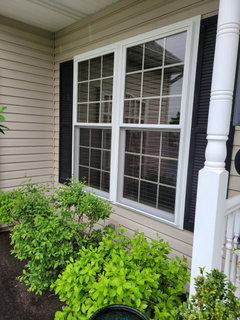
- PROlast year
Looks good. Do you know what Low-e range the window was specified with as well?
- PROlast year
The tint will take hit on visable light transmission . Glass is a trade
off pure and simple . It is like trying to find a tire that is the best in mud , snow , milage, ice, rain, handling ect. What you give up is gonna cost you somewhere else. In the end I try to find and all season tire that suits you best and meets code. In the end we can guide with the options are brands give us
 last year
I like that analogy. Unless you are buying specific, purpose-built vehicle, most will come with all season tires that are a good overall balance of mileage, performance, wear, and cost. Only a fool would drive off the lot without asking questions and then later complain that they aren't getting the mileage that they want, that they really should have been given an ultra high mileage option.
Yes window companies should discuss the pros and cons of glass packages. If they don't, its probably a sign that YOU as a consumer are the one with poor judgement. Glass is like 90% of a window, you'd think that it might be something that you should ask about as a responsible consumer. If you don't, you are probably going to get the "all-season tire" of glass packages which is just right for just about everyone but self entitled cat ladies with no personal accountability.
- PROlast year
@HomeSealed Exteriors, LLC
It’s bizarre how you undermined my concerns about the green tint from triple coated low-e glass and the need for better transparency across the industry by claiming 98% of customers don’t care in your experience, then immediately turn around and say you don’t sell triple coated low-e glass at all.
As I said above, I’m in process of swapping my new triple coated low-e glass windows to double coated low-e glass. Double coated low-e glass is seemingly what you predominantly sell, and you reportedly rarely hear negative feedback regarding a green tint. That’s great to hear, and is aligned with what I’ve gathered from my own research. Although again, information on this is scant and good luck finding comparison photos.
There’s another commenter above, @fridge2020, that claimed since glass is 90% of the purchase, a customer must lack proper judgement is they are unaware of the nuances of low-e coated glass.
I’ll again just emphasize how if you go on any window manufacturer’s website and search their glass options — all of the information listed will promote the gained efficiencies from the low-e coatings. ‘The greater low-e coats, the more efficient the window.’ There will no disclosure of the green tint. That’s the problem in the industry.
- PROlast year
@HU-965389720, I did address that concern in my original post:
"We don't use much 366 glass up here in the North, however it is the land of triple pane which is similarly dark/tinted. "
We sell more triple pane glass than double pane.
Among qualified professionals and including marketing materials and manufacturer websites where performance ratings are earnestly discussed, VT (Visible Transmittance) is the one that refers to how "dark" the glass will be in the most basic terms. I realize that your issue may be more with the GREEN color than the "darkness" of the glass but the darker it is, the more pronounced that color will be. The new glass that you are sourcing will have a green tint as well. Most glass used in residential windows and other common applications does have a green tint without regard to the presence of low e. Go put a white piece of paper behind the window in your car, you'll see that has a green tint as well. I presume that you have not taken issue with the fact that your car salesperson didn't disclose that the windows have a green tint?
I won't speak for other posters that you've referenced, however I believe the general idea here is not that an average consumer should be informed on the "nuances of low-e coated glass", but simply that if it is something of great concern to you, it would only make sense to ask your sales person about it upfront.
Lastly, to be clear, I have no intention of undermining your concern about dark/green glass. That is your preference and there is nothing wrong with that whatsoever. I only take issue with the baseless assertion that there is some type of intentional lack of transparency regarding this topic that is prevalent in the industry. There simply is not, and as has been stated by myself and others, there would be literally nothing to gain from doing so. The only thought process that could lead one to that conclusion is a lack of information, hence why myself and others have attempted to help by offering transparency in what we see and hear on a daily basis.
It sounds as though you've found a solution that you'll be happy with which is fantastic, I'm glad to hear that.
- PROlast year
@HomeSealed Exteriors, LLC
Visible transmittance ratings do not reflect how green the glass is. For you to even frame it as such to in your efforts to prove industry transparency on this issue is truly mind blowing.
Low-e 340 glass has a lower VT rating than low-e 366 glass. It’s not more green, because VT ratings are not measuring how green the glass is.
I’m also not under the impression that double-coated low-e glass is clear. There is nuance to this. I can tolerate some green — myself and others just want a more balanced option.
For you to suggest customers should just know up front to ask about the increased green hue from low-e 366 glass v. low-e 270, combined with the fact that the industry at large “glosses” over the low-e green hue effect is 100% the heart of the issue. Customers may not know to ask up front because information about it online is so scant.
I’ve said this numerous times by now, and notably you haven’t responded to this — if you go to any major window manufacturer’s website and search their glass options, you won’t see disclosures on the green hue from low-e coatings. Additional coatings are framed as ‘all upside’ with increased efficiencies. That is unfortunately reflective of the industry writ large.
Window suppliers are mostly no different, but not all. Although I searched the website for Home Sealed Exteriors in Wisconsin. The webpage on energy efficient glass discusses “UV Resistance Coatings” and increased curb appeal. I was unable to identify any mention of the green hue effect.
I hope we can agree on this — there can and should be a greater effort to educate consumers on the green hue effect from low-e coatings.
- PROlast yearlast modified: last year
@HU-965389720, once again, I've already clarified the issue that is apparently "mind blowing" to you, and you've restated my comments to some degree:
"VT (Visible Transmittance) is the one that refers to how "dark" the glass will be in the most basic terms. I realize that your issue may be more with the GREEN color than the "darkness" of the glass but the darker it is, the more pronounced that color will be." ...as a general rule.
I'm happy to respond about your website question as well:
A manufacturer or dealer website should not be viewed as an all-encompassing, exhaustive source of product information unless you are visiting a site created for the purpose of granular level research. Manufacturers and dealers instead will highlight the most impactful features and benefits of their products and company, just like most other websites that exist for the purpose of generating business. Luckily in this industry we have consultations (in home or in showroom) where further dialogue can occur about items like this. We also have various sources such as this site and others where folks can do research, which is advisable on such a large investment... and as a matter of fact, there is a history over a decade long of professionals including myself commenting that additional coatings are not "all upside" as you stated, but are climate and circumstance specific.
You'd be correct in pointing out that very, very little of the content on these sites is focus on the "green" issue.... which entirely proves my point given that the subject matter is generated by consumers and their common questions/concerns.
What we can agree on is that it is fortunate that you've found a solution to your concern. As a matter of fact, there is really nothing that I disagree with you on other than your continued, unfounded assertion that there is some sort of industry conspiracy to conceal the fact that some window coatings are more green than others. The persistent attempts to impugn the character and motivation of folks simply attempting to help you also serves no purpose.
With that, I wish you the best, and once again I'm glad that you found a satisfactory solution to your concern.
- last yearlast modified: last year
Consumer94,
I think you are going out of your way to be argumentative and annoying.. HomeSealed has explained this 100 ways to Sunday but yet you still insist on being problematic and ignore the facts.
I suggest you get yourself some friends( if you can find any).
- PROlast year
Even “clear” glass will have a green hue. The more layers or the thickness if the glass the greener it is.


Windows on Washington Ltd