Software
Houzz Logo Print
30years1moretime

Tung Oil Regrets - need advise please

10 years ago
last modified: 10 years ago

So, three years ago we installed Douglas fir T&G floors (trees off our land). And for VOC reasons and appearance we decided on Tung Oil cut with Citrus Solvent. We applied 7 coats as instructed; until the wood stopped absorbing. Well, it looked great for about a week. Then it became the dreaded dull, dirty ugly floor that just a few special folks get when using tung oil - no patina whatsoever. Our guess, it's the fir.

We want a little shine and patina. We want to go over the floor with something that won't soak in and look dull in a week or a month.

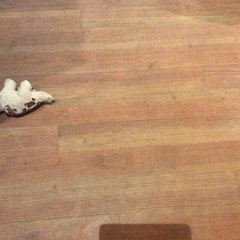
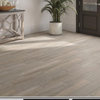
Below are pictures of the plain floor (with dog toy) - yuck.
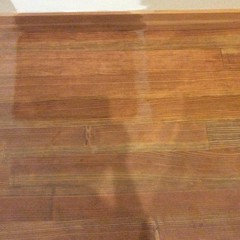
Another picture of the floor with Johnson's One Step Wax on the left (almost absorbed in 24 hours) and Watco Danish Oil on the right.
The other picture is the Watco on the left and Howard's Bee's Wax on the right. (The Howard's contains bee's, carnuba and orange oil).
It's only been 24 hours so I'm not sure how all will absorb in a week or more.

I like the Watco because it tones down the orange tones.

Any advise please! Would a combination of these products work; say the Danish Oil, then wax as needed with Howard's. This wood is so porous I'm not sure anything other than poly will give it a lasting glow, but I don't want poly.

Comments (45)

  • 10 years ago

    Advice :-)


  • 10 years ago

  • 10 years ago

  • 10 years ago

  • 10 years ago
    last modified: 10 years ago

    Sand it down and refinish it with one of the hard wax oils. Pallmans, etc. But you've got to get that goop off of there first. Orange oil anything is the kiss of death. You're only adding to the dull goop by going on top.

  • 10 years ago

    If you like the look of tung oil, you could try Waterlox, a tung oil varnish that should keep more vibrancy in the wood and shouldn't look dull. It comes in a couple different sheens. It scratches but is easy to repair as you just have to recoat it. I have it on quartered oak parquet and heart pine. I would test it in a spot first, since fir brings in some challenges. The Waterlox company also has great customer service and will help you, if you need it.

    Also, if you want to stay with wax (more trouble than I would want) you could go with Briwax. They have waxes with different stains that will give it any tone you want (albeit slight). But this, and all waxes I know of, will mean you are buffing it constantly to keep it looking nice. But it will be a very nice looking finish and you can control the sheen by the way you apply it and buff it.

  • 10 years ago

    I talked to someone at Waterlox a few months ago. It was like I was the biggest pain in his hiney to even speak with me. He told me - I needed to clean my floors, but they are almost impossible to clean (he said that). He said, don't sand because you grind in the grime. He basically said to use it on brand new floors.

    My floors are not "goopy" at all. They are dry, dry, dry. Both the Watco Danish oil and the Howard's have now soaked in (48 hours) and lost their shine. I'm sure in a month it will be as if I did nothing.

    I don't want my floors perfect by any means. Just some shine.

    What about Pre-polymerized Tung Oil? It is supposed to be high gloss (would probably be satin on my fir). http://www.leevalley.com/en/Wood/page.aspx?p=20050&cat=1,190,42942

  • 10 years ago

    They are not ''dry''. That's a myth. They are dull because of the buildup of dirt and oil. Orange oil acts as a solvent that contaminates the polymers and never allows it to cure fully. Thus they attract and hold dust and dirt.

    They need to be sanded down to bare wood and start over. With quality products. No orange oil and no topically applied wax. That is your culprit with the appearance of your floor.

  • 10 years ago

    Sophie, you misunderstood my post. Maybe I wasn't clear. My floors were finished 3 years ago with raw tung oil (diluted with a solvent). After 1 month, maybe actually a week, the floors absorbed all the tung oil and became very dull, extremely dull. Just like raw wood with some color. I'd have to mop everyday if I want them to look clean and not show dirt. That is the first picture.
    Now, I'm finally wanting to give my floors some glow, so I tried 3 products in the second two pictures (One of them being Howard's bee's wax with carnuba and orange oil).
    Today I spoke with a company that makes a polymer tung oil that cures to a high gloss. That may just be my solution.

  • 10 years ago

    It will not cure on top of the mess you have. It will only be worse. You have to sand down and start over.

  • 10 years ago

    Thank you for the information on Pallmans. It sounds interesting with good reviews.
    And again to be clear my floors are a three year old tung oil. Other than additional dirt, their 'gloss' or lack there of, has not changed in 3 years. We were unhappy with the finish w/in a week or a few weeks of doing them. I think tung oil is probably better on harder woods, but I'm not sure. I haven't seen any other Douglas fir floors. Many love their floors finished with tung oil and many do have a light patina glow. Maybe you consider tung oil a mess? IDK.
    I only sampled the other three products in a small inconspicuous area.

  • 10 years ago

    Interesting that citrus solvent and tung oil don't work together.

    Would that also apply to turpentine?

    I know I've mixed tung with mineral spirits, and the tung will polymerize. I have leftovers of it mixed to prove it from various small projects.

    I would not want a tung oil finished floor.

    Looking at those pictures, the floor needs sanded. There is no way to clean it otherwise.

  • 10 years ago

    HI Sambah,
    Citrus solvent and tung oil do work together. It is what we used. It does penetrate the wood, but on the Doug. fir its appearance it too dry. Like raw wood.
    Citrus oil, I believe, is what Sophie is speaking of. Howard's Bee's wax contains bee's wax, citrus oil and carnuba wax. Sophie is saying to avoid the orange oil as it would attract dirt.

  • 10 years ago

    The was I understood it was when orange solvent is mixed with Tung oil, it prevents the tung oil from polymerizing correctly.

    No one would mix orange oil and tung oil together.

    It will take many, many, many coats of tung oil to build up a sheen. It looks good when it's wet, but as it cures it's just going to get dull looking. I imagine that would be for all woods, not just Doug Fir.

  • 10 years ago
    last modified: 10 years ago

    Wax ruins any chance of proper adhesion. As does any citrus oil, or other oil, like Murphy's oil soap, Orange Glop, Liquid Gold, Endust, Pledge, and a whole host of ''care'' products that should be banned.

    That floor does NOT need more stuff on top of the dirt that is embedded in the current finish. It needs to be sanded down and you need to start over with a different finish. Repeat again. Do NOT put any assorted cocktails," shine'' or any other finish on top of that contaminated wood. START OVER WITH BARE WOOD.

  • 10 years ago

    Well, someone should notify the Real Milk Pain Company because raw tung oil and citrus solvent is there recipe and products.

    I wish I had been more clear on my OP and what I wanted for flooring. We live on 30 acres in the mountains, in the forest. My husband works, hunts, lives, breaths outside and is in and out of the house numerous times/day. I am also in out to tend to animals, etc. He does not take off his boots to come inside. We have 2 dogs, soon to have 2 more. I wanted our floors to look old and beat up, but have some patina that doesn't show every bit of dirt.

    We are not looking for, nor do we want to maintain, designer, socks only flooring.

    Maybe some day we'll sand, but not now.

  • 10 years ago

    @omgareallnamestaken: I don't understand why you ask for help, then argue with Sohpie, and the others. Why don't you call up the "Real Milk Paint Company" and have them 'fix' it. It's their product - they should be able to tell you the solution?

    I went to the "Real Milk Paint Company" web site. IMO they give the worst advice. Tung Oil on concrete, on brick? You gotta be kidding. Do they have any sort of warranty?

    I'm an amateur wood worker (50 years). IMO the only thing I'd put an oil finish on is a piece of furniture - and I stopped doing that 25 years ago. Wax, soap, aerosols, are all products that gunk up the wood.

    I don't think Douglas Fir is hard enough to get that 'patina'.

    Sand it down, and apply Bona Traffic. They use that stuff in malls - and it lasts forever.

    How about tile floors?

  • 10 years ago

    I did call the the Real Milk Paint Company and they said to use carnuba wax. I was pretty sure I didn't want to go down the wax road.

    When I researched low/no VOC floor finishes years ago, there were several folks here on Gardenweb (and on the web) who were happy with their tung oil finished floors. There was the rare exception that wasn't happy and their results seemed to be exactly what we got.

    I wasn't trying to argue with Sophie and was trying to be clear. She has used words such as "goopy" and "orange oil" and "wax" and "more stuff" - none of which is on my floor (except a small sample). I don't see how the "pros" on this site can give advice if they don't understand what is on my floor. I was trying to clarify what is currently on my floors and that my floors look no different now, then they did a week after we put down the tung oil (with the exception of dirt).

    I'm nervous to put down some of the high VOC products because the last time my husband applied (exterior) stain I went into anaphalactic shock. I don't know enough of these products to know what's in them and what causes a problem for me. So, I'm guessing to redo the floors we'll need to move out for a time.

    Yes, the best case is to sand down the floors and start over, but that is not an option for us now. Maybe this summer.

  • 10 years ago

    "I did call the the Real Milk Paint Company and they said to use carnuba wax. I was pretty sure I didn't want to go down the wax road."

    The Real Milk Paint Company must be a real bunch of hacks. Carnuba wax - how long do they think that will stay on the floor - before you need to reapply?

    99% of the people use a polyurethane, acrylic, or a factory finish - for a reason.

  • 10 years ago

    The Real Milk Paint company, and many others make all sorts of claims, and give lots of bad advice to sell a product. I'm sure we've all been victims of it in some shape or form.

    Although I have zero experience with waxed floors, I believe there are some legitimate wax floor finishes out there. I'm not sure if 100% carnuba is one of them. Sounds like a nightmare to apply and buff out.

  • 10 years ago

    After a little research it looks like the main driver behind tung oil and citrus solvent is the Real Milk paint Company. I can't comment on the efficacy of this method. Over the last 30 years I have heard stories and personally seen poor performing tung oil finish. Since it plays into my natural bias against things that may not turn out as intended, I took them at face value. It's hard to believe it's all bad considering that tung oil certainly appears to have it's fans. Perhaps what some people thought was tung oil wasn't.

    That said, I do prefer things that are tried and true and things I have experience with. When something new comes along I prefer that other people work out the bugs.

    My recommendation to you would be to treat a test area of your floor with DuraSeal penetrating finish (http://www.duraseal.com/products/stains/penetrating-finish/). I would prepare the test area by cleaning with mineral spirits (my preference), denatured alcohol or acetone to remove dirt, oil and grime. Allow to dry, apply DuraSeal sealer and remove per manufacturer's instructions. Apply a second coat the next day.

    If this works, repeat the process on the whole floor. After two coats the floor can either be used as is and refreshed with more sealer later or it can be waxed with paste wax and machine buffed. In your case I'd skip the wax. I've finished auditorium stage floors with this method. It's better than wax in that it's not slippery and it's better than poly since it can be retouched more easily. I've also done this process in homes where the owner didn't want a film forming finish but didn't want wax.

    Others have mentioned some of the newer oil finishes. I'm a fan of those but I feel they may not perform suitably unless they are applied to freshly sanded wood. I feel the DuraSeal might work better in your situation.

    30years1moretime thanked User
  • 10 years ago

    FYI, waxing floors is a legitimate procedure but it's largely fallen out of favor. Wax should really be applied (very thin) by hand then buffed with a bristle brush or a fine nylon pad. It's not too hard to do but it should be done every six months until it gets a buildup, then once a year. Within a couple of weeks of application all the solvents will have evaporated and it's good to buff it to bring up the shine. Worn or high traffic areas can be done as needed. Grimy areas should be cleaned with mineral spirits before wax application. Once a waxed floor gets a buildup it can just be buffed to bring up the shine and remove scuffs. Buffing burnishes and hardens the wax. Some companies sell wax and cleaner that's effective for rewaxing.

    I'm surprised that some people aren't familiar with it. Have people not heard of Johnson Paste Wax, or am I just showing my age?

  • 10 years ago

    Another company, I think Lee Masters in Canada, recommended carnuba wax as well. Exactly as you said jfcwood. (They also have a poly tung oil which they state dries to a high gloss.)

    Maybe this summer when we can move out for a while, we sand and go at it again.

    What about this new "odorless mineral spirits"? It's a milky white color. Is it any good?

  • 10 years ago

    @jfcwood: Is this 1930?? What a horrible recommendation. Maybe good in Kentucky.

  • 10 years ago
    last modified: 10 years ago

    @omgareallnamestaken: I can't help stupid. Understand, I know there are tried and true methods, but for floors, well you can do nothing. Just walk on them.

    But really, waxes, oils, etc, are crap. Yeah, it 'penetrates' the wood. It ' feeds' the wood. All crap, with no proof, with no warrantee, People used this 100 years ago because that was all there was. Today there are much superior coatings,

  • 10 years ago
    last modified: 10 years ago

    I'm giving someone valid advice on a way to fix their problem and I've given them the details on how it would have to be maintained. After they've applied 7 coats of tung oil that hasn't performed well, I don't think my advice is out of line.

    Anyone can come on here and tell someone that most people use poly for a reason.

    What do you have against Kentucky. Are you some kind of bigot?

  • 10 years ago
    last modified: 10 years ago

    Using odorless mineral spirits to clean a floor is probably okay and might mitigate some of the unpleasantness, but I wouldn't ever add it to a floor finish.

  • 10 years ago

    +1 on Bona Traffic. Sounds perfect for your needs. I've used it in the last three houses (and the Traffic HD in my woodworking shop) and it both looks good and wears like steel. Pure tung oil and wax can make a lovely finish, but it's wildly inappropriate for something you're going to walk on.

    30years1moretime thanked rwiegand
  • 10 years ago

    jfcwood,
    I'm sorry, I wasn't asking about the new odorless mineral spirits for my floor, but just in general. Bought some recently to clean a paint brush after using some stain. Thank you!

  • 10 years ago

    I'm honestly not sure but a little searching found these:

    http://www.recochem.com/us/products/paint_thinners_solvents/odorless_mineral_spirits

    http://www.popularwoodworking.com/article/a_primer_on_solvents

    It appears that lower odor is simply distilled more to remove smelly toluene and xylene. The second one says it's weaker so may not clean as well without them. For cleaning brushes (which could be done outside) it's probably not worth it. For cleaning a floor, it probably is worth it.

    Thanks for the question. I learned something new today.


    30years1moretime thanked User
  • 10 years ago
    last modified: 10 years ago

    @jckwood:

    Where can I start?

    After applying 7 coats of tung oil & citrus solvent. This is so sad. There is something called progress. Yes, there are tried and true old timey methods but oiled floors is not one of them. Mostly, the people who sell that crap, will tell you how the oil 'deeply penetrates' the wood. Actually, messes it up, and prevents from putting a legitimate finish on it.

    Wax? Johnson's Wax? Carnuba Wax?: Wax is crap. It fills the pores of the wood. Dries. Discolors. A product for 1800. Not 2000.

    "What do you have against Kentucky. Are you some kind of bigot?" Chill out, just a joke.

  • 10 years ago

    @geoffrey_b-- we agree on the use of oil and wax for floors, but don't throw the baby out with the bath water. Pure tung oil (distinct from the "tung oil finishes" at the borg) is a polymerizing oil that builds to a nice sheen that will provide excellent depth and clarity to a piece of wood. When topped with a good wax it make a finish that is both beautiful and very nice to the touch. It's not very water nor abrasion resistant, but it's much prettier than most modern finishes. It's completely appropriate as a finish for fine furniture. Many of the best pieces of furniture I've ever seen are finished with it, most definitely not "crap". Just not appropriate for all situations. (I also use a lot of shellac, another finish from the 1800's (1800 BC, I suspect)).

  • 10 years ago

    Geoffrey, we probably agree on many things like tung oil and wax, however I'd ask you to read a little more and think a lot more before you criticize my advice. I agree that waxing sucks but if you read what the OP wrote, he doesn't want poly. It's clearly stated in the initial post, hence my advice.

    And your "joke" smacks of elitism and bigotry. Stick to woodworking.

  • 10 years ago

    I believe waxed floor finishes, a hundred years ago, were "popular" because affordable oil varnishes did not exist until the advent of alkyds and phenolic resins. Or maybe varnishes with even 100% natural resins, that only the super wealthy could afford, just weren't durable enough.

    Unless shellac used to be expensive, I'm not sure why wax was ever used for a floor finish instead.

  • 10 years ago

    In the late 60s/early 70s I would go with my grandfather to look at shellac finished floors that needed to be refinished. I vaguely recall being told that the floors were shellacked then waxed. It was hard to get the shellac perfectly smooth so it was applied, allowed to dry, buffed with steel wool then waxed and buffed. This article would seem to confirm that:

    http://www.woodshopnews.com/columns-blogs/finishing/502292-shellac-as-a-sealer-its-all-just-hype

  • 10 years ago

    @sambah006: I believe waxed floor finishes, a hundred years ago, were "popular" because affordable oil varnishes did not exist until the advent of alkyds and phenolic resins."

    Exactly. It seems there are a very small percentage of people who think an 150 yr/old product is better - cause it's old. But we drive cars, not horses. Think about picking up all the horse droppings?


  • 10 years ago
    last modified: 10 years ago

    Kentucky A state with five last names :)


    Get over it!

  • 5 years ago

    Sorry, but I have to say I'm laughing at this thread. There is no such thing as a perfect floor finish. And, if you took the advice of some of these posters, you may come out just as disappointed. Set your criteria, what is important to you and what isn't. Then study each form of finish to find the one that best fits your desires for it. Verily, one size does not fit all.

    Granted tung oil will only give you a matte finish. If your top criteria was shine, you picked the wrong one. Other than increasing the vibrancy of the wood grains, tung oil is about as matte a finish as you can get. It is also an oil, if you want that feel of a slick, plastic like coating, no oil will give you that. Done right, they will still feel like unfinished wood.

    Yet, from what I can see from your photo, it looks like your culprit is not the tung oil, rather it's the soap you are using. It is chemically reacting to the tung oil, breaking it down. (See that milky film on it? That tells me that.)

    What can you do now? 7 applications of tung oil (that's only 1 coat unless you waited 1 month between applications) does mean that it's saturated in about 1/4in. Unless your floorboards are an inch or more thick, it makes no sense to try and sand them down. You are not going to get that tung oil out of those boards. After having sanded just the film off, reapply 1 or 2 applications of tung oil. Then yes, you're going to need to start waxing your floors. There's no way around it. You're stuck with what you have, deal with it the best you can. Throw the soap you've been using away, and find something less aggressive. Also insure that your wax does not do the same thing. You must use a natural wax. But, it's the wax that can easily be replenished, let it take the abuse.

  • 5 years ago

    Michael, that would have been such great advice...six years ago, when this thread was fresh.

  • 5 years ago

    Yes, but who knows, maybe she hasn't done anything yet, and maybe someone else has the same problem. You never know...


    Maybe I just had to set the record straight.. it's all good.

  • 5 years ago

    True dat

  • 3 years ago

    I just have to say, in case somebody’s looking at this in the year 2022, that I used the tongue oil with citrus solvent last year. I put on three coats. My floors are rustic oak. And I love the finish. It’s a matte finish. And the reason I love this we are still in construction and I have dropped hammers on it and other tools and it scratches, and then I just go grab my bottle of tongue oil under the sink and rub it on wait a few minutes and rub it off and you can’t even tell it was scratched. It’s so nice to have a worry free floor. I realize I’ll probably be applying it every few years if I want to. The guy who installed my rustic white oak long board (ie expensive) floor does all kinds of finishes. Most customers ask for some sort of poly finish that looks like plastic on the wood which is a living thing. He said his favorite finish is oil. The reason he said is that the day you put on a poly finish it only gets worse from there. The day you put on an oil finish it only looks better as time goes on. Anyway I was skeptical but I have to say I love it

  • 3 years ago

    I really don't want to know, but from whose tongues is this oil being extracted?

  • 2 years ago

    We used tung oil with citrus solvent. Our floors are white oak. Three years now and it is wonderful. You can drop things on it that scratch and you just give the scratch a rub with a little tung oil. I would not do any other finish. Maybe the mono coat or osmo, but I really would probably only do tung oil. I did my new wood Pella windows with it as well. Most poly will peel off sometimes yearly due to condensation. I have a friend who sands and coats his windows every year with poly. I am just amazed, mine have never had an issue.

Sponsored
CHC & Family Developments
Average rating: 5 out of 5 stars5 Reviews
Industry Leading General Contractors in Franklin County, Ohio