Software
Houzz Logo Print
kevin_wang80

Ungrounded outlet tripping help!

8 years ago

Hello, we been living in our house for 2 years. From the house inspection, some outlets are ungrounded. We been using electronics with surge protectors. In our garage, we have water, washer/dryer, furnace all using outlets on the same side of the wall.


This is the outlet connecting the wash/dryer


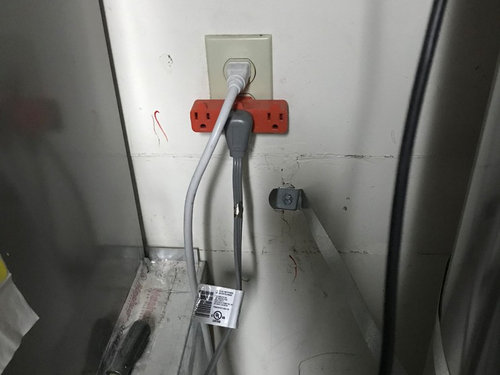
This is another one one the same side with furnace and water heater connected

to it. This is also the one that tripped. I was using a TP link smart plug with extension for Christmas light on top and a surge protector on the bottom connecting furnace and water heater. This morning, I noticed my heater was off and had to press the red reset on the wash's outlet. However, I can no longer use my smart plug with water heater/furnace on the same outlet, it will trip.

I tested by connect the furnace and water both plugged in the surge protector and as soon as I plug in the smart plug with Christmas light it tripped again. So I don't if I overloaded the outlet or anything to do with outlets being ungrounded.

I don't know if I need to replace the receptacle?? I just want to use my Christmas light with the smart plug without unplugging the furnace and the water heater.

The last picture is area next to my garage door. The light switch is for exterior light that is near the lawn area which we rarely use. There is a covered outlet box under it. Is buying a new receptacle and install it there work for me? Thank you. very much. I don't know much and most of these things were done from previous owner.

Comments (3)

  • 8 years ago

    I think you need to call an electrician in to look at your setup and determine what is safe and what isn't. What you've got going on with those extension cords and surge protectors and large appliances connected to wall plugs may not be to code, and in any case is not particularly advisable. The first photo shows a GFCI, which is intended to have a ground wire, although it can be hooked up without a ground and still afford some shock protection. In addition, surge protectors are often not compatible with GFCIs, but without knowing the details of how things are wired, I can't diagnose whether that is the problem, whether you have circuits overloaded, or you have a fault somewhere. I am also hoping your water heater is gas fueled and not electric as powering an electric water heater from a wall outlet would not be a good thing or to code since, for one thing, the wire gauge would be inadequate in all likelihood.

    I am concerned that you mentioned the former owner did some of the wiring, which is fine if he knew what he was doing and had it inspected. I'm skeptical that that was the case.

    Here's the deal: you acknowledge you don't know much about electrical, and there are enough unanswered questions here that we can't diagnose this completely on the basis of what info you provided. We could suggest things to further investigate, including figuring out all the wiring at least in that location, but I fear that would be putting to much of a burden on you to fully understand what you are looking at . I'm not trying to insult you as I'm all for DYI. This situation, however, may be more complex than can be safely resolved by giving you a to-do list of things to open up and inspect.

    You really do need a professional to size up what you have on your hands and determine whether there are any unsafe things going on here that need to be remedied. Right now this is mainly an annoyance to you. However, it may be a prelude to a fire or someone getting shocked.


  • 8 years ago

    It sounds like the receptacle in the second photo is connected to the load side of the GFI (Ground Fault Interrupter) in the first photo, so that it has the same shock protection that the GFI itself has.

    A GFI is designed to open (interrupt) the circuit if it detects a ground fault (faulty device or cord "leaking" electricity that could electrocute a person). It can do that even if the GFI doesn't have a proper ground.

    If connecting the Smart Plug causes the GFI to trip, either the Smart Plug has a ground fault, or one of the Christmas light strings connected to the smart plug does. That means you have a shock a hazard. Someone could get hurt or killed.

    Unplug all the Christmas lights from the Smart Plug, and plug the Smart Plug in all by itself. If it trips the GFI that way, replace the Smart Plug.

    If the GFI doesn't trip with just the Smart Plug plugged in, then the problem is in one or more of the Christmas light strings. Carefully plug the light strings themselves into the GFI, one at a time. Discard any strings or other decorations that cause the GFI to trip.

    All that said, a lot here looks and sounds fishy to me.

    Maybe others have, so I welcome their notes on this, but I've never seen a furnace that was cord-and-plug connected.

    Every gas and oil furnace I've ever seen has been designed to be permanently wired. It would be a code violation (because of not following the installation instructions) to install such a furnace with a cord and plug.

    The only water heaters that can be safely and properly cord-and-plug connected are the ones that come with cords from the factory. These are always very small 120 volt point of use water heaters, a foot or two tall, with typically less than 5 gallon capacity.

    Also, that light switch is nothing like what I'd call a workmanlike installation. To me, that just shouts "hack work."

    Given such obvious poor workmanship, and your home inspector's report of ungrounded receptacles, I really think that for your family's safety you should hire a licensed professional electrician to look over your electrical system's safety.


  • 8 years ago

    I agree with DavidR. The GFCI when properly installed can offer nearly the same protection as a grounded receptacle. What reads all kinds of red flags for me is the sloppiness of the electrical work, the use of extension cords on heating appliances, 3 receptacle taps etc. I wouldn t trust any of this . It’s been a while since I have bouht a home but his would have a been a big flag to my home inspector which would have me walk away from the purchase if the seller wouldn’t make right. In fact I probably would have walked away without making an offer. From experience DIY is like an iceberg. You only see 10 percent of it. If what you see is the sloppy, poorly done or obviously not to code then the other 90% is probably worse. Some things were missed in my home inspection. Through the years some of DIY mistakes of the prior owners has cost me real money. Some was done correctly some not so much. I am all for DIY but you need to learn the code, and do it properly and preferably have it inspected. Your situation looks like electrical hackery. For you and your family’s sake, get it looked at by an electrician, not a handyman but a licensed electrician.

Sponsored
AIS Renovations
Average rating: 4.5 out of 5 stars15 Reviews
Custom Craftsmanship & Construction Solutions in Franklin County, Ohio