Software
Houzz Logo Print
k_fredrick

Sweating Egress windows in basement during winter months

6 years ago

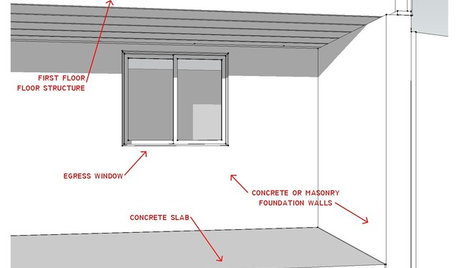
2 yr old construction and the house is very tight. When the temperature dips well below freezing, the metal casing of the Egress windows sweat dramatically. A dehumidifier helps but I’m looking for a more permanent solution as we’re making plans to finish the basement. Maybe an air exchange system? Thank you in advance.

Comments (37)

  • 6 years ago

    Metal window frames have zero insulation properties so they're going to sweat no matter what you do. The only real solution is to replace them with wood, vinyl or vinyl-clad windows.

  • 6 years ago

    Thank you for your response. I want to make sure I understand correctly - the metal framing that houses the vinyl window should be replaced? These are the original frames that went in with the construction so they’re solidified into the poured concrete.


  • 6 years ago

    It is simple physics. The cold outside temp makes the metal cold and there is no thermal break. The inside is warmer and the humidity condenses on the metal. Exactly like a glass of ice water on a warm summer day. The best way to fix is install windows that have a thermal break so their inside temperature is warmer. Aluminum windows were a poor choice for your climate. (I’m not sure if they are a good choice in any climate.)

  • PRO
    6 years ago

    Blow more conditioned air at the frame. What is the Relative Humidity in the house and in this location?

  • 6 years ago

    Yes - spot on. I had to look into this further. It appears to be an aluminum buck that was installed. This is what’s sweating like crazy on the inside

  • 6 years ago

    The “sweat” is likely moisture from the air in the basement, Definitely need to check the relative humidity of the basement. For instance, if the basement is 68 degrees and the RH is 50%, the dew point is just below 49 (48.7) degrees. So if the aluminum gets that cold, it can start to sweat. If the RH is higher, it could be the basement is as cool as 58, but the dew point at 70% would be just above 48 (48.3).

  • 6 years ago

    Excellent. Thank you very much. I’m going to have to monitor those conditions in the basement closely this winter. Appreciate all the help

  • 6 years ago

    We just finished our basement and replaced the metal framed egress window with vinyl. From an aesthetics perspective, you might want to consider this, if it will be in the finished area. We have brick as well.

  • 6 years ago

    I spoke with the builder. He recommended framing out a jamb extension and filling it with spray foam insulation to keep the warmer and higher humidity I’d from reaching the aluminum buck. I anticipate having to run a dehumidifier just in case. I like your idea of replacing but the house is just 2 years old - living with a little disappointment re the basement

  • 6 years ago

    *air (not i’d)

  • 6 years ago

    I suggest telling the builder you would like the aluminum windows replaced with vinyl. You are willing to purchase the new windows if he’ll do the labor. (I don’t understand installing a window that is so embedded in concrete that it can’t be removed.)

  • 6 years ago

    I agree with your assessment. Thank you. Unfortunately this seems to be what’s recommended in this area and we’re already 2 years out. Any warranty has expired. We’ll see how his recommendation works out as we get moving on the renovation.

  • 6 years ago

    This happened to us as well. We are not the original owners of our house and we bought it when it was 4 years old. The egress and sliding windows were metal and would sweat occasionally. When we finished our basement last fall we had the original windows replaced with vinyl windows and have not had any problems since.

  • 6 years ago

    The metal bucks can be removed during a window replacement but it is not necessarily an easy job. I would do it on my own hose, but I'm a serious DIYer and it would be my labor, not someone else hired out to do it for me. Why would the builder use metal bucks? Easy! It's quick and cheap. That's what most of them care about, unfortunately.

  • PRO
    6 years ago
    last modified: 6 years ago

    Two options:

    1) warm up the surface that is has condensation, either via more warm, conditioned air (I believe WoW alluded to this above), or by replacing with a more thermally efficient unit that doesn't conduct the cold from ext to int as badly

    2) Reduce the RH

    You seem to have a perfect storm here, having newer, tight home, conductive metal window frames, and a cool, high RH basement.... Your builder's idea of isolating the metal to the exterior isn't crazy, however it will need to be truly sealed off from that interior moisture. Think of a conventional metal storm window for comparison. If the interior prime window does a good job of sealing, it should keep the moisture from the interior air from escaping onto that colder surface. If full replacement of these units isn't in the cards for you, perhaps something like adding an interior storm insert (again, imperative that it be well sealed) could be an option.

    To the other point, given that the home is new, tight, and this is a basement, running a dehumidifier at a preset Rh level year-round is not the worst idea. An air exchange may not be either if you have an issue with high RH throughout the home, but I don't know that it would be ideal to address the basement specifically. Also consider that if the basement is currently unfinished, you don't likely have much supply for conditioned air being pumped in there currently

    If the RH level down there is not crazy high, you will see improvement merely in finishing that area and supplying it with heat

  • PRO
    6 years ago

    I think the best and more economic and easier way is to replace these windows with a vinyl ones!

  • 6 years ago

    "easier way is to replace these windows with a vinyl ones!"


    The OP has vinyl windows but they are set in a metal buck which is what is causing the condensation...............................

  • 6 years ago

    Correct.


  • PRO
    6 years ago

    K Fredrick, that's all sound information that they provided... I initially thought that the window frame was metal as well. Given that it's not, once again, it sounds like their solution is solid. You will essentially push that metal frame outside of the conditioned space/envelope. Key thing as I mentioned earlier is getting that sealed up so that the moisture doesn't migrate to that surface that will be even colder... As I also mentioned, finishing the space and supply with balanced hvac will also warm it up and help things as well.

  • 6 years ago

    I have the same issue and it’s bad, even drips on the floor and finished walls at times. If I have spray foam on all fours sides of the metal on the inside of the house, then finish with my trim would that be enough to stop the issue? I’m just really nervous about moisture issues.

  • 6 years ago

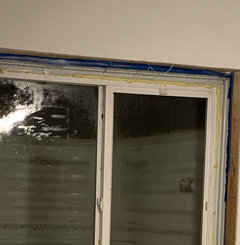
    Here a picture of the moisture you can see on the top of the frame

  • PRO
    6 years ago

    That window is not finished and should not have been left like that. The jambs need to be finished and should be foamed or otherwise insulated to keep the warm inside air from contacting the steel of that lentil. There is no situation where that unfinished opening doesn't show condensation on that lentil if its cold outside. That steel goes straight to outside and will be, effectively, the outside temperature and a condensing surface.

  • 6 years ago

    If I get spray foam and insulate that metal wear its sweating all the way around, will that eliminate the moisture? or would I have a issue below the foam insulation? My thought was if I sprayed some insulation on the metal seal on all 4 sides like the rest of my basement walls are then I could finish it off with wood trim. Right now there is so much sweat its getting on the floor and I dont want a moisture issue because I didnt stop the sweating issue.


    Or would I be best to some how remove that metal buck and use treated wood to install new vinyl windows?

  • 6 years ago

    My window was left exposed as well by the builder and responded the same way...condensation forming on all 4 sides with heavy droplets falling from the top. I’m hoping that when the metal is finally insulated and finished we shouldn’t have any moisture issues as ‘Windows on Washington’ mentioned. Thank you for all the feedback

  • 5 years ago

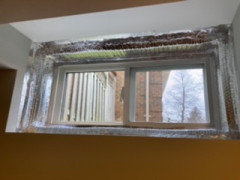
    Thank you all for the constructive discussion taking place here. I’ve bought some special ducting insulation and foil tape and I plan to seal up and insulate my window buck. WI’ll then look at something to cover that over. I was having a huge problem with condensation buildup and ponding due type of window buck that has a cavity in it. Saves me a lot of money by not replacing the window buck. The ones I have are steel and conduct cold right into the room.

  • 5 years ago

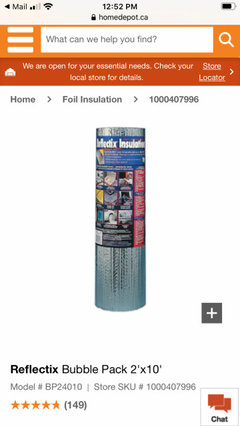
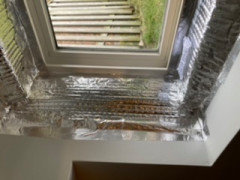
    I bought this yesterday with Reflectix foil tape It took me about 90 minutes to cover the exposed metal window buck I’ll have to figure out how to cover it with trim or mdf Hopefully it stops the condensation problem I had. I have also turned on my dehumidifier to drop the RH Its hard when we’re all home 24/7 in lockdown


  • 5 years ago


  • 5 years ago

    Any luck? I’m having exact same issue. House built in 70’s I replaced with vinyl window, but the buck is still metal. Condensation is actually creating mold on the cavity on buck.

  • 5 years ago

    For those who are having this problem, what is the humidity level in your house? Are you running a humidifier and if so have your tried turning it off?

    If you have an old system with steam radiators, then the humidity level can be high in the winter. If you a forced hot air or hydronic baseboard, then it would be unusual to have a humidity level above 50% in the winter. You are better off finding the source of the high humidity than trying to stop the warm moist air from coming in contact with the cold window.

  • 5 years ago

    I agreed with you mike. I’ve killed my humidifier and seen improvements but it’s still an issue at 48RH at 22c. My first attempt to fixing this issue will be changing the surface tension if the Buck, first by painting it as its pitted with rust from this issue, and secondly by applying a wax (RainX or something similar). I use this trick in the field on pipes using cold water in the summers. It stops the cold pipes gathering condensation by “repelling“ the moisture in the air.


    I’ll let you know If how it goes.

  • 5 years ago

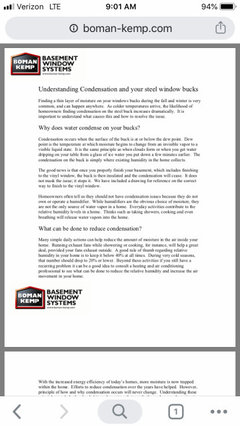
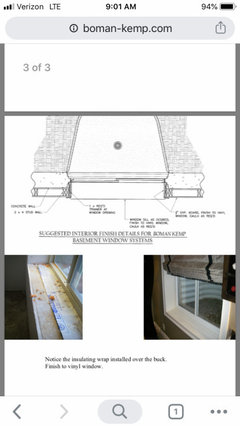
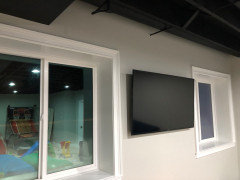
    I’m banking on the idea that a lot of the condensation was a result of the metal buck being directly exposed to the humidity inside the home. I followed the Boman-kemp recommendations and wrapped it with insulation. Eventually those exposed bucks were cased in. I’m attaching the final product. I’m also hoping there is no moisture behind that wall...fingers crossed.


  • 5 years ago

    Here is the finished product


  • 5 years ago

    I think once insulated and sealed behind the wall the problem is solved. I’ll show my final pics once available...

  • 5 years ago


  • 5 years ago

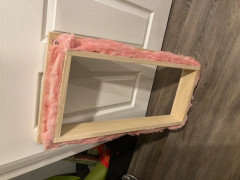
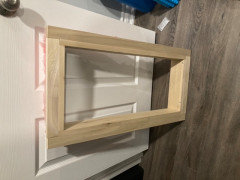
    Here is the wooden frame I made and used some fibreglass insulation inside it as well as insulating the buck itself. Just needs a couple of coats of paint. No more rain in the basement!

  • 5 years ago

    Wow! That looks amazing. That should definitely stop the condensation! Great job on the finishing!