Software
Houzz Logo Print
nejohnson

Heated, passive MUA for 1200 cfm hood

5 years ago

Renovating a 100 year old summer cottage to code in northern Michigan. Using cast iron baseboards/hydronic heat. No A/C because usually endurable and ductwork would have been difficult. Have a 48" Kobe insert over an 80,000 BTU (total) 48" Hallman dual fuel range. With windows open spring/summer/fall, I assume MUA would be sufficient. But for wintertime, is it possible to have a simple passive, dampered, heated MUA through sidewall of house (<10 ft) exiting at toekick at either side of range? Will have vertical granite wings similar to this: https://www.kbbonline.com/wp-content/uploads/2020/08/4grandprize.jpg Is it impossible to heat 10F fresh air in that length of duct run?

There is a Rumford wood burning fire place on the same wall in another room at the opposite end of the house with its own MUA, electric W/D and one bath fan around the corner and down the hall in another room in an addition.

Comments (10)

  • 5 years ago
    last modified: 5 years ago

    The two most practical high flow MUA schemes for residences (of which I am aware) are electric heat and hydronic heat. However, the latter requires a water to air heat exchanger, and there will be some pressure drop on the kitchen side when no MUA blower is used that may aggravate possible backdrafting elsewhere. In either case, if you use an air filter there will be some added pressure loss. Also, if smallish toe-kick vents are used, there will be further loss there. Electrical heating can be done with little flow rate pressure loss (see a clothes dryer's guts for an example).

    Without knowing your electrical setup and convenience of wiring to ducts, I would guess that electrical will be less of a pain to install than hydronic. (I built hydronic, but for cold weather and full hood blower power -- I have a 1500 CFM rated roof blower -- the diversion of heat from the furnace is sufficient over time to allow other zones to cool down.) For duct heating with an electrical scheme I would contact Fantech and see what they can supply from their MUA line. You will need some control scheme which they can also supply.

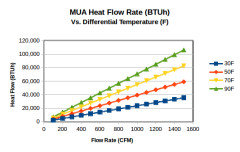
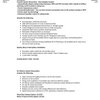
    See the figure below for how much heating you need to do. Assume that your hood blower can manage against pressure losses (in particular the pressure loss from the hood baffles, but also the MUA paths) 800 - 900 CFM. [Click to enlarge.]


    Divide BTUh by 3412 to get kW.

    N Johnson thanked kaseki
  • 5 years ago

    Thank you! If I use a universal automatic air damper with a pressure sensor directly from outside out through the toe kicks on either side of the range, will that be sufficient for the range hood? I am assuming that the air flow will depend on the fan speed which will in turn depend on the various burners (BTUs) in use. The heat of the burners and the radiator next to the cabinet would ameliorate even frigid fresh air, right? maybe?

  • 5 years ago

    If your unheated MUA enters the kitchen through toe kicks, won't the person doing the cooking get quite cold?

  • 5 years ago

    Well, the required CFM for most residential hoods is determined by the velocity of the plume, and that depends on the temperature of the material being cooked, plus an effect of combustion products if gas is used. In any case, a passive MUA will flow only what is needed to match the air flow in the hood, and this will depend on the blower's fan curve vs. the pressure loss from cooktop to outside and back to the kitchen.

    It is important that the MUA enter the kitchen in a way that doesn't cause disturbance to the rising plumes from the pots and pans. So the toe kicks used vs. nearby islands should not reflect moving air into the cooktop space without having some distance to smooth the flow. Ideally, if the air is introduced into the kitchen, it should be into the other side of the kitchen distant from the range.

    Household heating usually doesn't provide the capability for dealing with MUA heating on top of other heating tasks. In particular, a room's radiator is intended to make up the heat loss of a room, and not that from 800 CFM of frigid air. You will rapidly chill the kitchen unless a heater is put into the MUA -- two heaters if two separate ducts are used. Simple coils in the air path with a thermostat downstream from them to turn the coils on and off should suffice, so long as their kW rating is consistent with the graph.

  • 5 years ago

    @kaseki, I live in minnesota and I am currently in the process of updating my kitchen with a range hood of 600 cfm. All the hvac guys are giving me $6500+ number to do the make up air. They like to bring the air from outside to my utility room and feed it into the furnace. My utility room is in basement and it is finished. Which means they will cut out a large chunk of drywall to build out all the ductwork. $6500 is a very steep number and it is actually out of our budget. I started researching and came across fantechs muas 750. I like the functionality of it. And was thinking to install it in our garage. And blow it inside the laundry/mud room which is about 8ftx5ft. And it is directly connected to the kitchen. So in between the garage and the kitchen we have this mud room. The mud room door to the kitchen is atleast 12 feet away from range hood. And our kitchen is open another side to a double ceiling family room. I have a gas fireplace, that i barely use. Dryer, furnace and gas water heater. 4 bathroom plus 1 laundry room exhaust fan. Total area 4600 sqft. Do you think fantech muas will work or passive dampers like ccb or broan will be fine?

  • 5 years ago

    OP, you will likely be fine w/ open windows during spring/summer/fall. Just make sure you remember to open them.

    Range Hoods + Wood burning fireplaces/stoves require some careful consideration. What is the MUA for the fireplace? A Rumford typically exhausts 600-1100 actual CFM so they are pulling a lot of air from your house and they need that much to function correctly and not backdraft.

    You do not want to backdraft the fireplace either while there's a fire going or, perhaps worse, after it goes out. There's a lot of carcinogenic stuff in there that you do not want to breath.

    SO, I would make sure that you have POWERED MUA for your range hood that provides at least as much airflow as your hood or ideally a bit more. Passive for a 1200 CFM hood sounds like a recipe for problems unless you seal off the fireplace.

  • 5 years ago

    Numerous folks have told me that Electro Industries has a better MUA and a better MUA control so might be worth checking them out. We have 3 EI MUA's in our current house. We had 1 EI and 1 Fantech in our previous house and both seemed to work well.

    Be careful using a duct heater w/ passive MUA. Make sure it has a good sensor and runs only when necessary as otherwise you can burn it out (and damage nearby structure) otherwise.

    It is standard in Minnesota to run MUA in to the return of the furnace. Not a great solution but it works OK. The average HVAC person in Minnesota is about 30 years behind so it's an uphill battle to get them to do stuff right. As @kaseki said, they need to make sure that they interlock w/ the furnace to insure that the furnace blower is on ANYTIME the MUA is running and that all of the ducting is correct.

    FWIW, $6500 seems quite high. I'd get other bids. What did they tell you they're having to do for that?

  • 5 years ago

    @kaseki thank you for your detailed answer.

    @opaone, I had 3 bid and they are similar in cost. The reason they are providing is basement is finished, they can not see what it inside. The utility room has so much duct work there is no way to open a new duct from utility close enough to the furnace. So they have to run a long duct work to connect outside and make a new soffit. And on the top of it. Heated unit cost a lot as per them. So I am looking for a cost effective less destructive solution.

  • 5 years ago

    Yeah, if they're having to run through finished areas and build soffits then it'll add up.

    If you do the garage option make sure you seal the ducts up extremely well. My guess is that code will require the ducts to be sheetrock separated from the garage space (and a good idea for your families safety) so plan for that. If you're going to do the job yourself it may pay to talk to your local building inspector to make sure that you do it the way that they want.

    Also remember that the duct will need to be insulated very well from entry to the MUA heater or you'll have condensation problems.