Software
Houzz Logo Print
webuser_29405466

Debating crawl space in new build--do they all get damp/musty?

5 years ago
last modified: 5 years ago

The design for our house includes a large crawl space to allow for ducting. We would like wood floors on a lot of the main level and we're told a crawl space underneath is helpful. Some rooms will have radiant heat, if that matters. There will be some full basement, but we don't need the whole thing dug out.

All i hear from homeowners are bad experiences with crawl spaces, and I don't want to set us up for a problem. If your crawlspace is dry, is there anything special you did to keep it that way?

If it helps we're building way out in the country, very rural area, on a small mountain. Lots of clay in the soil, lots of rock.

Comments (17)

  • 5 years ago

    We are on a crawlspace about 3’ high, no moisture and not damp or musty and never been in 24 years. plastic covering the dirt

  • 5 years ago
    last modified: 5 years ago

    With a crawl space, you should put water proofing on the portion below grade (outside) then insulate the space. The insulation can be either interior or exterior, there are pors/cons to each based on where you live.

    The floor should also have waterproofing, but that depends on whether it will be dirt or a poured slab.

    Exterior vents are generally not done anymore becuase they can bring in outdoor moisture. If the xrawl space is open to your full basement, air circulation may help, but again there are a lot of factors that go in to that.

    2rickies thanked Indecisiveness
  • 5 years ago
    last modified: 5 years ago

    The floors of homes with crawl spaces are much more easily insulated and moisture can be controlled IF properly done and as long landscaping turns the rainwater away from the house. Most homes with crawl spaces now have a specially made fabric or at least plastic covering ALL the ground underneath the house so that any moisture from the ground below is not pulled up into the crawlspace and house.

    Also, you need vent blocks (or if tall space, casement windows you can open) and an electrical outlet in the crawl space you can turn off and on from above (beside a porch switch) so you can add a light and/or fan as needed in the crawlspace.

    https://www.lowes.com/pd/Air-Vent-17-in-x-7-75-in-Aluminum-Foundation-Vent/1000881776

  • 5 years ago

    There are waterproofing products you can smear/paint onto the outside of the foundation blocks before pushing the dirt back against them for landscaping. Do waterproof them. There is insulation that can be sprayed into the concrete foundation blocks before you build atop them. Putting insulation with a vapor barrier between the floor joists can be a good idea -- better than only trying to insulate the foundation wall. Do plan for some kind of insulation for below the floor. Even with waterproofing on the exterior of the blocks and insulation below the floor, do make sure your landscaping on all sides of the house turns the rainwater away from the house. That will save you a lot of regrets later.

    2rickies thanked suezbell
  • 5 years ago

    I’ve lived with at least 4 crawlspaces, all built around 1960, and none have been damp or musty. most have had a concrete floor but the current one is gravel. I think there is plastic underneath. The only dampness was once when the kitchen sink above leaked, a one-time gush of water (glad we were there, someone happened to be inthe basement alongside the crawl, and we could stop it immediately and call the plumber. oh yes, and another, we added a route for the condensation from the AC to get to the sump In a 40-year-old house. Made a tinfoil ”gutter”. Meant to be temporary but it worked till we moved. But that crawl was never damp or musty.)

  • 5 years ago

    Thank you all for the very useful information! I feel a lot better about having a crawlspace now.

  • 5 years ago

    The plastic used to be 6mil and now it's 10mil. You can cover that with pea gravel. Include lighting for when you go down there.

    2rickies thanked dan1888
  • PRO
    5 years ago

    I think for the extra money I would enjoy the extra space in the basement instead of a really useless crawl space.

  • 5 years ago

    Above all, the lot needs to be sloped in such a way as to direct water away from the foundation. Your gutter downspouts need to be extended in order channel water away from the edge of the structure or buried drainage pipes need to be installed.

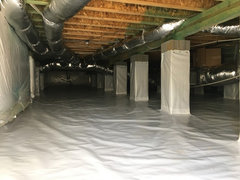
    The thinking about crawlspaces has changed in the last few years. It used to be that crawl spaces were ventilated. Now, crawlspaces are encapsulated as closed conditioned spaces. Often this is an additional item after you build a home involving a specialty contactor. If this were an entirely custom home, you would consult with your general contractor and get them to order it.

    My guess is this a production home. You need to discuss your options with the salesmen and construction supervisor and determine the plan for this space. It can involve HVAC elements.

    You definitely want pay attention to this. It's easy to forget until you have a problem with mold, mildew and air quality in the home. Better to take care of it before it becomes a problem.

    2rickies thanked homechef59
  • 5 years ago

    Would NOT add pea gravel or any gravel to a crawl space -- crawling around on that on your knees to do maintenance or repair work on anything would be torture for you or the people you hire -- slowing their work and increasing any costs.

    If your lot is sloped, consider a partial basement for utility and some storage ... and do take appropriate measures so the concrete floor of any basement or partial basement is waterproofed and insulated between concrete and ground around and beneath it.

    Your lot size and shape should be considered as you decide on crawl space, basement or partial basement.

    Patricia Colwell Consulting isn't wrong but if you're NOT actually going to use a "full' basement, that would be even more wasted space than a crawl space.

    2rickies thanked suezbell
  • 5 years ago

    We have about 900sf of full basement already in the current plan, besides the crawl space. Part of that will be pantry storage, second freezer, exercise space, dog grooming, and general storage. Because almost the entire house is on the main level, if we did the whole thing it would be a huge full basement, and we don't need all that. But that does mean we may have a lot of crawl space.


    homechef, it's a custom build, and we will discuss this with the builder and make sure everything is being done right. Appreciate your advice!


  • 5 years ago

    I would seriously consider doing a sealed conditioned crawlspace. We did that in our new build and it was money well spent. It’s not creepy or gross and an absolute pleasure if you have to access anything down there because its cooled in the summer and heated in the winter. We have some mechanicals down there (tankless water heater, well pressure tank, softener system and of course duct work).


    A - New Build in Process... · More Info


  • 5 years ago

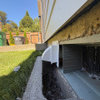
    You will also have a reduction in the number of spiders, bugs and other creepy things. Good picture from nidnay illustrating how the basement crawl should look.


  • 5 years ago

    I just had my crawl space encapsulated recently with a dehumidifier. Huge difference in air quality and peace of mind regarding subfloor health. Humidity meter went from 81% to 62% in less than 24 hours.


    My previous home was in a dry climate. It had a below grade lower level with crawl space and it got damp at times. Drainage was great away from the house but the concrete enclosed crawl space still got damp.


    It seems like the needs and solutions are regional and based on multiple factors. Here the soil is a big deal as well as humidity and pests. I would consult local experts in foundation repair, hvac and pest control.


  • 5 years ago

    Done correctly, it will be fine. We have been in the house 10 years and store books, a leather saddle, clothing, etc and have had no issues.

  • 5 years ago

    Our old house had a vented crawl space with a dirt floor. I think they put some plastic down. We lived there 13 years and it was never damp or musty. We had excellent drainage on that lot, though though, so that probably helped. In our custom home, the builder recommended an encapsulated crawl space. It’s really nice…the air under there is conditioned, and it really does help with the humidity levels in the house, which helps keep the HW floors more stable as the seasons change. I think you will be glad you did it.