Software
Houzz Logo Print
jerijensunsetz24

Collected as . . .

last month

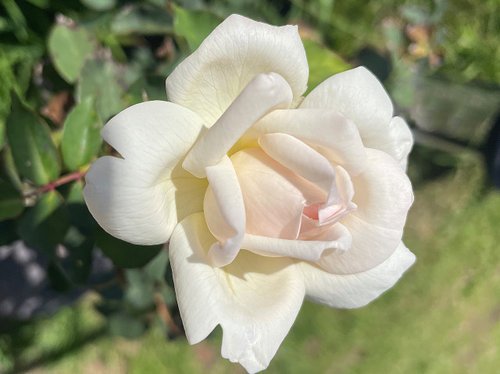
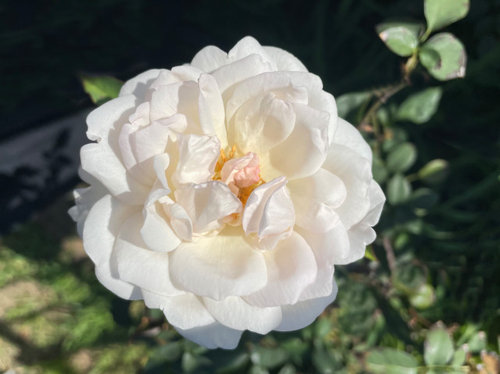
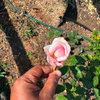
Collected as "George Washington Richardson", it is now known to be 'Mlle. de Sombreuil'


Comments (22)

  • last month

    It's a gorgeous thing and if you're interested in creating new roses, it is fertile as both a seed and pollen parent. It makes rather good "babies".

  • last month

    Wonderful, Jeri.

  • last month

    And, Kim, if you're choosing a rose to breed, it's also disease-free, here.

  • last month

    @jerijen I wouldn't have chosen to use it had it not been clean for me, also.

  • last month

    @jerijen, love that faint blush on white!

    Both you and @roseseek mention that this rose is clean/disease-free. May I ask a naive question; what is it about a variety’s genetics/class that makes it resistant to fungal disease?

  • last month

    @jjkOC zone 10a/22, SoCal there are genes which lack the resistance to specific fungal types. There are genes which possess resistance to one or more type or races of fungi. There are also combinations of genes which provide resistance to varying races. Different "classes" can be better suited to different climates than others. Culture and climate can enhance as well as diminish resistance. I'd read in rose books that water stress can cause even resistant types to mildew when conditions wouldn't ordinarily support mildew outbreaks. I didn't believe it until I did it. I've also discovered that drying out many roses can literally force them to rust, even when rust shouldn't be an issue. I grew a R. Arkansana in a pot. It was breaking out in gorgeous new spring growth when I accidentally missed watering it and dried it out severely. It rusted from the new growth tips to the bottom of the plant. Nothing else in the garden had rust. I picked off the foliage and watered it copiously. It exploded in to healthy new foliage again. To test my theory, I dried it out again and it rusted fully. Now, when a rose either rusts or mildews for me, I increase the water and it most often stops the outbreak. For the few it hasn't, they've gone on to the city green waste.


    Arkansana rusting when dried out makes logical sense. Where it is indigenous, it's healthy and very Arctic hardy. In spring, the rains push new, beautiful, healthy foliage. The plants flower and set seed. As summer wears on, the rains stop and the ground water begins to dry out. The plants become water stressed, causing them to rust. The rust causes the foliage to fall, checking growth and triggering the plants to begin shutting down before the winter freezes arrive, providing for their Arctic hardiness. What benefit Nature derives from using mildew, I haven't a clue. Other rose breeders have suggested, perhaps Nature uses black spot variants for similar benefits. There are numerous races of "black spot" as well as many other types of "spot" diseases in roses. There are genes which don't contract one or more of most of the black spot races, just as there are genes which don't contract rust or mildew. Not all races of each disease exist in the same place. My part of the country may have three or four black spot races while yours has fewer, or more different races. Any particular rose which has resistance to the races in my area may not have as much, or even any resistance to the races in yours. And, there are actually quite a few which have virtually no resistance to any of the races. So, it's literally the genes themselves which produce the resistance or susceptibility to any of the fungal diseases.

  • last month
    last modified: last month

    @roseseek, Thank you for sharing your knowledge about this subject!! Your experiment with R. arkansana in particular was compelling. Kim, is there a chart that catalogs which rose species or cultivars have inherited known resistance genes? It seems that if the gene sequences are known it would just be a matter of genotyping desired varieties.

    @jerijen, my apologies for diverting the discussion. I am happy to move this to a separate post, if desired.

    I think this sort of work would really benefit growers that have mentioned on this and the Rose discussion group that they don’t even dare grow varieties that have shown blackspot in a different zone, when such species of mold may not even exist in that grower’s neck of the woods.

    I would hope that mass-commercial hybridizers would be able to well-characterize their plants to determine any inherited traits that aren’t immediately observable, and list these at least in some internal database as part of the plant ”product” description.

    I’d suppose epigenetics also plays a role in the expression of disease-resistance genes, but at least the genetic potential to withstand onslaught (five resistance genes vs zero) would be good to know.

    In the world of drug-resistant bacteria which is a little more my wheelhouse than plant genetics, we need to test for such genes in pathogenic bacteria to ensure that when a physician prescribes an antibiotic, it will indeed be able to kill the identified microbe. Antimicrobial susceptibilities are a *must* for patient care.

    If the fungal disease resistance gene sequences are known in roses, in theory, they should be able to be detected from each rose variety in a similar fashion.

  • last month

    Kim, that diversion is welcome here. But maybe it would be good to put it into it's "own" post so that more people might see it???

    I know we've all come across roses "known" to be "resistant" to diseases -- which weren't at all resistant where WE planted them!!!

  • last month

    @jjkOC zone 10a/22, SoCal Yes, there are lists of which roses possess certain genes and which strains of black spot those genes have, so far, found to be resistant to, but that doesn't do anyone much good as far as selecting garden roses is concerned as it hasn't been mapped where the various races of black spot exist. There is much overlap and no logic to it. Those lists belong to the researchers who have discovered the knowledge and they are used to help breed roses with greater resistance to more races of the disease. Whether and when to share them publicly is up to those who have done the research. It's surprising how many of the early Griffith Buck roses are as black spot resistant as they are. I only know that because of information which gets passed among pollen pushers. Summer Wind is one with increased resistance, but get ready for all the complaints that it ISN'T resistant in this or that garden. No one knows where, which races exist and, as I wrote, there is no logic to where they are. So, that information is better used to try increasing the resistance genes in more roses. Add how often the other spotting diseases are mistaken for "black spot" and how it appears the "black spot resistance genes" have nothing to do with resistance to the other spotting fungi and you can see the problems. And, none of it has anything to do with resistance to other fungal diseases such as rust or any of the mildews.


    @jerijen I will leave opening that Pandora's Box to others, thank you. That discussion has already been beaten to a pulp.

  • last month
    last modified: last month

    @jerijen, I’ll create a new discussion thread and link to both antique roses and roses groups so that it will be more broadly accessible. I think a strong argument for growing OGRs is their strong disease resistance and ease of care in some locales.

    @roseseek, Kim would you permit me to copy your comments to the new thread to provide context for the continuation of the discussion?

    Thank you both for your interest in educating newbie growers like me!

  • last month
    last modified: last month

    @roseseek, I wrote the above post without having read your reply due to delay in page buffering. I see the issue with discussing resistance ”blind” to which strains of blackspot are in a locality, and so many cultivation variables. I suppose empirical determination is the ultimate reality.

  • last month
    last modified: last month

    @jjkOC zone 10a/22, SoCal the issue is, in general, OGRs are NOT more disease resistant overall than moderns. All of it depends upon how suited the particular rose is to the conditions in which it is to be grown. Like so many, I fell prey to Graham Stuart Thomas' romantic ravings of how magnificent, how perfect all OGRs are in comparison to moderns. I love HPs and genuinely wanted the Old European garden roses to cooperate with where I had to grow them. As a whole, they were horrible. MOST HPs rusted terribly in Zone 9b San Fernando Valley and Santa Clarita Valley weather. They grew well, rusted continually (even with heavy water) and the flowers fried due to their too-soft petal substances. Bourbons were TERRIBLE. Rust, rust and MORE rust. Damasks and Centifolias rusted, black spotted and refused to bloom. Gallicas grew like bamboo on steroids (EXCEPT Camaïeux which grew backwards until it has died, every time I've ever planted it) and black spotted with a vengeance. The only one which flowered well without literally being packed in ice was Cardinal de Richelieu, but it flowered for a few days then fried and didn't flower until the next year. Albas grew well and most refused to flower. Teas and hybrid musks grew well and many mildewed regularly. Hybrid musks with multiflora too close behind them (they are NOT "musks", they ARE "multifloras") suffered chlorosis rather badly own root. Ballerina rusted, black spotted and mildewed, AND, like all the Flower Carpet and Drift roses, galled everywhere it touched the soil. My impression is the gall issue behind the "ground cover" types is due to them being based upon The Fairy, which has died from gall everywhere I've ever encountered it.

    Yet, in those gardens, MANY modern shrubs, floribundas, minis, HTs and climbers grew and flowered with NO fungal issues. NONE. Own root as well as budded. Yes, there were some "OGR" types which grew without diseases, but it was a case of experimenting by growing those of interest and retaining those which cooperated and responded to the culture they were provided.

    I'm no longer in the inland valley heat, but now along the coast with EXTREME marine influence. Now, instead of hot and dry, we're chilly and often damp, particularly at night. Days are generally sunny, with HOT sun, so flowers and new seedlings can easily fry rather quickly. The "heat" comes for a few short hours in mid day, then the ocean breezes start and it gets COLD. I brought many roses with me, selecting from those of interest and enjoyment, based upon observed and reported mildew and rust resistance. The Teas were also selected based upon reported resistance to flower balling. It worked pretty well. I still manipulate water to control outbreaks of mildew and rust, though they are VERY few and far between. "Spotting" is almost never an issue and flower balling just doesn't happen, likely due to selection and conditions. I don't spray anything. I don't want exposed to anything, nor do I want to expose our dogs (who eat EVERYTHING) to anything. If a variety doesn't cooperate with my limited efforts to help it succeed, I DUMP it.

    MANY years ago, Jeri and Clay provided a presentation at a Huntington Old Rose Symposium. Jeri stated it was possible to eliminate disease in your rose garden. People were on the edges of their seats. Clay held a shovel over his head and pumped it. Yes, people laughed, but that IS the trick. Decide how aggressive you wish to be with chemicals then limit what you grow to those which cooperate with your decision. Much of that is going to depend upon where you live. The more humid heat you endure, the fewer roses will succeed without chemicals.

    Try what you find interesting, but be willing to dump and move on when the "pretty face" betrays you, or endure the betrayal and live with it. What will succeed will depend upon how suited the variety's immune system is to the climate, conditions and culture it will endure where it is expected to grow. I was delighted when Fred Boutin discovered the rose he felt sure was the original Bloomfield Abundance and just as delighted to finally be able to grow it. (Thanks, Jeri!) It was terrible in my conditions! It spotted all the time, despite all of my efforts. I refused to provide it any chemical interference and it continued spotting so it went away. If any plant I want to try refuses to cooperate with what I am prepared to provide it, it's mulch. Life is SO much easier (and CHEAPER) when you refuse to be held hostage by cocaine addicted French mistresses. I make one exception. I grow the San Juan Bautista Autumn Damask because that one is documented as having been propagated from THE plant the Padres brought to the Mission and planted. It's identical to all the other Autumn Damasks out there, except for its provenance. And, just as it does in San Juan Bautista, it rusts like an old iron skillet. The only rose in my yard which does. It doesn't get sprayed. I simply live with it.

    If you're trying to grow roses in a Zone 5 or 6 perhaps some of the more Arctic hardy OGRs and moderns are what you should grow. The shorter growing season will likely prevent many fungal outbreaks until late in the season when the diseases will probably trigger them to shut down for winter. Just don't expect those types to be "easy care" in your Zone 10 garden. Wandering the Huntington Library gardens for years showed me what to expect from many "classes". I'd read all the poetic waxing in Thomas' rose books about the glory of Hybrid Rugosas. Sir Thomas Lipton, Sarah Van Fleet, Conrad Ferdinand Meyer, any of the Grootendorst varieties and so many others, in Zone 9 Santa Clarita Valley and at The Huntington had horrible foliage by mid to late summer. Meyer rusted horribly and you can't spray it. Rugosas, like Eglantine, HATE anything but water on their foliage. Everything turns yellow and falls off, only to be replaced with beautiful new foliage which then RUSTS. They're marvelous in cold, short growing season areas, where their foliage lasts just long enough for the winter freezes to knock off and provide their winter freeze hardiness, but in our "endless summer" conditions, the season drags on so much longer than the useful life of the foliage, the geriatric diseases of rust and black spot flourish. There are situations where mitigating conditions exist, permitting them to grow fairly well and remain healthy, but those are the exceptions, not the rule.

    All of which to say, what is healthy, where, depends upon MANY factors. No one class or type of rose is "better" or "worse". All of it depends upon your tastes, your climate and conditions, how suited the rose in question is to what it is expected to endure and what YOU will (or won't) do to and for it. If you like a particular class, try some of them to determine if you can acceptably make them happy. If not, move on. Attempting to recreate the South Pole in Las Vegas simply so you can grow penguins gets very old, very expensive, very tiring, very quickly.

  • last month

    I love it that GWR has now been identified. Mlle de Sombreuil is a lovely rose.

  • last month

    @roseseek and @jerijen, Thank you both for sharing your experiences, and the reality of rose gardening.

    I think what initially is sobering is also liberating—letting go of something that prefers to be elsewhere.

    Though they were moderns, there were a few varieties that just weren’t as stellar as I wished for my garden. My friend now grows them and they are performing like gangbusters in her drier and sunnier conditions in Rowland Heights. Perhaps the key is resisting attachment to expectations, over observed performance.

  • last month

    YES!! " Perhaps the key is resisting attachment to expectations, over observed performance. "


    That's EXACTLY right! That's the whole ball of wax!!!

    Grow what is good in YOUR garden.


    No matter how "wonderful" or "important" it is . . . IF IT'S GARBAGE IN YOUR GARDEN, YOU DON'T WANT IT!


    Ask me about 'Souv. de la Malmaison' some time!

  • last month

    @jjkOC zone 10a/22, SoCal precisely. I can't tell you how many times I've admired something in a friend's garden and inquired as to its identity, only to be met with, "you should know...YOU gave it to me!". It's remarkable how glorious the plant which was awful in your conditions turns out to be in conditions which suit it better.

  • last month

    @jerijen, hahaha! I can imagine SDLM being as frosty as fake snow on a Christmas tree! However, I will say that I do have a bush in a less than ideal spot, but adapting to this the bush has grown toward the south-facing direction to get more sun. As the bush has grown larger, the flowers have gotten so prolific that there’s always at least a few blooms on it year-round. But I tolerate the white cast on her leaves and buds because I really love the flower form and that innocent pale pink color.

    Tolerance level is definitely a factor for this rose in my garden. ;)

    @roseseek, your story made me laugh. Such pretty-faced roses should come with warning labels. :D

  • 29 days ago

    Oh, tolerance level is a big factor! Fr'instance, 'Mme. Lambard' tends to mildew in the summer, but it is dynamite through our winter -- so she gets the seal of approval from me.

  • 29 days ago
    last modified: 28 days ago

    @jerijen, I wasn‘t familiar with Mme. Lambard, but looking at her pics, she has got a lovely, silvery reverse color that gives dimensionality to the bloom. Do you find her color changing through the season?

  • 29 days ago

    JJK -- Her color changes WILDLY . . . which I LOVE!

    Take a look at some of the images of her at:

    (6) Facebook


Sponsored
Uncommon Interiors
Average rating: 5 out of 5 stars1 Review
Turnkey Interior Design Studio in Loudoun County, VA