
10 Easy Ways to Refresh Your Front Entry
Step into a more welcoming, functional and stylish entry space with these simple and affordable upgrades

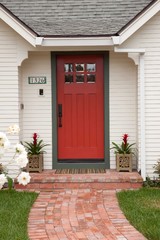
The front entryway is the first thing you and your guests see upon entering your home, so it should make a great impression and set the tone for what’s beyond. At the same time, it needs to function as a practical transition between indoors and out. Whether you have a spacious, seldom-used foyer or a compact, high-traffic drop zone, these 10 easy updates will enhance both its style and functionality.
If you have a coat closet in the entryway, give it a refresh too. Empty, vacuum and wipe it down, then cull the contents. Store off-season gear and rarely used items elsewhere to keep the space open and easy to use. Swap mismatched hangers for two coordinated sets: slim, flocked ones for light jackets and contoured wooden hangers for heavy coats. Rehang only what you reach for regularly, and place labeled baskets on the top shelf to neatly store gloves and other small accessories.
2. Upgrade Your Coat Hooks or Rack
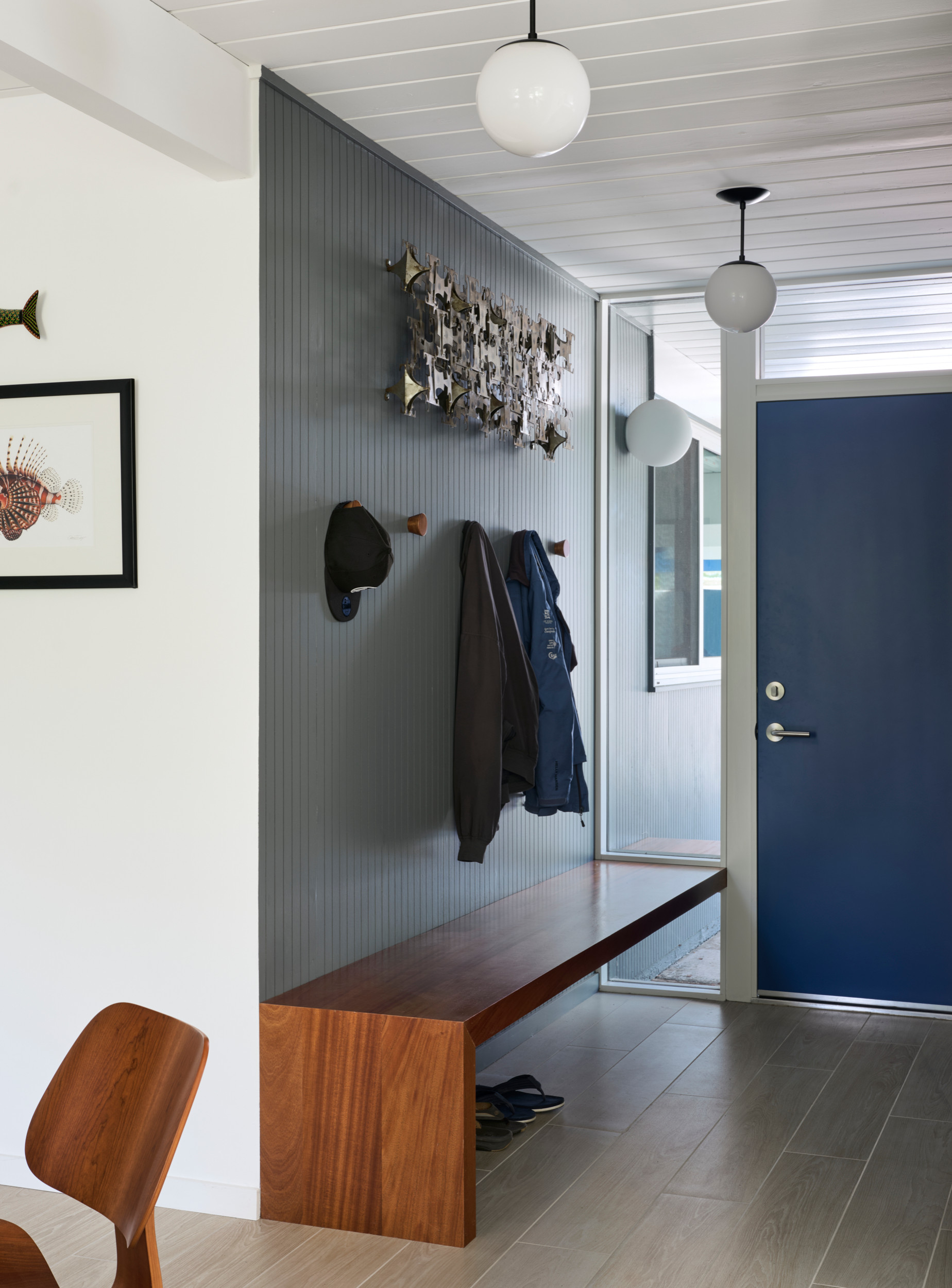
If your household lacks — or tends to ignore — the coat closet, hooks are the way to go. Replacing ineffective hooks or racks with stylish, strategically chosen designs is a relatively inexpensive upgrade that makes a big impact visually as well as functionally.
Before selecting the new rack or hooks, take stock of the items you plan to hang and choose accordingly.
How to Create a Joyful, Clutter-Free Entry
If your household lacks — or tends to ignore — the coat closet, hooks are the way to go. Replacing ineffective hooks or racks with stylish, strategically chosen designs is a relatively inexpensive upgrade that makes a big impact visually as well as functionally.
Before selecting the new rack or hooks, take stock of the items you plan to hang and choose accordingly.
How to Create a Joyful, Clutter-Free Entry
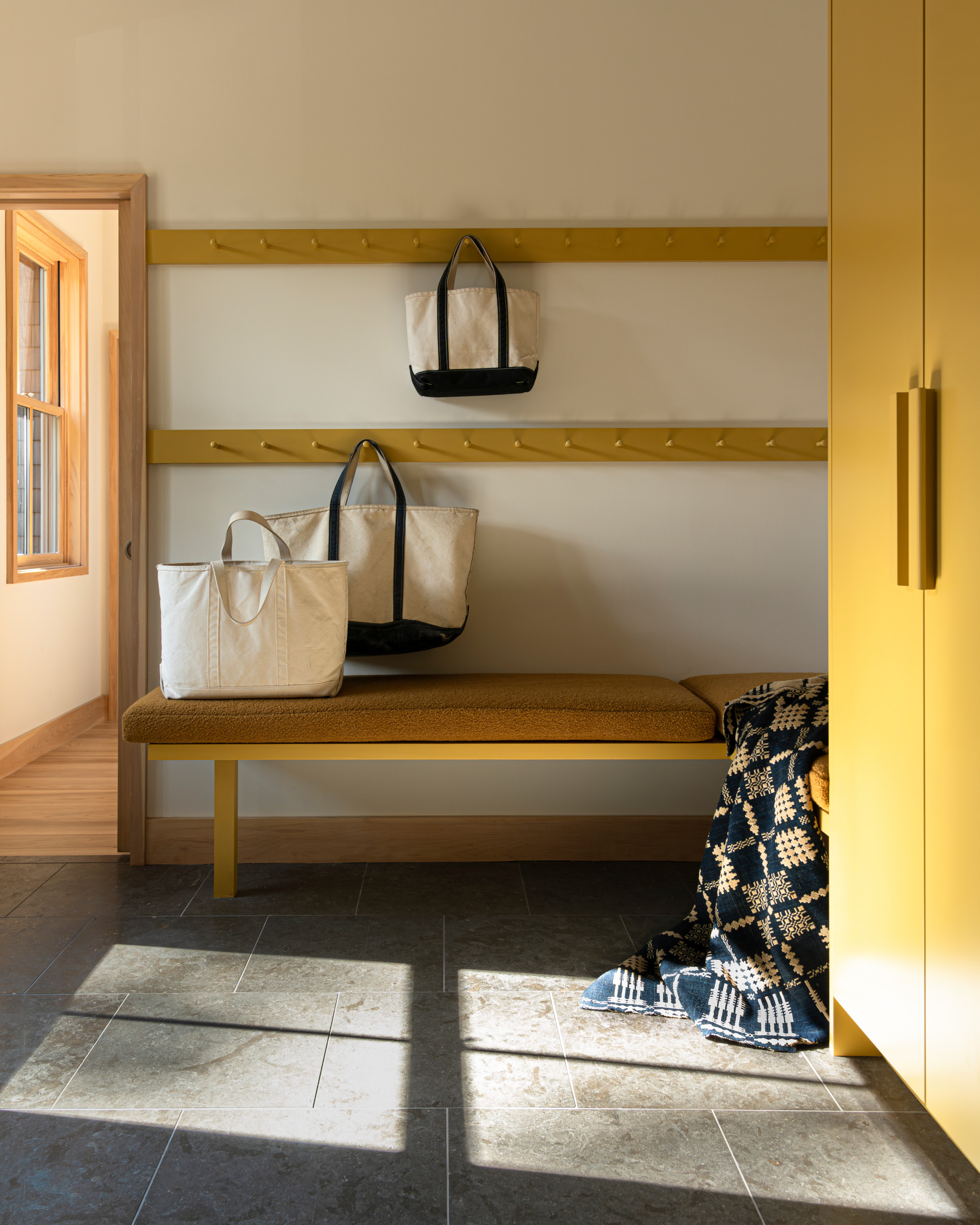
- Rounded or ball-end hooks are safest for delicate fabrics like scarves or lightweight jackets
- Double hooks allow you to hang multiple items, such as a coat and a bag, without crowding
- Heavy, curved metal hooks are best for backpacks and heavy winter coats
- Wide, flat and arched hooks support the shape of hats and prevent creases on leather handbag straps
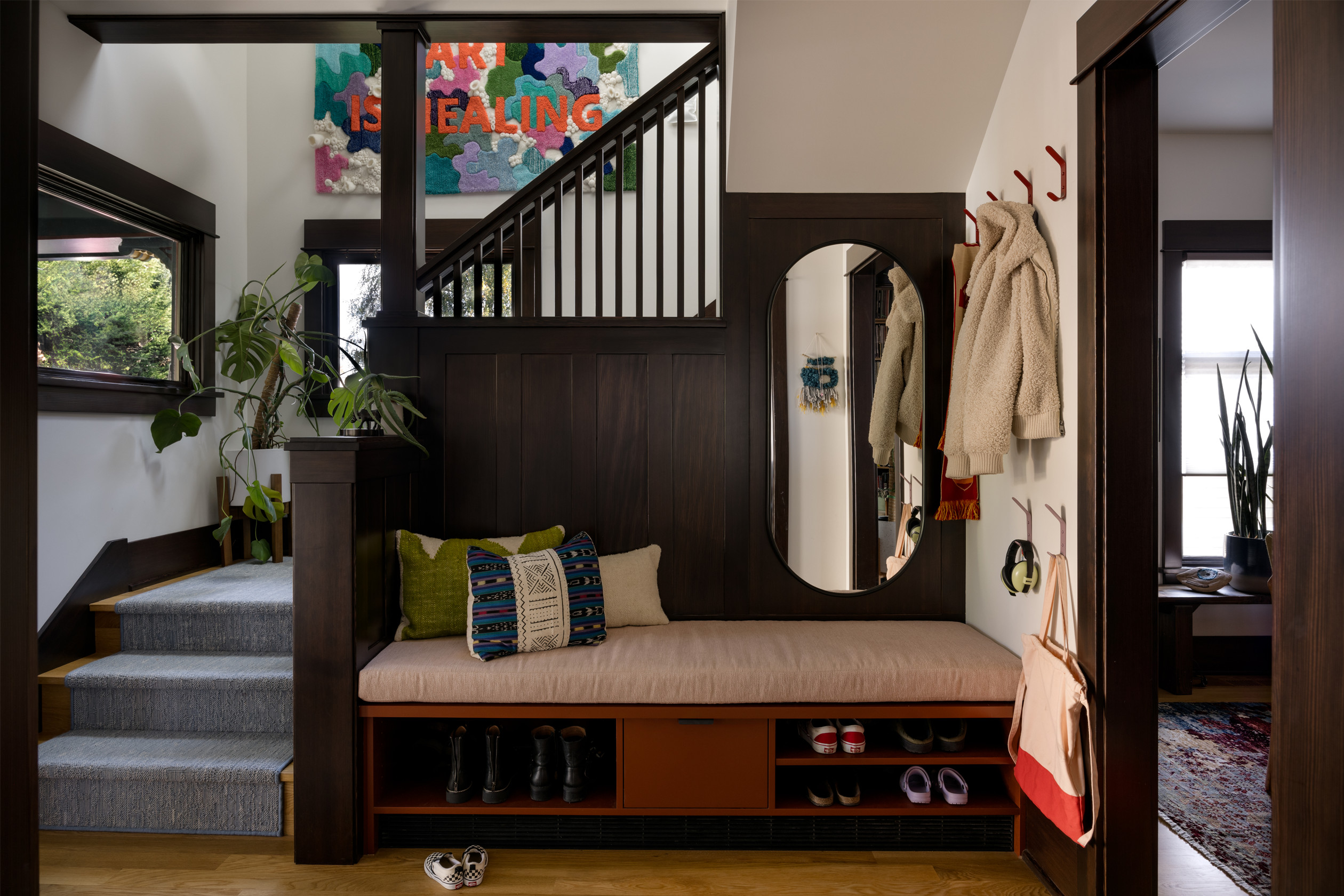
Also keep in mind these standard hook heights (above the floor):
Don’t be afraid to mix and match hook shapes or vary their heights for added interest and functionality — especially in households with children. Just stick to a consistent finish and overall design style to keep the look cohesive, and ensure that no sharp hooks are in anyone’s path of travel.
- Adults: 60 inches
- Children: 36 inches
- Wheelchair access: 42 to 48 inches
Don’t be afraid to mix and match hook shapes or vary their heights for added interest and functionality — especially in households with children. Just stick to a consistent finish and overall design style to keep the look cohesive, and ensure that no sharp hooks are in anyone’s path of travel.
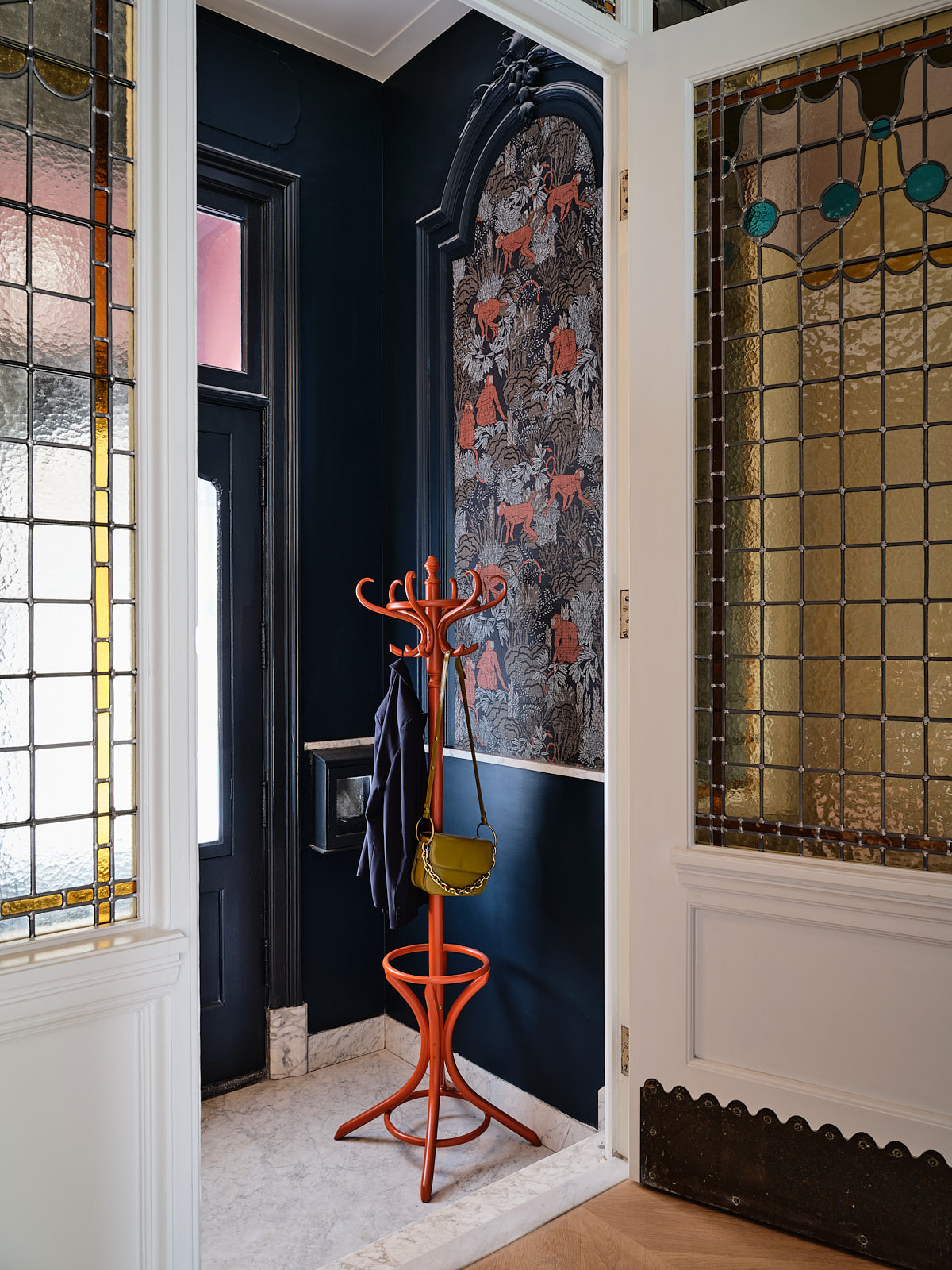
If you have enough floor space, a coat tree is a charming, freestanding and tool-free alternative to coat hooks — perfect for renters, the drill-averse and homes with brick or plaster walls. Choose one with a wide base for stability.
In wet climates, a stylish umbrella stand by the door keeps umbrellas handy and floors puddle-free.
In wet climates, a stylish umbrella stand by the door keeps umbrellas handy and floors puddle-free.
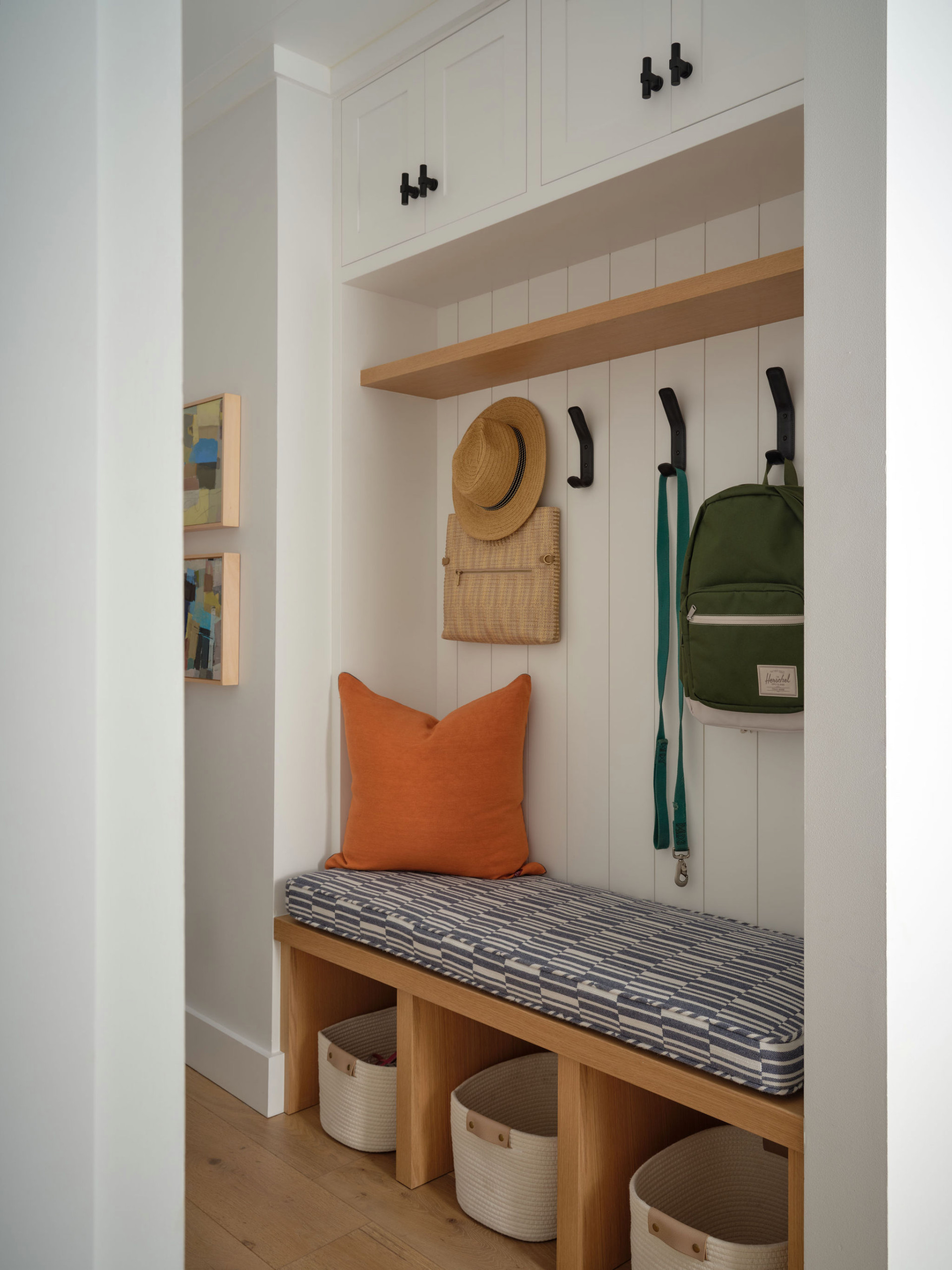
3. Divide and Conquer With Bags or Baskets
Items that aren’t easy to hang up, such as gloves, sports gear and other small accessories, can be organized and stored in baskets or in chic totes. Then the baskets and bags can be stashed under benches, slipped into cubbies or hung from hooks.
Items that aren’t easy to hang up, such as gloves, sports gear and other small accessories, can be organized and stored in baskets or in chic totes. Then the baskets and bags can be stashed under benches, slipped into cubbies or hung from hooks.
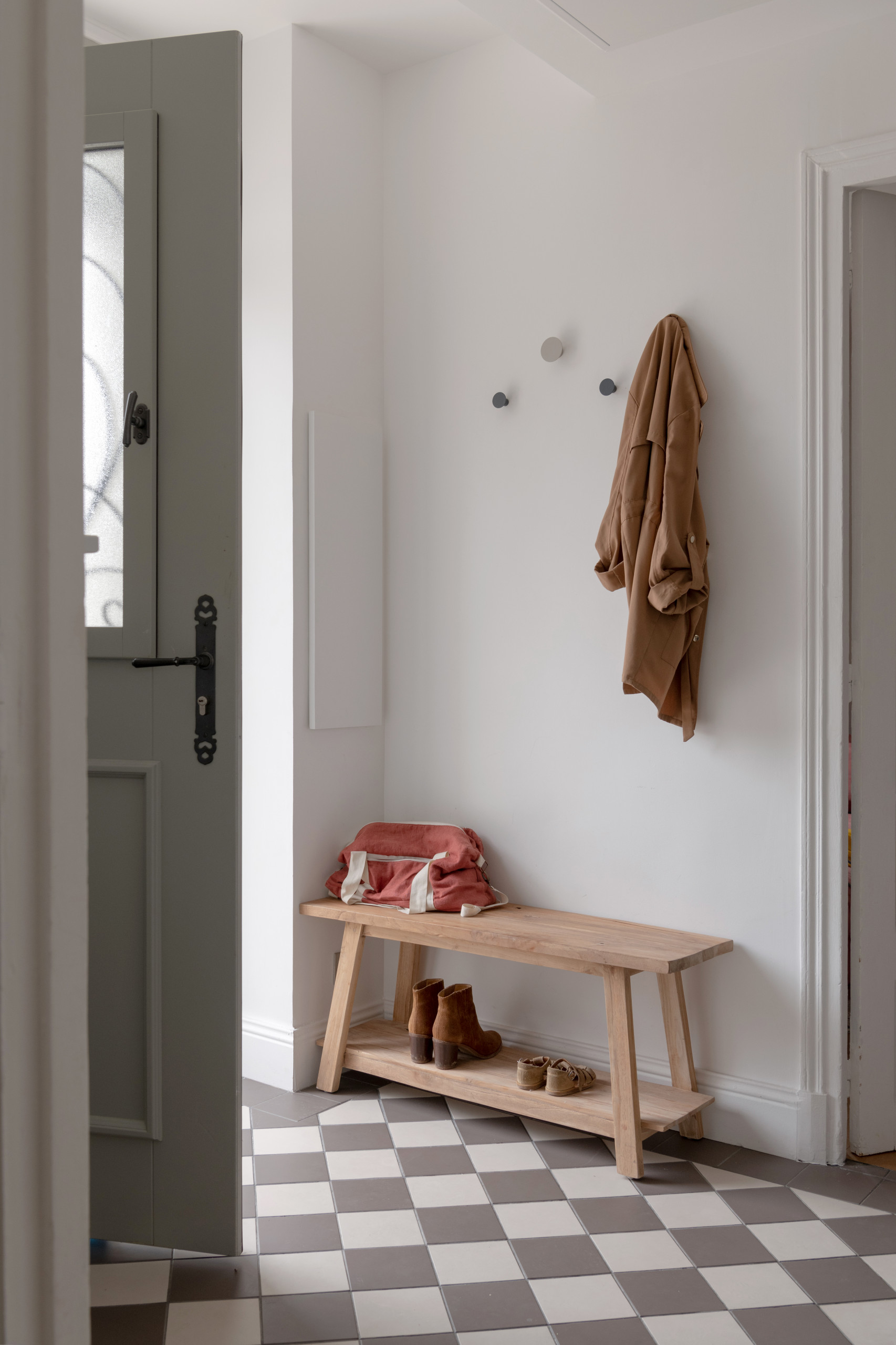
4. Corral Footwear
A shoe-free house offers many benefits, but stray shoes and muddy boots piled by the door are both a nuisance and an eyesore. Impose order with an attractive basket, boot tray or shoe rack placed near the door or under a console.
Open racks offer easy access for busy families, while closed racks create a cleaner look. Whatever style you choose, place it out of the main traffic path, keep it tidy and resist the urge to overfill.
If your no-shoes policy extends to guests, a basket of washable slippers or disposable booties near the rack is both a thoughtful gesture and a polite hint.
A shoe-free house offers many benefits, but stray shoes and muddy boots piled by the door are both a nuisance and an eyesore. Impose order with an attractive basket, boot tray or shoe rack placed near the door or under a console.
Open racks offer easy access for busy families, while closed racks create a cleaner look. Whatever style you choose, place it out of the main traffic path, keep it tidy and resist the urge to overfill.
If your no-shoes policy extends to guests, a basket of washable slippers or disposable booties near the rack is both a thoughtful gesture and a polite hint.
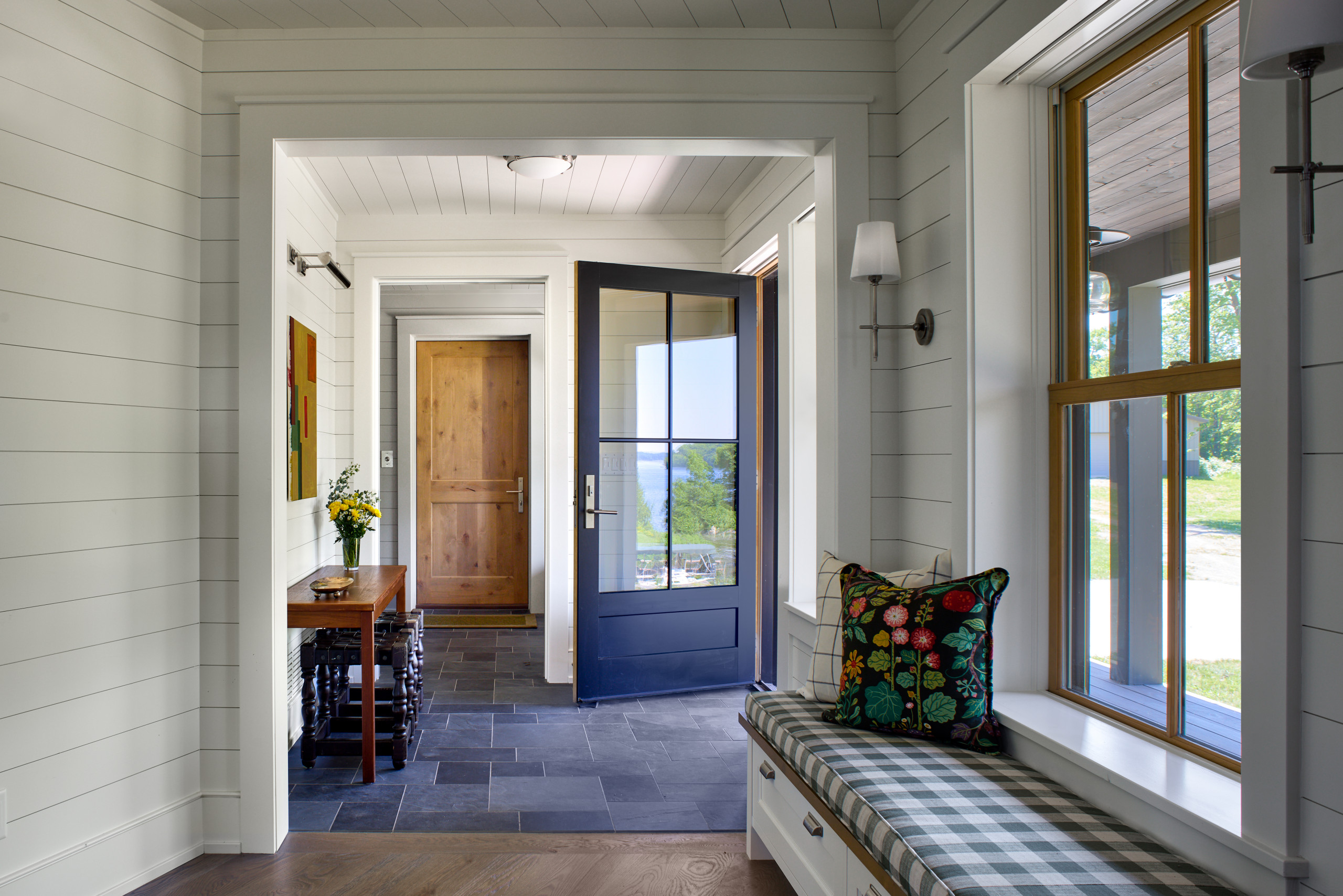
5. Provide a Pretty Perch
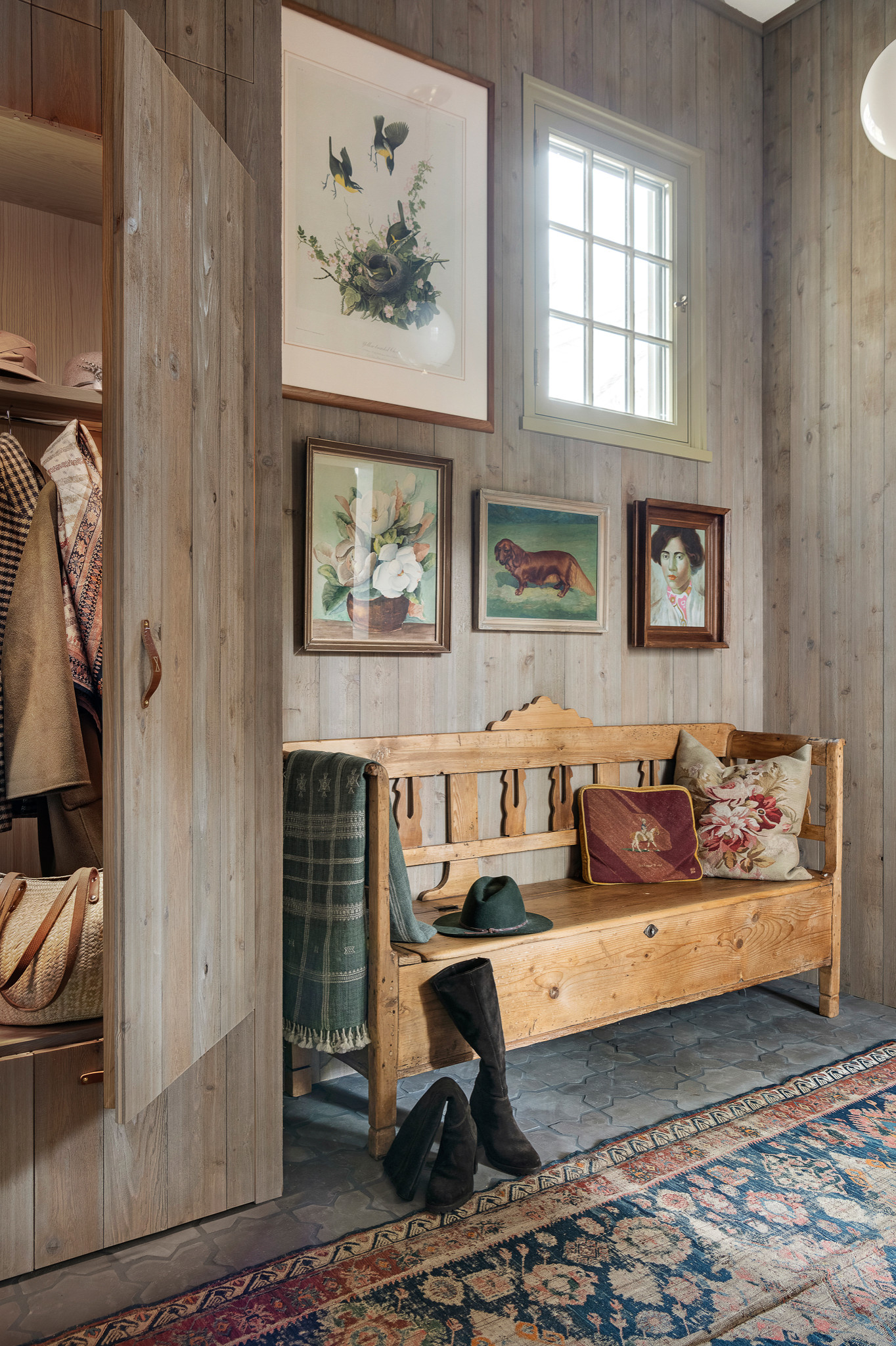
Adding a bench, small chair or stool near your shoe rack makes putting on and taking off shoes much easier — especially for anyone with balance or flexibility challenges. It’s also a perfect opportunity to add panache to your entryway.
Give an existing entry seat a whole new look by reupholstering or repainting it. A new cushion or even a throw pillow that coordinates with your rug can add comfort and style.
Adding a bench, small chair or stool near your shoe rack makes putting on and taking off shoes much easier — especially for anyone with balance or flexibility challenges. It’s also a perfect opportunity to add panache to your entryway.
Give an existing entry seat a whole new look by reupholstering or repainting it. A new cushion or even a throw pillow that coordinates with your rug can add comfort and style.
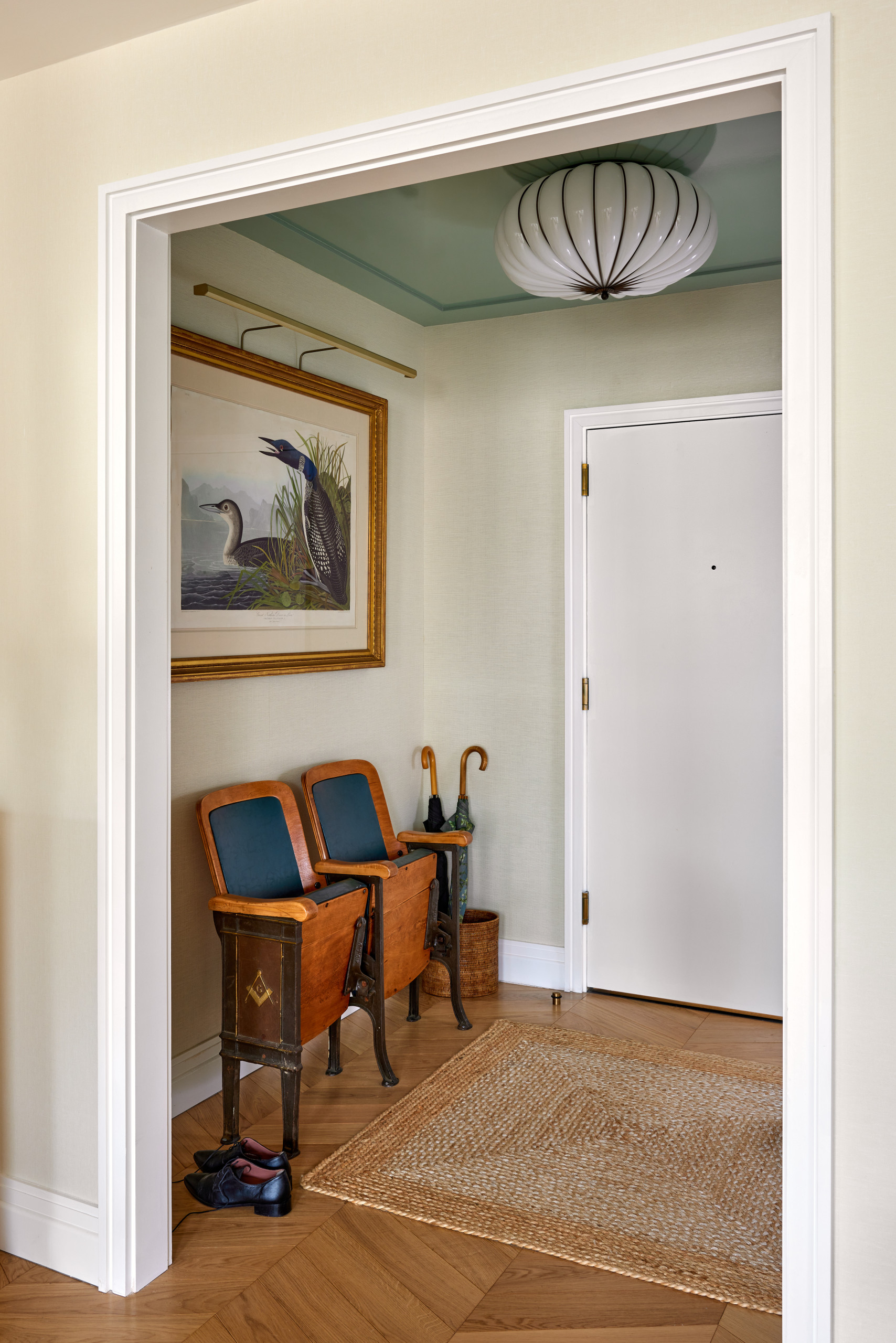
If you’re shopping for seating, consider both your space and your lifestyle. Those who store shoes, bags and other items by the front door might benefit from a bench with a lift top or cubbies. If you’re more of a minimalist, opt for a lightweight stool that can be tucked away when not in use. Seating should be scaled up for very large entryways. Conversely, a very narrow bench or a wall-mounted flip-down bench (securely installed, of course) works well for especially tight entryways.
A new or vintage chair with a touch of whimsy can add a lot of character to an entry. Keep in mind that any entry seat ideally should be 18 to 20 inches high for comfort and ease of use.
A new or vintage chair with a touch of whimsy can add a lot of character to an entry. Keep in mind that any entry seat ideally should be 18 to 20 inches high for comfort and ease of use.
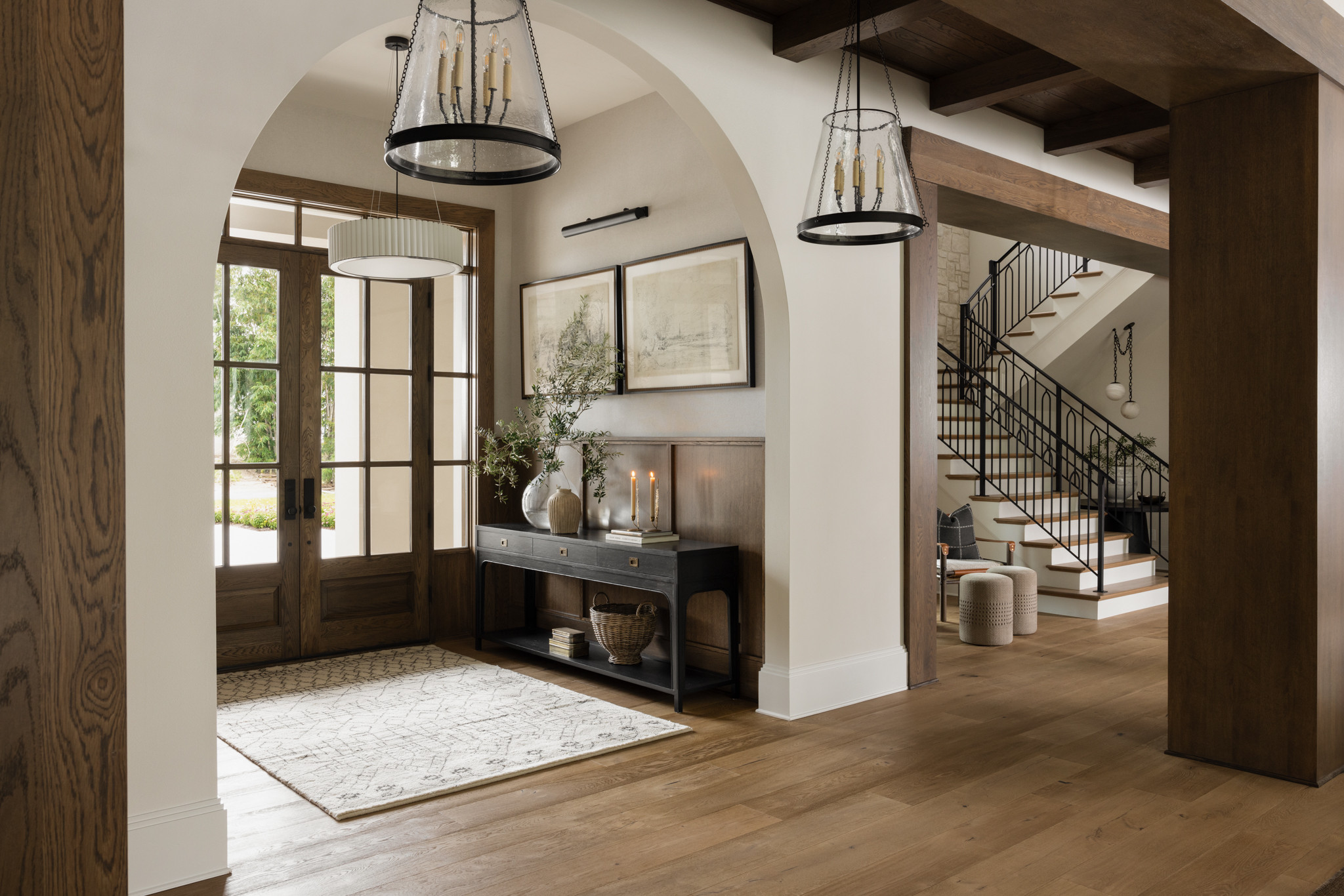
6. Size Up (or Down) Your Rug
A sturdy, attractive area rug defines the entry zone and helps catch the dirt and moisture that your outdoor doormat missed. Choose a pattern or color that adds visual interest (and hides dirt) while complementing your decor, and make sure it has a nonslip backing or rug pad.
Jute and sisal entry rugs are popular choices thanks to their durability, versatility and affordability. However, they tend to absorb and retain moisture, so be sure to hang them to dry if they get very wet. If your entry sees heavy foot (or paw) traffic, a performance rug is a soft and affordable option that makes cleanup a cinch. Wool rugs are typically the priciest of the bunch, but they can be spot cleaned and are naturally durable, stain- and moisture-resistant, eco-friendly and beautiful.
8 Steps to Finding Your Design Style Using Ideabooks
A sturdy, attractive area rug defines the entry zone and helps catch the dirt and moisture that your outdoor doormat missed. Choose a pattern or color that adds visual interest (and hides dirt) while complementing your decor, and make sure it has a nonslip backing or rug pad.
Jute and sisal entry rugs are popular choices thanks to their durability, versatility and affordability. However, they tend to absorb and retain moisture, so be sure to hang them to dry if they get very wet. If your entry sees heavy foot (or paw) traffic, a performance rug is a soft and affordable option that makes cleanup a cinch. Wool rugs are typically the priciest of the bunch, but they can be spot cleaned and are naturally durable, stain- and moisture-resistant, eco-friendly and beautiful.
8 Steps to Finding Your Design Style Using Ideabooks
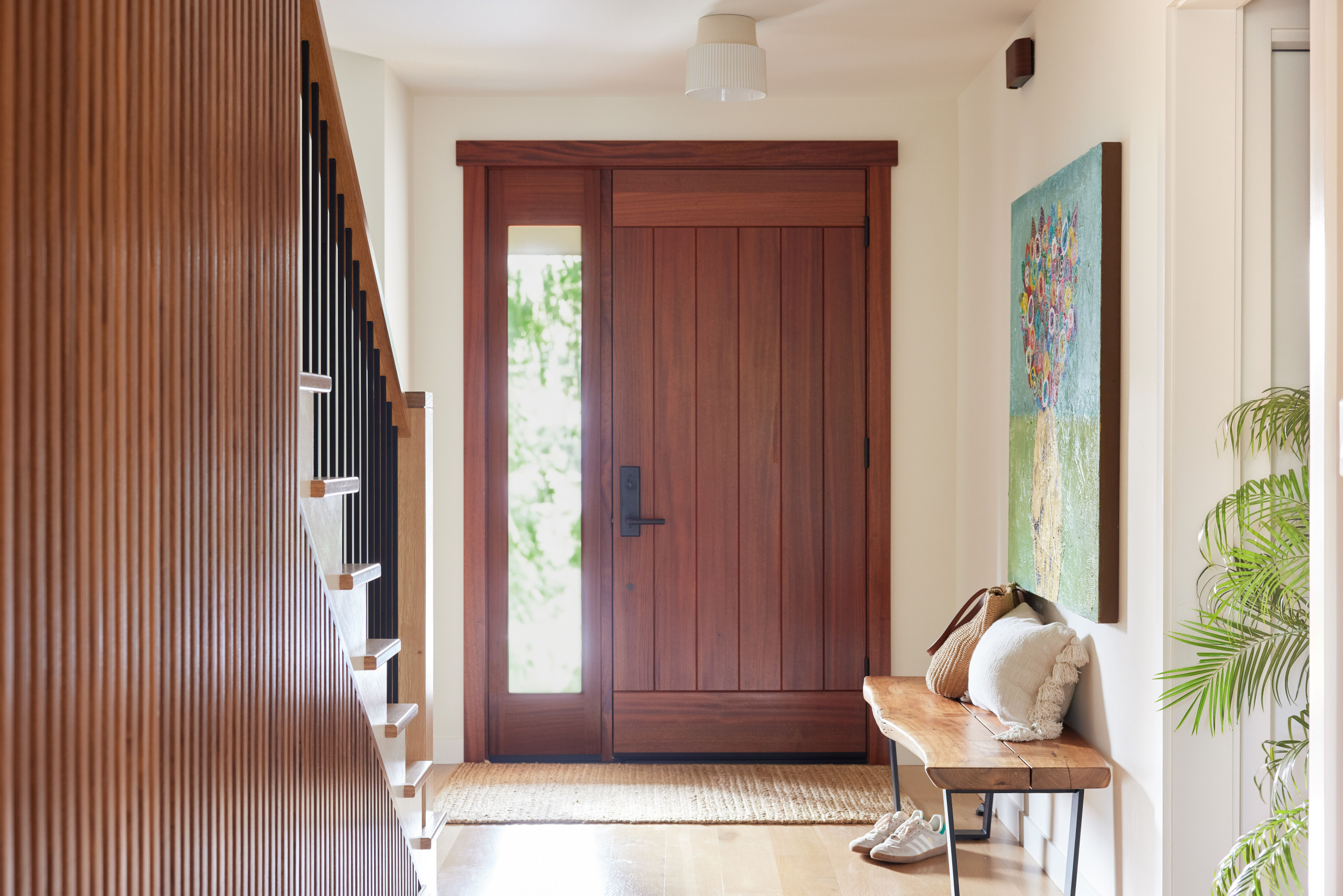
Too-small rugs can look like afterthoughts, while rugs that are too large make a space feel cramped. In larger foyers, a good rule of thumb is to measure the space and subtract about 18 inches from both the length and width to determine the ideal rug size. Depending on the entry’s dimensions, a runner, square or circular rug might work best.
If you don’t have room for at least a 3-by-5-foot rug laid horizontally to the threshold, opt for a narrow runner laid perpendicularly or simply use a doormat — but spring for the prettiest, highest-quality one you can afford. Leave a small gap between the rug and the walls for a neat, balanced look.
See why you should hire a professional who uses Houzz Pro software
If you don’t have room for at least a 3-by-5-foot rug laid horizontally to the threshold, opt for a narrow runner laid perpendicularly or simply use a doormat — but spring for the prettiest, highest-quality one you can afford. Leave a small gap between the rug and the walls for a neat, balanced look.
See why you should hire a professional who uses Houzz Pro software
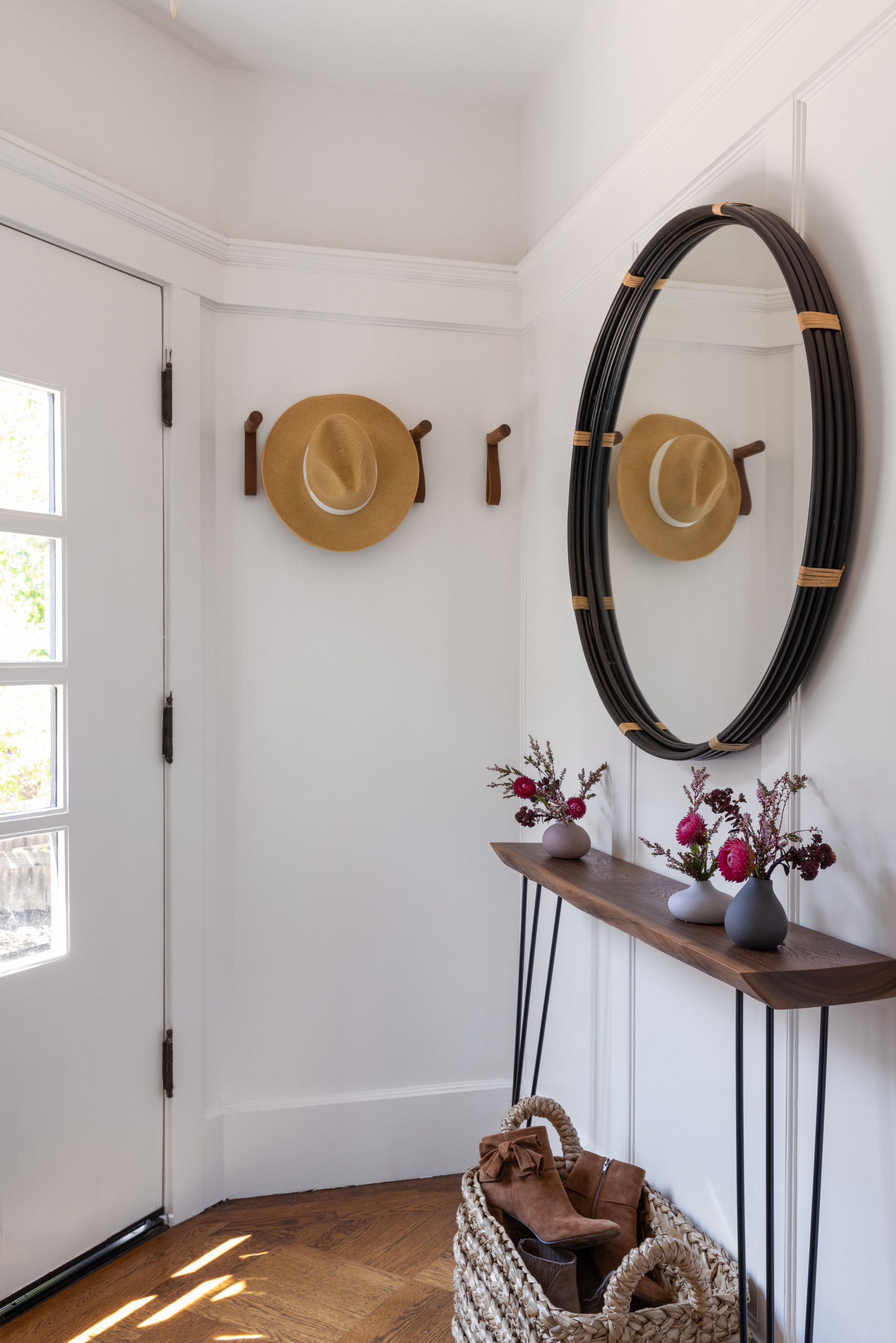
7. Consider Your Console
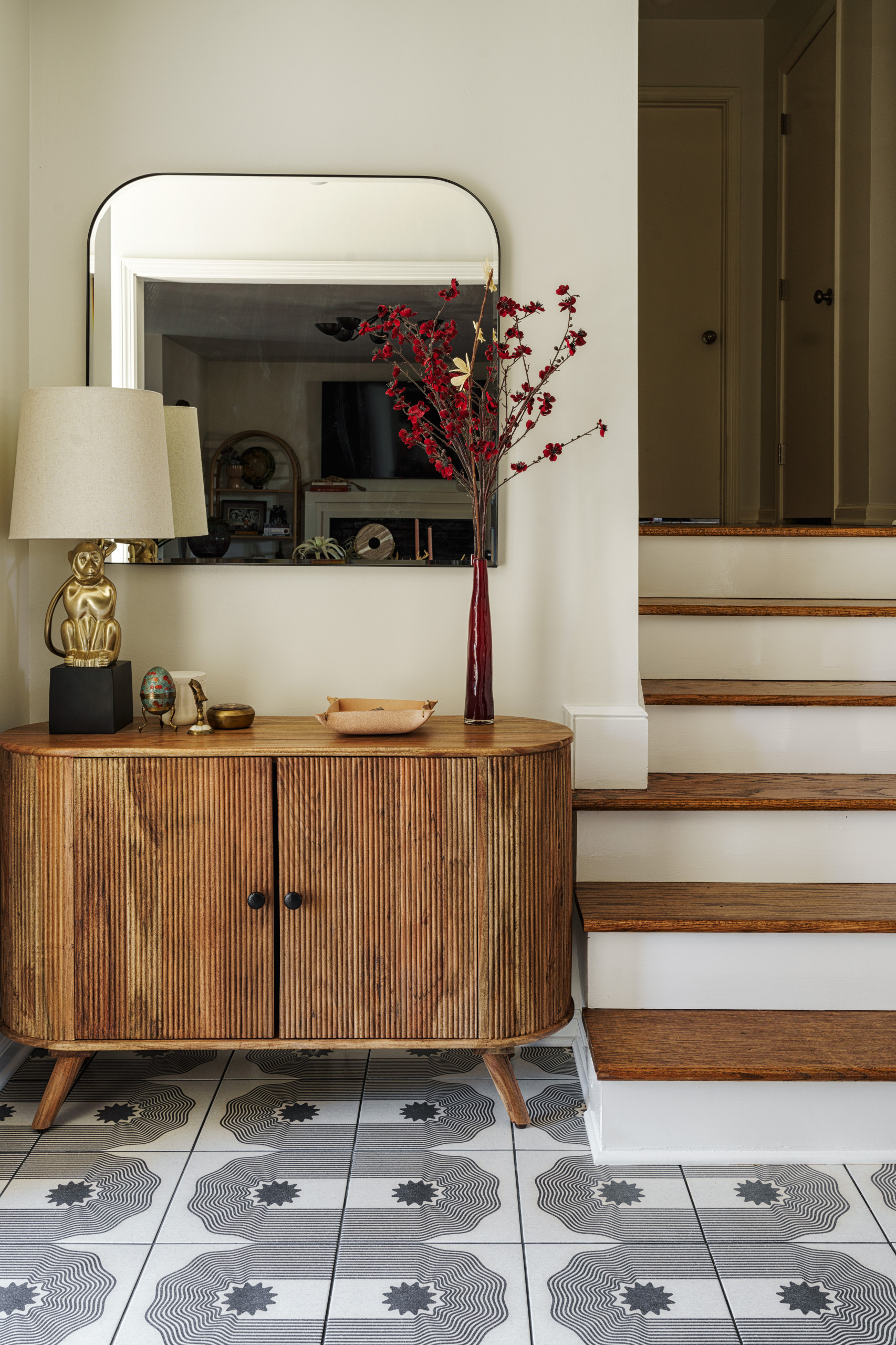
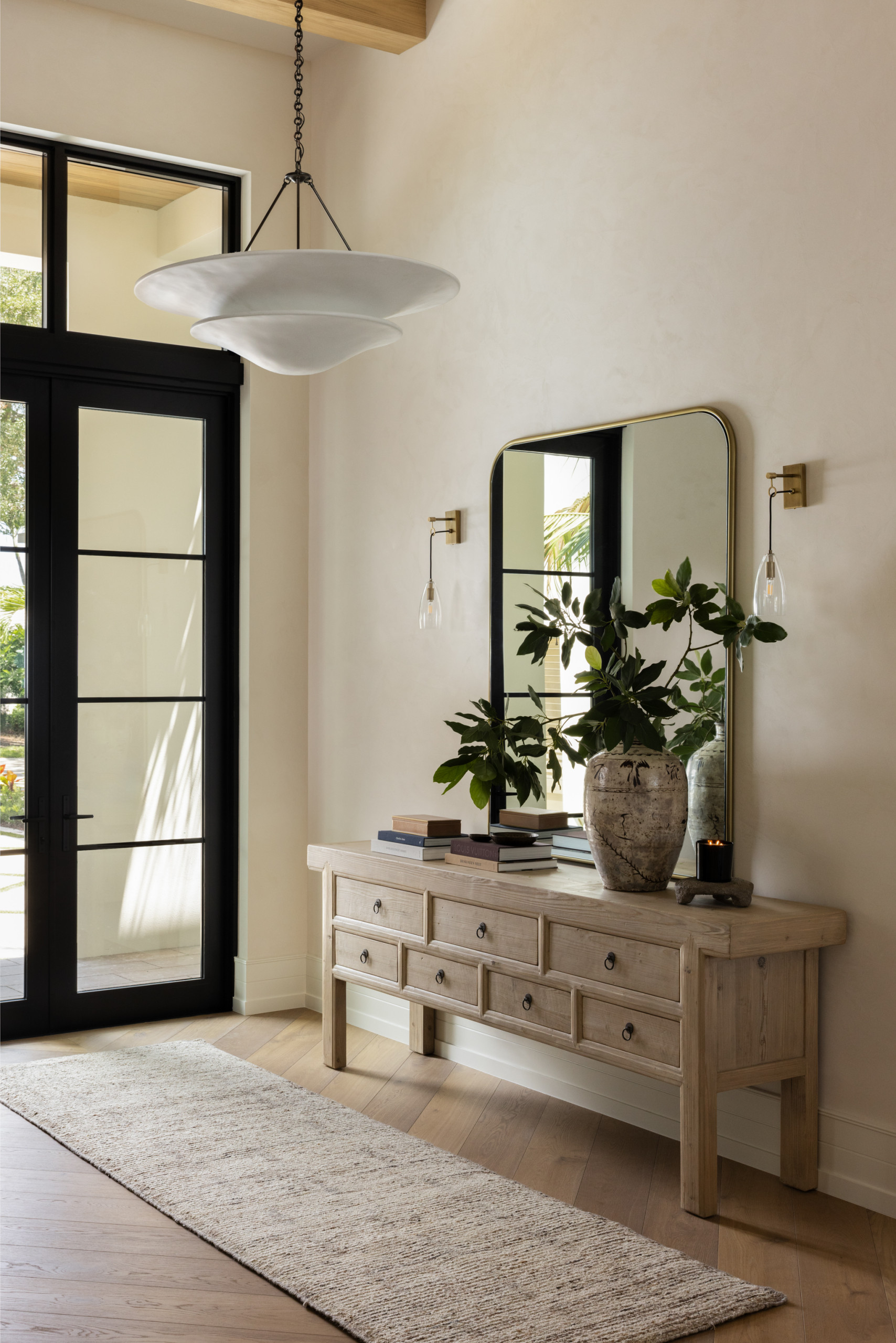
Even tiny entryways can benefit from a surface just inside the door, such as an open console or a wall-mounted shelf, to catch keys, sunglasses and mail. Placing a pretty catchall bowl or tray on top and baskets underneath can keep the area tidy while adding a decorative touch. If space allows, a small dresser offers even more concealed storage.
When styling the surface, think about balance and proportion. For a slim console against a wall, a few bud vases and a small bowl may be all you need. For larger consoles or dressers, designers often recommend placing a table lamp on one side, a matching lamp or plant of similar height on the other, and a stack of books and a catchall bowl or box in between. A large mirror or artwork completes the picture.
Key Entryway Dimensions for Homes Large and Small
Even tiny entryways can benefit from a surface just inside the door, such as an open console or a wall-mounted shelf, to catch keys, sunglasses and mail. Placing a pretty catchall bowl or tray on top and baskets underneath can keep the area tidy while adding a decorative touch. If space allows, a small dresser offers even more concealed storage.
When styling the surface, think about balance and proportion. For a slim console against a wall, a few bud vases and a small bowl may be all you need. For larger consoles or dressers, designers often recommend placing a table lamp on one side, a matching lamp or plant of similar height on the other, and a stack of books and a catchall bowl or box in between. A large mirror or artwork completes the picture.
Key Entryway Dimensions for Homes Large and Small
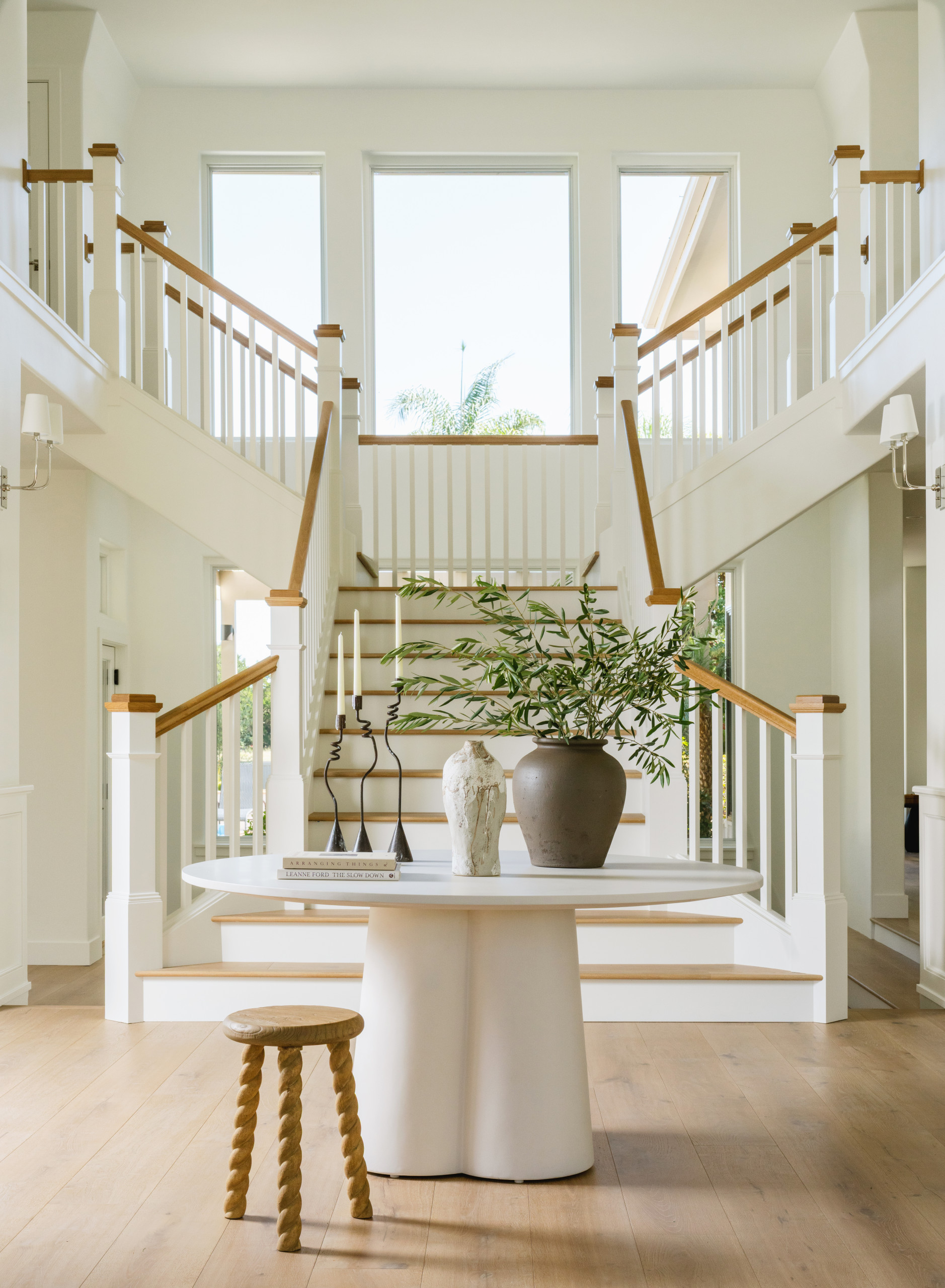
If your foyer feels too empty, try placing a table in the center rather than — or even in addition to — putting one against a wall. This creates a welcoming focal point and can make the space feel more intentional. Aim for at least 3 feet of clearance on all sides to keep pathways open, and choose a round table with a pedestal base to optimize flow. For styling, start with a tall, dramatic floral arrangement in the center and accessorize around it.
8. Hang or Lean a Mirror
Whether it’s a decorative mirror above the console or full-length version nearby, a mirror is a must-have for last-minute appearance checks and making a small entry feel larger. For the best effect, position the mirror so it bounces natural light into the room, and avoid placing it where it will reflect clutter.
What to Do When You Don’t Have a Front Entry
Whether it’s a decorative mirror above the console or full-length version nearby, a mirror is a must-have for last-minute appearance checks and making a small entry feel larger. For the best effect, position the mirror so it bounces natural light into the room, and avoid placing it where it will reflect clutter.
What to Do When You Don’t Have a Front Entry
9. Cover Your Walls
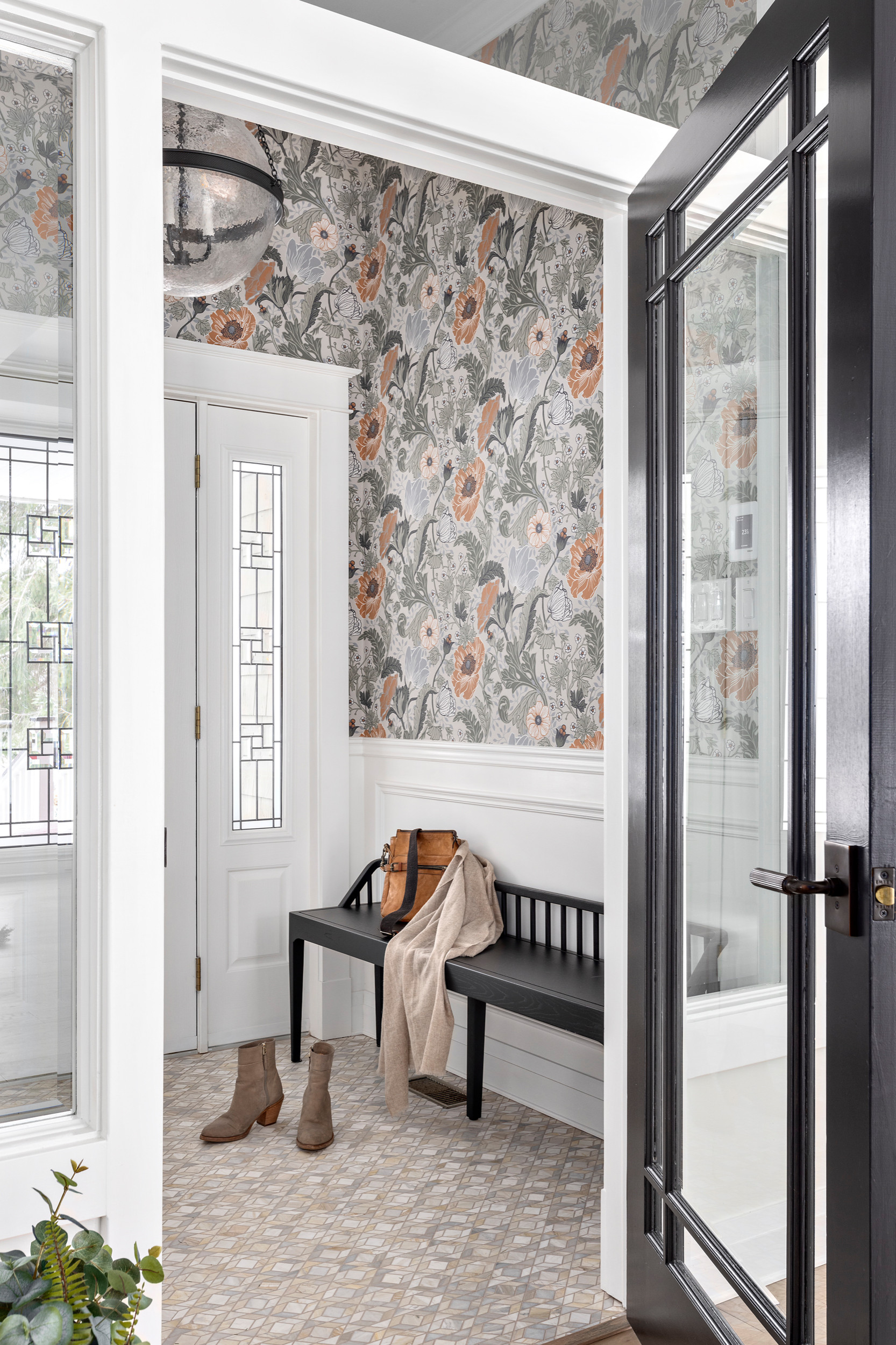
When an entryway flows seamlessly into an adjacent space, it’s usually your best bet to carry the wall treatment through for a cohesive look. But if you have a vestibule or foyer separated by an architectural element, such as a framed doorway or distinctive molding, you have the perfect chance to splash out with a contrasting paint color or statement wallpaper.
Designers suggest taking cues from the look of the rest of the home but dialing up the drama with richer tones and bolder patterns. Painting and hanging wallpaper may take more effort than than setting out a basket, but the payoff — a memorable first impression — is huge.
Not sure where to start on your home project? Learn the basics
When an entryway flows seamlessly into an adjacent space, it’s usually your best bet to carry the wall treatment through for a cohesive look. But if you have a vestibule or foyer separated by an architectural element, such as a framed doorway or distinctive molding, you have the perfect chance to splash out with a contrasting paint color or statement wallpaper.
Designers suggest taking cues from the look of the rest of the home but dialing up the drama with richer tones and bolder patterns. Painting and hanging wallpaper may take more effort than than setting out a basket, but the payoff — a memorable first impression — is huge.
Not sure where to start on your home project? Learn the basics
10. Swap Out Your Light Fixtures
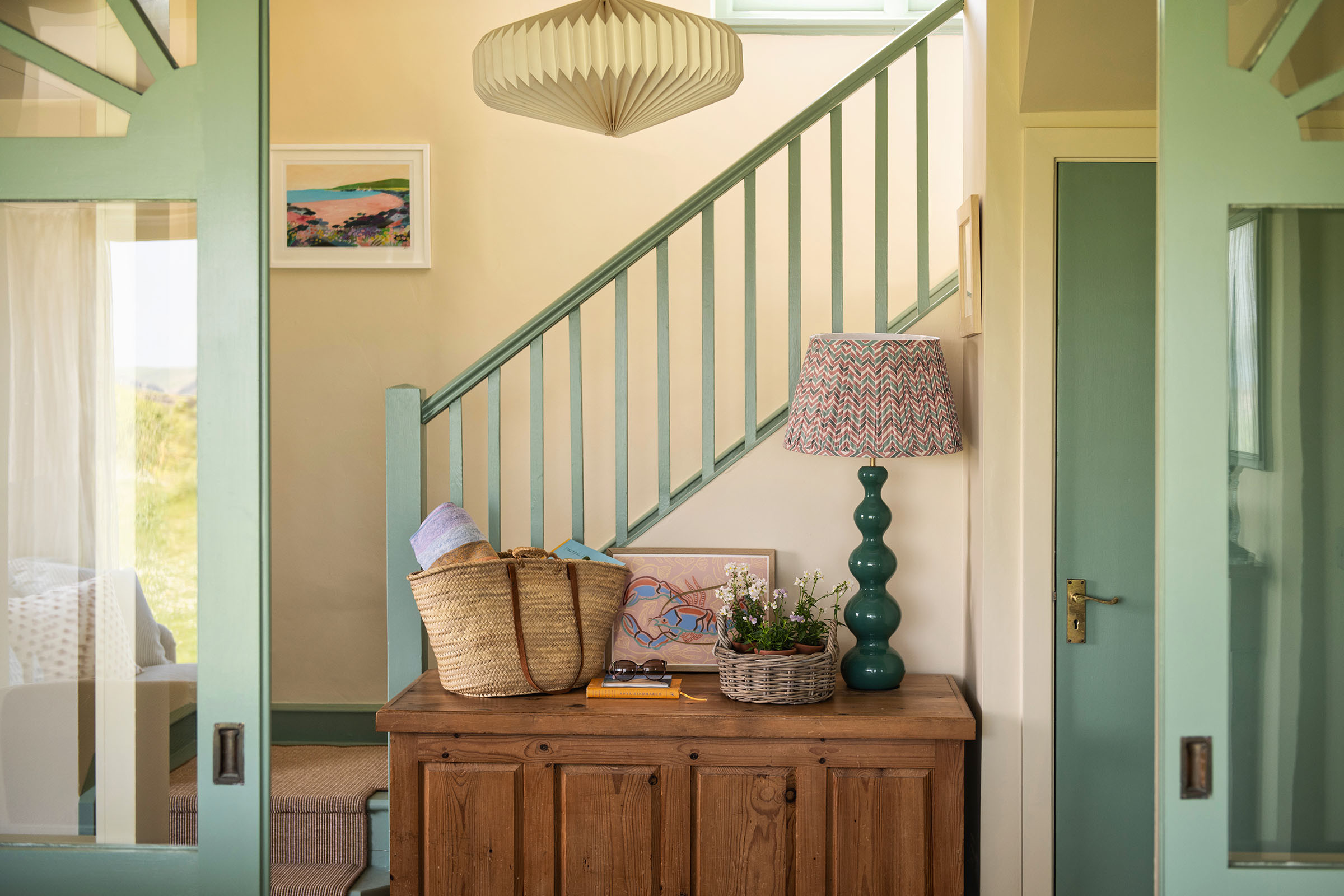
Replacing outdated or dim lighting is a quick and cost-effective way to boost brightness and style. An electrician can upgrade your current overhead fixture to a statement pendant or semiflush mount, or install a brand-new one.
As a rule of thumb, choose a fixture with a diameter about one-third the width of the room, and opt for warm bulbs (around 2700K) to create a welcoming glow. Layer the light with a table lamp on your console for softer, more flattering illumination. Installing a dimmer switch or smart bulbs will give you control over the mood throughout the day.
Finally, don’t overlook the power of accent lighting. Adding a sconce or picture light to highlight architectural details and artwork instantly elevates a space. Rechargeable options can make it as easy as setting out a basket, though a designer can help you get the right lighting mix — and bring the whole entryway together.
Tell us: What easy upgrades have made your entryway more functional and inviting? Share in the Comments.
More on Houzz
Read more entryway stories
Browse entryway photos
Find the right pro for your project
Replacing outdated or dim lighting is a quick and cost-effective way to boost brightness and style. An electrician can upgrade your current overhead fixture to a statement pendant or semiflush mount, or install a brand-new one.
As a rule of thumb, choose a fixture with a diameter about one-third the width of the room, and opt for warm bulbs (around 2700K) to create a welcoming glow. Layer the light with a table lamp on your console for softer, more flattering illumination. Installing a dimmer switch or smart bulbs will give you control over the mood throughout the day.
Finally, don’t overlook the power of accent lighting. Adding a sconce or picture light to highlight architectural details and artwork instantly elevates a space. Rechargeable options can make it as easy as setting out a basket, though a designer can help you get the right lighting mix — and bring the whole entryway together.
Tell us: What easy upgrades have made your entryway more functional and inviting? Share in the Comments.
More on Houzz
Read more entryway stories
Browse entryway photos
Find the right pro for your project

Sponsored
Sponsored

Leading Interior Designers in Columbus, Ohio & Ponte Vedra, Florida
Jackets, shoes, bags, mail, dog leashes and sports equipment often pile up in entryways. Left unchecked, these everyday items create not only visual clutter but also potential trip hazards — and make cleaning nearly impossible. Tackling this issue can instantly refresh your entryway’s appearance, and it doesn’t have to cost a thing.
Start by clearing everything out. Wipe down walls, trim and door frames with a damp sponge and a drop of dish soap to remove grime and fingerprints. Use a magic eraser for scuffs and tougher marks (test an inconspicuous spot first), and don’t forget to dust light fixtures and polish door hardware.
Before placing any furniture or decor back in the entry, ask yourself: Does this item serve a daily purpose or set the right tone for the rest of the house? If the answer is no, it doesn’t belong.
Once your space is clean and uncluttered, you’ll have a clearer sense of whether it needs a simple sprucing-up or calls for a more substantial redesign — perhaps even built-in cabinetry. For bigger projects, consider enlisting an interior designer, many of whom can be found on Houzz.
Find an interior designer on Houzz