
Search results for "Institutional" in Home Design Ideas


 MJ Neal Architects
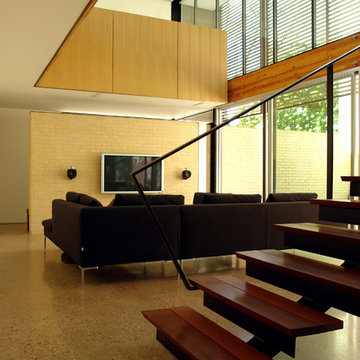
The American Institute of Architects in Austin has awarded MJ Neal Architects a 2009 Design Award for the Wolfe Den. We started competing for these city design awards in 2003 and we’ve won every year except for 2006, when we didn’t enter.
 Studio InSitu Architects
Awarded 2023 Citation Award by the American Institute of Architects Central MA Chapter
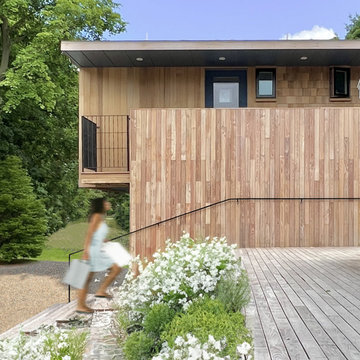
When multiple schemes to enlarge the existing ranch house on this parcel exceeded the project budget, this frugal scheme for a new outbuilding showed promise.
Cantilevers on opposing end-walls create a 30x24 second floor studio suite above a 22x24 garage.
Entry, service spaces, and a napping nook tuck under the shed roof’s low side, and the studio proper fills the high side.
Find the right local pro for your project
 Breathe Design Studio
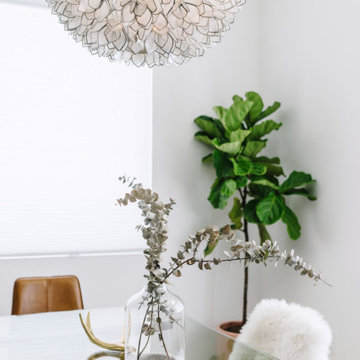
Completed in 2015, this project incorporates a Scandinavian vibe to enhance the modern architecture and farmhouse details. The vision was to create a balanced and consistent design to reflect clean lines and subtle rustic details, which creates a calm sanctuary. The whole home is not based on a design aesthetic, but rather how someone wants to feel in a space, specifically the feeling of being cozy, calm, and clean. This home is an interpretation of modern design without focusing on one specific genre; it boasts a midcentury master bedroom, stark and minimal bathrooms, an office that doubles as a music den, and modern open concept on the first floor. It’s the winner of the 2017 design award from the Austin Chapter of the American Institute of Architects and has been on the Tribeza Home Tour; in addition to being published in numerous magazines such as on the cover of Austin Home as well as Dwell Magazine, the cover of Seasonal Living Magazine, Tribeza, Rue Daily, HGTV, Hunker Home, and other international publications.
Featured on Dwell!
https://www.dwell.com/article/sustainability-is-the-centerpiece-of-this-new-austin-development-071e1a55

 Kansas City landscape and Design Contractor
Kansas City Landscape is one of kansas city best Kansas City landscaping companies / Kansas City Landscape Design is a Kansas City Area Landscape Company that continues to develop as a design discipline, and to respond to the various movements in architecture / design throughout Kansas City and the 20th and 21st centuries. Our goal is to create a sense of bliss around your KANSAS CITY metro home, starting at the entrance to your front door and leading to your own special place in your backyard. We are here to complete the vision you have always dreamed of in landscape design with Kansas City landscaping companies. We offer quality and craftsmanship that stand the test of time. We are specializing in all types of brickwork ,Stone Landscape, landscape fountains ,Hardscape, Landscape design, Landscape patio, Landscape Company Installation, Paver Patio Company Kansas City /Brick Paver Patio, Masonry services . From small renovations to multi-million dollar new construction, we handle commercial LANDSCAPE Kansas City, industrial and institutional work for clients seeking a KANSAS CITY landscape partner they can trust. Our final product is always beautifully constructed, fairly priced and delivered on time and on schedule
 Hurst Design Build Remodel
Rising Star Creative
Inspiration for a timeless kitchen remodel in Cleveland
Inspiration for a timeless kitchen remodel in Cleveland
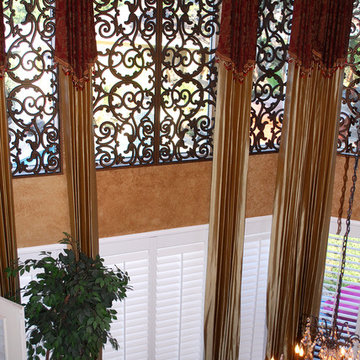
 Star Furniture
Meet Joyceanne Bowman
Joyceanne has been practicing interior design for 38 years. She studied Art History and History of Furniture Design at the prestigious Art Institute of Chicago.
Joyceanne believes in completing every detail necessary to make a beautiful home. All elements of a home are integral to the finished product, just like every brush stroke in a masterpiece.
"I enjoy all styles of design. Give me a project and I will execute it!"-Joyceanne
Contact Joyceanne and let her know that you found her on Houzz.com.
Webpage: https://www.starfurniture.com/joyceanne-bowman
Address: Star Furniture, 12350 I-10 West, San Antonio, TX
Phone: 210-558-7800
Email: jbowman@starfurniture.com
 Ward+Blake Architects
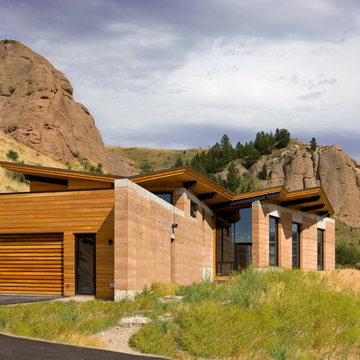
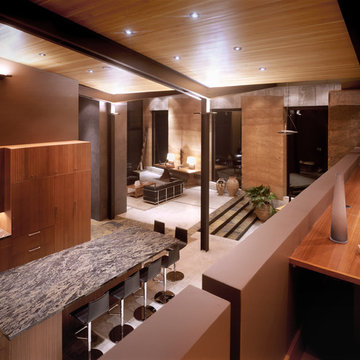
Naturally simple, the TK Pad is settled organically into a reddish-brown butte 10 miles south of Jackson. From its unadorned and earthy materials—most notably the post-tensioned rammed earth walls, patented by the architect and used here for the first time—to its butte-side orientation, the residence is in harmony with its environment for a successful design that won the architects an Award of Excellence in the “Built” category from the Wyoming chapter of the American Institute of Architects.

 Essential Habitat Architecture
This 1922 Craftsman was rehabbed and retrofitted to meet the Passive House standard. Certified by the Passivhaus Institut as the 1,000,000th square meter of Passive House in the world. www.midorihaus.com
Photos - K. Hurley
 Ward+Blake Architects
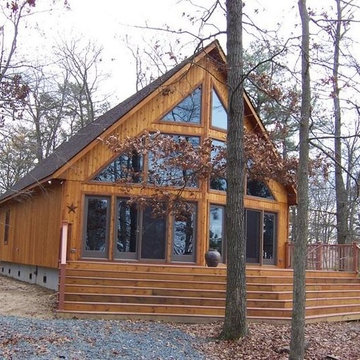
Naturally simple, the TK Pad is settled organically into a reddish-brown butte 10 miles south of Jackson. From its unadorned and earthy materials—most notably the post-tensioned rammed earth walls, patented by the architect and used here for the first time—to its butte-side orientation, the residence is in harmony with its environment for a successful design that won the architects an Award of Excellence in the “Built” category from the Wyoming chapter of the American Institute of Architects.
 MJH Construction, LLC
Full service residential and light commercial building, remodeling and design contractor
MJH Construction is committed to providing our customers with exceptional customer service, sound design, extreme craftsmanship, and the highest quality products to complete their projects and exceed expectations.
Owner and Founder, Michael J. Harkowa is a graduate of New York Institute of Technology with a Bachelor of Science Degree in Architecture. He has over 25 years of experience in the construction industry and has been a licensed contractor since 1989. He established MJH Construction in 1993 in Brentwood, NY, providing customers with remodeling and design services. In 1997, Mike moved to Maryland to pursue new opportunities in the remodeling and new construction markets as a founding member of Needwood Construction, LLC. He held the position of Senior Member/Partner of Needwood Construction, LLC for 15 years, as well as Vice President and later, President of Needwood Homes, Inc. for 9 years. In 2012, Mike re-established MJH Construction, LLC; providing building, remodeling & design services.
 Vastu Sankalpa Architectural Services- Kandy.
MIHIRI
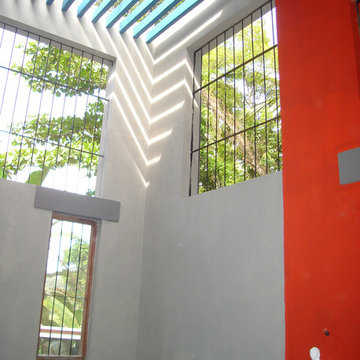
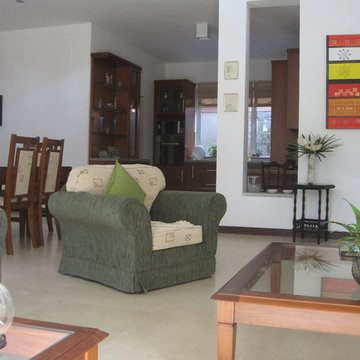
Inspiration for a tropical home design remodel in Other
Inspiration for a tropical home design remodel in Other
 Remodeling by Classic Homes
After finding a great neighborhood nestled in charming Keizer, Oregon, our clients went about leaving their mark on their new home.
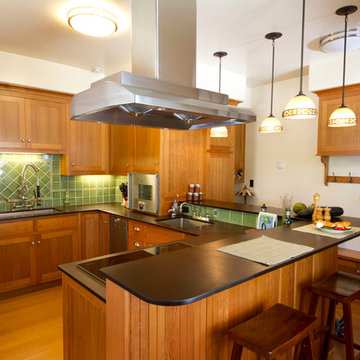
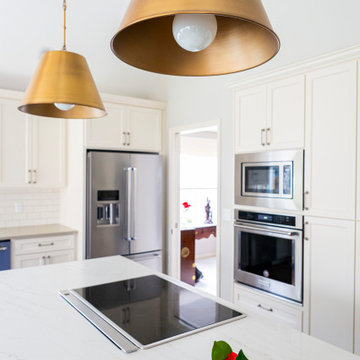
The kitchen was just too cramped and dark with the wood stained cabinets. We snagged a little unused space in the rarely used formal dining room and pushed the face of the cabinets, oven, and microwave flush with the wall. Trading unused space in the formal dining room gained us nearly two feet of prime work area in the kitchen.
With the space issue resolved we tackled brightening up the area. Replacing the black appliances with stainless steel KitchenAid microwave, oven, and a french door bottom mount fridge really helped. The full height Daltile Rittenhouse 3”x6” subway tile backsplash in Biscuit with Oyster Grey grout helped keep the kitchen bright while adding enough color to keep it from feeling “institutional”.
The two-tone quartz, Basix Portabello on the outer counter tops and Polarstone Pietra Danae on the island, along with the sleek Blanco Biscotti undermount sink add form and function. Being able to wipe the counter tops directly into the sink is a joy everyone should experience. We added a custom wine bar and the Navy Blue statement island to make this kitchen really stand out. The result was very happy clients who love spending time in their home.
 Greg D. Fisher, Architect, PLLC
Designed and hand built by the owner/architect, this home is one of the first PHI (Passive House Institute) certified projects in Northern Colorado.
Living room - modern living room idea in Denver
Living room - modern living room idea in Denver
 Electronic Design & Consulting, Inc.
This article is posted here with the consent of the author. The views and opinions expressed in this article are those of the author and do not necessarily reflect the official policy, position, view, or opinion of Crestron Electronics, Inc., or of any of its employees. Crestron Electronics is not responsible for, and does not verify the accuracy of, any of the information contained in this article.
By Jeff Singer
The “smart” revolution began several years ago with smartphones (a.k.a phones) and has extended in recent years to thermostats, doorbells, alarm systems, and kitchen appliances. Smart devices are so ubiquitous that the term “smart” is overused to the point that it is almost meaningless. Companies are eager to jump on the bandwagon and claim their products are “smart,” and consumers proudly claim they have a smart home because they have lighting control. Misconceptions about smart homes are prevalent and create confusion in the marketplace. This can have deleterious effects on businesses and underserve consumers. Here are seven of the most popular misconceptions about smart homes:
1. Apps are smart
Apps are convenient and easy to use. Yes, it seems there’s an app for everything. People expect to be able to download an app and do just about anything. App developers and many companies do not disavow consumers of this myth. On the contrary, they promote this idea with carefully worded descriptions. The promise of having the world at your fingertips for $1.99 is very enticing. Although it sounds too good to be true, it is also too good to pass up for many people. This leads to undervaluing home control and disappointment when the apps don’t work, which undermines confidence in our industry. The fact is that apps are not smart. They do not control anything. They must connect to and communicate with a control system or cloud service that processes, prioritizes, and executes commands. That’s the real magic and what most people do not understand.
2. Smart devices work together
With so many smart appliances and devices on the market today, it’s understandable that the average consumer might think that they actually communicate and work together. This is simply not the case. Smart devices are not that smart. They are designed and manufactured by different, often competing, companies. There are no national or industry standards governing these products. Even if they all operate using Wi-Fi® communications, that doesn’t mean they work together. Some companies promote a home control platform, which unites different devices from different companies – in theory. The platform is yet another third-party software totally dependent on other companies developing APIs and writing control modules for their hardware to run on that piece of software. The devices are not independently compatible. Also, when updates are made to either the hardware or the software, functionality may be affected for some period. That’s a nice way of saying the device or system won’t work and there’s no way of knowing for how long.
3. It’s a DIY project
Which brings us to the next myth, which is that the average person can do it themselves. Unless you are a skilled professional, I would not advise taking on a smart home project. You want to make a light turn on and off with your Alexa® or Google Assistant™ virtual assistant software, go for it. A smart home takes much more planning and expertise. I have no problem changing a light bulb or hanging a light fixture in my dining room; however, I am not going to rewire my house. I may change the flush valve in my toilet, but I’m not going to replace the pipes in my house. You get it. Integrating devices and systems, establishing different zones, creating scenes, designing the UI with a balance between control, feedback, and simplicity – all takes experience and skill.
4. Need a programmer to make changes
Early adopters may have experienced the pain of trying to make a simple change or update to their home control system. Years ago, if the cable provider changed the channel line-up, the homeowner would have to call the dealer or programmer to make an appointment for them to come out to the house to reprogram the system. The system wouldn’t work as expected until it was updated, which often took several days and beaucoup bucks. Not anymore. Technology has evolved so now it’s easy for system owners to change favorite channels, create scenes, rename buttons, update images, and more. While a professional is needed for the initial installation and setup, the system is easy to manage once it’s up and running. This makes life so much easier for both dealer and customer.
5. Tech becomes obsolete quickly
Similar to updating the UI, updating firmware or hardware used to be a stressful process. A smart home should be intelligent enough to update itself. Apps don’t become obsolete. Updates are constantly pushed out from the cloud, making them better all the time. The same is true for a good smart home system. New features, functions, and device support gets added in the background consistently, so the system you installed (or purchased) yesterday gets better over time. Swapping out decorative elements, such as keypads, dimmers, and touch screens is also seamless. When a new device is added, all the settings are pulled down from the cloud and it just works. No system interruptions. No sunk costs. No imposing house calls. No surprise bills.
6. Lighting control saves energy and money
Lighting control is one of the most popular smart systems, but it takes more than just one system to make a home smart. On the surface, it makes sense that if you dim the lights ten percent, then you save ten percent of energy costs. If the shades are raised during the day to take advantage of sunlight so the lights don’t need to be on (or at least not 100%), but that causes the room temperature to rise a few degrees, which triggers the air conditioner to run longer and more often, was energy usage (or cost) reduced? A smart home integrates all the various systems and technology to optimize comfort, convenience, safety, and sometimes energy.
7. Home technology is easy to hack
Security is at the forefront of people’s minds these days. Personal identities are stolen; email accounts hacked; private photos publicized; and more. A smart home must outsmart those who don’t respect privacy. Crestron control systems adhere to the strictest security standards. The same Crestron control system that goes into a home is also installed in secure government and military facilities, global banking institutions, hospitals, and other mission critical applications. When installed correctly by a trained professional, a Crestron smart home is the gold standard for security, comfort, and convenience.
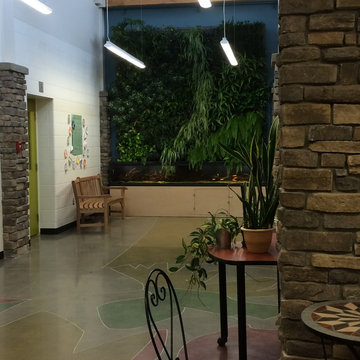
 Vertical Oxygen Ltd
Vertical Oxygen
Inspiration for a large transitional concrete floor hallway remodel in Calgary with blue walls
Inspiration for a large transitional concrete floor hallway remodel in Calgary with blue walls
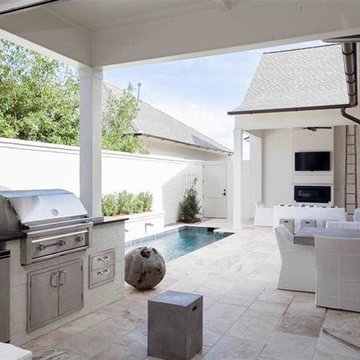
 Le Jardin Development, LLC
Best known for his designs in Rosemary Beach, Alys Beach and along the 30-A corridor in Florida, renowned Architect Matthew Savioe brings his talents back to Baton Rouge! After months of tweaking the plans and the purchase of this beautiful lot, we believe this home will be a stunning marriage of concept, function and aesthetics. Rusty Golden, owner of LeJardin Development, is the 2013 President of the CRBA, Graduate of the Green Institute of Building and has completed many fantastic homes in the area. This home will enjoy top of the line products, Green features and a clean style that allows your art and furnishing to tell your story. Open plan with 3 bedrooms plus an office/den upstairs and lots of natural light throughout.
107