Software
Houzz Logo Print
ruckusev

Pruning Oak Tree Waterspouts

10 years ago

Does anyone have any advice about removing waterspouts from the trunk of an oak tree? As you can see, we've been ignoring them a few seasons and they're about to make a tree of their own. I think winter is the season to do it, but should we just do a few at a time? Any other tips? Thanks so much.

Comments (21)

  • 10 years ago

    Actually ruck. me no can see. Regardless, a profusion of "watersprouts"-yet another terrible name for what amount to new branches, albeit from a source different than some other branch origins-often indicates a tree under significant stress. It would not be too much of a stretch to say that this bursting forth of epicormic shoots up and down the trunk of such a tree is indicative of wholesale failure of the tree's vascular system. It would rather not be dedicating resources to these structures, but something "is telling the tree" that it is in trouble. Sure, you may want to remove these sprouts-I would too-but that does nothing to either diagnose or treat whatever it is that is ailing the tree. A few questions: Has there been construction/dirt work nearby this tree? Any grade changes? Any changes to drainage patterns anywhere near this tree? Any lawn weed-control products used recently? Any major environmental factors of late, such as drought, too much rainfall? Etc...

    What I'm getting at, is this is almost always a sign of stress, so it maybe beneficial to try to nail down what this stress factor is. Any additional input for us?

    +oM

  • 10 years ago

    of my near hundred oaks... i have never seen a watersprout ... so i am questioning your premise ...


    where are you ...


    what kind of oaks..


    how about some pix ... in other words... as tom notes... no 'i cant see'


    ken

  • 10 years ago

    We have indeed seen a handful of oaks-these are street trees-exhibiting multiple trunk watersprouts. Invariably, these were trees that had had their roots dinged up by street reconstruction or the like. Not a good omen, as they say.

    +oM

  • 10 years ago

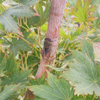
    Wow, that is not good news, but obviously I really need to know what you're telling me, so thank you! And yes, sorry, I guess I needed to sign in first to be able to upload the photo. So, here is the picture. No work has been done around the tree, just the usual mowing, no changes to drainage and we don't use any herbicides on the lawn (thus our nice lush weeds). I called them "waterspouts" because our tree company called them that. They never mentioned the stress angle, but they always want to remove the waterspouts and we used to let them but the last few years we've had other projects that seemed more pressing (storms, etc.).


    So I'm not sure what could be stressing the oak (and sorry, I don't know exactly what kind it is, it was already pretty big when we moved in 12 years ago). I'm wondering if maybe the roots have run into pipes underground? I can't think what else could be affecting the tree, but clearly something is. I almost hate to ask, but did the street trees exhibiting similar waterspouts ever recover? Anyway, thanks, all, and if you have any additional ideas about how I could pursue this, please let me know. I really do appreciate the advice, I like our tree company but I never feel as if I'm getting 100 percent disinterested advice (from any tree company).

  • 10 years ago
    last modified: 10 years ago

    Hey Ruck, thanks for posting the pic. As far as terminology, I guess maybe it seemed I was balling you out for using the term. I didn't mean that...just saying, these types of branch initiations are known variously as suckers and/or watersprouts, and neither is in any way descriptive of anything about them! Nothing on you.

    The tree looks quite good, so far as I can tell. It appears to have a more or less full crown-again, from what I can see-and this is a good sign. Are there lots of dead branches? Again, I don't see that but I'm not standing there either. But....bottom line, now that I know, or think I know that this is a reasonably healthy oak tree, then yes, I too would likely prune those off or have same done by somebody with an aerial truck. It's still somewhat troubling that they formed in the first place, but at least, this doesn't present as some terminal tree, throwing out its last gasp of life.

    The oaks where I reported those watersprouts on the trunk varied in outcome. first, this was not a lot of trees, just a few. I think one-a red oak-is gone, but it was in much worse shape than I think yours is. Another-to be honest, the only other that I remember-I don't do such street tree work these days-is still there. Also a red oak, and a very large one, it seems to have recovered from whatever ailed it, which I do believe was new street/sidewalk work, which can be very hard on mature trees.

    My guesstimate is that you can have these sprouts removed with no apparent bad outcome.

    +om

  • 10 years ago

    Well, that IS a little bit of good news! Thank you, and thanks for the information. I do think the tree is pretty healthy otherwise, I didn't notice any dead branches at all on it this season. The rest of the tree seemed beautiful, as usual. You can't really tell how big it is from my (not very good)l picture, but it's quite tall. Still, if waterspRouts (I'll try to start getting that right!) indicate stress from somewhere, I will give that some thought and definitely keep an eye out next season. We will plan to take off about half the watersprouts (or .... whatever those bushy trunk sprouting mini-branches should correctly be called!) this winter, and take the rest off next winter. And keep our fingers crossed! Thanks again, really appreciate it.

  • 10 years ago

    Sounds perfect. Yeah, I think you'd expect some sprouts on a big old tree, just a little excessive. Half this year, half next is a good idea, and winter avoids the wilt, if you're in an oak wilt area.

    That does look like a nice tall tree. What state is it/you in?

    +oM

  • 10 years ago

    Connecticut. I'm not sure if we have oak wilt in our area but I'll look that up. Our main concern the last few years has been a big sugar maple that really has been declining, a few dead branches every year. It doesn't seem to be getting worse, but there were still a few this year. So we were busy looking up maple decline. Now we'll have to research oak wilt! Always something, but I'm just grateful to have the trees. Thanks again for your help!

  • 10 years ago

    Yes, as far as oak wilt, if it's not present in your immediate area, the likelihood of your tree becoming infected, while not set to zero, is considerably reduced. In groves of susceptible oaks, it is often roots that have grafted together that leads to disease spread. The other main vector is the picnic beetle, that little guy that also likes to crawl down inside your open bottle of suds, should you be so inclined to drink that item. It's the yeasty smell they are after and same is true with an oak infected with this disease-since it's fungal, it has roughly the same kind of smell. Therefore, in any area where oak wilt is a possibility, it is recommended the trees not be pruned during the growing season. You'll be good with your plan.

    Sugar maples in urban sites, etc. are failing all over the place. I'm sure you've become educated in that syndrome, and the fact it appears to be coming from multiple directions. Meanwhile, in any go-to-hell woods around here, so long as it's not a buckthorn hell, sugar maple will be the predominant understory tree. That is, they don't seem to be suffering in their native haunts, but streetside, etc. we're losing them fast.

    +oM

  • 10 years ago

    Very interesting! Well, very sad about the sugar maples, but interesting. We have two not far from each other, both were already large before we moved in, and one is magnificent, like a calendar picture, and one is really struggling. That's the one closer to the house (although the other one is not far from the garage). But unfortunately for me, I think I weakened the one near the house by planting epimedium and a few other shade plants under it about 8 years ago. I love that garden, it's thrived beautifully, and I was told that small shallow rooted plants wouldn't affect a mature sugar maple, but ... I think they did. It was a very delayed reaction, and there might be other factors at work, too, but the planting definitely didn't help. Live and learn. But I wish I didn't have to kill anything while I was learning. Thanks for the info! Happy Thanksgiving:)

  • 10 years ago

    I'd be somewhat surprised if you materially affected the big maple tree via an underplanting. Now, I wasn't there of course...don't know what level of soil and root disturbance this might have involved, but still it seems far-fetched to me. But on other levels, sugar maples are under attack just due to things like soil compaction, de-icing materials, drought, a warming planet, and other factors almost too numerous to mention. I tend to think of it as, the last 100 years or so just happened to be a little sweet spot where a lot of things seemed to work without too many problems, and that we are now in a different era where these issues are coming home to roost. Of course, I don't really know!

    The best to you as well.

  • 10 years ago

    I think you are exactly right. And of course, I'm grateful for your comment because it makes me feel a little less guilty -- but I guess I shouldn't really be feeling BETTER thinking about those very negative trends in our environment! But, just for a minute, about this one particular tree, I do feel better:) Thank you. Talk to you soon, I'm sure I'll have more questions about my trees and everything else I'm trying to keep alive in my little corner of the world!


  • 10 years ago

    Quick look not producing any previous discussion of this so I will say the long stretch of otherwise branch-free trunk that these are coming out of makes me think the oak had a bunch of existing branches cut off previously, has responded since with this crop of replacements. So the stress in this instance was the heavy pruning.

  • 10 years ago

    Yes, while we've lived here (12 plus years) we've removed those types of branches before a couple of times, so that may just be encouraging it! There might have been other pruning of branches done before our time, too. So I guess removing the current "crop" will encourage another. I'm not sure how to get out of this loop, because it sounds like leaving them will also take away nutrients, etc. from the rest of the tree. Maybe we should just try to keep up with it better, so that the pruning stress is less. Thanks for your observation, I appreciate it.

  • 10 years ago

    Timing of sucker removal can make a difference. Basically, mid-summer removal is slightly to fairly less apt to be followed by an immediate flush of new sprouts. Also-and I don't think this is going to work in this instance-if you can select one or two better ones-by better I mean more well-placed-and remove the rest, the plant can sometimes be less apt to re-sucker. I say I don't think that'll work here because it does not look to me like you'd want a branch or branches that low.

    It looks good the way it is, except for those suckers!

    +oM

  • 10 years ago

    We're getting rid of those! Slowly... :) Thanks, +oM!

  • 10 years ago

    Another cause of abnormal sprouting from the trunk is when the trunk has been girdled at some time constricting the flow of juices going up the tree. Look up for a ring around the trunk above the sprouts. It may have healed over and difficult to see.

    In this case, I don't think girdling is the cause. I'm thinking Embothrium nailed it.

    The solution is to cut off the sprouts as soon as they appear. If you wait then the wound is large and you get more sprouts. When those sprouts are first visible rub them off. If more come, rub them off. Pretty soon you won't have anymore sprouts. The object is to get them as early as possible. Diligence is the word of the day here.

    Mike

  • 10 years ago

    Diligence! That darn word. Always my downfall:) Thank you, Mike, I actually was thinking about asking everyone a little more about how to handle the new sprouts going forward, so I appreciate this. The information really helps, because a lot of times I think we put things off about the trees, and the property in general, when we don't quite know what to do so we just don't think about it for another season. When you have specific knowledge, it's a lot easier to just go follow the instructions! So that's what we'll do. Again, thanks so much, this has been like a mini-seminar and was exactly what we needed.

  • 10 years ago

    If I'm seeing it correctly, it looks like perhaps out of reach from the ground. If so, the purchase of a good pole saw would be worth the expense. With it, you could just kind of drag the blade across the newly-emerging sprouts to effect the rubbing off that Mike mentions. Make sense? I'm talking with the blade more or less at a tangent to the trunk. No need to really bite in-a simple rubbing effect will get them when they are newly-emerged and tiny.

    BTW, if one were to purchase a pole saw, I don't think the combo units are all that. I'd rather have a separate pole pruner and pole saw than one unit with both. It gets too clunky having that amount of hardware on the end of the pole and makes getting a good cutting angle difficult to impossible at times. Pros don't use combo units, for these reasons.

    +oM

  • 10 years ago

    I totally agree, +om.

    My pro arborist has one with just the blade. I used it for months opening up several acres of woods. I cut a lot of hemlock, maple and Doug fir limbs. The saw was still fairly sharp after that, but I bought him a new blade anyway for the use of the pole saw. The blade was just over $100! Well worth it though. That blade is awesome!

    He also has a chainsaw on a pole, but it's a bit cumbersome and is more often used for the larger cuts.

    I have used a saw as you described to cut a lot of sprouts when they sprout in groups and over 6 inches in length. Then when they just start to sprout again I've used an old piece of canvas or towel. A good pair of leather gloves works for me the majority of the time.

    Mike

  • 10 years ago

    EXCELLENT information, guys, thank you so much!

Sponsored
Daniel Home
Average rating: 4.8 out of 5 stars20 Reviews
Premier Interior Design Team Transforming Spaces in Franklin Co, Ohio