Software
Houzz Logo Print
ancientgardener

Eggplant Problem

10 years ago

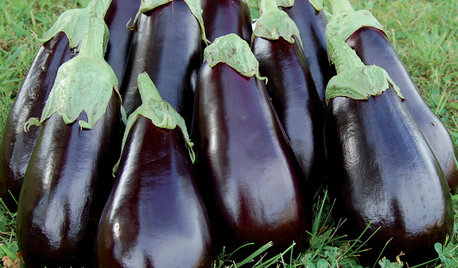
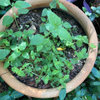
Some insect has eaten all my eggplants. I have put them out a various times and it takes only a few days for them to be covered in tiny holes. Makes them look like lace. Also, the Tomatillos have been infected but I have managed to save them with insect spray. I still have time, should I try again and what should I do to prevent this problem?

Comments (11)

  • 10 years ago

    I think your first step would be to try to identify the culprit. Flea beetles do that kind of thing, and just on eggplants, tomatoes, and peppers. But eggplant is their favorite. If that's the problem there are many benign repellents. Look hard to see who it is, and compare with pictures of flea beetles, which are tiny black shiny beetles that jump.

  • 10 years ago
    last modified: 10 years ago

    IME flea beetles prefer potatoes to eggplant (but eggplant is second best). Tomatillos are nightshade family so I am sure they could eat them too...

    It is probably flea beetles. Their peak season is pretty short.

  • 10 years ago
    last modified: 10 years ago

    "... what should I do to prevent this problem?"

    I agree with the above that it certainly sounds like flea beetles. I also agree that the same flea beetles that prefer potatoes, are the same ones that enjoy eggplant.

    Last year I fought an epic battle with flea beetles on my eggplant. With me sitting on a milk crate 3 times a day crushing the little buggers between my fingers, they attempted to devastate my crop. While I sat there, periodically sliding my crate from one plant to the next, squishing thousands of them one at a time, I thought... "there has to be a better way!"

    I searched the internet, I read GW threads, I looked for yellow sticky traps around town... everything short of falling back on insecticides. What I found that seemed the most promising, as well as requiring the least intervention, was a 'trap crop' combined with insect barrier row covers.

    I had read that radish was even more favored than eggplant. So, this spring, I bought a packet of radish. Before the eggplant was ready to go out, I planted a few radish. I don't mind radish, but it isn't my favorite veggie. I could live with, or without it, so I usually don't spend money on the seed. So, I figured that if I got an open pollinated, or heirloom variety, I could have my cake, and feed some of it to the flea beetles.

    I planted 6 radish seeds. But, I also devoted a small section of the same bed to potatoes. The potato patch was right between the radish, and the adjacent bed- the future home of the eggplant. The radish grew nicely, and the potatoes were doing fine. One day, getting close to the time for transplanting the eggplant, I did an inspection of the radish, hoping to start my eradication of the flea beetles. What did I find? That I made an ignorant mistake. I had bought an open=pollinated variety of radish, but it was daikon :-|. Turns out, that not one black flea beetle was on the radish. Instead, the potatoes were absolutely infested lol. There were a few striped flea beetles on the radish, but not even enough to count.

    Removing the black flea beetles from the potatoes proved too difficult. I pinched where I could see them easily, but the potatoes, while full of holes, are chugging along just fine. No potato bugs, just flea beetles.

    However, what now to do with the eggplant?

    I had 2 open beds... one right next to the potato patch, and another over, and up a bed. So, having started more eggplant than I needed from last year's saved seeds, I decided to change my plans. I put the best eggplant seedlings in the top bed, and put the cucumbers where the eggplants were supposed to go. I covered the main eggplant bed with insect barrier, and planted a row of poor eggplant seedlings between the places reserved for the cukes and left them uncovered. As expected, the flea beetles quickly found the unprotected eggplants and are feasting on them as we speak. I take 5 mins and squish what I can see when I have a few extra mins, but otherwise, I care not a wit what happens to them.

    In the meantime, the eggplants under the row covers are preforming wonderfully. Not a flea beetle to be seen!

    That's my story, and I'm gleefully sticking to it!

    Oh, and this fall I hope to have daikons, along with striped flea beetle protein in my salad lol.

  • 10 years ago

    They probably are flea beetles. I haven't been able to find them, but they may have moved on after they destroyed the eggplants. I think I have one remaining eggplant that looks ok. I will go out and check again, they may be on that plant. Thanks for the advice if I plant a few more I may try the row covers. I have never used them.

  • 10 years ago

    Eggplants are hard to grow because of flea beetles. Cover them with floating row cover as much as possible.

  • 10 years ago

    Row covers are pretty much impermeable to them, but diatomaceous earth may be the cheapest and easiest solution. It works. Be aware that adults overwinter in the soil and emerge in the spring, so cultivation during the winter could help suppress them.

  • 10 years ago

    On the plants that are bothered by things laying eggs-or wilt in the cucumbers, would it help to cover with row covers or is there a problem with fertilization? Just wondering. I hate that worm that gets in zuchinni. Barb

  • 10 years ago
    last modified: 10 years ago

    I cover my zucchini. The problem with covering zucchini though, is that you do have to hand pollinate. Is that what you mean by fertilization? Hand pollinating is a little more work, but I don't mind because without the covers the squash vine borers would destroy the entire crop. The eggplant is a bit easier because once the plants are ready to flower, typically they are large enough, and established enough to not be killed by the flea beetles - thus the covers can be taken off. I'll wait until they flower, or they are 1' - 1 1/2' tall, whichever comes first.

  • 10 years ago

    This is the first year my eggplants have stayed unmolested. They always bounce back for me with at least a couple fruit per plant...

  • 10 years ago

    rgreen48 Give me some more info on hand pollinating and when and how. Thanks so much. Bb

  • 10 years ago
    last modified: 10 years ago

    Hand pollinating is actually quite simple. First, you need to identify the male, and the female flowers. You can do a web search for pics if you need, but in general, the male flower is atop a single stem. The female is atop an immature fruit. Inside the male flower is a stamen (like a post) covered in pollen. The easiest way I know of, is to cut off a male flower with some of the flower-stem still attached (you'll use that stem as a handle.) Remove the petals and you'll have the pollen-covered stamen exposed. Be gentle, especially in dry weather the pollen can fall off if you bump it around.

    Find a female flower and touch the pollen to the 'stigma' of the female flowers. It doesn't take much. If you have just one male flower, and are careful, you can pollinate a few females.

    If you are saving seed, try to use the male flower off of a plant that has good qualities, and use it to pollinate a female on a plant with good qualities. Then remember that particular fruit. If you aren't saving seeds, it won't matter; the fruit has the characteristics of the plant that the female is growing on. Only the seeds (the next generation) is affected by your choice of male flower.

    A squash blossom, for the most part, is only open and viable for a day - often, only a few hours. The best time is early morning, soon after they open. If you wait too long, insects that can get under the row cover (like ants), can remove a lot-to-all of the pollen before you get to it.

    If you are saving the male flowers to eat (or you just do not wish to remove the male flowers,) you can use a paint brush, or a cotton swab to transfer the pollen without removing the petals from the male.

    Hand pollinating is quite easy, and if you get in the habit of doing it early each morning, depending on the availability of both male and female blossoms, your yield will increase to almost 100% pollination.