Software
Houzz Logo Print
kathleen_marineau

Will induction work during canning season?

Will need to replace my LG gas (propane) range, probably next year. I like a gas range for holidays and canning season. I often have 4 or 5 burners going simultaneously, such as 2 pressure canners, large cooking pot (jam or peeling tomatoes), and a couple small pots.

My concern is my electric panel. When our heat pump comes on, the lights dim briefly. I think we are maxed out on our panels (2, one for downstairs apt, one for upstairs).

Comments (32)

  • 2 years ago

    You don't mention this in your question, but it's implied in the title. Are you replacing your propane range with an induction one? If so, then you have a valid concern. How big is your main service? How many other big things are on it? How much does the induction range consume when all burners are on? These questions must be addressed before you remove your existing range.

    Kathleen Marineau thanked mtvhike
  • PRO
    2 years ago

    Where I live your new induction range will require a dedicated circuit so that requires an electrician to check out if your electrical can handle the new range . That is the first step to making the change . From what you are describing my guess is an upgrade to your service even before this change it was probably needed.


    Kathleen Marineau thanked Patricia Colwell Consulting
  • 2 years ago

    My 36" induction cooktop requires a 50 amp breaker.

    Kathleen Marineau thanked Seabornman
  • 2 years ago

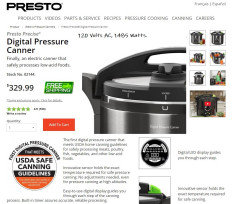
    My mom loves canning and has always had either gas or electric coil stovetop. She would like to make a change but everything I've read it's not a good choice. Most canners are not made of a magnetic material, which you need for induction. Her solution is to get an electric canner so she can go with the induction stovetop.

    Kathleen Marineau thanked Emily
  • 2 years ago

    This spring we converted a sunroom to a laundry due to old age (80yr) and old narrow stairs. The electrician used the last available space on the 1976 electrical panel for the dryer. There are 2 unused 220 outlets, one for the original electric stove and one for a chest freezer (in the dining room). But neither of them has 50amp on the electric panel; they are both 40amp.

    In all the store and environmental spiels for induction, they extol the lower cost, faster cooking, fire/burn safety without mentioning electrical requirements. I came across that info accidentally in reading posts about updating very old homes. I don't understand why the people who's business is remodeling don't mention the extra cost.

    If my interpretation of what little info I've found is correct, we would need to put in a new panel at a few thousand dollar cost. Maybe more than a few. I recall someone quoting $8000.

    On the other hand, if it would eliminate the inherent risks of a gas stove and keep us out of a nursing home, it might be the less expensive alternative.

    At least the rest of the kitchen is just fine.

  • 2 years ago

    If your lights are dimming it sounds like you probably need some electrical work done anyway??? ours takes a 50 amp circuit but many will work with 40 amp i think. we had to add a subpanel when we did our kitchen.

  • 2 years ago

    "Kathleen Marineau: There are 2 unused 220 outlets, one for the original electric stove and one for a chest freezer (in the dining room)."

    I've never run across a (home) chest freezer that requires 220/240v power. Perhaps the outlet was used for a window air conditioner?

    Regards to momentary dimming of lights when HVAC turns on, mine does that occasionally in a house built in 2004 with a 200-amp panel. My neighbor worked for the local electric cooperative for more than 40 years, says it's not considered a problem unless the lights stay dim for the duration the unit runs.

    Kathleen Marineau thanked dadoes
  • PRO
    2 years ago


  • 2 years ago

    I upgraded from 40 amp to 50 amp when I got an induction range. This also required upgraded wiring. The specs for my range were inconsistent - some places said 40 amp and others said 50 amp. My understanding is that the more functions of the range that you use at the same time, the more likely you would need higher amp service.

    Kathleen Marineau thanked 3katz4me
  • 2 years ago

    Wow, I didn't realize pressure canners had gotten so expensive. Between grandma, mom and myself, we've worn out 2 big ones, but my 4 jar Presto is still working after 50years. Cost $49 new, half of my monthly food budget. Had to mail order new seals a couple of years ago.


    Yes, dadoes, our lights dim for only a second, then come back on bright. I think it's like starting a car; it takes a big drag of energy to start, then settles down to a trickle.

    The first full size chest freezer I bought in 1973 used 220. The builder in our rural area put an extra 220 outlet in the garage. Mom had to pay an electrician to get one in our dining room in the mid 1950s. It was a great buffet spot after getting what was needed for Thanksgiving dinner out of it. We had 22 relatives for dinner that year.

  • 2 years ago

    Thank you all for confirming my suspicions. Before I even go looking for a new stove, I need an electrician or the power company to do an assessment. We may be sticking with gas, but not an LG or a Samsung.

    Even if what is here currently can handle an induction stove, I will need more outlets to handle the extra countertop appliances - new pressure cooker, new bean pot, crockpot (the old one died). And I'll have to give up my well used favorite cast aluminum stew pot; it holds a whole chicken or a large brisket.

  • 2 years ago

    If you are in the US, I believe the new tax credit applies to both buying induction ranges and in electrical retrofitting to support the induction range. So if you need to upgrade your electrical anyway, doing it as part of installing induction might provide you with a nice tax discount.

    Kathleen Marineau thanked CYNTHIA JONES
  • 2 years ago

    There are (magnetic) heat plates available to allow use of non-magnetic cookware on an induction burner, which may (or may not) be workable for a canner pot.

  • 2 years ago
    last modified: 2 years ago

    Yes, there is a current U.S. tax credit that also applies to the cost of a main panel upgrade, if needed. Hard to say without knowing what your main panel's amperage currently is and how much you're using of that capacity, though. There are also several 40A induction range options, though 50A gives you more choices. We did just upgrade to 200A because we were installing solar, and the cost wasn't too bad [in California with overhead power lines--will vary based on your location].

    We also do seasonal canning and I looked at options for induction since we plan to upgrade soon. The old school aluminum canner we have won't work, but Ball (and I'm sure others) makes a stainless steel canner that works with induction. We do water bath canning so YMMV for pressure but lots of discussion of it online. One thing I'm really looking forward to about the new range is the ability to bridge burners on the model we're looking at for one "big" burner for canning. With our current (admittedly ancient!) gas range, the canner is too wide for even the biggest burner, so wobbles on the grate and we have to prop the edge with cookie sheets to keep it from tipping over. Very excited to end that practice (though of course you can get newer gas ranges that also have extra-wide center burners too--ours has a griddle in the center instead so not so useful for canning).

    Kathleen Marineau thanked artemis78
  • PRO
    2 years ago

    Where I live 200AMP is the basic for any new build and for sure first thing changed when renovating and sometimes that is not enough.

  • 2 years ago
    last modified: 2 years ago

    Energy-efficient appliance tax credits are separate from the clean energy credits and have not yet rolled out—states are managing that program and it should start coming online soon depending on how quick your state is. There will be two paths, one that is income-tested (must be under 150% of median income in your area, with bigger credits if you're under 80% of AMI) for upfront rebates when you buy and one that is open to everyone but is based on whether your efficiency upgrades meet certain thresholds for reducing energy use. You can look up AMI here to get a sense of whether you'll qualify for the upfront rebates: https://ami-lookup-tool.fanniemae.com/amilookuptool/ (States may have their own ways of calculating this once the programs launch, though.)

    This is the best summary I've found of everything in one place: https://www.rewiringamerica.org/app/ira-calculator

    (Also check locally—many utilities have their own rebate programs.)

    The electric panel upgrade credit, which just gets claimed on your tax return, is active already: https://www.energystar.gov/about/federal_tax_credits/electric_panel_upgrade

    Kathleen Marineau thanked artemis78
  • 2 years ago

    Makes sense to me. As we go to more and more electric, less and less manual, the demand keeps growing.

    I remember the beginning of the Energy Star program; I wonder if it needs a reboot, at least in advertising.

  • 2 years ago

    Thank you, Artemis78. I'll definitely check those links. Our son plans on keeping our house after we die. It would be nice if he could flip it to a rental without a lot of remodeling. Double nice not to have an electrical fire in the mean time.

  • 2 years ago

    @artemis78
    Yes, that bridge feature can in theory be a great help with large vessels and trying to get them heated. But, words to the wise, before you actually purchase any induction appliance, whether it be a range, cooktop, or other, make sure that you actually test the bridge feature before you commit to purchasing. Some of the induction bridge features work “OK” sort of, and some of them not so OK. They promise to create one large induction hob, but often what they do is to allow two induction hobs to turn on at once, but the middle space that connects the two does not necessarily create the same level of heat. A number of users here on the forums have discovered this when they attempted to use a griddle that they were excited to be able to have work with induction. I love the idea of a nice long, large griddle on a bridge induction hob, but just be careful to test out anything before you buy because the bridge may not be as powerful or as useful as the marketing materials claim.

    Kathleen Marineau thanked HU-16168550092
  • 2 years ago

    Presto also makes an induction compatible stove top pressure canner- one of the giant ones- for much less than the stand alone electric model.

    Kathleen Marineau thanked G W
  • 2 years ago
    last modified: 2 years ago

    I dont think the "cool" spot in bridged elements would be a problem for canning. The turbulence of boiling water will spread the heat around within the pot. It would be similar to putting a large pasta pot on a 7 or 8 inch burner: the burner may be smaller than the pot diameter, causing a hot center & cooler perimeter, but you can still heat water to a boiling point just fine. I typed "cool" spot because it's still hot enough to cook foods or to burn you if you should touch it.

    Kathleen Marineau thanked awm03
  • 2 years ago

    Have you considered stand-alone canners instead of stovetop canners? One big benefit is that you can put them outside on the porch instead of heating up your house. I know they make electric Water Bath canners -- not sure about Pressure Canners.

    Kathleen Marineau thanked Mrs Pete
  • 2 years ago


    My ideal, Mrs Pete, would be a summer kitchen. We have a back deck, but no electricity to it. This house is a rancher set atop a walk-basement. The walk from the kitchen to the back deck is past the interior door to the basement stairs, past the walk-in pantry and through the sunroom/laundry.

  • 2 years ago

    This is all beginning to seem like too much bother and not worth the expense. At our age the odds of living another 10 years are low. New electrical panel, rewiring, new pots, finding places for new electric appliances... Ugh!

    Maybe I'll just buy a new gas range when my LG's oven gets to where it won't light at all.

  • 2 years ago
    last modified: 2 years ago

    I know that feeling all too well.

    However, since you already have a 40-amp range outlet in the kitchen, you would not need a new electrical panel or rewiring if you choose a 40 amp induction range. Postings here indicate that there are a number of decent 40 amp models in a "range" of prices. You just choose a three-wire power cord that will fit the existing outlet as opposed to specifying the four wire cord that you would get if you had a newer outlet. (In much of the North American market, ranges' power cords are a separate purchase.)

    There's no getting round the need for a new pressure canner, though, but at least that expensive countertop model is no longer your only choice. Manufacturers have recently started offering induction-capable stove-top models such as the 23 quart Presto induction stove-top pressure canner which GW mentioned and that ci-lantro linked to above.

    When recently helping friends shop for an induction range, I found that Presto model for slightly less ($152) on Amazon --- here's the Amazon link: https://www.amazon.com/Presto-01784-23-Quart-Induction-Compatible/dp/B07PYLD742 --- and, meanwhile, my friends found theirs on sale at the same price in our nearest Home Depot. Not cheap, but a lot more affordable than the countertop appliance. For water bath canning (as opposed to pressure canning) any inexpensive, induction-capable, large stock pot will do as long as it has a flat bottom. If you want/need a new large pot, the standard advice has been to avoid the ripple-bottomed graniteware pots on induction.

    You can get induction adapter disks to use with non-induction-capable pots, as Dadoes suggested, but my experience is that the disks proved impractically inefficient for large pot projects such as water-bath canning and brewing. Just inordinately slow to heat and never got to a hard boil.

    Kathleen Marineau thanked jwvideo
  • 2 years ago

    An induction expert here can tell you more, but it is my understanding that induction cooktops do not permit you to run all the "burners" on high at the same time, unlike a gas cooktop

  • 2 years ago
    last modified: 2 years ago

    Just to clarify, when choosing an induction range or cooktop, there can be confusion between "high" and "boost" power settings, which confusion is compounded by some manufacturers with some models taking shortcuts and cheaper components that really do keep those particular designs from allowing you to run all burners on high.

    "High" on most induction ranges is like the "high" setting on other kinds of electric ranges. High will bring pans to boil and hot-enough-for-searing heat as hot as most home cooks need but won't give "zero to sixty" bragging rights.

    Then there is "boost" which gives higher than high for a brief time (usually 10 minutes) by shifting power from one induction burner to another. (Ranges usually pair burners into zones, so the burners in each zone can share boost power). It's like Star Trek where Captain Kirk (or Picard or Janeway or ....) orders "all power to the forward shields." In the past, most of the posts here which have complained about "not permit you to run all the burners at the same time" were confusing "high" and "boost" settings.

    Just to confuse things further, there have been reports here identifying a few induction range models that (a) do not have a boost function and/or (b) are built with cheaper heat sensitive components and insufficient cooling fans that require ratcheting down power levels when four burner are all at run at high power for any length of time. This is a design failing -- cheaping out with insufficient cooling fans and less-than-robust components -- rather than something inherent in induction. From past reports here, this kind of design usually (but not always) is reflected with warnings in the user guides.

    Yet another reason to read user guides to check a chosen model for "gotchas" before buying it.

    That said, how often do you run your gas stove at home for long periods of time with four woks at lead melting temperatures? Do you often need to keep four massive kettles (5 or more gallon capacity, much bigger than regular stockpots) at a hard boil for long times? If you often do that kind of production cooking, you may want to skip residential induction ranges -- indeed, most residential ranges of any kind . Maybe look for something like a Blue Star gas range or consider rebuilding your kitchen to handle commercial equipment that would be up to that level of use. OTOH, when using regular size stockpots or a mix of four pots and pans (as one might for, say, holiday meals), many induction and other kinds of residential ranges will handle that kind load.

  • 2 years ago

    Finally, it's all becoming clear, thanks to the education.

    For those who don't do their own food preservation, here is a short as I can keep it explanation.

    The simple one is home canning tomatoes. This can be done using a water bath - the filled jars are completely covered with water - which must be kept boiling for 20-30min. Or, you can use a pressure cooker which uses only a couple of inches of water, so less fuel is needed over the same time period plus the time it takes for the steam to force most of the air out of the pot.

    Prepping the tomatoes for canning includes brief submersion in boiling water, usually 1-2minutes, to loosen the skins so they are easy to slip off. The safety guides say to keep the jarred tomatoes hot while preparing the rest of the batch. That means another pot of matching diameter on the stove with a few inches of water kept just below boiling.

    Additionally, the empty jars need to be kept hot.

    We are now up to 2 pots with 9"-12" diameter, plus a smaller pot for the skin treatment.

    If you are making jam you will have a 3rd large pot, so that's 4 pots.

    I have sucessfully managed this on many different gas stoves, including counter stove top with wall oven setups.

  • 2 years ago

    It's not just canning season. Think about holidays.

    In the oven: Turkey, extra dressing, baked yams, and buns go in when the turkey comes out.

    On top of the stove: potatoes for mashing, giblets simmering to make broth. Depending on where you call home, more veges on the stove top or waiting their turn in the oven. When the turkey is done it's time to make the gravy - usually in a large cast iron skillet.


    Thus the origin of the saying: "If you can't stand the heat, stay out of the kitchen."


    An inadequate stove adds to the stress, chaos and challenges the primary cook has to overcome. Untrained sales staff doesn't help. It was even more difficult before the internet to pick a stove. Magazine articles were our best source of information.


    So - a hearty thank you to everyone who has offered their advice, experience and knowledge to my quest.

    And to everyone who comes across this thread in the future - I hope it helps.

  • 2 years ago

    You may want to have an electrician check your current panel and wiring just to be safe. The dimming lights may be due to improper wiring and could cause a problem.

    Kathleen Marineau thanked ulisdone
Sponsored
Mary Shipley Interiors
Average rating: 4.8 out of 5 stars34 Reviews
Columbus OH Premier Interior Designer 10x Best of Houzz