
Craftsman Bungalow
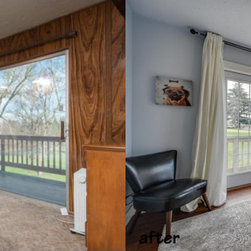
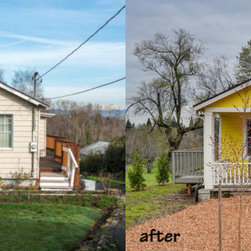
Before the owner, a real estate investor, purchased this 1000 sqft bungalow, it had been “remodeled” in the 1970s into a 1 bedroom 1 bath bachelor pad (originally built in the 1920's with 2 bedrooms and 1 bath).
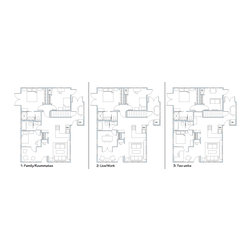
Rather than create a large inefficient 2-bedroom unit, I maximized value (and future rents) by designing a 3-bedroom 2-bath house. There was demand (both for rent and for sale) of 3-bedroom houses. So I created a unit-within-a-unit.
There are two bedrooms in the back and one in the front. One of the two back bedrooms has an attached master bath. The other bedroom has a kitchenette with bar sink, fridge, induction hot plate, and microwave. Combined, these rooms form a small suite with its own private entrance.
This suite can be closed off from the kitchen, living room, and front bedroom with a locking solid-core door. This configuration could be ideal for intergenerational living, a master suite for parents, owner-occupied rental income, and/or flexibility for a landlord responding to changing demographic trends over time.
Having enough doors is key to flexibility. In this house, I added doors to the deck from each of the two back bedrooms. This way, either room could be accessed independent of the main house (in case my client ever wanted to short-term-rent individual rooms, or rent the entire back suite as a single unit).
Having multiple doors to frequently-used rooms is not only convenient, but it also allows residents more flexibility in how they use the space. The main bathroom's door opens in the back hall, but there's a second entrance directly from the front bedroom. This not only makes tub to story-time a lot smoother with wee ones, but it's also much easier to navigate during half-asleep jaunts to the loo.
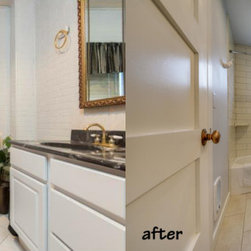
The pocket door between the vanity and the tub/toilet rooms effectively creates two bathrooms from one, because now one person can shower while another brushes their teeth. (I used a similar tactic in the master bath, separating just the WC from the vanity and shower.)
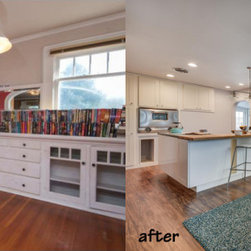
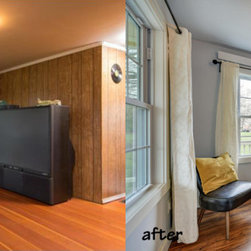
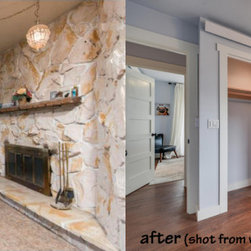
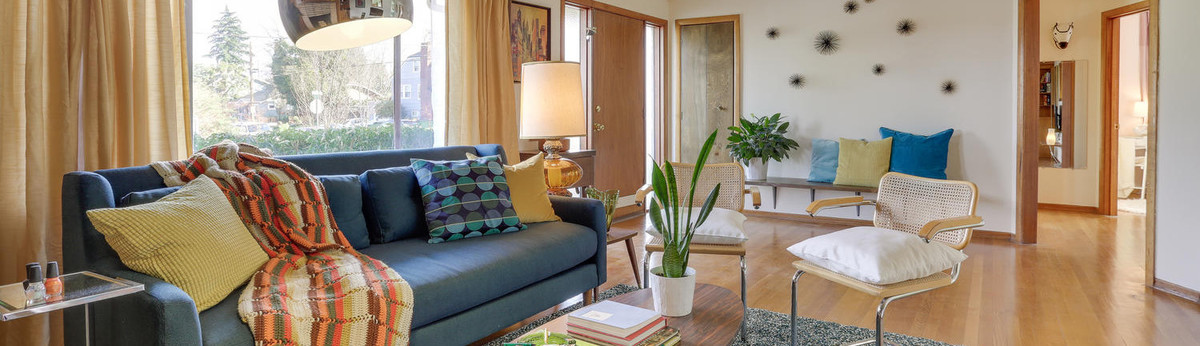
Though open floor plans have reigned supreme in the past decade, sometimes quiet and privacy win the day. While I did connect the kitchen to [what was] the original dining (now living) room to create an open concept in the shared space, I also carved out a den and an office/3rd bedroom from what used to be the old living room. While none the room sizes are expansive in this modest bungalow, carving out separate rooms for live/work/play helps buyers and tenants to visualize how they might use the space.
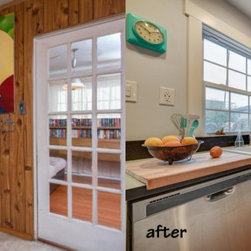
I am a huge fan of French doors that visually connect but acoustically separate two rooms. This joins different spaces when wanted (e.g. play time), borrows daylight from adjacent rooms, creates the perception of more space (even when doors are closed), and creates privacy when needed (with panel curtains on each door).
The cozy den near the front door can be used as a play room, reading room, media room, yoga room, work area, waiting room, formal dining room and even (in a pinch) guest space. The small bedroom beyond the French doors can become an office, craft room, meditation room, guest room, movie room, library or whatever the imagination can conjure.
While it's impossible to imagine the needs of every future resident, designers who understand the functional, aesthetic, and financial goals of their clients can help add value and navigate shifting tides.
("After" photos taken by RE PIXS Portland https://www.repixs.com)
Rather than create a large inefficient 2-bedroom unit, I maximized value (and future rents) by designing a 3-bedroom 2-bath house. There was demand (both for rent and for sale) of 3-bedroom houses. So I created a unit-within-a-unit.
There are two bedrooms in the back and one in the front. One of the two back bedrooms has an attached master bath. The other bedroom has a kitchenette with bar sink, fridge, induction hot plate, and microwave. Combined, these rooms form a small suite with its own private entrance.
This suite can be closed off from the kitchen, living room, and front bedroom with a locking solid-core door. This configuration could be ideal for intergenerational living, a master suite for parents, owner-occupied rental income, and/or flexibility for a landlord responding to changing demographic trends over time.
Having enough doors is key to flexibility. In this house, I added doors to the deck from each of the two back bedrooms. This way, either room could be accessed independent of the main house (in case my client ever wanted to short-term-rent individual rooms, or rent the entire back suite as a single unit).
Having multiple doors to frequently-used rooms is not only convenient, but it also allows residents more flexibility in how they use the space. The main bathroom's door opens in the back hall, but there's a second entrance directly from the front bedroom. This not only makes tub to story-time a lot smoother with wee ones, but it's also much easier to navigate during half-asleep jaunts to the loo.
The pocket door between the vanity and the tub/toilet rooms effectively creates two bathrooms from one, because now one person can shower while another brushes their teeth. (I used a similar tactic in the master bath, separating just the WC from the vanity and shower.)
Though open floor plans have reigned supreme in the past decade, sometimes quiet and privacy win the day. While I did connect the kitchen to [what was] the original dining (now living) room to create an open concept in the shared space, I also carved out a den and an office/3rd bedroom from what used to be the old living room. While none the room sizes are expansive in this modest bungalow, carving out separate rooms for live/work/play helps buyers and tenants to visualize how they might use the space.
I am a huge fan of French doors that visually connect but acoustically separate two rooms. This joins different spaces when wanted (e.g. play time), borrows daylight from adjacent rooms, creates the perception of more space (even when doors are closed), and creates privacy when needed (with panel curtains on each door).
The cozy den near the front door can be used as a play room, reading room, media room, yoga room, work area, waiting room, formal dining room and even (in a pinch) guest space. The small bedroom beyond the French doors can become an office, craft room, meditation room, guest room, movie room, library or whatever the imagination can conjure.
While it's impossible to imagine the needs of every future resident, designers who understand the functional, aesthetic, and financial goals of their clients can help add value and navigate shifting tides.
("After" photos taken by RE PIXS Portland https://www.repixs.com)
Project Year: 2019
Project Cost: $75,001 - $100,000
Country: United States
Zip Code: 97211