


Brian Patrick Flynn
What Houzz contributors are saying:

decordemon added this to DIY Project: Mobile Container Garden
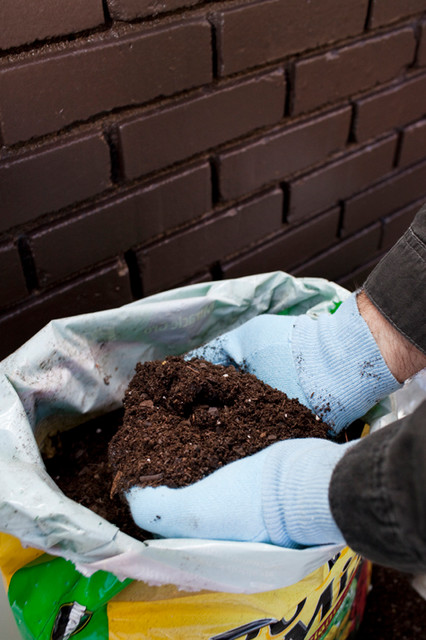
Step 5: Unless you're a fan of black stuff under your fingernails, get some gardening gloves on those hands, y'all. And for all you guys out there, not all garden gloves are lady-like. They come in blue and camouflage. From the photo, it's obvious which of the two I did not choose, especially since there are no bears or game hen in my backyard.

Margie Grace - Grace Design Associates added this to Southern California Gardener's September Checklist
Adding nutrients: Now's the time to add nutrients to the beds you plan to plant when the weather cools. Compost existing beds. For new beds, add compost, N-P-K (see below), trace elements and gypsum (for sticky clay soils) and turn it all in.Bed preparation: I like to add three to four inches of organic material, such as compost or planting mix first. For heavy, sticky clay soil, add some agricultural gypsum at this point to help break it up. Scatter slow-acting, low concentrate N-P-K and trace nutrients on top and then give it all a good mix with a rototiller or a shovel. Compost made of mixed materials such as green waste, egg shells, coffee grounds and other kitchen waste generally contains all the necessary nutrients for healthy growth. If you don't happen to have yummy homemade compost, add individual ingredients to your mix, following label directions. You have lots of options; here are just a few to cover the N-P-K:For nitrogen ("N"): bloodmeal, cottonseed meal, or well-composted manureFor phosporus ("P"): bone mealFor potassium ("K"): kelp meal, wood ash

Amy Renea added this to Mid-Atlantic Gardener's November Checklist
It's also time to stock up on gardening essentials from retail stores. The last of the garden clearance sales are going on now, and the deals are sweet. Pick up potting soil, soil amendments, tools and even seeds. Many seeds will still be fine by next spring, and at 10 cents a packet, if even half of them sprout, it's still a great deal.

J. Peterson Garden Design added this to Texas Gardener's February Checklist
Test your soil. Take samples of soil from different parts of your garden and have them tested for pH as well as levels of nitrogen, phosphorus and potassium. Most extension offices will perform the test for a fee, and the results will help you to know how to amend your soil if necessary. Some plants prefer a certain soil pH in order to bloom or thrive, so it's good to know what you are dealing with and make the recommended adjustments.How to start your spring and summer crops indoors

Noelle Johnson Landscape Consulting added this to Southwest Gardener's March Checklist
Get your soil ready for planting in later spring by working 2 to 3 inches of compost into the top 6 inches of soil. The benefits of compost in the garden are many. Two major ones are that compost adds nutrients to the soil and improves the texture of both clay and sandy soils.Don't worry if you don't make your own compost. You can buy some at your local nursery.Get ready for April. Warm spring temperatures are a great time to add succulents to your garden.Tell us: How are you preparing your Southwest garden for spring?
J. Peterson Garden Design added this to Texas Gardener's April Checklist
Bugs. Be on the lookout for detrimental bugs, such as aphids, tomato hornworms, leaf rollers and spring cankerworms. Remember that not all bugs are bad — ladybugs feed on unwanted pests and should be protected and encouraged to set up house. Identify your problem pest first by taking a sample to a local nursery, and then make your treatment selection from there. Always follow package directions when using any pesticide or chemical to avoid harming beneficial insects.Compost. Add 1 or 2 inches of compost to bare soil areas to amend the soil, and then lightly work it into your topsoil. I like to use a garden fork to loosen the area up to incorporate the compost, then rake it smooth with a hard rake and add mulch.

Kim Gamel added this to Container Gardening Basics: The Dirt on Soil
Commercial Potting MixOrganic ingredients. A bag of commercial potting mix is made up of a variety of organic and inorganic materials. Organic ingredients retain water and provide essential nutrients. These ingredients typically include peat moss, ground pine bark, coir and composted manure.Peat moss is often added to mixes for its ability to hold water, nutrients and air. It has a slightly acidic pH, which allows roots to take in nutrients. While they don't retain moisture, pine bark particles improve the porosity of the potting medium. Coir comes from coconut hulls and is excellent at retaining water. When mixed with pine bark, it can reduce the need for peat moss, which is a nonrenewable resource.Composted manure is manure that has aged up to a year. It increases nitrogen levels and loosens the soil.
J. Peterson Garden Design added this to Common Myths That May Be Hurting Your Garden
2. Soil is soil. No, no, no! This is a very bad myth, and one that should be dispelled immediately. All soils are not created equal, and if you use the wrong soil for your plants, you'll create an inhospitable environment for them from the get-go. The first rule of thumb is to never use soil dug up from the ground for your inside houseplants — that type of soil will never drain the correct way for interior plants. Next, if you have specialty plants, such as orchids, cacti or palms, know that each one of these needs a different kind of soil to thrive. When purchasing plants, ask the garden center staff what type of soil that plant needs, and then make sure to group plants with like needs together in your garden. Plants like cacti and succulents need well-drained loose soil; hostas and impatiens need soil that holds a bit of water (not soggy, though); hydrangeas and azaleas prefer soil that is on the acidic side.
J. Peterson Garden Design added this to How to Prep Your Ground for a Healthy New Lawn
4. Add compost. All soils, regardless of the results of a soil test, can benefit from a 2- to 3-inch application of compost. This can be compost taken from your own pile or purchased from a landscape supply yard. Use well-rotted compost, as compost that is too new or "hot" will not be sufficiently broken down and will not benefit your new lawn. Good-quality compost costs about $30 to $50 per cubic yard, depending upon the type you purchase and the area in which you live. Be sure to tell the landscape supply yard that you need it to establish a new lawn, as there are often different mixtures for various garden applications.You can also add other soil amendments, like sand, to break up clay-like soils. Soil amendments address the soil's physical condition (texture, ability to drain), and are not to be confused with fertilizers, which address the nutrient levels in the soil.

Jocelyn H. Chilvers added this to Xeriscape Gardens: How to Get a Beautiful Landscape With Less Water
4. Improve the soil if necessary. Have your soil tested before planting or installing your irrigation system. A professional soil test — available through your local cooperative extension office — will pinpoint what soil amendments would be beneficial. Soil amendments should relate to the type of plants you are installing; native plants may need little or no amendments, whereas food crops may need more. Improved drainage, water-holding capacity and pore (air) space, plus extra nutrients for plant health, are all potential benefits of amending the soil.
What Houzzers are commenting on:

susie_strunk added this to susie_strunk's ideas
Tomatoes in containers and planting ideas
Dianne Raisin added this to gardening
decordemon
This technique (called deep planting) triggers the plant to form roots along the stem below the soil level, promoting a strong, healthy root system for the tomato plant. A system of healthy roots equals stronger plants and more tomatoes.
Once you have the height of the seedling set, backfill the container with fresh potting mix, leaving two sets of two leaves exposed above the soil level. Water in well after planting with a seaweed solution.

Golden Girl added this to Gardening
Compost. Add 1 or 2 inches of compost to bare soil areas to amend the soil, and then lightly work it into your topsoil. I like to use a garden fork to loosen the area up to incorporate the compost, then rake it smooth with a hard rake and add mulch.

katwellen added this to garden
Soil
Choose a seed-starting or potting mix for best results. Moisten the mix thoroughly and let it drain. It should be thoroughly damp, with no dry clumps, but not overly wet and heavy. You can do this either before or after you add the mix to your chosen containers.
Tip: Before you get started, check the seed packet for any requirements prior to planting, such as soaking or chilling the seeds. It will also tell you of any soil and light requirements.
katpur24 added this to soil, potting
Commercial Potting Mix
Organic ingredients. A bag of commercial potting mix is made up of a variety of organic and inorganic materials. Organic ingredients retain water and provide essential nutrients. These ingredients typically include peat moss, ground pine bark, coir and composted manure.
Peat moss is often added to mixes for its ability to hold water, nutrients and air. It has a slightly acidic pH, which allows roots to take in nutrients.
While they don't retain moisture, pine bark particles improve the porosity of the potting medium. Coir comes from coconut hulls and is excellent at retaining water. When mixed with pine bark, it can reduce the need for peat moss, which is a nonrenewable resource.
Composted manure is manure that has aged up to a year. It increases nitrogen levels and loosens the soil.
Cathy McKay added this to GARDEN
Compost. Add 1 or 2 inches of compost to bare soil areas to amend the soil, and then lightly work it into your topsoil. I like to use a garden fork to loosen the area up to incorporate the compost, then rake it smooth with a hard rake and add mulch.
katpur24 added this to Landscape Planning
Improve the soil if necessary. Have your soil tested before planting or installing your irrigation system. A professional soil test — available through your local cooperative extension office — will pinpoint what soil amendments would be beneficial. Soil amendments should relate to the type of plants you are installing; native plants may need little or no amendments, whereas food crops may need more. Improved drainage, water-holding capacity and pore (air) space, plus extra nutrients for plant health, are all potential benefits of amending the soil.
suzismiles added this to Gardens
Improve the soil if necessary. Have your soil tested before planting or installing your irrigation system. A professional soil test — available through your local cooperative extension office — will pinpoint what soil amendments would be beneficial. Soil amendments should relate to the type of plants you are installing; native plants may need little or no amendments, whereas food crops may need more. Improved drainage, water-holding capacity and pore (air) space, plus extra nutrients for plant health, are all potential benefits of amending the soil.


