


Maekawa House
What Houzz contributors are saying:

Karen Severns added this to A Renowned Modernist Turns Tradition-Minded for His Own Home
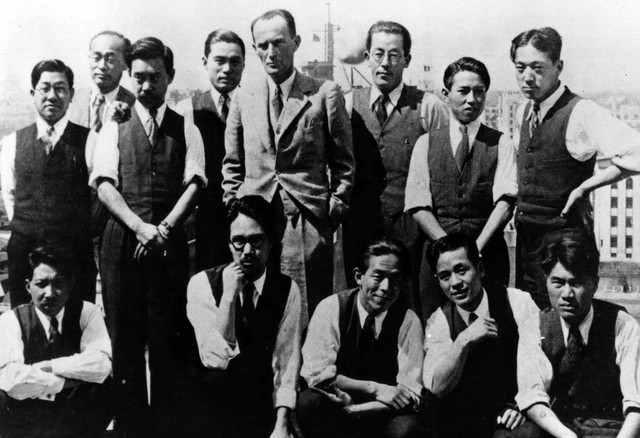
Kunio Maekawa (center, bottom row) poses with office mates in 1935, including Antonin Raymond (fifth from left, top row), Junzo Yoshimura (far right, bottom row) and furniture designer George Nakashima (third from left, top row). Photo from Koichi KitazawaBut Maekawa had spent five years with Antonin Raymond, the former apprentice of Frank Lloyd Wright who followed in his mentor’s footsteps by opening the eyes of Japanese architects to the possibilities of their own tradition. Maekawa signed on with Raymond after returning in 1930 from Paris, where he had worked for a time in the atelier of Le Corbusier, and was instrumental in helping the Czech-born architect develop a unique fusion of East-West modernism in Japan. His own 1942 home became his first expression of this synthesis.Maekawa studied architecture at what is now the University of Tokyo during a period of great change, when Japan was seeking to define a new national identity. In architecture, there was much debate about what role tradition should play. Vernacular architecture had always favored modular planning, flexible space use and simplicity. As a student, Maekawa embraced the shinkenchiku (new architecture) movement and its commitment to exploiting new materials and technology, as well as to sustaining local architectural features in the face of international influences.
What Houzzers are commenting on:

ginntamadream added this to ginntamadreamのアイデア
前川(前列中央)とレーモンド(後列中央)。レーモンド事務所の同僚である吉村順三(前列右端)、家具デザイナーのジョージ・ナカシマ(後列左から3人目)の姿もある。1935年撮影。写真提供:北澤建築設計事務所しかし前川には、チェコ生まれの建築家、アントニン・レーモンドのもとで5年間働いていたという経歴がある。レーモンドは、彼の師であったフランク・ロイド・ライトと同様、日本人建築家たちに対し、日本の伝統の内在する可能性について目を開かせた人物だ。パリのル・コルビュジエのアトリエでしばらく働いていた前川は、1930年に帰国したのちレーモンド(写真中央。前川は前列左から3人目。1935年撮影)の事務所で働き始め、レーモンドが東洋と西洋を融合させた独特なモダニズムを日本につくり出していくなかで大きな役割を果たしている。1942年に竣工した前川邸は、その東西の融合を前川自身が表現した最初の例となった。前川國男が東京帝国大学(現在の東京大学)で建築を学んでいたのは、日本が国として新しいアイデンティティを確立しようと模索していた激動の時代のことである。建築において日本の伝統がどのような役割を果たすべきかという議論が盛んに行われていた。日本の建築は古来から、モジュールを基本とする設計、用途の柔軟性、シンプルさを重視するものであった。学生時代の前川は、新しい素材や技術を探る新建築運動に傾倒しており、海外からの影響を受けながらも日本固有の建築の要素を維持するべきだと考えていた。
Photos in Maekawa House


