
Firefly Hill
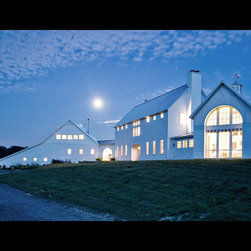
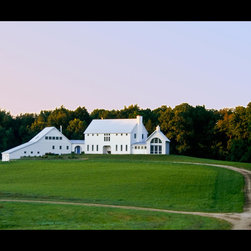
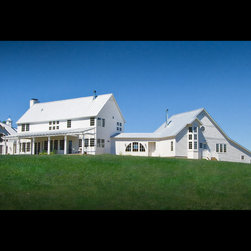
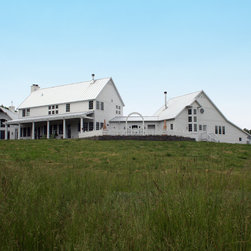
Firefly Hill is a new home in the vineyard region of southwest Michigan. It was designed as a retreat for the owners and their extended family. The site includes five acres of meadow and twenty acres of conservancy-protected woodland; it offers beautiful views over rolling hills and the surrounding farms.
The objectives were these: to create a home which could comfortably accommodate a crowd of weekend guests, while still feeling cozy when the owners are there alone; to ground the home in history and context; to focus on the vistas; and to incorporate sensible Green strategies and features.
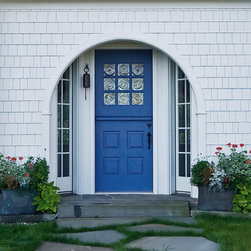
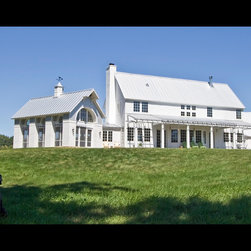
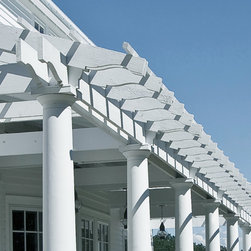
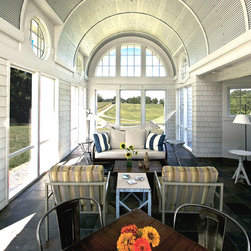
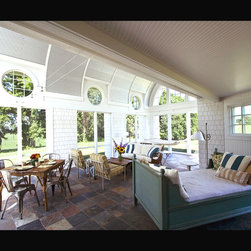
The objectives were met by arranging the plan so it rambles over the hilltop, with the forms angled to take advantage of the views and the prevailing western breezes. The garage tucks down into the eastern slope and acts as a privacy screen for both this house and the neighboring home. On axis with the front door is a south-facing hexagonal flower garden embraced by the angled wings. The south porch and screen porch are passive solar features designed to shield the main living spaces from the summer sun, yet allow the stone floors to absorb solar heat during the cooler months.
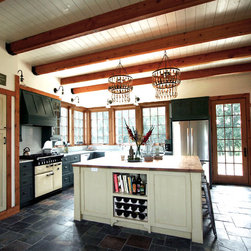
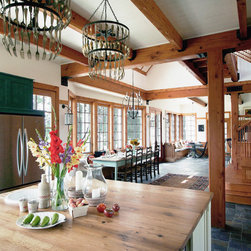
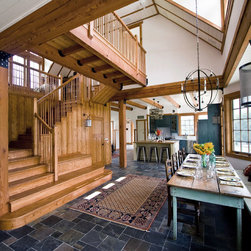
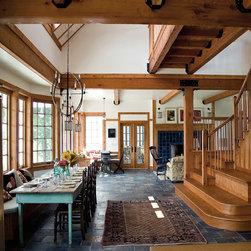
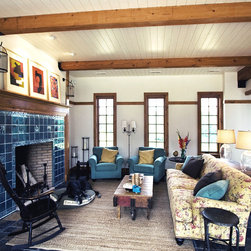
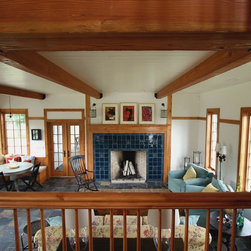
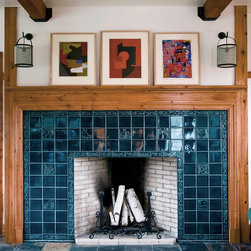
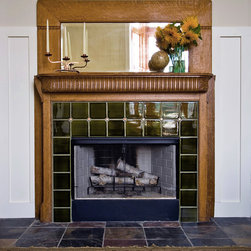
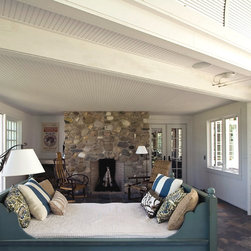
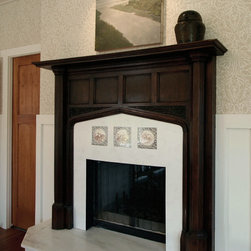
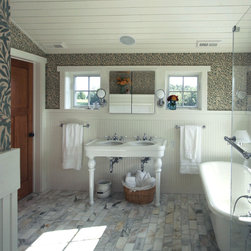
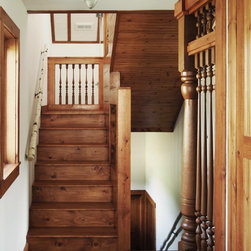
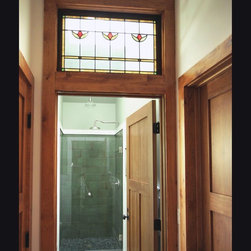
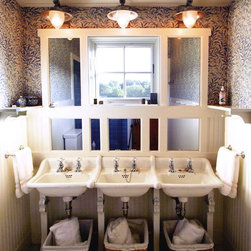
The home was constructed with walls and attics lined with dense-pack cellulose insulation, and is clad in sustainably-harvested cedar clapboard siding and shingles. Other green features include a geothermal heating and cooling system; Energy Star mechanical equipment and appliances; radiant heating throughout; engineered flooring fabricated from wood waste; reflective Galvalume roofing and siding made from recycled metal; high-efficiency windows and doors; a fireplace clad in stone sourced from the site; and extensive use of salvaged materials such as heavy-timber beams and columns, vintage sinks and bathtub, door and cabinet hardware, fireplace mantels, millwork, stair spindles, and wood countertops.
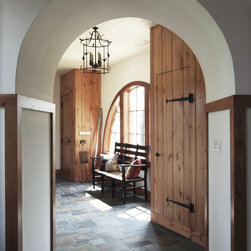
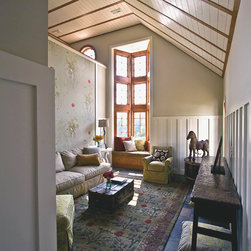
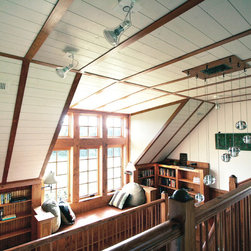
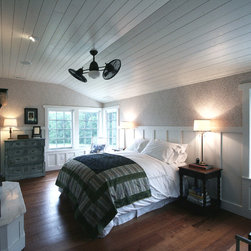
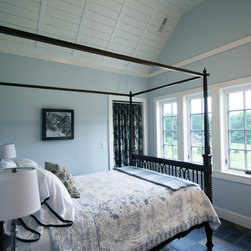
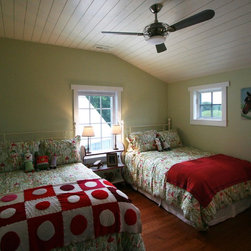
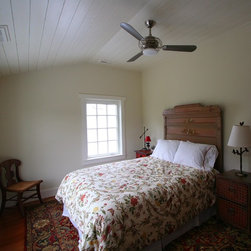
The many salvaged elements lend a palpable character of age to the interiors, which were designed and furnished by the owners. Gathering spaces for summer and winter anchor the barnlike pavilions of the house, and are complemented by comfortable nooks and bays perfect for playing a board game or curling up with a book.
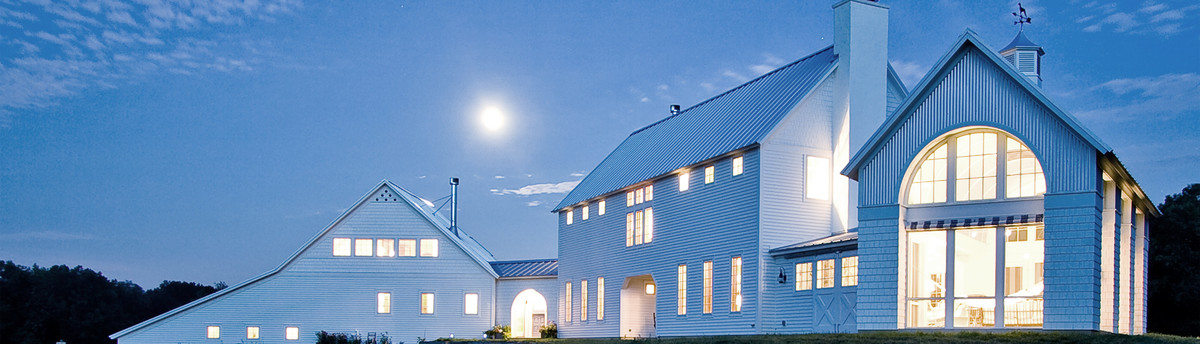
The exterior was inspired by the vernacular farm structures of the Midwest, and by the white connected farmsteads of New England evoked in the 19th century children’s cadence, “Big house, little house, back house, barn.” Galvalume siding like that on nearby silos is used to clad the upper walls and barrel-vaulted ceiling of the screen porch.
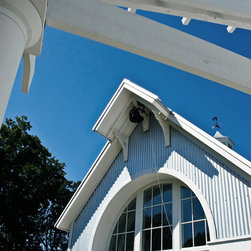
Distinctive details include the dovecote pattern of the gable venting; the weather vane silhouette of the owners’ Great Dane; and the farmhouse bell at the porch gable, which is irresistible to children of all ages.
This home was featured in the Spring 2010 issue of Beautiful Homes. Please click the link below to read the article.
( http://www.sgwarch.com/media/2010Spring_BeautifulHomes_FireflyHill.pdf)
The objectives were these: to create a home which could comfortably accommodate a crowd of weekend guests, while still feeling cozy when the owners are there alone; to ground the home in history and context; to focus on the vistas; and to incorporate sensible Green strategies and features.
The objectives were met by arranging the plan so it rambles over the hilltop, with the forms angled to take advantage of the views and the prevailing western breezes. The garage tucks down into the eastern slope and acts as a privacy screen for both this house and the neighboring home. On axis with the front door is a south-facing hexagonal flower garden embraced by the angled wings. The south porch and screen porch are passive solar features designed to shield the main living spaces from the summer sun, yet allow the stone floors to absorb solar heat during the cooler months.
The home was constructed with walls and attics lined with dense-pack cellulose insulation, and is clad in sustainably-harvested cedar clapboard siding and shingles. Other green features include a geothermal heating and cooling system; Energy Star mechanical equipment and appliances; radiant heating throughout; engineered flooring fabricated from wood waste; reflective Galvalume roofing and siding made from recycled metal; high-efficiency windows and doors; a fireplace clad in stone sourced from the site; and extensive use of salvaged materials such as heavy-timber beams and columns, vintage sinks and bathtub, door and cabinet hardware, fireplace mantels, millwork, stair spindles, and wood countertops.
The many salvaged elements lend a palpable character of age to the interiors, which were designed and furnished by the owners. Gathering spaces for summer and winter anchor the barnlike pavilions of the house, and are complemented by comfortable nooks and bays perfect for playing a board game or curling up with a book.
The exterior was inspired by the vernacular farm structures of the Midwest, and by the white connected farmsteads of New England evoked in the 19th century children’s cadence, “Big house, little house, back house, barn.” Galvalume siding like that on nearby silos is used to clad the upper walls and barrel-vaulted ceiling of the screen porch.
Distinctive details include the dovecote pattern of the gable venting; the weather vane silhouette of the owners’ Great Dane; and the farmhouse bell at the porch gable, which is irresistible to children of all ages.
This home was featured in the Spring 2010 issue of Beautiful Homes. Please click the link below to read the article.
( http://www.sgwarch.com/media/2010Spring_BeautifulHomes_FireflyHill.pdf)
Country: United States