
Mount Welcome Retreat
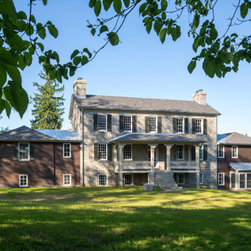
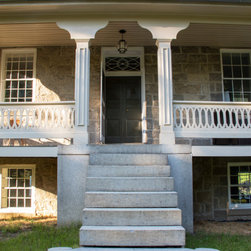
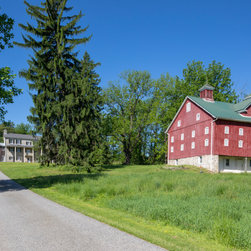
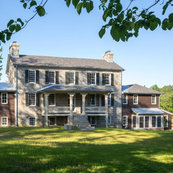
This historic landmark granite farmhouse and addition date to the early 1800’s, once built for the daughter of the prominent quarry owner as a wedding gift. Due to its connection to local economy and farmland, the 13-acre property including house, accessory buildings, farmland, woods and stream are protected through historic preservation, agricultural, environmental and viewshed conservation easements.
Following an active New York City urban lifestyle, our clients and their young school-aged children were in search of a different adventure – inhabiting an historic house and living on a farm.
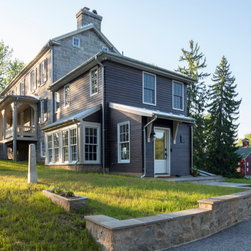
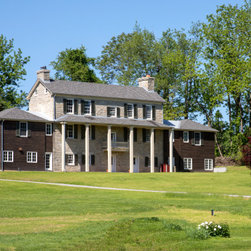
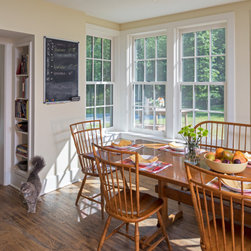
The original farmhouse was built in two phases, 1800 and 1830, with two subsequent 1-story additions in the 1950’s. We proposed rebuilding the inadequate 1-story additions with 2-story symmetrical pavilions connected to the main house via hyphens. Secondary 1-story volumes of mudroom and dining bay step down in scale and are located on the south and west sides addressing the driveway and original arrival point marked by the hitching post and trough.
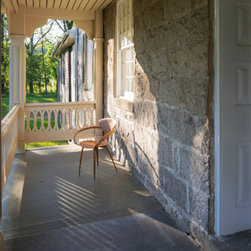
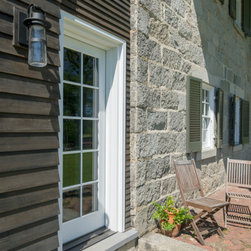
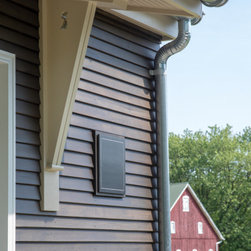
Hip and shed roofs defer to the scale of the existing house without overpowering it. Galvalume standing seam and shingle roofing with stained cedar siding, reclaimed granite and slate maintain the historic farmstead vocabulary.
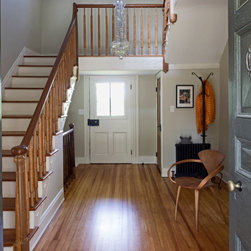
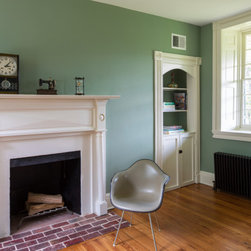
The design intent was to address how a modern family might sensitively inhabit a farmhouse and maintain its historic character. Sustainable principles were recognized through solar orientation, daylighting, cross-ventilation, insulation, energy efficient system upgrades, along with on-site and locally sourced materials.
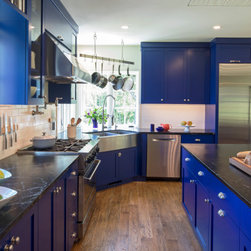
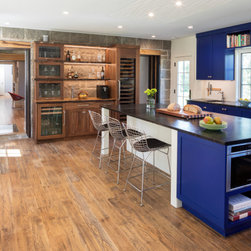
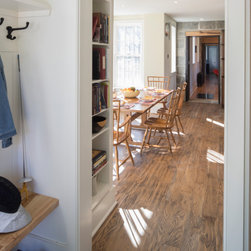
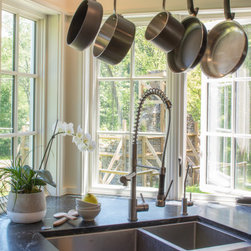
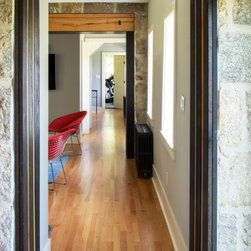
The project consists of re-envisioning the original kitchen/later turned-dining ground floor level as the heart of the house, connecting the two wings with the historic house through two main light-filled circulation zones that run the length of the house along the east and west axis. Large windows relate in proportion to the existing and open to expansive vistas: barn, pond, tenant house ruins and woods.
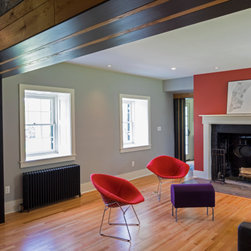
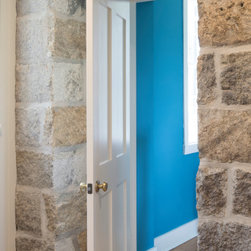
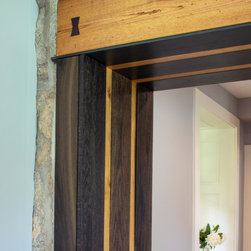
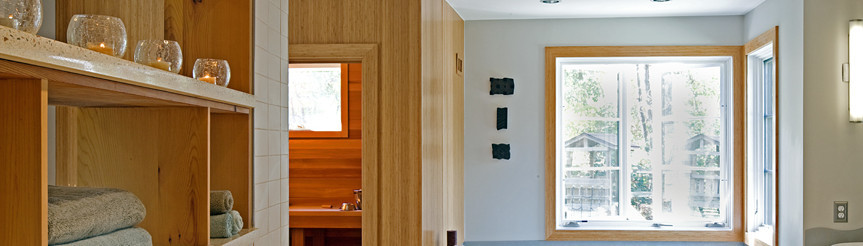
New openings into the existing 2-foot masonry walls are celebrated with exposed steel beams and on-site reclaimed, kiln-dried and milled American chestnut and horse-chestnut wood.
Following an active New York City urban lifestyle, our clients and their young school-aged children were in search of a different adventure – inhabiting an historic house and living on a farm.
The original farmhouse was built in two phases, 1800 and 1830, with two subsequent 1-story additions in the 1950’s. We proposed rebuilding the inadequate 1-story additions with 2-story symmetrical pavilions connected to the main house via hyphens. Secondary 1-story volumes of mudroom and dining bay step down in scale and are located on the south and west sides addressing the driveway and original arrival point marked by the hitching post and trough.
Hip and shed roofs defer to the scale of the existing house without overpowering it. Galvalume standing seam and shingle roofing with stained cedar siding, reclaimed granite and slate maintain the historic farmstead vocabulary.
The design intent was to address how a modern family might sensitively inhabit a farmhouse and maintain its historic character. Sustainable principles were recognized through solar orientation, daylighting, cross-ventilation, insulation, energy efficient system upgrades, along with on-site and locally sourced materials.
The project consists of re-envisioning the original kitchen/later turned-dining ground floor level as the heart of the house, connecting the two wings with the historic house through two main light-filled circulation zones that run the length of the house along the east and west axis. Large windows relate in proportion to the existing and open to expansive vistas: barn, pond, tenant house ruins and woods.
New openings into the existing 2-foot masonry walls are celebrated with exposed steel beams and on-site reclaimed, kiln-dried and milled American chestnut and horse-chestnut wood.
Project Year: 2018
Country: United States