Plant profiles
I have a old affinity for the Pacific Coast Iris. As a young adult hiking in the Redwood, Oak and Bay trees of the Santa Cruz mountains I was astounded that these large specimen flowers were part of the native flora. In California you become used to the subtly of the seasons and the minute shifts of tone as the mountains from a distance mark the blooming of the Wild Lilac and the Coffeeberry. Things like the Tiger lily and the Canyon sunflower take you by surprise and trigger a moments skepticism,”Are you really a native? How far south do you truly originate?” Arguments like these make me happy to live in the Northwest and while I use and adore many of our native species the lines I keep are much more venturesome.
That said;
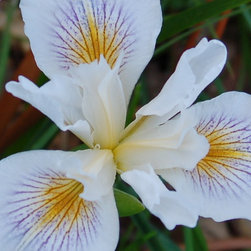
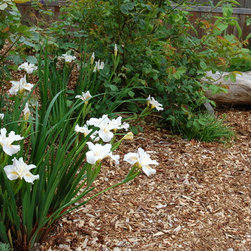
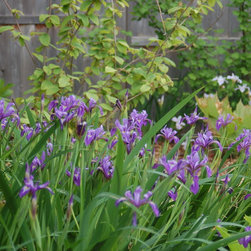
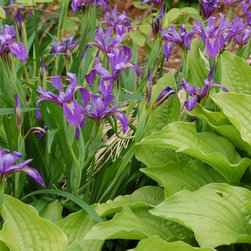
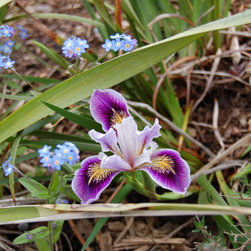
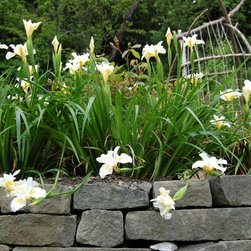
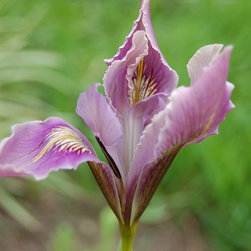
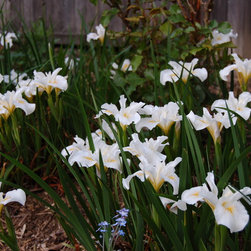
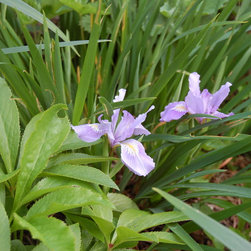
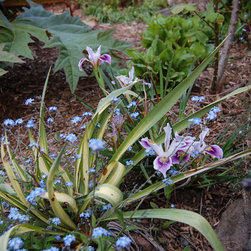
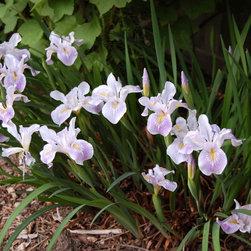
the power of place that the Pacific Coast Iris holds in my garden is impressive. It begins with a bright splash near the street and and rolls up the trail and into the back garden over the coarse of a full month and lasting until the final buds open a good two months later. They bloom during a time nearly there own in my garden. I don’t have much in the way of Rhododendron or Azalea, especially in the areas where my Irises live. With the Hosta, Crocosmia, Aster, and Sedum practically doubling in size every week the lush green of spring is intoxicating in it’s own right. I enjoy the break of solid color in my garden; knowing well that there is a summer out there somewhere and I will have all the flowers I desire until frost. Accenting this foliage indulgence the Irises are planted in mass per variety; they can be noticed from afar and give a reason to walk down the path for a closer inspection.
I have seven varieties at last count. Each form has a slightly different bloom time and leaf in addition to a complete range of colors. They are called the Pacific Coast Iris due to the hybridization of multiple native varieties found along the Pacific Coast from Central CA to BC. This forms have been crossed, naturally or mechanically so many times over that the true native forms are hard to single out at this point. Most of the varieties are named, however I have collected mine mostly from two friends who upon letting go of their garden of some 50+ years, they allowed me to selectively harvest certain plants that I cherished. Since then these forms have found their way into many other gardens to suffer the awe and respect they well deserve.
That said;
the power of place that the Pacific Coast Iris holds in my garden is impressive. It begins with a bright splash near the street and and rolls up the trail and into the back garden over the coarse of a full month and lasting until the final buds open a good two months later. They bloom during a time nearly there own in my garden. I don’t have much in the way of Rhododendron or Azalea, especially in the areas where my Irises live. With the Hosta, Crocosmia, Aster, and Sedum practically doubling in size every week the lush green of spring is intoxicating in it’s own right. I enjoy the break of solid color in my garden; knowing well that there is a summer out there somewhere and I will have all the flowers I desire until frost. Accenting this foliage indulgence the Irises are planted in mass per variety; they can be noticed from afar and give a reason to walk down the path for a closer inspection.
I have seven varieties at last count. Each form has a slightly different bloom time and leaf in addition to a complete range of colors. They are called the Pacific Coast Iris due to the hybridization of multiple native varieties found along the Pacific Coast from Central CA to BC. This forms have been crossed, naturally or mechanically so many times over that the true native forms are hard to single out at this point. Most of the varieties are named, however I have collected mine mostly from two friends who upon letting go of their garden of some 50+ years, they allowed me to selectively harvest certain plants that I cherished. Since then these forms have found their way into many other gardens to suffer the awe and respect they well deserve.
Country: United States