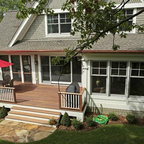

The Chantilly Traditional Deck, DC Metro
Curved Deck Project with full EPDM 100% dry space under deck:
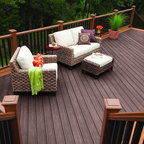
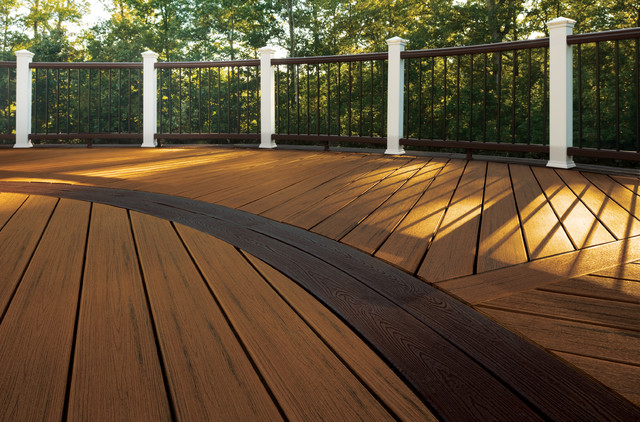
Shows Trex Transcendsdecking (Spiced Rum center with Vintage Lantern border) with Trex Transcends curved rails (Vintage Lantern rail with black aluminum balusters & white Trex Artisan composite post sleeves)
Shows Trex Transcendsdecking (Spiced Rum center with Vintage Lantern border) with Trex Transcends curved rails (Vintage Lantern rail with black aluminum balusters & white Trex Artisan composite post sleeves)
Elegant deck photo in DC Metro — Houzz
Related Professionals in DC Metro
This photo has one question
What Houzz contributors are saying:

Mitchell Parker added this to What to Know About Adding a Deck
Know Your Material OptionsThe two main options for decks are wood and composite boards. Historically, wood has dominated decks, but lately composite boards are more in demand. Jellema says there was a time when many homeowner’s associations didn’t allow composite decks, because they looked too plasticky and had other problems. Now it’s the complete opposite. “Many developments don’t allow wood decks,” Jellema says. “People don’t take care of them, and they can start to look ugly in five or six years when they start to weather.”Composite boards. Composite boards, seen here, are engineered products that are a mixture of wood fibers and plastic; a lot of the material comes from recycled plastic grocery bags. Some companies use old shredded carpets for wood fillers. Newer composite boards are wrapped in a thin plastic layer so they won’t stain or fade. These are more expensive than wood boards but often come with a warranty of 20 to 25 years, are low maintenance and can be made to look almost identical to any species of wood out there. Plus, they stay the same color as the day you installed them. “A lot of contractors have had problems with composites in the past, but they’re getting pretty good now,” Jellema says. Composite is more expensive than real wood, but because you don’t have to keep restaining it and paying for upkeep, the cost over time can be equal to or less than real wood.To clean composite decking, just rub some detergent on it and hose it off. Find decking planks and tiles
What Houzzers are commenting on:

Diane Evans added this to covered porch
use different colored boards to create a border

J C added this to Janice's Ideas
Different colors working together
cletaintx added this to DECKS
Composite boards. Composite boards, seen here, are engineered products that are a mixture of wood fibers and plastic; a lot of the material comes from recycled plastic grocery bags. Some companies use old shredded carpets for wood fillers. Newer composite boards are wrapped in a thin plastic layer so they won’t stain or fade. These are more expensive than wood boards but often come with a warranty of 20 to 25 years, are low maintenance and can be made to look almost identical to any species of wood out there. Plus, they stay the same color as the day you installed them.

Michele Kurtz added this to Michele's Ideas
Like railings and deck coloring
donnaatgs added this to millbrook
composite vs wood. Composite options have improved over the years. More expensive but will last longer