
Holly Hill House
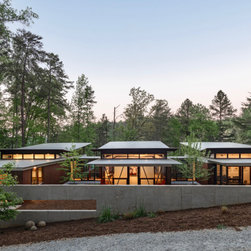
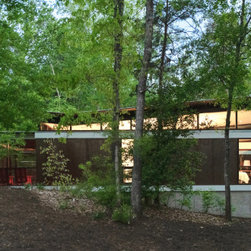
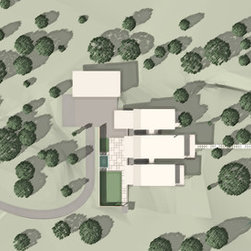
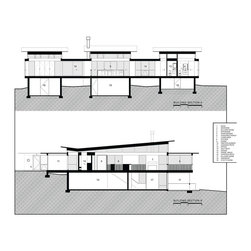
The home is named for the numerous American Hollies scattered across the owners’ ten beautiful acres of high Piedmont land sloping dramatically to Lake Hartwell. Holly Hill, a sustainable retirement home for an architect and engineer whose hobbies, respectively, are gardening and restoration of classic cars, will be nestled into the site contours to maximize views of the lake and minimize impact on the site.
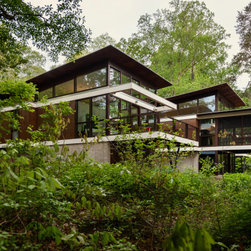
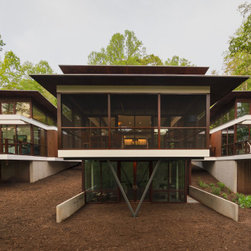
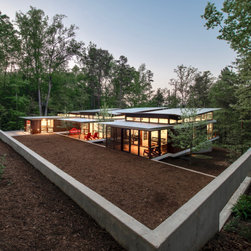
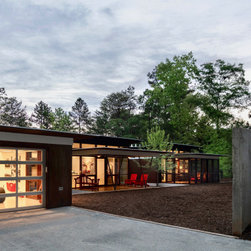
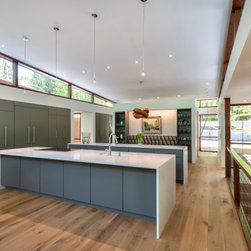
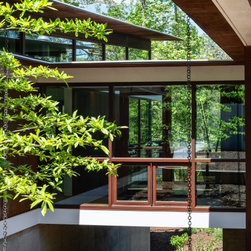
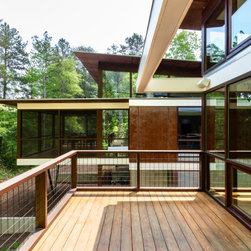
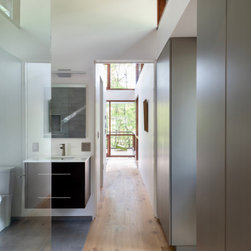
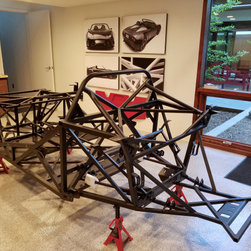
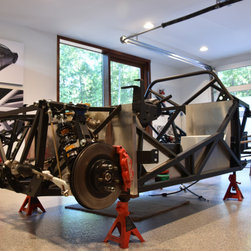
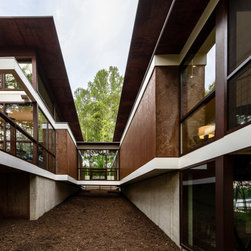
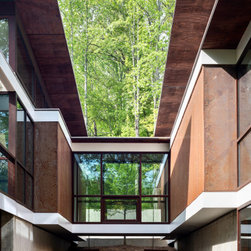
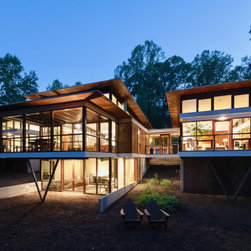
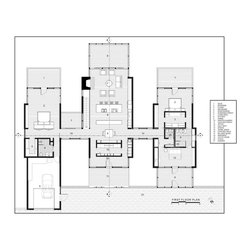
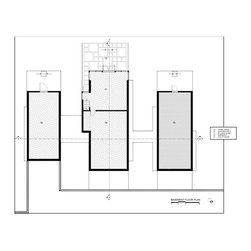
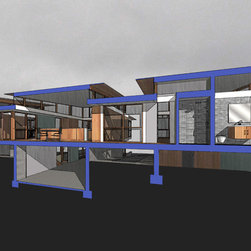
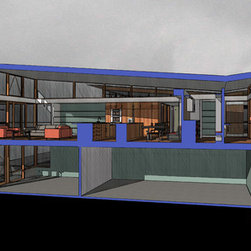
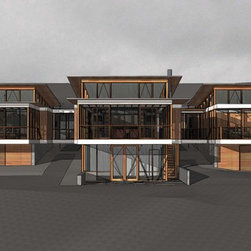
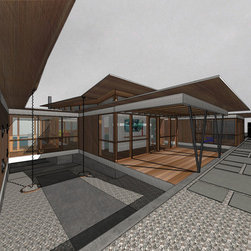
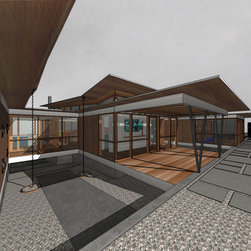
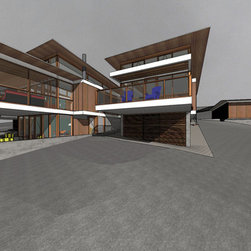
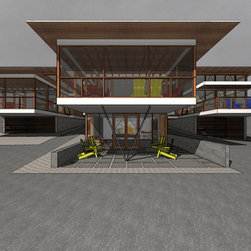
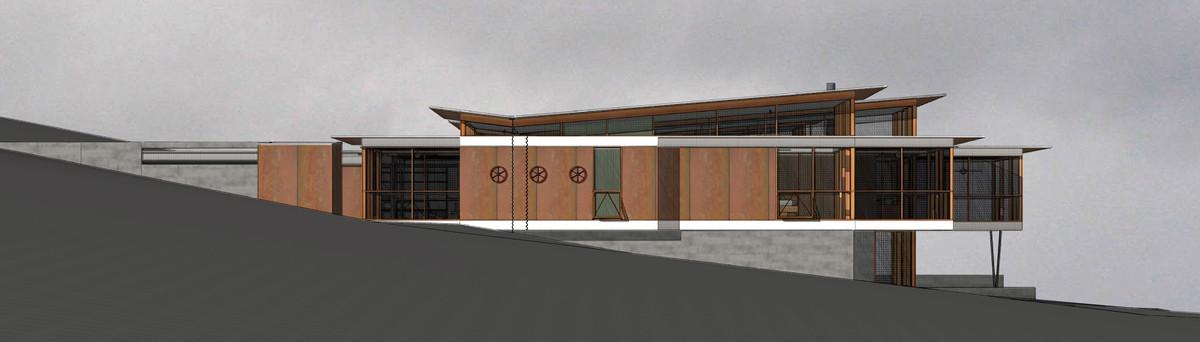
Holly Hill is comprised of three wings joined by bridges: An architect's wing facing a master garden to the east, an engineer’s wing with an automotive workshop and a central activity, kitchen, living, dining wing. Similar to a radiator in design, the plan of the house increases the amount of exterior wall thus maximizing opportunities for natural ventilation during temperate and hot summer months.
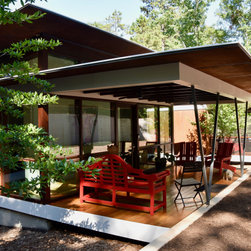
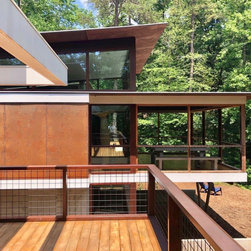
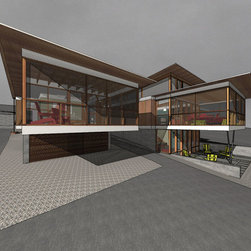
Other passive design features will include extensive eaves, sheltering porches and high albedo roofs, as strategies for considerably reducing solar heat gain.
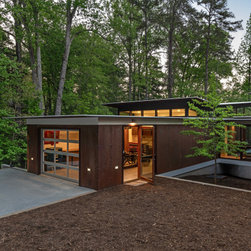
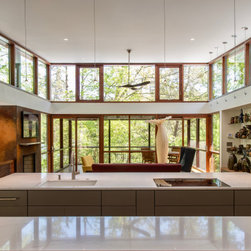
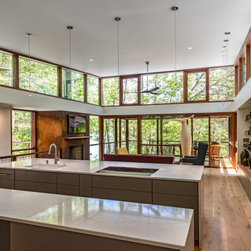
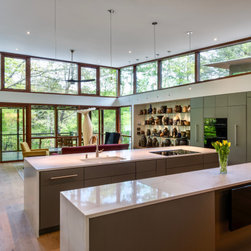
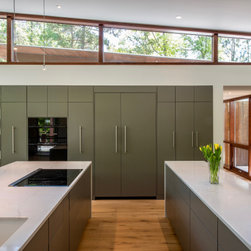
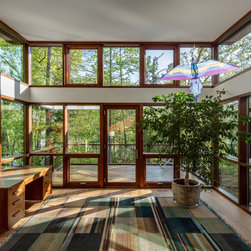
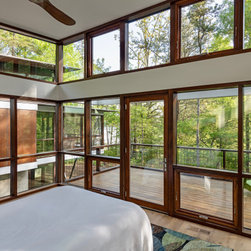
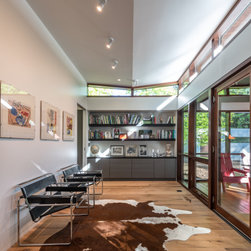
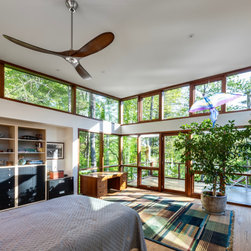
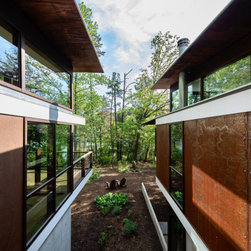
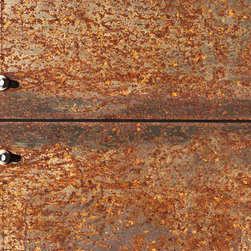
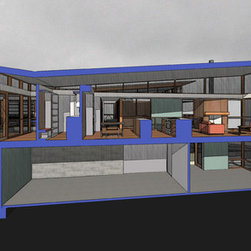
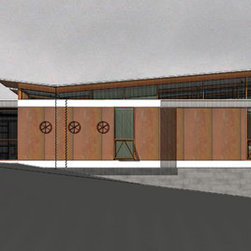
Daylighting with clerestories and solar tubes reduce daytime lighting requirements. Ground source geothermal heat pumps and superior to code insulation ensure minimal space conditioning costs. Corten siding and concrete foundation walls satisfy client requirements for low maintenance. All light fixtures are LEDs. The design team anticipate achieving LEED Silver certification.
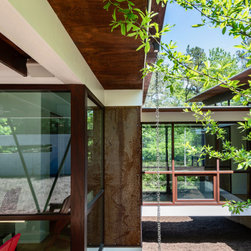
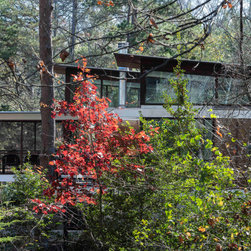
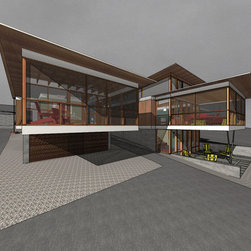
Open and screened porches are strategically located to allow pleasant outdoor use at any time of day, particular season or, if necessary, insect challenge. Dramatic cantilevers allow the porches to extend into the site’s beautiful mixed hardwood tree canopy.
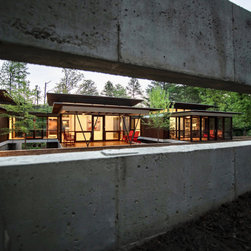
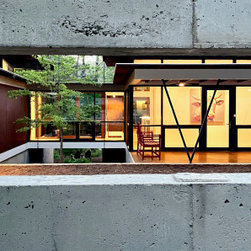
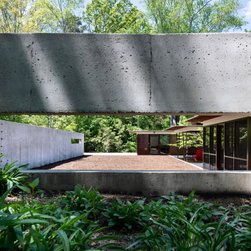
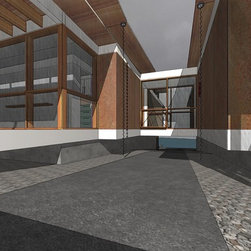
Guest arrive by vehicle with glimpses of the house and grounds through penetrations in the concrete wall enclosing the garden. Once parked guests proceed through a garden composed of plantings, pavers, a Koi pond and fountain, benches and sculpture. On approach to the entry views of the lake can be seen through and below the bridges.
Essential client goals were a sustainable low-maintenance house, primarily single floor living, orientation to views, natural light to interiors, establishment of individual privacy, creation of a formal outdoor space for gardening, incorporation of a full workshop for cars, generous indoor and outdoor social space for guests and parties.
Holly Hill is comprised of three wings joined by bridges: An architect's wing facing a master garden to the east, an engineer’s wing with an automotive workshop and a central activity, kitchen, living, dining wing. Similar to a radiator in design, the plan of the house increases the amount of exterior wall thus maximizing opportunities for natural ventilation during temperate and hot summer months.
Other passive design features will include extensive eaves, sheltering porches and high albedo roofs, as strategies for considerably reducing solar heat gain.
Daylighting with clerestories and solar tubes reduce daytime lighting requirements. Ground source geothermal heat pumps and superior to code insulation ensure minimal space conditioning costs. Corten siding and concrete foundation walls satisfy client requirements for low maintenance. All light fixtures are LEDs. The design team anticipate achieving LEED Silver certification.
Open and screened porches are strategically located to allow pleasant outdoor use at any time of day, particular season or, if necessary, insect challenge. Dramatic cantilevers allow the porches to extend into the site’s beautiful mixed hardwood tree canopy.
Guest arrive by vehicle with glimpses of the house and grounds through penetrations in the concrete wall enclosing the garden. Once parked guests proceed through a garden composed of plantings, pavers, a Koi pond and fountain, benches and sculpture. On approach to the entry views of the lake can be seen through and below the bridges.
Essential client goals were a sustainable low-maintenance house, primarily single floor living, orientation to views, natural light to interiors, establishment of individual privacy, creation of a formal outdoor space for gardening, incorporation of a full workshop for cars, generous indoor and outdoor social space for guests and parties.
Project Year: 2020
Project Cost: $750,001 - $1,000,000
Country: United States
Zip Code: 30643
Others who worked on this project: Carmen P. Stan, AIA, NCARB