
Kuhlman Road
A family purchased a two-acre wooded site in an upscale Houston neighborhood of traditional houses. The site is a flag lot, unique in the area, and offered the opportunity to create an architecture that would provide a respite from the pressures of work and an oasis to share with their two kids and extended family and friends.
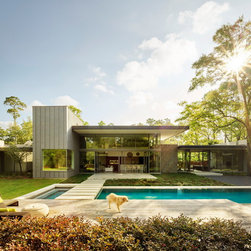
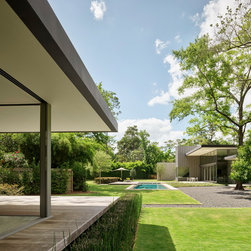
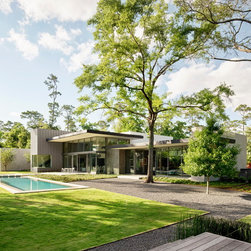
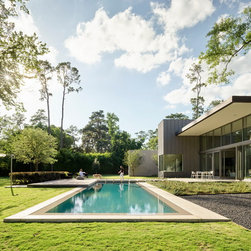
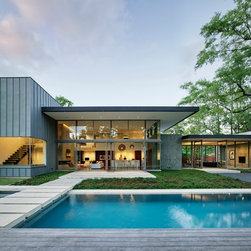
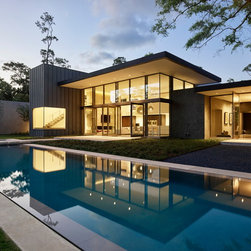
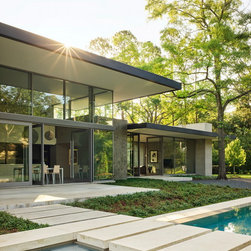
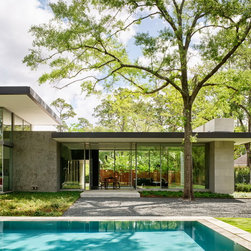
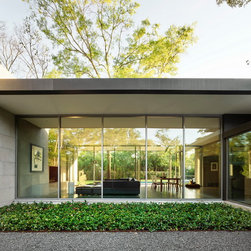
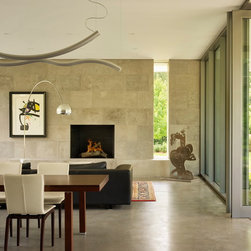
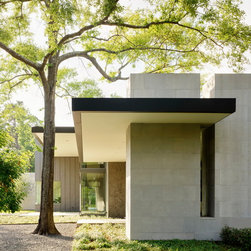
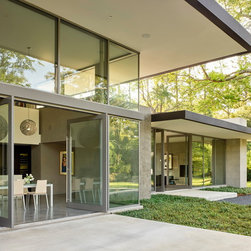
The understated design connects strongly with its leafy setting with large expanses of glass alternating with masses of Texas limestone, the largest of which is a stair volume clad in rheinzink; the glazed spaces are for living while the masses enclose service elements including bathrooms, storage and fireplaces. Horizontal roof planes with deep overhangs to mitigate Houston’s sun and heavy rains. This combined with high-performance glass and deliberate orientations in regards to the sun and plenty of opportunities for natural ventilation comprise the passive sustainable strategy.
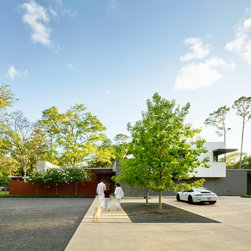
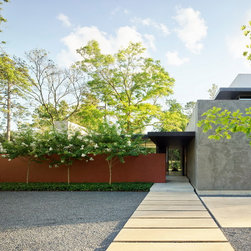
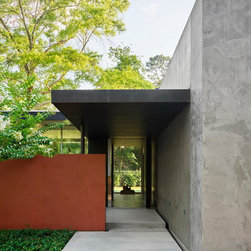
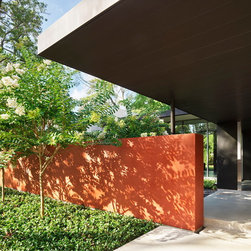
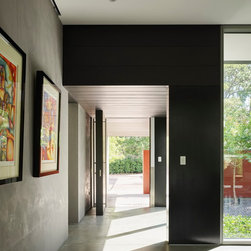
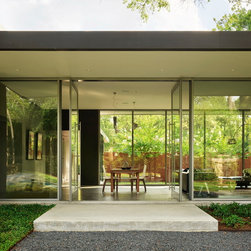
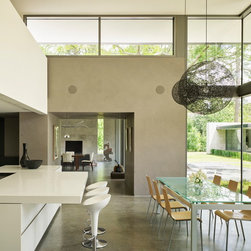
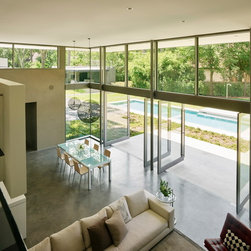
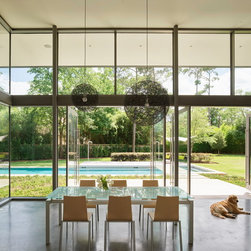
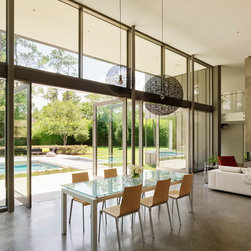
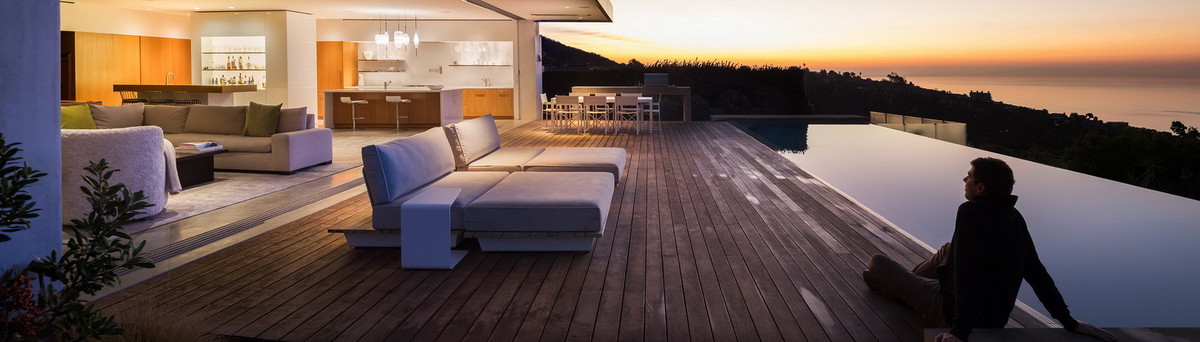
The generous motor-court locates the house deep within its site and ensure privacy, a departure from the local norm of houses with grand façades facing the street. From the motor court, the entrance walkway and garden are flanked by a rust-colored wall of hand-troweled plaster. The heart of the house is a double-height great room encompassing family living, dining and kitchen. The two-story children’s wing with playroom and study overlooks this main space from the second-floor balcony, fostering interactions. Floor-to-ceiling pivot doors in the dining and entertaining areas open to the pool courtyard.
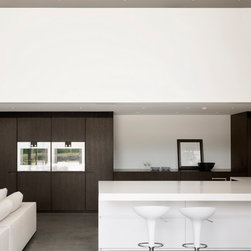
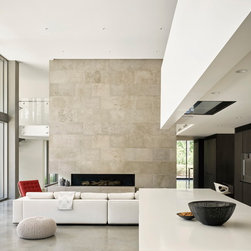
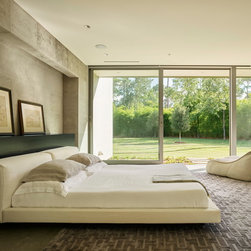
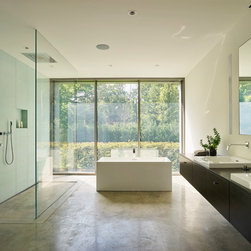
The master suite at the back of the house is soothingly minimal, with the bedroom, spa bathroom and study all opening to secluded gardens. The palette throughout the house juxtaposes white plaster, natural grey poured concrete, and dark wood cabinets. Custom design elements include a long white rectangular kitchen workspace with a top that slides back to become a counter.
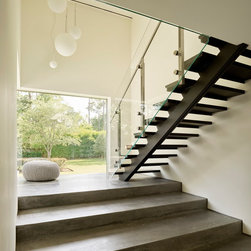
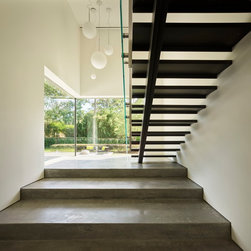
The staircase provides a contrast in materials, commencing from the ground plane as three broad concrete amphitheater steps, then transforming into black steel treads and glass as it ascends further.
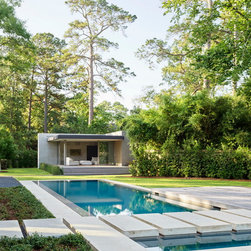
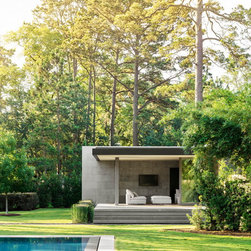
A separate guest/pool house has its own deck and secluded garden.
The understated design connects strongly with its leafy setting with large expanses of glass alternating with masses of Texas limestone, the largest of which is a stair volume clad in rheinzink; the glazed spaces are for living while the masses enclose service elements including bathrooms, storage and fireplaces. Horizontal roof planes with deep overhangs to mitigate Houston’s sun and heavy rains. This combined with high-performance glass and deliberate orientations in regards to the sun and plenty of opportunities for natural ventilation comprise the passive sustainable strategy.
The generous motor-court locates the house deep within its site and ensure privacy, a departure from the local norm of houses with grand façades facing the street. From the motor court, the entrance walkway and garden are flanked by a rust-colored wall of hand-troweled plaster. The heart of the house is a double-height great room encompassing family living, dining and kitchen. The two-story children’s wing with playroom and study overlooks this main space from the second-floor balcony, fostering interactions. Floor-to-ceiling pivot doors in the dining and entertaining areas open to the pool courtyard.
The master suite at the back of the house is soothingly minimal, with the bedroom, spa bathroom and study all opening to secluded gardens. The palette throughout the house juxtaposes white plaster, natural grey poured concrete, and dark wood cabinets. Custom design elements include a long white rectangular kitchen workspace with a top that slides back to become a counter.
The staircase provides a contrast in materials, commencing from the ground plane as three broad concrete amphitheater steps, then transforming into black steel treads and glass as it ascends further.
A separate guest/pool house has its own deck and secluded garden.
Project Year: 2016
Country: United States