
Lakeside Modern Lodge
H-LODGE reconstruction began in fall 2017 to update an aging cottage for an extended family retreat on Lake Lemon, located in Unionville, Indiana. The client was interested in a dramatic modern transformation inside and out that incorporated existing conditions, added a main level master suite, and included complete interior updates enhancing indoor-outdoor relationships. But most importantly, they wanted a comfortable place for family to enjoy time together on the lake while also leaving a legacy for future generations.
The property sits adjacent to a protected forest owned by the City of Bloomington; a prime lakefront location. The original structure, built in the 1971 and acquired by our clients in 1989, included the primary house with detached accessory storage and garage structures. Each was experiencing some degree of structural degradation, with outdated interior and exterior.
DESIGN SOLUTION:
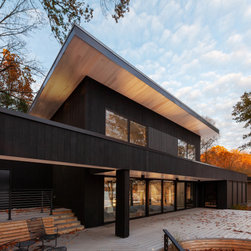
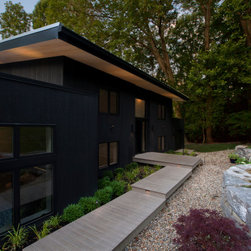
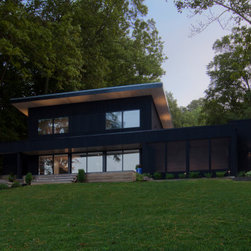
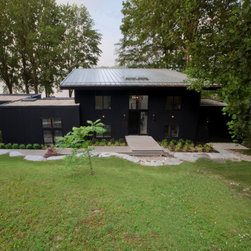
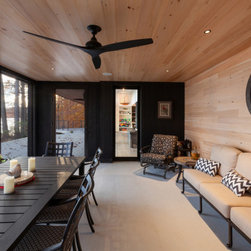
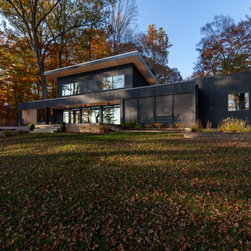
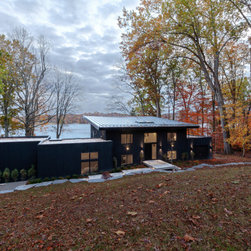
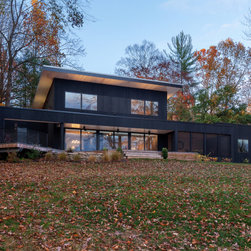
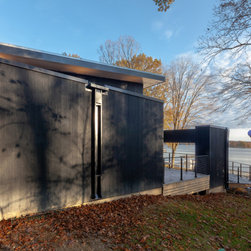
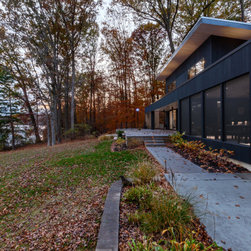
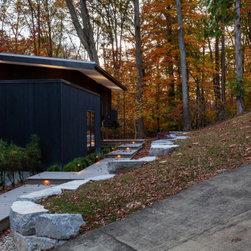
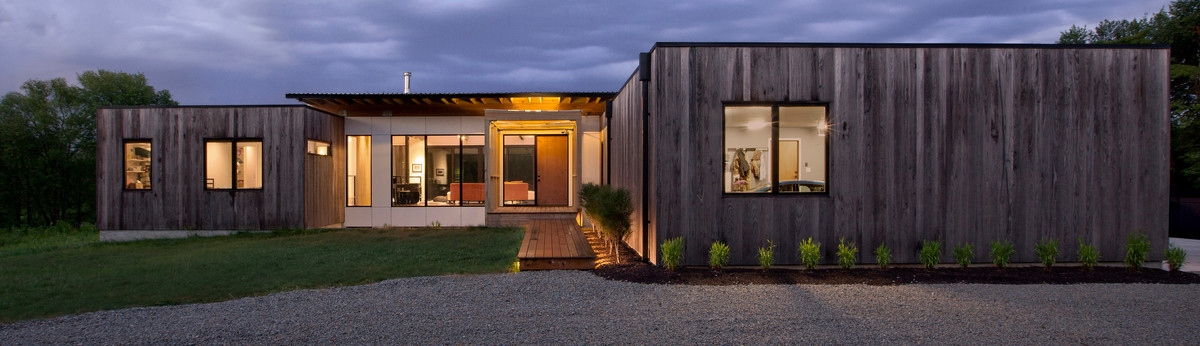
The new design solution connected and preserved the existing structures, which led to a completely new modern aesthetic inside and out. From the south, the new façade broadens the lakeside exposure with a low, horizontal roof tying together the inside and outside spaces and framing panoramic lakeside views. New master suite, storage, powder room, and screened porch spaces make-up the infill between original house and garage. The south-side screened porch is offset from the main living spaces to maximize interior views and light. The north-facing master suite bumps-out to accommodate space requirements and distinguish the massing independently from original house and garage. This new motif supports abundant glazing which receives the south passive solar rays in winter. The dark cladding retreats to counterbalance the bold, simple form while visually tying the exterior into a low-maintenance, cohesive whole.
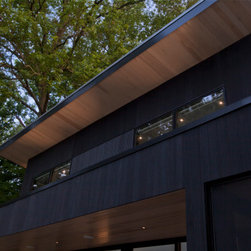
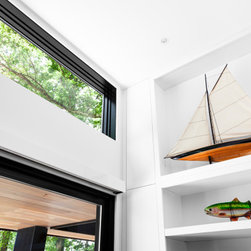
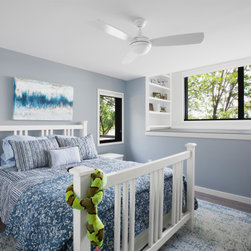
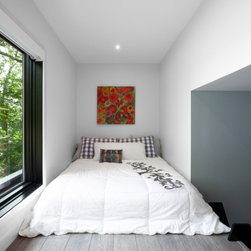
Since covered porches span the entire south façade, it was important to find a solution that would allow an enhanced level of natural light into the living spaces beyond. The new clerestory along southern edge does just that, allowing sunlight to bypass the lower porch roof and directly shine into the interior living spaces. And as an added benefit upstairs, this raised area becomes a loft feature for the lakeside bedrooms (more places to sleep!). The central upper level pavilion rises above a mostly horizontal composition distinguishing itself with its height, shed-roof overhangs with contrasting soffits, and integrated uplighting.
INTERIOR:
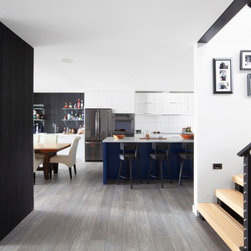
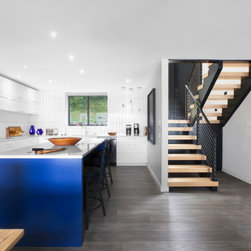
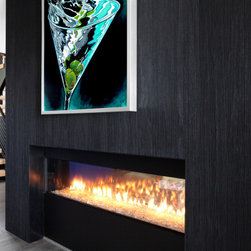
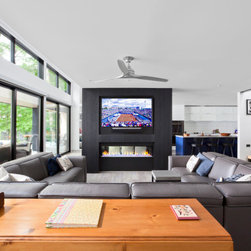
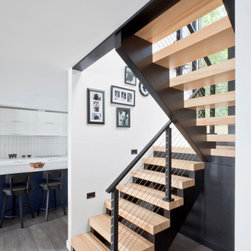
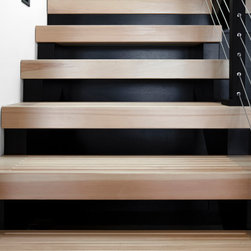
The interior functional layout generally follows the original, but adjusts to a more modern, open-concept plan. While the clerestory floods and unites the living spaces with natural light, the two-sided fireplace wrapped in exterior cladding separates living from dining. Also, kitchen cabinets flow from kitchen to dining space, morphing into new wet bar and clerestory tower. At the entry area, team reconstructed the existing split-level stair, again utilizing exterior materials on the interior. Eastern White Pine was used to fashion custom block treads with rounded flutes on walking surface. Heavy stringers are fabricated from Poplar glue-ups and painted black. Railing is a prefabricated steel and cable-rail kit of parts.
SUSTAINABILITY:
Sustainable features include embodied energy from reclaimed-repaired-reinforced structural elements (original foundations, garage slab, wood walls and deck structures, foundation walls, shed + garage structures, and driveway). New double-glazed, aluminum-clad wood, low-E windows, sliding doors, and skylights replaced smaller, inefficient windows and doors for high-efficiency (daylighting + long-lasting materials) and to allow passive solar rays to heat interior spaces in winter. Windows on east and west exposures are minimized to limit east-west solar gain. New unvented roof system integrating closed-cell board insulation over deck + fiberglass under deck (R-45 or better) replaced under-insulated original vented attic – building envelope resilience.
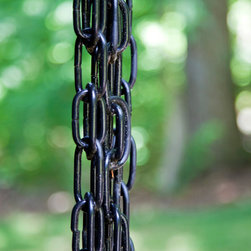
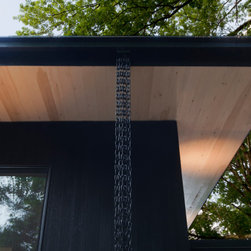
Accoya/Shou-Sugi Ban siding clads the exterior, with contrasting soffits of Eastern White Pine – natural materials. Primary shed roof is standing seam in pre-weathered galvalume finish, with continous black gutter with debris screens and aluminum rain chains to channel water to sub-grade drainage tiles – long-lasting/resilient materials. Flat roof rainwater is channeled laterally via custom rooftop aqueduct spanning linear lakefront roofs with custom conductor heads and downspout terminations. We designed the site drainage and roof water management thoughtfully for the steeply-sloping site – sustainable drainage solutions. Flat roofs are black EPDM with ballast cover – light roof coverings address heat island effect.
RESILIENCE:
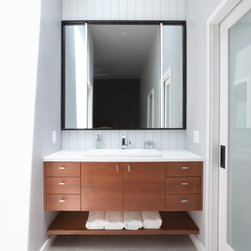
New high-efficiency appliances and plumbing fixtures, propane-fueled HVAC systems, extra wall insulation, smart-programmable controls, and LED light fixtures further contribute to project sustainability. We sized the roofs for future intensive green roof and solar panel integration. Main level cabinetry is custom utilizing maple cabinet boxes and drawers with low-VOC materials and finishes. This home increased in size, yet the energy bills (propane $30/month – electrical averages $130/month) are dramatically reduced from previous baseline, according to the client (part-time residence). Baseline Energy Use Intensity (EUI): Typical Residential Home (130 Zero Score) – Target EUI: (40 Zero Score) – Projected EUI: (40 Zero Score) – Percent Reduction from Baseline: 70%
The property sits adjacent to a protected forest owned by the City of Bloomington; a prime lakefront location. The original structure, built in the 1971 and acquired by our clients in 1989, included the primary house with detached accessory storage and garage structures. Each was experiencing some degree of structural degradation, with outdated interior and exterior.
DESIGN SOLUTION:
The new design solution connected and preserved the existing structures, which led to a completely new modern aesthetic inside and out. From the south, the new façade broadens the lakeside exposure with a low, horizontal roof tying together the inside and outside spaces and framing panoramic lakeside views. New master suite, storage, powder room, and screened porch spaces make-up the infill between original house and garage. The south-side screened porch is offset from the main living spaces to maximize interior views and light. The north-facing master suite bumps-out to accommodate space requirements and distinguish the massing independently from original house and garage. This new motif supports abundant glazing which receives the south passive solar rays in winter. The dark cladding retreats to counterbalance the bold, simple form while visually tying the exterior into a low-maintenance, cohesive whole.
Since covered porches span the entire south façade, it was important to find a solution that would allow an enhanced level of natural light into the living spaces beyond. The new clerestory along southern edge does just that, allowing sunlight to bypass the lower porch roof and directly shine into the interior living spaces. And as an added benefit upstairs, this raised area becomes a loft feature for the lakeside bedrooms (more places to sleep!). The central upper level pavilion rises above a mostly horizontal composition distinguishing itself with its height, shed-roof overhangs with contrasting soffits, and integrated uplighting.
INTERIOR:
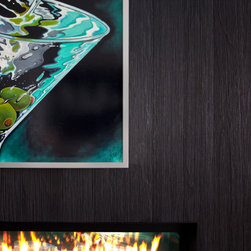
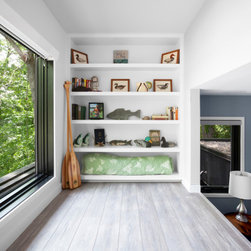
The interior functional layout generally follows the original, but adjusts to a more modern, open-concept plan. While the clerestory floods and unites the living spaces with natural light, the two-sided fireplace wrapped in exterior cladding separates living from dining. Also, kitchen cabinets flow from kitchen to dining space, morphing into new wet bar and clerestory tower. At the entry area, team reconstructed the existing split-level stair, again utilizing exterior materials on the interior. Eastern White Pine was used to fashion custom block treads with rounded flutes on walking surface. Heavy stringers are fabricated from Poplar glue-ups and painted black. Railing is a prefabricated steel and cable-rail kit of parts.
SUSTAINABILITY:
Sustainable features include embodied energy from reclaimed-repaired-reinforced structural elements (original foundations, garage slab, wood walls and deck structures, foundation walls, shed + garage structures, and driveway). New double-glazed, aluminum-clad wood, low-E windows, sliding doors, and skylights replaced smaller, inefficient windows and doors for high-efficiency (daylighting + long-lasting materials) and to allow passive solar rays to heat interior spaces in winter. Windows on east and west exposures are minimized to limit east-west solar gain. New unvented roof system integrating closed-cell board insulation over deck + fiberglass under deck (R-45 or better) replaced under-insulated original vented attic – building envelope resilience.
Accoya/Shou-Sugi Ban siding clads the exterior, with contrasting soffits of Eastern White Pine – natural materials. Primary shed roof is standing seam in pre-weathered galvalume finish, with continous black gutter with debris screens and aluminum rain chains to channel water to sub-grade drainage tiles – long-lasting/resilient materials. Flat roof rainwater is channeled laterally via custom rooftop aqueduct spanning linear lakefront roofs with custom conductor heads and downspout terminations. We designed the site drainage and roof water management thoughtfully for the steeply-sloping site – sustainable drainage solutions. Flat roofs are black EPDM with ballast cover – light roof coverings address heat island effect.
RESILIENCE:
New high-efficiency appliances and plumbing fixtures, propane-fueled HVAC systems, extra wall insulation, smart-programmable controls, and LED light fixtures further contribute to project sustainability. We sized the roofs for future intensive green roof and solar panel integration. Main level cabinetry is custom utilizing maple cabinet boxes and drawers with low-VOC materials and finishes. This home increased in size, yet the energy bills (propane $30/month – electrical averages $130/month) are dramatically reduced from previous baseline, according to the client (part-time residence). Baseline Energy Use Intensity (EUI): Typical Residential Home (130 Zero Score) – Target EUI: (40 Zero Score) – Projected EUI: (40 Zero Score) – Percent Reduction from Baseline: 70%
Project Year: 2019
Project Cost: $750,001 - $1,000,000
Country: United States