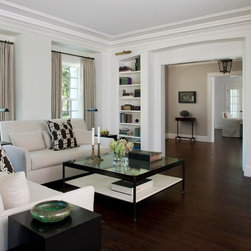


Luxury Custom Home Renovation
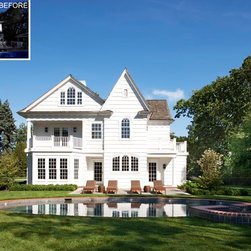
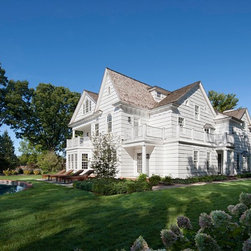
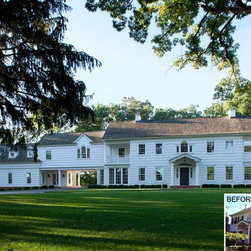
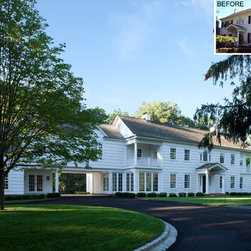
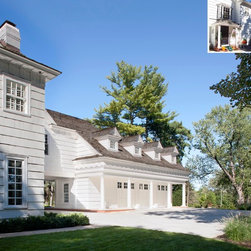
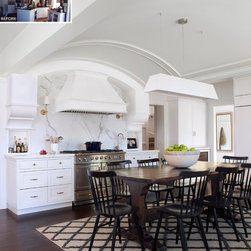
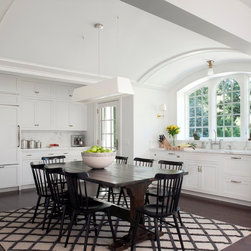
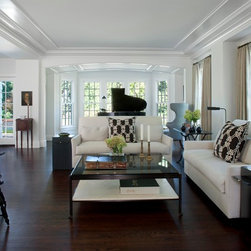
This project is nestled in an affluent, suburban area of metropolitan Detroit. The home was built adjacent to a severe drop in grade. Since its original construction, new roadways and adjacent property developments have left it on a difficult triangular parcel. The challenge we were offered was to come up with an expansion and modernization project to meet the owner’s new requirements, while attaining community over sight through public hearings and variance requests. We also had to be sensitive to the historical nature of the original home. The owner’s felt an attached garage was necessary due to the cold climate while the historical character implied a detached structure. Zoning ordinances also mandated attachment to facilitate the size constraint for the owner’s program requirements. The functional design solution involved adding garages which were not visible from the street. This included multiple stories for car storage as well as a living space connection to the garage meeting local zoning requirements. A separate Au-paires apartment on the third level over the garage rounded out the required additional spaces. The remainder of the project requirement was to renovate this 1930’s summer home into an up-to-date modern home that looked as if it could be original. The central part of the interior renovation was a complete re-work of the kitchen and dining rooms to make them the central living area for this home.
The materials originally used for the home came from what would have been local wood shingle and lumber products. We replicated all of these with sustainably sourced double cedar shingles for the exterior and primarily engineered wood products for the structure. Original wood windows were restored where possible and new thermal units matching original windows were used for addition areas as well as for any windows/doors requiring replacement.
All original low-efficiency mechanical systems were replaced by new high-efficiency equipment. Multiple types of equipment were used in an effort to minimize energy usage. Radiant floors improved comfort while allowing lower ambient room temperatures. In addition, the entire home was broken up into multiple zones to improve the overall performance. To further improve the use of this equipment, controllers were used to take advantage of modern electronic sensors and computerized systems. These sensors were concealed in order to maintain a historically sensitive visual effect while creating a more sustainable and modernized home. This approach to updating the home allowed it to fit gracefully into a well-established suburban community and will allow it to be completely viable for the next several generations. We strongly promote and believe that the updating of these established homes and properties is one of the most practical and ultimately sustainable projects available to the architectural community. By making this home as viable for this generation and the next, as it was for its previous owners, we have kept additional development of property from being required. This approach keeps established neighborhoods sustainable and active while keeping a connection to the historical culture. Keeping homes like this from finding their way into a landfill is a significant bonus for everyone involved.
The materials originally used for the home came from what would have been local wood shingle and lumber products. We replicated all of these with sustainably sourced double cedar shingles for the exterior and primarily engineered wood products for the structure. Original wood windows were restored where possible and new thermal units matching original windows were used for addition areas as well as for any windows/doors requiring replacement.
All original low-efficiency mechanical systems were replaced by new high-efficiency equipment. Multiple types of equipment were used in an effort to minimize energy usage. Radiant floors improved comfort while allowing lower ambient room temperatures. In addition, the entire home was broken up into multiple zones to improve the overall performance. To further improve the use of this equipment, controllers were used to take advantage of modern electronic sensors and computerized systems. These sensors were concealed in order to maintain a historically sensitive visual effect while creating a more sustainable and modernized home. This approach to updating the home allowed it to fit gracefully into a well-established suburban community and will allow it to be completely viable for the next several generations. We strongly promote and believe that the updating of these established homes and properties is one of the most practical and ultimately sustainable projects available to the architectural community. By making this home as viable for this generation and the next, as it was for its previous owners, we have kept additional development of property from being required. This approach keeps established neighborhoods sustainable and active while keeping a connection to the historical culture. Keeping homes like this from finding their way into a landfill is a significant bonus for everyone involved.
Project Year: 2013
Country: United States
Zip Code: 48304