
Playa Del Sur
This site within the historic El Pueblo Ribera complex was left vacant after two pueblos were destroyed in a fire. The design respects the context and ideologies of this historically significant project and recalls the architectural massing, articulation and the exploration of concrete by R.M. Schindler for his original 1923 structures.
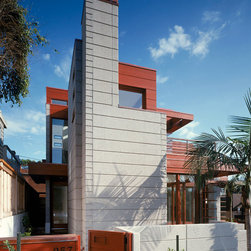
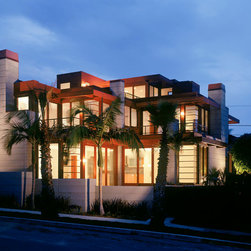
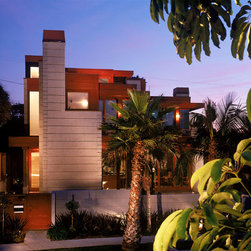
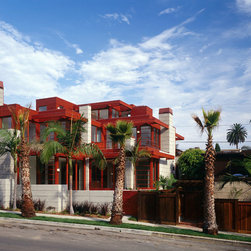
The materials and articulation of the house emulate the original pueblos and respects the context and ideologies of this historically significant site. The design uses R.M. Schindler’s ideas of creating, activating and making connections to the usable exterior spaces and facilitates the indoor/ outdoor lifestyle he dreamed of. Just as Schindler experimented with his slip-form concrete construction in 1923, eighty years later, the architects experiments with a new concrete composite panel that has structural capability. The prefabricated concrete and metal stud composite wall panels and structural elements of the project define and articulate courtyard spaces and provide privacy. The building terraces give the exterior spaces access to view, sunlight and fresh airflow and give relief, street presence and delineation to the project in a manner that is sympathetic to R.M. Schindler’s original creation.
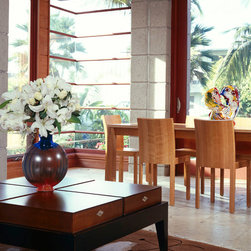
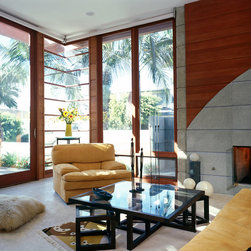
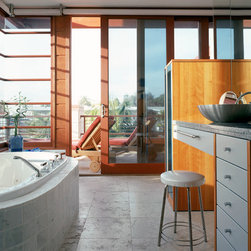
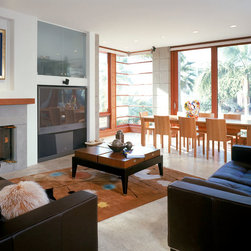
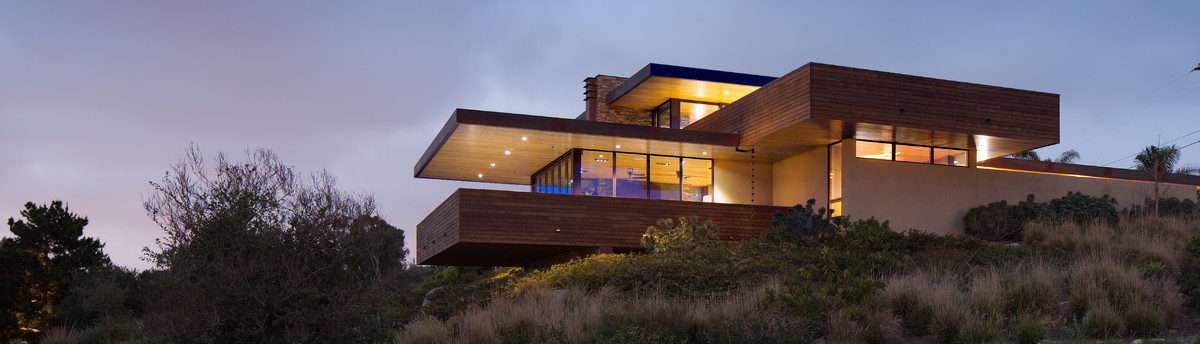
The core of the residence is the patio. The Living spaces wrap around and engage the patio. The “public” rooms of the home have strong visual and physical connections to these spaces through the extensive use of windows and “sliding glass wall” openings. The concept utilizes ‘solid’ vertical elements contrasted with more delicate horizontal wood trellis overhang elements and fields of glazing. In R.M. Schindler’s original plans he ‘pushed’ the buildings to one side of the property to maximize the usability of the remaining exterior space, as does this house. The exploration and inclusion of these themes upon this project testifies to timeless qualities and ‘correctness’ of these concepts. They are as applicable and exciting today as they were 80 years ago.
The materials and articulation of the house emulate the original pueblos and respects the context and ideologies of this historically significant site. The design uses R.M. Schindler’s ideas of creating, activating and making connections to the usable exterior spaces and facilitates the indoor/ outdoor lifestyle he dreamed of. Just as Schindler experimented with his slip-form concrete construction in 1923, eighty years later, the architects experiments with a new concrete composite panel that has structural capability. The prefabricated concrete and metal stud composite wall panels and structural elements of the project define and articulate courtyard spaces and provide privacy. The building terraces give the exterior spaces access to view, sunlight and fresh airflow and give relief, street presence and delineation to the project in a manner that is sympathetic to R.M. Schindler’s original creation.
The core of the residence is the patio. The Living spaces wrap around and engage the patio. The “public” rooms of the home have strong visual and physical connections to these spaces through the extensive use of windows and “sliding glass wall” openings. The concept utilizes ‘solid’ vertical elements contrasted with more delicate horizontal wood trellis overhang elements and fields of glazing. In R.M. Schindler’s original plans he ‘pushed’ the buildings to one side of the property to maximize the usability of the remaining exterior space, as does this house. The exploration and inclusion of these themes upon this project testifies to timeless qualities and ‘correctness’ of these concepts. They are as applicable and exciting today as they were 80 years ago.