

Waterfall Mansion
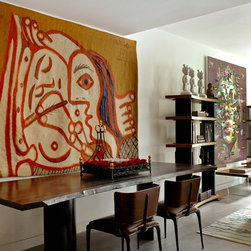
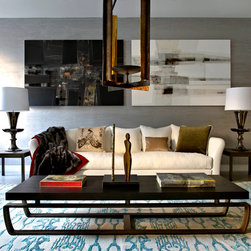
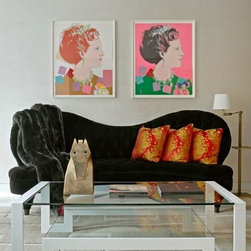
This former Manhattan carriage house was once a storage site for horse-drawn carriages, but these days it contains a lot of modern and contemporary art. Pieces by Picasso, Warhol, Chagall, Leger and Dubuffet are mixed with the work of 21st century artists. Collectible furnishings are set against custom finishes by artisan craftsmen like Gracie, a third-generation fabricator of hand-painted wall coverings. With the various elements in harmony, the house flows as smoothly as the interior waterfall, the home’s namesake and defining feature. Renovated by architect Toshiko Mori, the house had strong lines but the interiors were considered a bit austere for my client, a real estate, finance and art-world visionary.
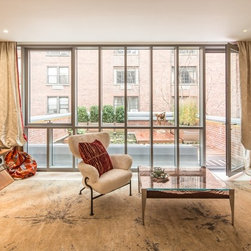
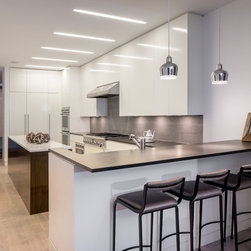
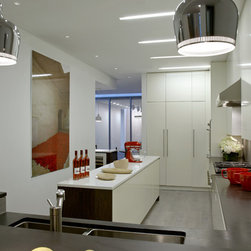
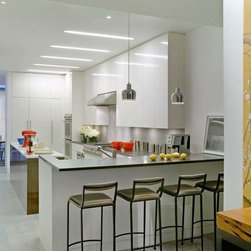
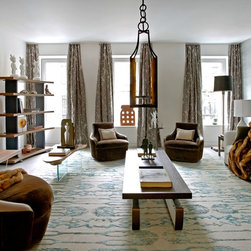
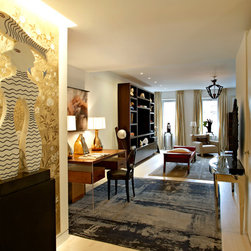
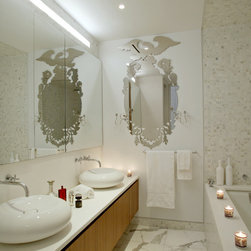
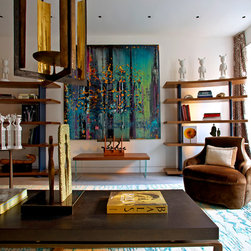
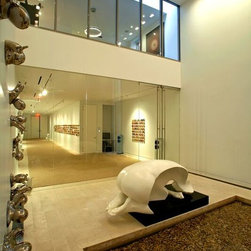
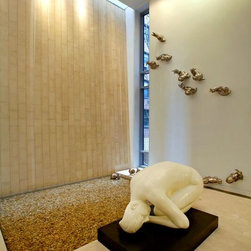
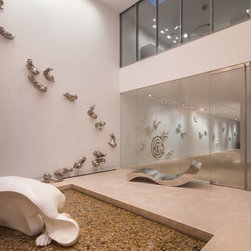
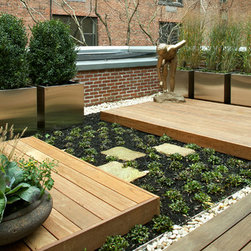
I met her request for a more striking look by redoing the kitchen cabinets in white lacquer and ebony Macassar, dying the floors a light grey, and introducing Venetian plaster accent walls and floor-to-ceiling woven-silk curtains. We incorporated furniture and accessories that could hold their own against the attention-grabbing artworks. Most of all, my team strove to avoid the monotony of pure white gallery walls — each floor landing is distinguished by its own hand-painted wallpaper. The interior waterfall remained in place — cascading down the 25-foot-high back wall of the main entertainment and exhibition space — though it now serves as a setting for the work of Korean ceramicist Jae Yong Kim and an oversized hyperrealist sculpture of a swimmer by Carole Feuerman.
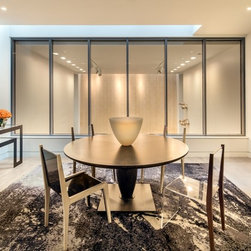
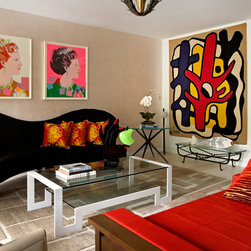
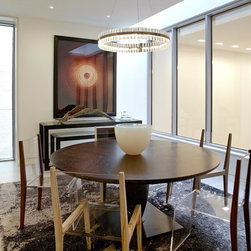
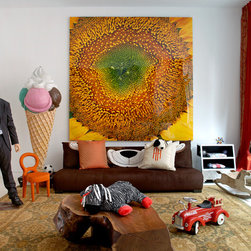
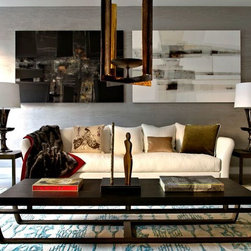
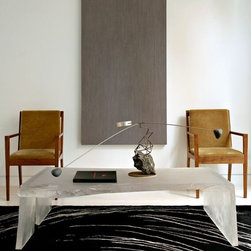
The challenge in the other rooms was to add luxurious touches without creating distractions. I relied on a mix of mid-century and contemporary furniture, including some oversized pieces that will “hold the floor” in any context.
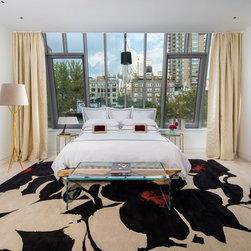
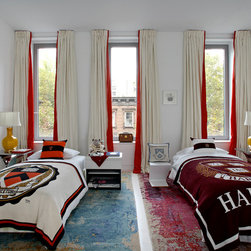
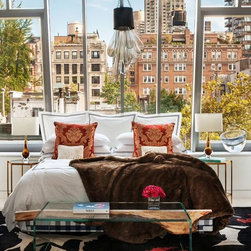
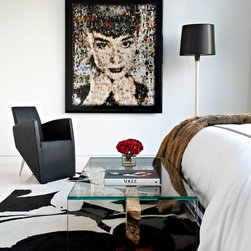
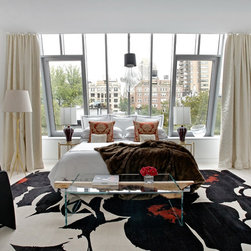
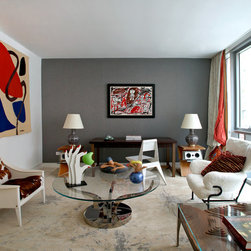
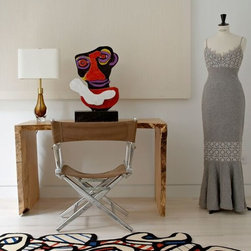
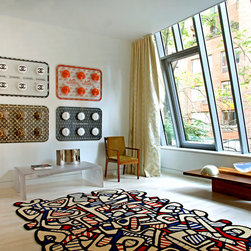
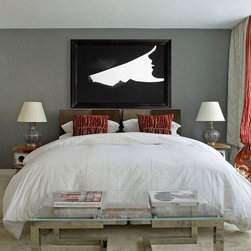
As one ascends, the composition simplifies, culminating in the minimalist master bedroom and home office where elegant silk moire curtains flank a dramatic, angled fourteen-by-twenty foot window. Light floods onto a John Houshmand natural-edge desk and a Jean Dubuffet tapestry used as a floor covering. Technically Houshmand is a craftsman, Dubuffet was an artist, I am a designer, but in this house, where everything is special, the lines between disciplines blur.
I met her request for a more striking look by redoing the kitchen cabinets in white lacquer and ebony Macassar, dying the floors a light grey, and introducing Venetian plaster accent walls and floor-to-ceiling woven-silk curtains. We incorporated furniture and accessories that could hold their own against the attention-grabbing artworks. Most of all, my team strove to avoid the monotony of pure white gallery walls — each floor landing is distinguished by its own hand-painted wallpaper. The interior waterfall remained in place — cascading down the 25-foot-high back wall of the main entertainment and exhibition space — though it now serves as a setting for the work of Korean ceramicist Jae Yong Kim and an oversized hyperrealist sculpture of a swimmer by Carole Feuerman.
The challenge in the other rooms was to add luxurious touches without creating distractions. I relied on a mix of mid-century and contemporary furniture, including some oversized pieces that will “hold the floor” in any context.
As one ascends, the composition simplifies, culminating in the minimalist master bedroom and home office where elegant silk moire curtains flank a dramatic, angled fourteen-by-twenty foot window. Light floods onto a John Houshmand natural-edge desk and a Jean Dubuffet tapestry used as a floor covering. Technically Houshmand is a craftsman, Dubuffet was an artist, I am a designer, but in this house, where everything is special, the lines between disciplines blur.
Project Year: 2016
Country: United States