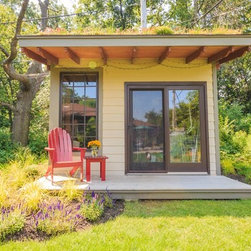
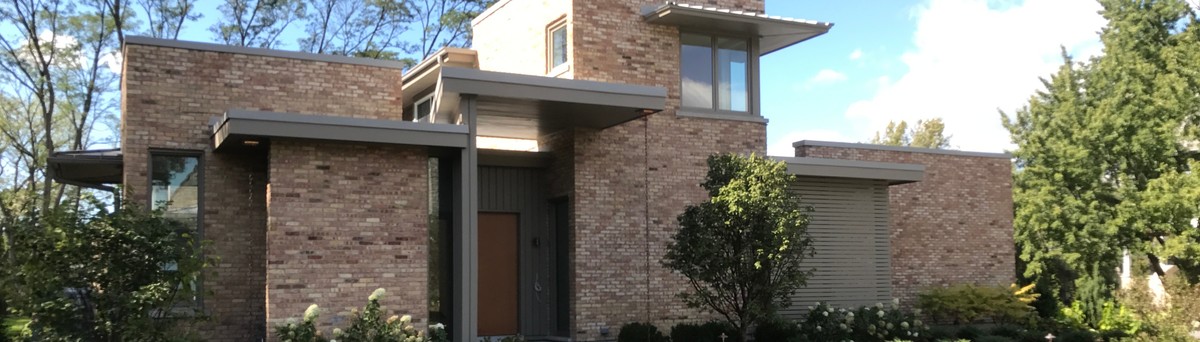

Architect's Garden Studio
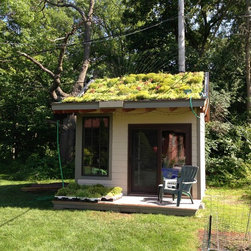
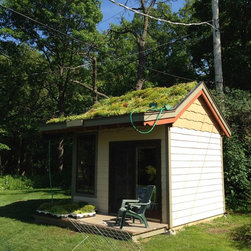
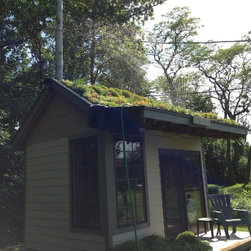
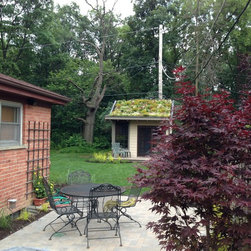
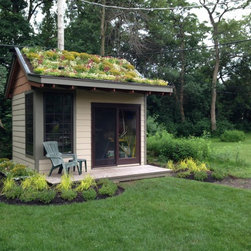
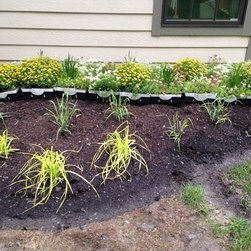
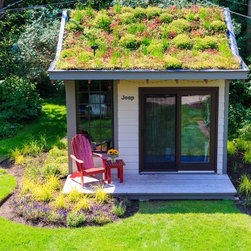
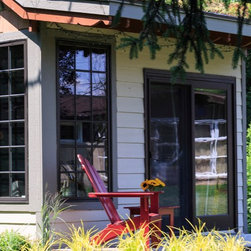
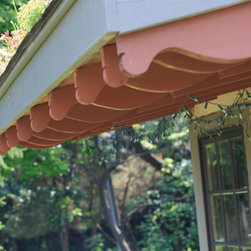
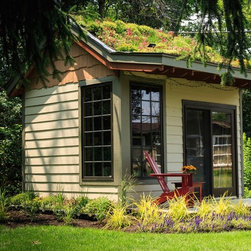
Welcome to the Mark Eric Benner - Architects Garden Studio. This is being developed as my architectural laboratory to demonstrate new and sustainable technologies and practices. In addition to is use as outdoor storage it also serves as an architectural design studio with an inspiring view. The vegetated roof offers the comfort of an earthen home, sustainably addresses storm water runoff, and blends beautifully into the garden landscape.
Why a green roof?
Many have inquired as to the benefits of a green roof, and there are many. The upfront considerations with regard to structural stability, waterproofing, and drainage does make this a more expensive project than a traditional shingled or membrane application. The advantage comes in the form of long-term economical and environmental considerations that justify the higher initial cost. They are more comfortable, they last much longer, they look better, and require less maintenance than regular roofing systems.
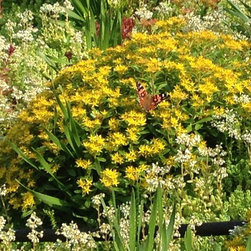
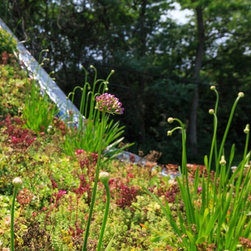
• Green roofs are visually attractive, offering a significantly broader range of color, texture, and a truly unique expression.
• Energy efficiency. Vegetated roofs are cooler in the summer and can be as effective as white roofs in reducing the urban heat island effect. The thermal mass of the soil reduces heat gain and loss by isolating the building from temperature extremes.
• Stormwater runoff. As more and more land is developed, decreasing the amount of available land to absorb rain water, green roofs retain as much as one half to three quarters of the annual rainfall, as well as serving as detention of the remaining runoff for delayed release.
• Longevity. Green roofs love the sun, which is the mortal enemy of all other roofing materials. By shielding the waterproofing membrane from damaging solar radiation and dampening temperature swings, roofing membranes and be expected to last fifty years or more. This extends the life of the roof by five times that of a traditional solution. In fifty or so years, the roof can be replanted, at significantly lower cost, than the initial installation cost.
I have been involved in a great many roofing projects and none have had the impact of this vegetated roof. A project of this type gets people excited, activated, engaged, and inspired to think about their projects in a new light.
Why a green roof?
Many have inquired as to the benefits of a green roof, and there are many. The upfront considerations with regard to structural stability, waterproofing, and drainage does make this a more expensive project than a traditional shingled or membrane application. The advantage comes in the form of long-term economical and environmental considerations that justify the higher initial cost. They are more comfortable, they last much longer, they look better, and require less maintenance than regular roofing systems.
• Green roofs are visually attractive, offering a significantly broader range of color, texture, and a truly unique expression.
• Energy efficiency. Vegetated roofs are cooler in the summer and can be as effective as white roofs in reducing the urban heat island effect. The thermal mass of the soil reduces heat gain and loss by isolating the building from temperature extremes.
• Stormwater runoff. As more and more land is developed, decreasing the amount of available land to absorb rain water, green roofs retain as much as one half to three quarters of the annual rainfall, as well as serving as detention of the remaining runoff for delayed release.
• Longevity. Green roofs love the sun, which is the mortal enemy of all other roofing materials. By shielding the waterproofing membrane from damaging solar radiation and dampening temperature swings, roofing membranes and be expected to last fifty years or more. This extends the life of the roof by five times that of a traditional solution. In fifty or so years, the roof can be replanted, at significantly lower cost, than the initial installation cost.
I have been involved in a great many roofing projects and none have had the impact of this vegetated roof. A project of this type gets people excited, activated, engaged, and inspired to think about their projects in a new light.
Project Year: 2015
Project Cost: $1,000 - $2,500
Country: United States
Zip Code: 60062