

Ling House
The increasing need for nature as an alternative to urban living, led me to
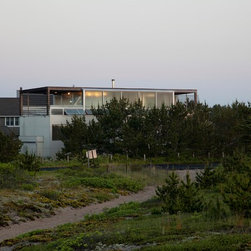
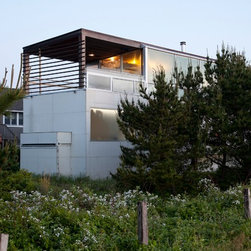
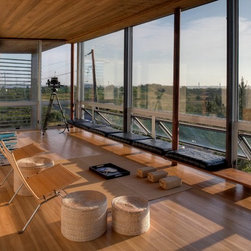
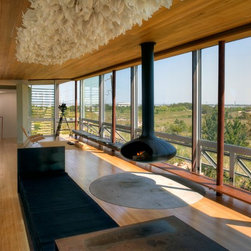
design my house on a small parcel of sand with views of the ocean and bay at Long Island’s South fork where the ocean met the bay in a 1930’s storm and later during superstorm Sandy. I wanted to integrate my experience of shelter with the surrounding natural environment of beach and dunes. The large expanses of glass on the second floor allow views of both very different bodies of water: the placid bay and ever changing ocean. The lower awning windows allow complete cross ventilation while the fixed glass above allows for the open views.
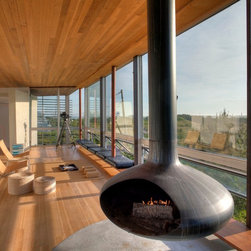
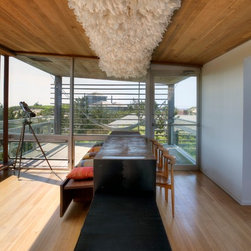
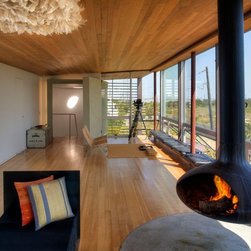
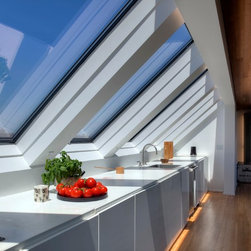
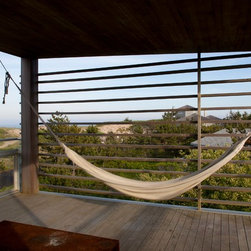
The second floor terrace is simply furnished with a hammock, handwoven from the Dominican design school where I have taught. Linking indoors and outdoors is a 24’ ribbon of steel that is part daybed of stacked felt, part indoor dining table and part outdoor table. Part Serra, part Beuys, and for the floating cloud of feathers above, part Tawney. The hanging orb fireplace punctuates the space and provides an elliptically framed fire against the backdrop of Japanese black pines an the sky. Completing the upside down house is the kitchen, an elongated galley kitchen oriented west to catch the setting sun while preparing dinner.
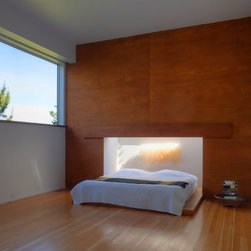
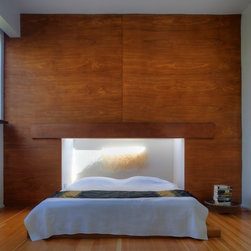
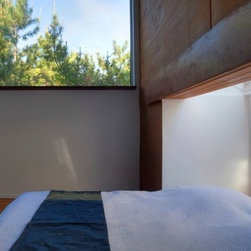
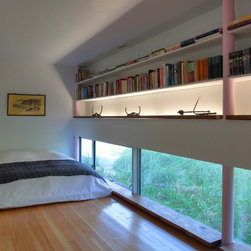
Below, the bedrooms have framed views of the surrounding vegetation. The guest bedroom, which can be subdivided into 2 smaller bedrooms has a lower slot window which frames views of the beach grass from a bed perspective. Floating above are bookcases. The master bedroom has 2 views of nature, one the upper window framing the black pines and two, the skylight above the pillows which frame the stars, occasionally shooting stars. The skylight opens to allow the sound and smell of the ocean waves to enter and permeate the sleep.
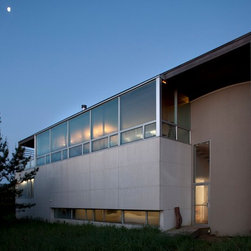
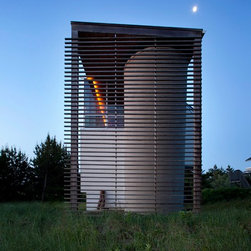
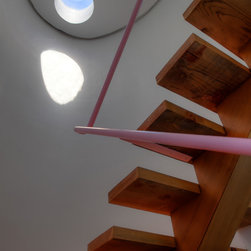
Linking the two floors of my upside down home is a series of floating steps housed in a conical entrance shape clad in grey stucco.
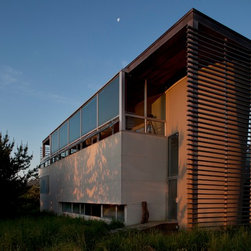
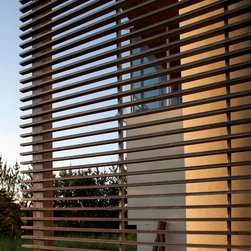
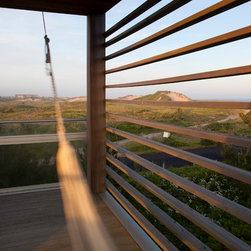
The exterior mass of the main body of the house is composed of 3 parts, a cement panel clad bottom, a cedar clad roof/ceiling and sides, and thirdly, joining the two are the second floor glass windows. To the sides, filtering the views to the neighboring houses, I placed horizontal cedar slats.
2,200 sq. feet
Photography by Erik Freeland
design my house on a small parcel of sand with views of the ocean and bay at Long Island’s South fork where the ocean met the bay in a 1930’s storm and later during superstorm Sandy. I wanted to integrate my experience of shelter with the surrounding natural environment of beach and dunes. The large expanses of glass on the second floor allow views of both very different bodies of water: the placid bay and ever changing ocean. The lower awning windows allow complete cross ventilation while the fixed glass above allows for the open views.
The second floor terrace is simply furnished with a hammock, handwoven from the Dominican design school where I have taught. Linking indoors and outdoors is a 24’ ribbon of steel that is part daybed of stacked felt, part indoor dining table and part outdoor table. Part Serra, part Beuys, and for the floating cloud of feathers above, part Tawney. The hanging orb fireplace punctuates the space and provides an elliptically framed fire against the backdrop of Japanese black pines an the sky. Completing the upside down house is the kitchen, an elongated galley kitchen oriented west to catch the setting sun while preparing dinner.
Below, the bedrooms have framed views of the surrounding vegetation. The guest bedroom, which can be subdivided into 2 smaller bedrooms has a lower slot window which frames views of the beach grass from a bed perspective. Floating above are bookcases. The master bedroom has 2 views of nature, one the upper window framing the black pines and two, the skylight above the pillows which frame the stars, occasionally shooting stars. The skylight opens to allow the sound and smell of the ocean waves to enter and permeate the sleep.
Linking the two floors of my upside down home is a series of floating steps housed in a conical entrance shape clad in grey stucco.
The exterior mass of the main body of the house is composed of 3 parts, a cement panel clad bottom, a cedar clad roof/ceiling and sides, and thirdly, joining the two are the second floor glass windows. To the sides, filtering the views to the neighboring houses, I placed horizontal cedar slats.
2,200 sq. feet
Photography by Erik Freeland
Country: United States