

Visitors office
Wissahickon Valley Park contains 2,042 acres (8.26 km2) of parkland in Northwest Philadelphia, including the Wissahickon Creek from its confluence with the Schuylkill River to the northwestern boundary of the city with eastern Montgomery County. Visitors travel by foot, bicycle and horse along Forbidden Drive where motor vehicles are not allowed. Side trails off Forbidden Drive lead up into the wooded gorge above the creek along a total of 50 mi (80 km) of trails.
It is the second largest part of the city's parkland areas, after the slightly larger Fairmount Park. The Wissahickon Valley was designated a National Natural Landmark in 1964, including 1,250 acres (5.1 km2) of the parkland.
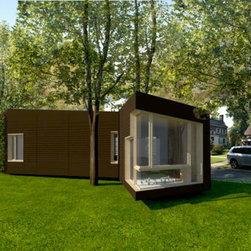
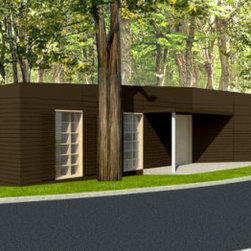
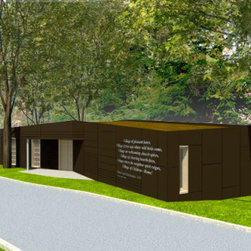
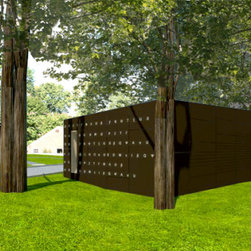
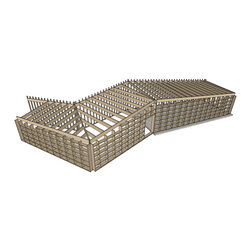
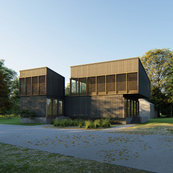
PhiBa worked in a building to function as the park’s visitors center. The 1 story building was thought to use the structure as a double function membrane, enclosing the space and acting as the building’s library. The design was intended to blend within the surrounding nature trying to minimize disturbing the site’s landscape. Only half of the building touches the ground and its shape zigzags around the existing trees. The texture and color of the siding and a green roof made the building almost disappear with the background.
It is the second largest part of the city's parkland areas, after the slightly larger Fairmount Park. The Wissahickon Valley was designated a National Natural Landmark in 1964, including 1,250 acres (5.1 km2) of the parkland.
PhiBa worked in a building to function as the park’s visitors center. The 1 story building was thought to use the structure as a double function membrane, enclosing the space and acting as the building’s library. The design was intended to blend within the surrounding nature trying to minimize disturbing the site’s landscape. Only half of the building touches the ground and its shape zigzags around the existing trees. The texture and color of the siding and a green roof made the building almost disappear with the background.
Country: United States