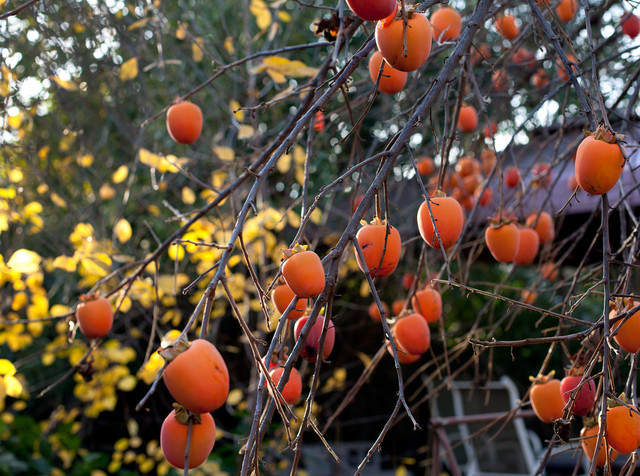

Persimmon Tree Traditional Landscape
Photo courtesy of Robert Couse-Baker
Design ideas for a traditional landscaping. — Houzz
This photo has one question

Christine Amey wrote:
Like Comment
What Houzz contributors are saying:

Bill Marken added this to Top 5 Trees for Fall Color in California
Japanese Persimmon(Diospyros kaki) The persimmon's fall beauty comes in a double dose: First the glossy, leathery leaves turn deep orange to red. After those fall, often around Thanksgiving, bare branches bend deeply as they hold dozens (hundreds?) of gleaming orange fruits well into winter. California nature/Zen poet Gary Snyder describes the magic of persimmons and the fruit’s "sweet orange goop” in “Mu Ch’i’s Persimmons”. The tree is dependable, medium size and perfectly suited to California gardens. It needs little care compared with most other fruit trees — no pruning or spraying. It is shapely enough to stand alone as a garden’s focal point. In time it can make a decent shade tree. In a big garden, several trees can form a row in the background.Many people like to eat the fruit fresh or use it in baking; others don’t like the fruit’s texture. USDA zones: 7 to 10Water requirement: ModerateLight requirement: Full sunMature size: 30 feet high and wideGrowing tips: There are a number of varieties on the market; ‘Hachiya’ is the most familiar one. ‘Fuyu’ has smaller, flatter fruit that is nonastringent and eaten when hard. What are you going to do with the fruit? It’s going to be there, although birds or squirrels may steal some. If you don’t want it, you can probably pick ripe fruits (after they soften and lose their astringency) and give them away — or have the kids set up a lemonade-style stand. Don’t plant this tree where you don’t want the fruit to fall.
Bill Marken added this to Great Design Plant: Persimmon
Botanical name: Diospyros kakiCommon name: Japanese persimmonUSDA zones: 7 to 10 (find your zone)Water requirement: ModerateSun requirement: Full sunMature size: 30 feet tall and wide Benefits and tolerances: No particular pests or diseases; birds or squirrels may steal fruit.

Margie Grace - Grace Design Associates added this to Southern California Gardener's November Checklist
Enjoy the fruits of the season. Beautiful persimmons hanging from trees are reaching their tastiest this month. This bright, autumn-y fruit comes on as the foliage drops, leaving little "lanterns" hanging from the bare branches.

J. Peterson Garden Design added this to Texas Gardener's February Checklist
Establish fruit trees and plants. Blackberries, dewberries, grapes, figs, pears, persimmons, strawberries and pomegranates can all be planted now, but be sure to choose the varieties that are best suited for your particular area. Your local nursery or extension office can provide recommendations for you, as well as the best times to plant them.

Susan Haynes added this to Your Garden Is Stirring — Here’s What to Do in February
Texas. "Establish fruit trees and plants," writes garden designer Jenny Peterson. "Blackberries, dewberries, grapes, figs, pears, persimmons, strawberries and pomegranates can all be planted now, but be sure to choose the varieties that are best suited for your particular area."Get her Texas February checklist

Marianne Lipanovich added this to How to Grow Your Own Persimmons
Care Requirements for PersimmonsPersimmons are sturdy and one of the easier fruit trees to care for. You’ll need to do some work, but they aren’t nearly as fussy or problem-prone as some of the more popular fruits. Your most likely problem, especially the first few years, is fruit drop on Japanese persimmons. Correct this by watering consistently and not overfeeding. Watering: Japanese persimmons are fairly drought tolerant, but you’ll get better fruit if you water at least every few weeks. Don’t overwater; the soil should be somewhat (though not completely) dry before you water again. American and hybrid persimmons benefit from a regular watering schedule.Feeding: Fertilize Japanese persimmons in late winter or early spring, as soon as you can work the soil. Feed American and hybrid persimmons only if they aren’t growing well. Often you’ll just need to apply organic mulch to get them back on track. Thinning: If a young tree is overburdened with fruit at the expense of its overall growth, remove the excess. Otherwise, there’s no need to thin.Pruning: Japanese persimmons should have either an open form, with no central trunk, or a modified center in which the trunk branches out near the top to form a vaselike shape. Prune the first few years to develop your preferred shape and remove any excessively long or thin branches. After that simply prune to maintain the shape; to remove diseased, dead or crossing wood; and to open up the canopy. Also remove any suckers around the base of the tree.For American and hybrid persimmons, just remove any broken, diseased or dead branches and get rid of any suckers at the base of the tree.Pests and diseases: Young trees may fall prey to gophers, and birds will be tempted by the fruit. In humid climates, such as the Southeast, anthracnose might be a problem, and wet conditions will encourage it. Keep the foliage as dry as possible and provide good air circulation. Remove and destroy affected branches.

Annie Thornton added this to How to Grow 10 Favorite Fruit Trees at Home
Photo by Robert Couse-Baker8. PersimmonsTalk about a long-lasting fruit. Even after the leaves have fallen and been raked up, you can still find persimmons hanging on to the tree. Even better, persimmons tend to be naturally smallish trees, ideal for today’s smaller gardens. Japanese or Asian persimmons are probably the better-known trees, growing well in USDA zones 6 through 10, but there are native American persimmons and hybrids that combine a smaller size with more cold tolerance for gardeners in zones 4 through 10. Persimmons also have a reputation for being very tart. It’s true that some astringent or soft Japanese varieties live up to their name in that regard. These have to ripen and soften completely while still on the tree to be palatable. But other Japanese varieties as well as American and hybrid persimmons are nonastringent, sweet while they’re still firm. No matter which type you choose, you’ll find them ornamental trees that are generally unfussy and easy to care for. They’re also relatively immune to major pests and diseases. Your biggest problem may be trying to determine just when to pick the fruit. Learn more about growing persimmon trees

Lauren Dunec Hoang added this to 10 Ideas for Enjoying More Outdoor Living This Fall
3. Pick for a good cause. This year, why not trade a visit to a U-pick farm for a harvesting day out that will leave both you and the greater community a little richer in fall produce? Nonprofit organizations like San Francisco Bay Area-based Village Harvest host weekly picking trips to local backyards and small orchards where volunteers harvest the excess produce for community members in need.
What Houzzers are commenting on:

Kat Ohare added this to kathrynohare's ideas
I would like to have a Persimmon tree.

Carlos Olivas added this to Landscape Design
would love a small weeping persimmon ornamental tree.