
Bridge Street
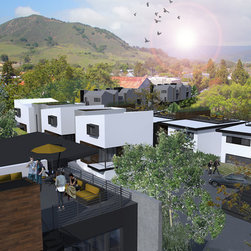
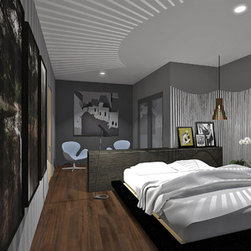
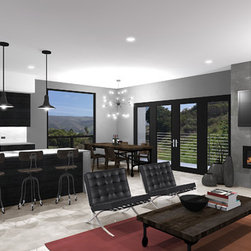
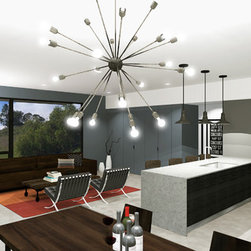
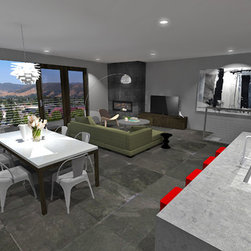
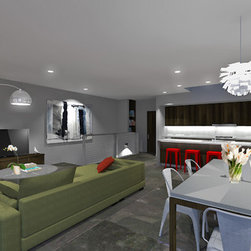
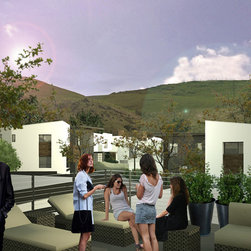
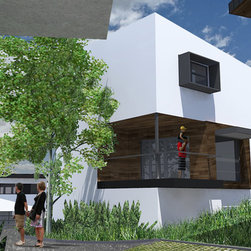
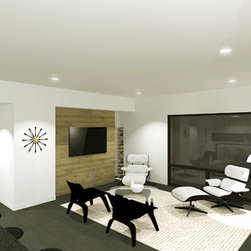
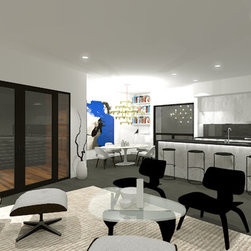
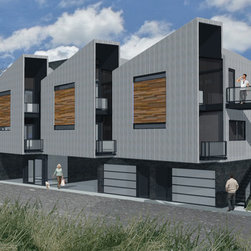
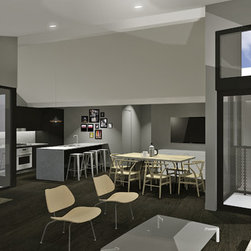
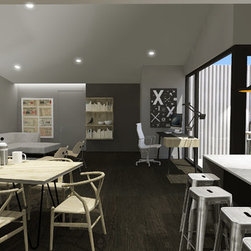
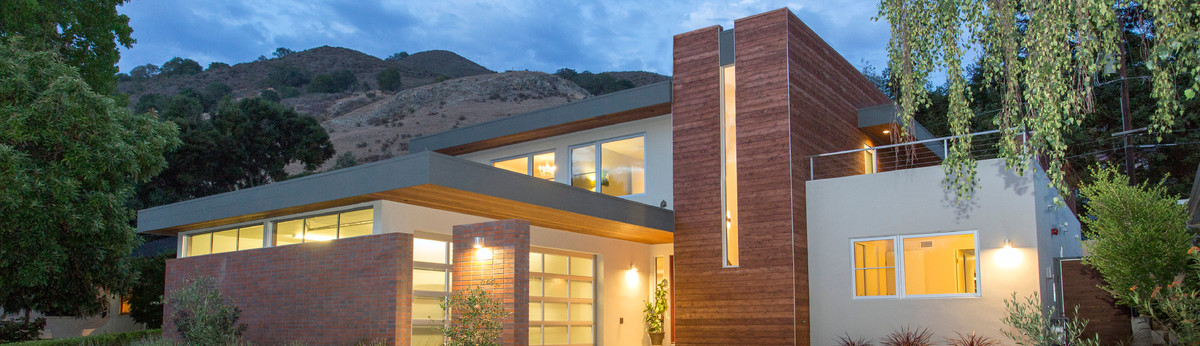
The goal of the Bridge Street subdivision is to create a local neighborhood based on the principles of permanent culture or ‘permaculture', adopting an attitude of holistic design sensitivity to the entire site. The proposal is to gently place structures on the land, thereby respecting existing vegetation and habitats. A successful design solution should result in a self-managed system which addresses both site and structure. To that end, this mixed use commercial and residential project will be harmoniously integrated into the natural setting in a way that supports a healthy, small or “micro” community. The mixed-use neighborhood is of a size in which people are able to know and be known by others, and where each member feels they are able to influence the community’s direction. The variety of commercial and housing options provides inherent diversity within the project itself.
Elements of the project will include:
- Commercial / Work / Live units
- Residential units
- Potential Rental Income or “Granny” units
- Leisure Outdoor Activities
- Social / Community Lifestyles
Building design features will include:
• Non-toxic sustainable building materials and finishes
• Solar orientation for light and environmental control
• Maximum daylighting to minimize reliance on power
• Design and construction for longevity
• Whole-systems approach in building design, siting and landscaping
• Integration of optional renewable solar energy sources and technologies
Wherever possible, the proposed units will rest on indigenous native landscaping resembling the original site and the surrounding hills. The physical placement of the housing units will create a common space for a community recreation area, and will include centrally located appurtenances such mailboxes and a common trash collection area that encourages residents to interact on a daily basis. In addition, porous pavers and decomposed granite will be used on vehicular driveway and pedestrian walking surfaces to allow greater percolation into the water table, and greater sensitivity to the original drainage patterns of the site.
One of the crucial site design issues for this development is maintaining the historical natural flow of stormwater from the surrounding hills through the site. In order to provide enhanced on-site stormwater management and erosion control, this proposal will capture and channel rainfall as it comes through the existing topography via a) rock gabion catchment system, and b) contour swales. These features address the permaculture principle of water catchment and soil fertility as early in the water migration cycle as possible.
Due to the presence of existing dense serpentine rock at a shallow level on the site, rainwater historically sheet flows through the site rather than percolating down into the soil. This problem is addressed via installation of vegetated infiltration contour swales, and would act to harvest seasonal sheet flow of rainfall by slowly infiltrating and recharging groundwater down slope, thus retaining moisture in the landscape much longer. This concept is known as ‘pattern application’ in permaculture. More than an aesthetic caprice, these landscaped contours will now passively direct storm water flow and nutrient dispersal with maximum efficiency via gravity. Supplemental drip irrigation system will be laid on these level horizons where flow will not be interrupted by elevations, in order to maintain healthy vegetation during summer seasons.
The design team has also utilized the permaculture principle of ‘edge effect’, by retaining the existing vegetation of brambles in the existing wildlife corridor. This existing dense brambles thicket forms a green corridor for wildlife to live, as well as a physical and visual boundary to the northern edge of the site. An ‘edge’ is an interface between two mediums; in this case between new structures and the neighboring property to the north. Diversity, productivity and concentrated soils nutrients will be enhanced at these project edges.
Elements of the project will include:
- Commercial / Work / Live units
- Residential units
- Potential Rental Income or “Granny” units
- Leisure Outdoor Activities
- Social / Community Lifestyles
Building design features will include:
• Non-toxic sustainable building materials and finishes
• Solar orientation for light and environmental control
• Maximum daylighting to minimize reliance on power
• Design and construction for longevity
• Whole-systems approach in building design, siting and landscaping
• Integration of optional renewable solar energy sources and technologies
Wherever possible, the proposed units will rest on indigenous native landscaping resembling the original site and the surrounding hills. The physical placement of the housing units will create a common space for a community recreation area, and will include centrally located appurtenances such mailboxes and a common trash collection area that encourages residents to interact on a daily basis. In addition, porous pavers and decomposed granite will be used on vehicular driveway and pedestrian walking surfaces to allow greater percolation into the water table, and greater sensitivity to the original drainage patterns of the site.
One of the crucial site design issues for this development is maintaining the historical natural flow of stormwater from the surrounding hills through the site. In order to provide enhanced on-site stormwater management and erosion control, this proposal will capture and channel rainfall as it comes through the existing topography via a) rock gabion catchment system, and b) contour swales. These features address the permaculture principle of water catchment and soil fertility as early in the water migration cycle as possible.
Due to the presence of existing dense serpentine rock at a shallow level on the site, rainwater historically sheet flows through the site rather than percolating down into the soil. This problem is addressed via installation of vegetated infiltration contour swales, and would act to harvest seasonal sheet flow of rainfall by slowly infiltrating and recharging groundwater down slope, thus retaining moisture in the landscape much longer. This concept is known as ‘pattern application’ in permaculture. More than an aesthetic caprice, these landscaped contours will now passively direct storm water flow and nutrient dispersal with maximum efficiency via gravity. Supplemental drip irrigation system will be laid on these level horizons where flow will not be interrupted by elevations, in order to maintain healthy vegetation during summer seasons.
The design team has also utilized the permaculture principle of ‘edge effect’, by retaining the existing vegetation of brambles in the existing wildlife corridor. This existing dense brambles thicket forms a green corridor for wildlife to live, as well as a physical and visual boundary to the northern edge of the site. An ‘edge’ is an interface between two mediums; in this case between new structures and the neighboring property to the north. Diversity, productivity and concentrated soils nutrients will be enhanced at these project edges.