
Condo Paridisio
The first call I got from this client was a question about fees. Would I be willing to do a $450 project? Since I don’t have any policies about budget other than that it has to be enough to do what the client wants, I said, "Sure."
When I got there the number had changed. "What would you do for $5k?" We spent an hour of design time looking at how to improve his little condo garden. I told him that I would have fixed bids for each of my ideas when we met again. On the third meeting he surprised me again: "If you had $15k to do whatever you wanted, what would you do?"
I got into a more serious design mode. The more that is being spent, the more profitable and important it is to look at a project from multiple angles. I felt the first thing was to get to know this client more fully. The garden’s sole function was to be a source of joy for a retired bachelor who enjoyed hosting friends from around the world. I decided to start with his art collection.
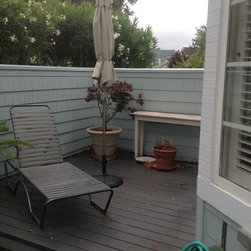
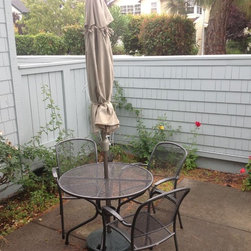
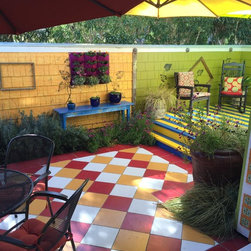
Touring the house, I noticed the brightly painted walls and the pride he took in showing me his European impressionist paintings. Then it struck me. His favorite painting was of a garden about the size of his condo garden! If he liked the painting so much, surely he’d like having an actual garden like that even more. I felt that what would make it truly original was transferring the bold impressionist colors into what was currently a drab, gray condo garden.
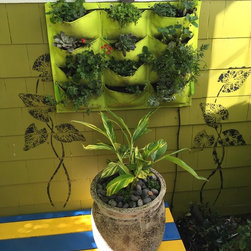
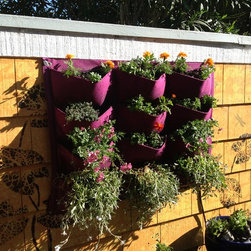
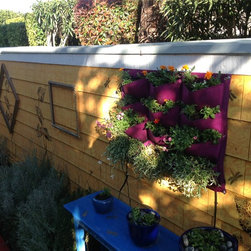
The trick was to do all this without violating condo regulations. The association owned the exterior of the building and so nothing could be altered that would affect the external appearance of the garden as visible from the street. Fortunately, there was a 6’ wall around the garden so I suggested that we go to town below that six foot wall and create a hidden oasis of color.
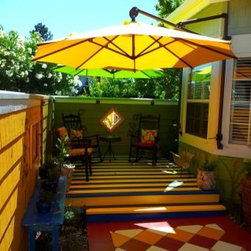
It was a lot of fun! I brought in the umbrella concept in part because it was a way to sneak above the 6’ limit without raising too many eyebrows. Just as importantly, the umbrellas made the garden more enjoyable in the San Rafael heat. There was one umbrella in particular that I felt passionate about for practical reasons. The client had a screen nailed over the outside of the main sliding glass door that overlooked the garden. The purpose of this was to protect the dining room table from fading and block out the intense afternoon sun. But this screen also blocked the view of the garden from the key window. Unless I could find another way to block the sun the client would be spending a lot of money to improve a garden he would not see.
I thought that an 11’ offset umbrella out at the edge of the property in direct line with the sun would solve much of the problem. I found one with a tilting mechanism that turned the umbrella into a vertical sun-sail. It worked!
I also tackled the issue of reducin sunlight on the table another way: There were some openings in the architecture that currently let light in. I thought the place to start would be to insert stained glass for both shade and light protection. I had some colored Plexiglas cut to the exact size and tacked it into place so that it could be easily removed in the event that the client moved or anyone objected in the association.
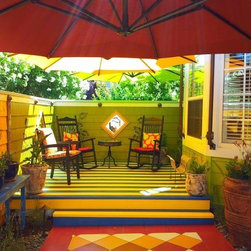
Next came the idea of wall-mounted umbrellas with colorful fabrics that would overlap to create a unified shade canopy. In such a small garden wall-mounted seemed key: the large bases on most umbrellas would make the space feel crowded and act as trip hazards. I found a custom manufacturer in China who could make and ship these for $600. each. I was also excited because the umbrellas made the space twice as functional and attractive (the garden would be used in the sun) while costing only 10% of the budget.
The client didn’t have the heart to tear out the gray Trex deck he had recently paid $8k to have installed. I didn’t like the color or the way it made the space feel boxy and smaller. Trex is not easy to paint. I decided to experiment and turned the situation around by finding vivid enamel colors that tied in with the painting and have held up over time.
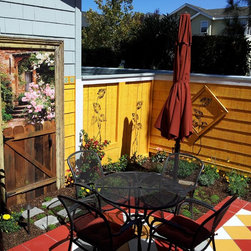
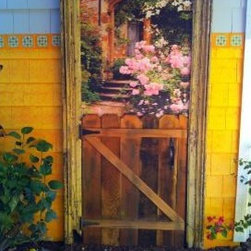
When I came across an 18th century antique door frame I thought it would fit right in to his favorite paintings. We went from first tacking it up on the wall as an empty frame to buying outdoor vinyl art to insert inside the frame to make it appear that we were looking through a doorway into a European garden. Since the garden art was not big enough to fill the whole door frame, I suggested building a faux gate to deepen the illusion. I also liked the fact that this illusion made a small garden look bigger. As an added bonus, the roses in this picture never got black spots, stopped blooming, or needed pruning!
http://www.mysticallandscapes.com/
When I got there the number had changed. "What would you do for $5k?" We spent an hour of design time looking at how to improve his little condo garden. I told him that I would have fixed bids for each of my ideas when we met again. On the third meeting he surprised me again: "If you had $15k to do whatever you wanted, what would you do?"
I got into a more serious design mode. The more that is being spent, the more profitable and important it is to look at a project from multiple angles. I felt the first thing was to get to know this client more fully. The garden’s sole function was to be a source of joy for a retired bachelor who enjoyed hosting friends from around the world. I decided to start with his art collection.
Touring the house, I noticed the brightly painted walls and the pride he took in showing me his European impressionist paintings. Then it struck me. His favorite painting was of a garden about the size of his condo garden! If he liked the painting so much, surely he’d like having an actual garden like that even more. I felt that what would make it truly original was transferring the bold impressionist colors into what was currently a drab, gray condo garden.
The trick was to do all this without violating condo regulations. The association owned the exterior of the building and so nothing could be altered that would affect the external appearance of the garden as visible from the street. Fortunately, there was a 6’ wall around the garden so I suggested that we go to town below that six foot wall and create a hidden oasis of color.
It was a lot of fun! I brought in the umbrella concept in part because it was a way to sneak above the 6’ limit without raising too many eyebrows. Just as importantly, the umbrellas made the garden more enjoyable in the San Rafael heat. There was one umbrella in particular that I felt passionate about for practical reasons. The client had a screen nailed over the outside of the main sliding glass door that overlooked the garden. The purpose of this was to protect the dining room table from fading and block out the intense afternoon sun. But this screen also blocked the view of the garden from the key window. Unless I could find another way to block the sun the client would be spending a lot of money to improve a garden he would not see.
I thought that an 11’ offset umbrella out at the edge of the property in direct line with the sun would solve much of the problem. I found one with a tilting mechanism that turned the umbrella into a vertical sun-sail. It worked!
I also tackled the issue of reducin sunlight on the table another way: There were some openings in the architecture that currently let light in. I thought the place to start would be to insert stained glass for both shade and light protection. I had some colored Plexiglas cut to the exact size and tacked it into place so that it could be easily removed in the event that the client moved or anyone objected in the association.
Next came the idea of wall-mounted umbrellas with colorful fabrics that would overlap to create a unified shade canopy. In such a small garden wall-mounted seemed key: the large bases on most umbrellas would make the space feel crowded and act as trip hazards. I found a custom manufacturer in China who could make and ship these for $600. each. I was also excited because the umbrellas made the space twice as functional and attractive (the garden would be used in the sun) while costing only 10% of the budget.
The client didn’t have the heart to tear out the gray Trex deck he had recently paid $8k to have installed. I didn’t like the color or the way it made the space feel boxy and smaller. Trex is not easy to paint. I decided to experiment and turned the situation around by finding vivid enamel colors that tied in with the painting and have held up over time.
When I came across an 18th century antique door frame I thought it would fit right in to his favorite paintings. We went from first tacking it up on the wall as an empty frame to buying outdoor vinyl art to insert inside the frame to make it appear that we were looking through a doorway into a European garden. Since the garden art was not big enough to fill the whole door frame, I suggested building a faux gate to deepen the illusion. I also liked the fact that this illusion made a small garden look bigger. As an added bonus, the roses in this picture never got black spots, stopped blooming, or needed pruning!
http://www.mysticallandscapes.com/