
Granite Ridge Residence
The site is a triangular shape that slopes 20 feet from front to back parallel to the rear property line. A hiking/skiing easement borders the eastern side of the property, while the entire northern side is bounded by National Forest. Although squarely placed in a mountainside development, the proximity to the National Forest provides privacy as well as a link to the wild life in the area.
In an area where the annual snowfall is typically in excess of six feet on the ground, precipitation management is critical for the well-being of the structure, while southern orientation is critical for the well-being of the occupants. The materials we chosen and graded vertically with this in mind.
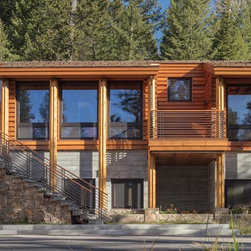
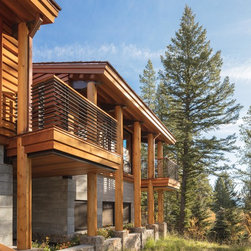
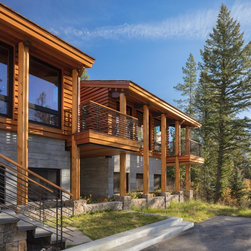
The design is informed by these two underlying environmental conditions. To take advantage of the attributes of the site, the garage was placed in the fore ground, to provide vehicular access from the street, and to establish a piano nobile datum for the building. The primary material for this section of the house is board-formed concrete. The board formed surface was constructed using radial sawn cedar boards separated by reveals.
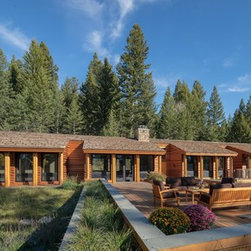
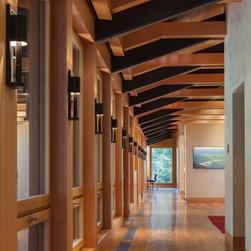
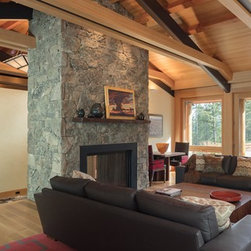
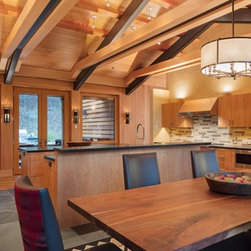
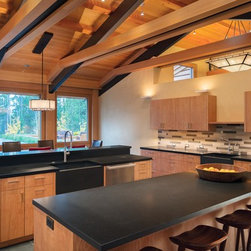
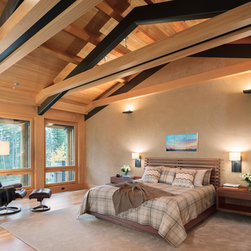
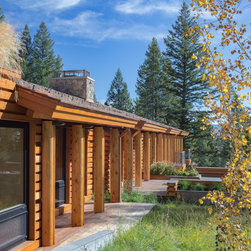
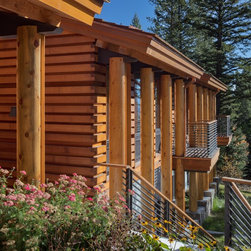
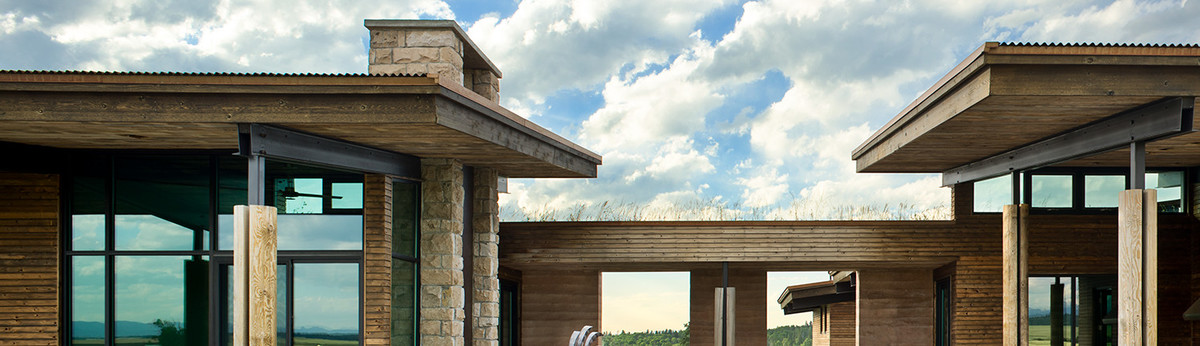
Upstairs, the materials switch from an earth-bound vocabulary of concrete, to a lighter vocabulary of wood and glass. This level is organized along an east-west gallery that allows access to the public portions of the residences from the north side, the glazed openings, operable and fixed, opens the house to the National Forest beyond. This gallery is defined architecturally, by custom steel and wood trusses, setting rhythm and scale from one end of the house to the other.
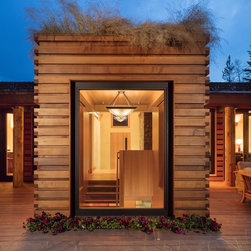
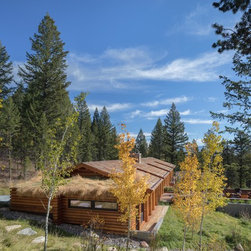
The exterior of the second floor is clad in a custom milled Western Red Cedar, of varying vertical dimensions, the module of which is derived from the reveals set in the board-formed concrete below.. All flashing consist of, sand blasted stainless steel. All materials, including the concrete, are left in their natural state.
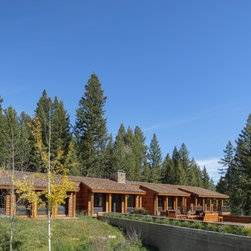
Sod roofs were chosen for portions of the roof that are flat. The intention of utilizing this material is to anchor the residence to the locale in which it resides. Indigenous plant materials were used here to let the roof to follow the seasons in color and texture.
In an area where the annual snowfall is typically in excess of six feet on the ground, precipitation management is critical for the well-being of the structure, while southern orientation is critical for the well-being of the occupants. The materials we chosen and graded vertically with this in mind.
The design is informed by these two underlying environmental conditions. To take advantage of the attributes of the site, the garage was placed in the fore ground, to provide vehicular access from the street, and to establish a piano nobile datum for the building. The primary material for this section of the house is board-formed concrete. The board formed surface was constructed using radial sawn cedar boards separated by reveals.
Upstairs, the materials switch from an earth-bound vocabulary of concrete, to a lighter vocabulary of wood and glass. This level is organized along an east-west gallery that allows access to the public portions of the residences from the north side, the glazed openings, operable and fixed, opens the house to the National Forest beyond. This gallery is defined architecturally, by custom steel and wood trusses, setting rhythm and scale from one end of the house to the other.
The exterior of the second floor is clad in a custom milled Western Red Cedar, of varying vertical dimensions, the module of which is derived from the reveals set in the board-formed concrete below.. All flashing consist of, sand blasted stainless steel. All materials, including the concrete, are left in their natural state.
Sod roofs were chosen for portions of the roof that are flat. The intention of utilizing this material is to anchor the residence to the locale in which it resides. Indigenous plant materials were used here to let the roof to follow the seasons in color and texture.
Project Year: 2017
Project Cost: More than $2,000,000
Country: United States
Zip Code: 83025