
Safir Residence
Situated on a flat parcel of land that possesses views to the Grand Teton Range to the north, and sleeping Indian Peak to the south west, this site is also situated directly in the migratory path of the native elk herd in Jackson Wyoming.
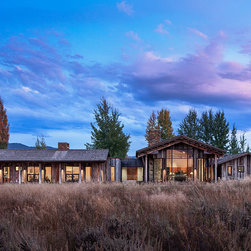
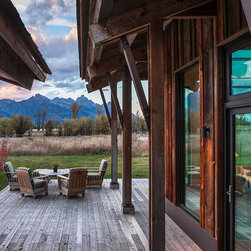
This is a large inventory of natural resources, and to take advantage of them, the house and guest house are situated to take in those northern views by stringing the rooms along an east west axis, looking north. Pedantic functions such as garage location occur where view sheds are compromised by the proximity of neighboring structures.
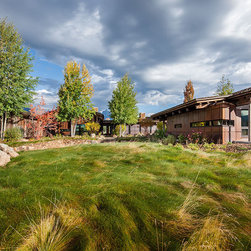
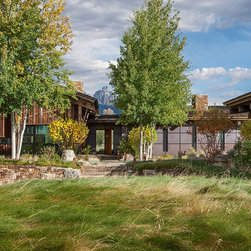
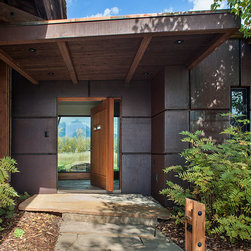
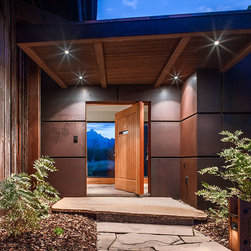
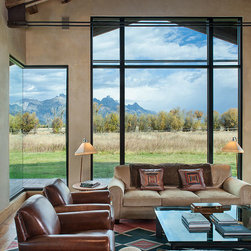
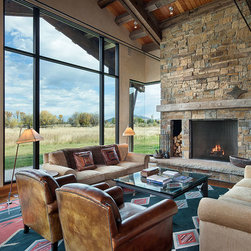
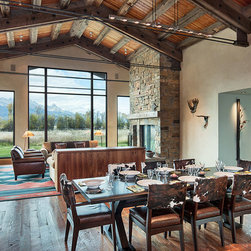
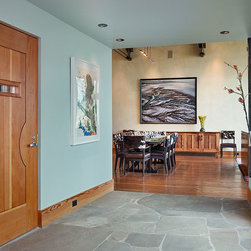
The entry is also situated so that the mountains are framed by glass, constituting an extremely spectacular view. At this point the architecture is subservient to the viewsheds, and sets the tone for the rest of the house. Moving then into the main public space, the view is captured by the North South alignment, as well as by an open plan that contains the kitchen dining and living space. Large expanses of glass with deconstructed glass corners ensures that the view capture is more than a static frontal portrait, but rather allows a visitor to experience a more panoramic view. The skewed plan of the dining area within the kitchen aligns with the Gros Ventre Mountain Range, and captures natural light by its orientation to the South. The siting of the guest house creates a semi courtyard at the front entry of the the main house. It achieves this by “completing the square” so to speak. The visitor experiences entry to both the main house and the guest house by traversing the drive which is set down some four feet below the entry level. This terrain relief reduces the scale of the small garage of the guest house and places most of the paved driveway well below finish/original grade retaining pristine view corridors on that side of the property.
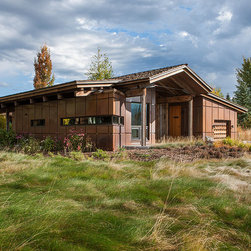
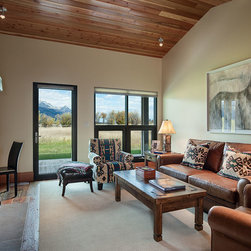
The guest house itself is a small structure consisting two monastic bedrooms adjacent to a single entry/living/kitchen dining space, which were conceived as one open space to conserve floor area.
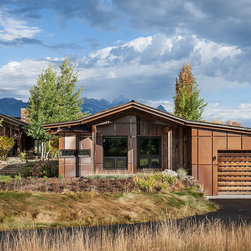
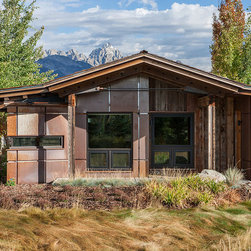
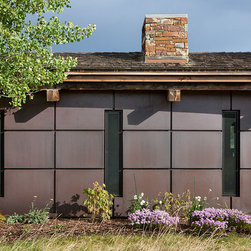
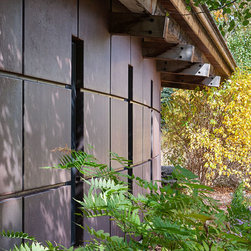
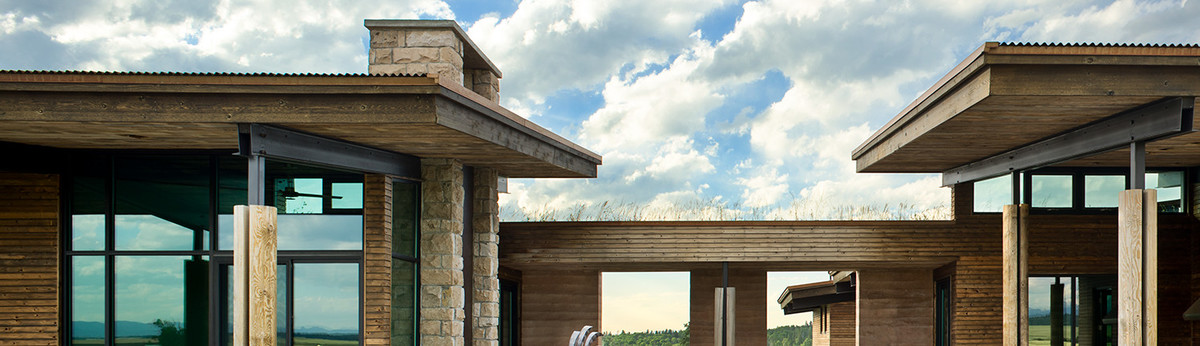
The two residences were treated as a suite of building sharing common materials and geometric components. The reclaimed wood on the exterior is shared between the two, as is the hand fabricated steel cladding. The steel cladding is divided into panels, reflecting the functions of the floor plan to give rhythm and cadence to the façade. The lack of protective finish on the steel promotes serendipitous corrosion, creating a constantly changing mottled façade, ranging from orange to a deep brownish purple.
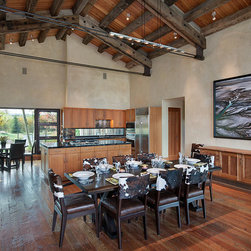
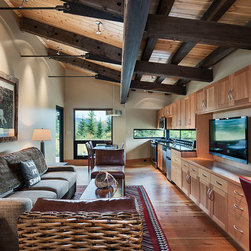
On the interior a large portion of the finishes are provided by the reclaimed material seen on the exterior. All of the beams and purlins are real and the decking is structural as well.
This is a large inventory of natural resources, and to take advantage of them, the house and guest house are situated to take in those northern views by stringing the rooms along an east west axis, looking north. Pedantic functions such as garage location occur where view sheds are compromised by the proximity of neighboring structures.
The entry is also situated so that the mountains are framed by glass, constituting an extremely spectacular view. At this point the architecture is subservient to the viewsheds, and sets the tone for the rest of the house. Moving then into the main public space, the view is captured by the North South alignment, as well as by an open plan that contains the kitchen dining and living space. Large expanses of glass with deconstructed glass corners ensures that the view capture is more than a static frontal portrait, but rather allows a visitor to experience a more panoramic view. The skewed plan of the dining area within the kitchen aligns with the Gros Ventre Mountain Range, and captures natural light by its orientation to the South. The siting of the guest house creates a semi courtyard at the front entry of the the main house. It achieves this by “completing the square” so to speak. The visitor experiences entry to both the main house and the guest house by traversing the drive which is set down some four feet below the entry level. This terrain relief reduces the scale of the small garage of the guest house and places most of the paved driveway well below finish/original grade retaining pristine view corridors on that side of the property.
The guest house itself is a small structure consisting two monastic bedrooms adjacent to a single entry/living/kitchen dining space, which were conceived as one open space to conserve floor area.
The two residences were treated as a suite of building sharing common materials and geometric components. The reclaimed wood on the exterior is shared between the two, as is the hand fabricated steel cladding. The steel cladding is divided into panels, reflecting the functions of the floor plan to give rhythm and cadence to the façade. The lack of protective finish on the steel promotes serendipitous corrosion, creating a constantly changing mottled façade, ranging from orange to a deep brownish purple.
On the interior a large portion of the finishes are provided by the reclaimed material seen on the exterior. All of the beams and purlins are real and the decking is structural as well.
Project Year: 2012
Project Cost: More than $2,000,000
Country: United States
Zip Code: 83001