

How Socket Organizers Improve Tool Efficiency and Save Time
A scattered toolbox can slow down any project. Misplaced sockets waste valuable minutes and cause frustration during tasks that demand precision and speed. A well-designed socket organizer helps reduce downtime by keeping every piece easy to find and ready to use. With each socket stored in a clear, consistent layout, efficiency naturally improves, and projects move forward without delay.
A good organizer does more than hold tools. It protects them from damage, prevents loss, and creates a clean workflow that saves both time and effort. Technicians and DIY users alike gain smoother control over their workspace and spend more time on actual repairs instead of searching for the right size.
Different organizer styles provide options for every toolbox setup. Whether it involves magnetic trays, socket rails, or labeled trays, choosing the right system transforms a cluttered drawer into an organized workstation. This simple change creates lasting convenience and supports a more productive rhythm in any garage or workshop.
Optimizing Tool Efficiency With Socket Organizers
A well-arranged workspace helps maintain focus and saves time on every project. Organized sockets lead to faster identification, better separation of different measurement systems, and fewer lost tools during daily use.
Faster Socket Identification and Access
A well-designed layout allows workers to locate the right socket in seconds. Socket organizers with clear size labels and uniform spacing keep every tool visible and accessible. Mechanics and DIY users no longer dig through cluttered drawers or trays to find the exact drive size they need.
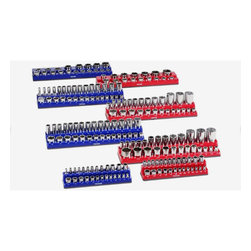
Color-coded rails or trays improve speed even further. For example, assigning red to SAE sizes and blue to metric helps users select the correct socket by sight alone. Some organizers hold the sockets upright, creating a quick view of all sizes within reach. This setup streamlines each repair or assembly step because the required tools sit in order of use.
Magnetic or clip-style holders also prevent sockets from sliding or falling during movement. The time saved adds up to measurable gains in daily productivity. Investing in socket organizers with labeled and color-coded features reduces wasted motion and supports consistent, efficient workflow in both home and professional settings.
Systematic Organization: Separating Metric and SAE
A mixed socket collection can cause delays if sizes are not separated by type. Professionals often use both metric and SAE systems, and confusion between the two leads to stripped bolts or incorrect fits. Designating specific sections or rails for each system maintains order and clarity.
Simple physical dividers or labels on trays create clear boundaries. In some setups, two separate organizer trays work best; one dedicated to metric sockets and another to SAE. Grouping them this way supports accuracy and prevents unnecessary test fits during time‑sensitive tasks.
Maintaining an orderly layout lowers the learning curve for new team members or shared workspaces. Once tools have a fixed location, anyone can find them quickly. A system like this contributes to long-term efficiency and helps preserve sockets by reducing the handling needed to identify them.
Reducing Tool Loss and Improving Visual Inventory
Missing sockets slow work and often force workers to buy replacements. A consistent storage method helps track every piece in a set. Organizers with labeled slots make empty spaces immediately noticeable, prompting users to retrieve or account for missing items before finishing a job.
Magnetic bases or twist-lock clips keep sockets firmly attached, even inside mobile carts. This reduces the chance of parts dropping onto the floor or rolling into hard-to-reach spaces. By protecting against small losses, professionals save both money and time otherwise spent replacing tools.
An organized setup doubles as a quick inventory reference. A single glance confirms which sockets are available or in use. This simple visual check builds good habits and supports smoother tool maintenance, especially for users who manage multiple sets or shared toolkits.
Socket Organizer Types and Best Practices
Proper socket organization helps workers keep track of tools, reduce downtime, and protect equipment from damage. Different organizer types serve unique purposes based on how a person stores, uses, and transports their tools.
Rail, Tray, and Magnetic Socket Holders Explained
Socket organizers vary in structure and purpose. Rail socket organizers use aluminum or steel rails fitted with clips to hold sockets arranged by drive size, such as 1/4-inch, 3/8-inch, or 1/2-inch. These suit toolbox drawers and allow quick visibility of both metric and SAE sockets. Many professionals rely on them to group shallow and deep sockets neatly.
Tray socket organizers use molded or labeled trays that hold each socket in a fixed position. A tray socket organizer works well in shallow drawers and larger tool chests. The labeled layout helps quickly identify missing sizes in mixed sets that include deep well sockets and impact sockets. Some trays also use plastic or foam inserts that fit snugly inside drawer liners to prevent socket movement.
Magnetic socket holders use strong magnets to secure sockets. A magnetic socket organizer can attach to metal toolboxes, lift tables, or carts for easy access. Because magnets hold sockets upright, they help stop rolling and protect socket edges. These are favored for mobile work setups or for those who frequently switch between ratchets and extensions.
Each style serves a different function but shares one goal: keeping every socket visible, accessible, and properly stored.
Choosing the Right Organizer for Your Tool Collection
The best socket organizer depends on the size of the collection, the number of drive sizes, and available storage space. A rail system fits those who use multiple socket sets for mechanical or automotive work. Adjustable clips help arrange sockets by both size and type, which saves time during repairs.
Trays provide a more stable option for stationary storage. A socket tray with clear labels and separate rows for deep and shallow sockets simplifies organization for mixed metric and SAE sets. Foam or drawer inserts also prevent accidental movement inside drawers, extending socket life.
For portable use, a magnetic holder stands out. Strong magnets grip sockets firmly during transport and make it easy to mount the organizer on metal surfaces. Professionals who carry their tools in modular systems such as stackable cases value this flexibility.
Each setup benefits from thoughtful grouping. Keeping similar sockets together, such as all deep or all impact types, leads to faster selection and a cleaner workspace layout.
Integrating Organizers Into Toolboxes and Workspaces
A well-planned layout in a toolbox or workbench improves tool flow and reduces clutter. Socket organizers should sit near ratchets, extensions, and related hand tools for easy reach. Rail and tray systems fit best inside drawers that match their length and depth.
In shallow drawers, a tray socket organizer keeps each piece flat and visible. For deep drawers, stacking tray layers or combining different rail sizes can save space. Users who mount magnetic holders on tool chest sides gain added visibility for often-used socket sizes without taking up drawer space.
Custom foam inserts fit inside drawers or cases to prevent rattling during movement. Drawer liners under trays also stop sliding and protect finishes from scratches. Those who rearrange workstations often can reposition magnetic or rail setups without drilling or permanent fixtures, preserving surface condition.
Integrating socket organizers thoughtfully creates a smoother workflow and improves long-term efficiency in both small and large tool storage systems.
Maintaining an Efficient Socket Organization System
A good setup only stays efficient with routine maintenance. Users should regularly return sockets to their specific slots after each task. Consistent habits prevent loss and keep sets complete. Missing sockets can indicate early signs of disorganization that slow down future projects.
Dust and small debris often collect inside trays or on magnetic holders, which can interfere with fit. Wiping each organizer occasionally keeps them clean and prolongs the life of the sockets. If moisture builds up, drying trays or liners prevent rust, especially in damp workshop environments.
Re-evaluating the layout every few months helps match tool storage to changing socket collections. Adding new drive sizes or replacing worn sockets might require rearranging positions or switching to larger trays or rails. Proper labeling in mixed metric and SAE sets further aids quick selection.
Simple upkeep habits protect tools from wear, maintain order, and support an efficient workspace.
Conclusion
Socket organizers play a direct role in keeping tools sorted and ready for use. By giving each socket a clear place, they remove clutter and limit the time spent searching through drawers. This leads to smoother work and fewer interruptions during tool use.
They also help protect sockets from wear by preventing scratches, dirt buildup, or accidental loss. As a result, users maintain better tool quality and reduce replacement costs over time. The workspace stays cleaner, and safety improves because loose pieces no longer roll around or get misplaced.
For anyone managing a toolbox or workshop, an organized system offers simple but measurable gains in speed and productivity. A few minutes spent setting up a socket organizer can save hours later, which makes the effort worthwhile. In short, they allow users to work smarter, not harder.
A good organizer does more than hold tools. It protects them from damage, prevents loss, and creates a clean workflow that saves both time and effort. Technicians and DIY users alike gain smoother control over their workspace and spend more time on actual repairs instead of searching for the right size.
Different organizer styles provide options for every toolbox setup. Whether it involves magnetic trays, socket rails, or labeled trays, choosing the right system transforms a cluttered drawer into an organized workstation. This simple change creates lasting convenience and supports a more productive rhythm in any garage or workshop.
Optimizing Tool Efficiency With Socket Organizers
A well-arranged workspace helps maintain focus and saves time on every project. Organized sockets lead to faster identification, better separation of different measurement systems, and fewer lost tools during daily use.
Faster Socket Identification and Access
A well-designed layout allows workers to locate the right socket in seconds. Socket organizers with clear size labels and uniform spacing keep every tool visible and accessible. Mechanics and DIY users no longer dig through cluttered drawers or trays to find the exact drive size they need.
Color-coded rails or trays improve speed even further. For example, assigning red to SAE sizes and blue to metric helps users select the correct socket by sight alone. Some organizers hold the sockets upright, creating a quick view of all sizes within reach. This setup streamlines each repair or assembly step because the required tools sit in order of use.
Magnetic or clip-style holders also prevent sockets from sliding or falling during movement. The time saved adds up to measurable gains in daily productivity. Investing in socket organizers with labeled and color-coded features reduces wasted motion and supports consistent, efficient workflow in both home and professional settings.
Systematic Organization: Separating Metric and SAE
A mixed socket collection can cause delays if sizes are not separated by type. Professionals often use both metric and SAE systems, and confusion between the two leads to stripped bolts or incorrect fits. Designating specific sections or rails for each system maintains order and clarity.
Simple physical dividers or labels on trays create clear boundaries. In some setups, two separate organizer trays work best; one dedicated to metric sockets and another to SAE. Grouping them this way supports accuracy and prevents unnecessary test fits during time‑sensitive tasks.
Maintaining an orderly layout lowers the learning curve for new team members or shared workspaces. Once tools have a fixed location, anyone can find them quickly. A system like this contributes to long-term efficiency and helps preserve sockets by reducing the handling needed to identify them.
Reducing Tool Loss and Improving Visual Inventory
Missing sockets slow work and often force workers to buy replacements. A consistent storage method helps track every piece in a set. Organizers with labeled slots make empty spaces immediately noticeable, prompting users to retrieve or account for missing items before finishing a job.
Magnetic bases or twist-lock clips keep sockets firmly attached, even inside mobile carts. This reduces the chance of parts dropping onto the floor or rolling into hard-to-reach spaces. By protecting against small losses, professionals save both money and time otherwise spent replacing tools.
An organized setup doubles as a quick inventory reference. A single glance confirms which sockets are available or in use. This simple visual check builds good habits and supports smoother tool maintenance, especially for users who manage multiple sets or shared toolkits.
Socket Organizer Types and Best Practices
Proper socket organization helps workers keep track of tools, reduce downtime, and protect equipment from damage. Different organizer types serve unique purposes based on how a person stores, uses, and transports their tools.
Rail, Tray, and Magnetic Socket Holders Explained
Socket organizers vary in structure and purpose. Rail socket organizers use aluminum or steel rails fitted with clips to hold sockets arranged by drive size, such as 1/4-inch, 3/8-inch, or 1/2-inch. These suit toolbox drawers and allow quick visibility of both metric and SAE sockets. Many professionals rely on them to group shallow and deep sockets neatly.
Tray socket organizers use molded or labeled trays that hold each socket in a fixed position. A tray socket organizer works well in shallow drawers and larger tool chests. The labeled layout helps quickly identify missing sizes in mixed sets that include deep well sockets and impact sockets. Some trays also use plastic or foam inserts that fit snugly inside drawer liners to prevent socket movement.
Magnetic socket holders use strong magnets to secure sockets. A magnetic socket organizer can attach to metal toolboxes, lift tables, or carts for easy access. Because magnets hold sockets upright, they help stop rolling and protect socket edges. These are favored for mobile work setups or for those who frequently switch between ratchets and extensions.
Each style serves a different function but shares one goal: keeping every socket visible, accessible, and properly stored.
Choosing the Right Organizer for Your Tool Collection
The best socket organizer depends on the size of the collection, the number of drive sizes, and available storage space. A rail system fits those who use multiple socket sets for mechanical or automotive work. Adjustable clips help arrange sockets by both size and type, which saves time during repairs.
Trays provide a more stable option for stationary storage. A socket tray with clear labels and separate rows for deep and shallow sockets simplifies organization for mixed metric and SAE sets. Foam or drawer inserts also prevent accidental movement inside drawers, extending socket life.
For portable use, a magnetic holder stands out. Strong magnets grip sockets firmly during transport and make it easy to mount the organizer on metal surfaces. Professionals who carry their tools in modular systems such as stackable cases value this flexibility.
Each setup benefits from thoughtful grouping. Keeping similar sockets together, such as all deep or all impact types, leads to faster selection and a cleaner workspace layout.
Integrating Organizers Into Toolboxes and Workspaces
A well-planned layout in a toolbox or workbench improves tool flow and reduces clutter. Socket organizers should sit near ratchets, extensions, and related hand tools for easy reach. Rail and tray systems fit best inside drawers that match their length and depth.
In shallow drawers, a tray socket organizer keeps each piece flat and visible. For deep drawers, stacking tray layers or combining different rail sizes can save space. Users who mount magnetic holders on tool chest sides gain added visibility for often-used socket sizes without taking up drawer space.
Custom foam inserts fit inside drawers or cases to prevent rattling during movement. Drawer liners under trays also stop sliding and protect finishes from scratches. Those who rearrange workstations often can reposition magnetic or rail setups without drilling or permanent fixtures, preserving surface condition.
Integrating socket organizers thoughtfully creates a smoother workflow and improves long-term efficiency in both small and large tool storage systems.
Maintaining an Efficient Socket Organization System
A good setup only stays efficient with routine maintenance. Users should regularly return sockets to their specific slots after each task. Consistent habits prevent loss and keep sets complete. Missing sockets can indicate early signs of disorganization that slow down future projects.
Dust and small debris often collect inside trays or on magnetic holders, which can interfere with fit. Wiping each organizer occasionally keeps them clean and prolongs the life of the sockets. If moisture builds up, drying trays or liners prevent rust, especially in damp workshop environments.
Re-evaluating the layout every few months helps match tool storage to changing socket collections. Adding new drive sizes or replacing worn sockets might require rearranging positions or switching to larger trays or rails. Proper labeling in mixed metric and SAE sets further aids quick selection.
Simple upkeep habits protect tools from wear, maintain order, and support an efficient workspace.
Conclusion
Socket organizers play a direct role in keeping tools sorted and ready for use. By giving each socket a clear place, they remove clutter and limit the time spent searching through drawers. This leads to smoother work and fewer interruptions during tool use.
They also help protect sockets from wear by preventing scratches, dirt buildup, or accidental loss. As a result, users maintain better tool quality and reduce replacement costs over time. The workspace stays cleaner, and safety improves because loose pieces no longer roll around or get misplaced.
For anyone managing a toolbox or workshop, an organized system offers simple but measurable gains in speed and productivity. A few minutes spent setting up a socket organizer can save hours later, which makes the effort worthwhile. In short, they allow users to work smarter, not harder.