
NORDON GROCERY
The rehabilitation of this neighborhood landmark, a former fresh market and supply store which was converted to a single-family residence, retains the traditional character of the original exterior. The interior spaces, however, pay homage to the old-fashioned grocery in "concept," albeit minimal, modern, and chic.
Originally constructed (ca. 1917) as a working class, two-story general store and neighborhood meeting hall, the "Nordon Grocery & Mart" (named in 1938 by its long-time owners Alexander and Myrtle Nordon)
'sold everything and anything except whiskey' until 1974. The couple raised their children there, converting the back half of the building into their family apartment. After the death of their parents, the Nordon heirs leased the apartment until they sold the building in 1999.
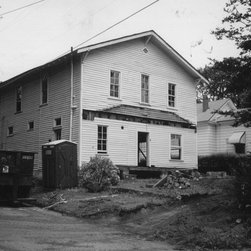
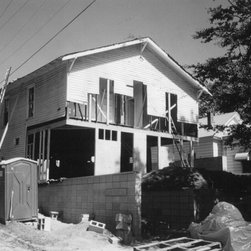
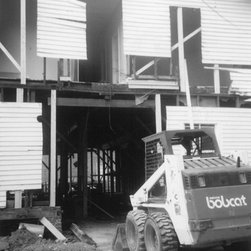
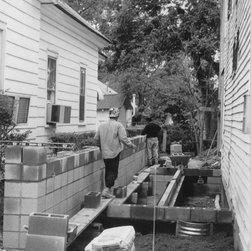
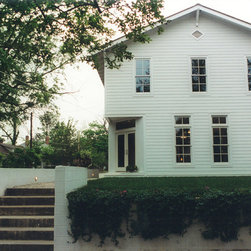
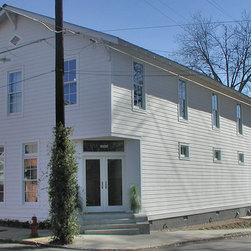
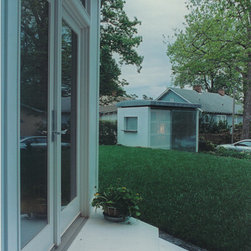
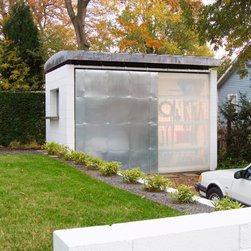
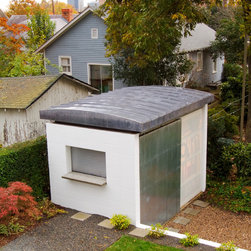
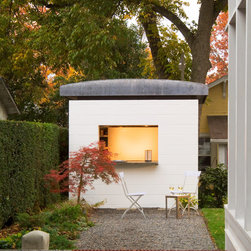
The rehabilitated exterior retains the building's original massing and architectural character. The structure is a "balloon-type" frame supported by a central beam and columns. The original look and proportions of the second floor elevations were maintained, however, the patch-worked elevations at the ground floor were redesigned to compliment the upper story. The foundation, originally constructed without footings, required the entire building to be hoisted up to dig a new crawl-space. The original corner entrance, long since filled in, was restructured and mirrored at the opposite end. A covered porch, added during a previous renovation, was removed. Windows were re-aligned and replaced with insulated units and a screened porch was carved out. Cementious siding and masonry retaining walls wrap the property and border the urban sidewalk.
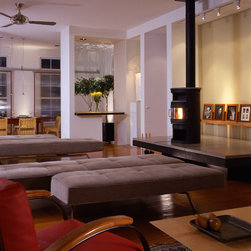
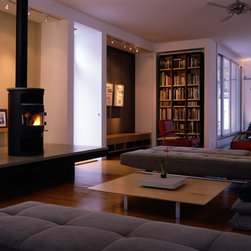
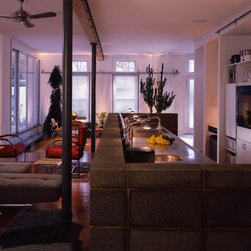
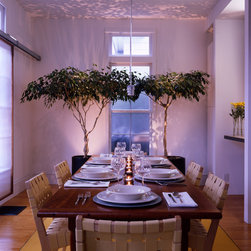
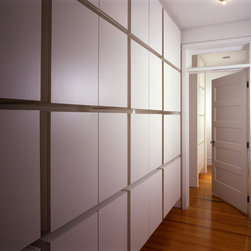
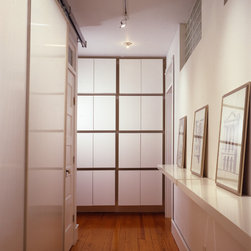
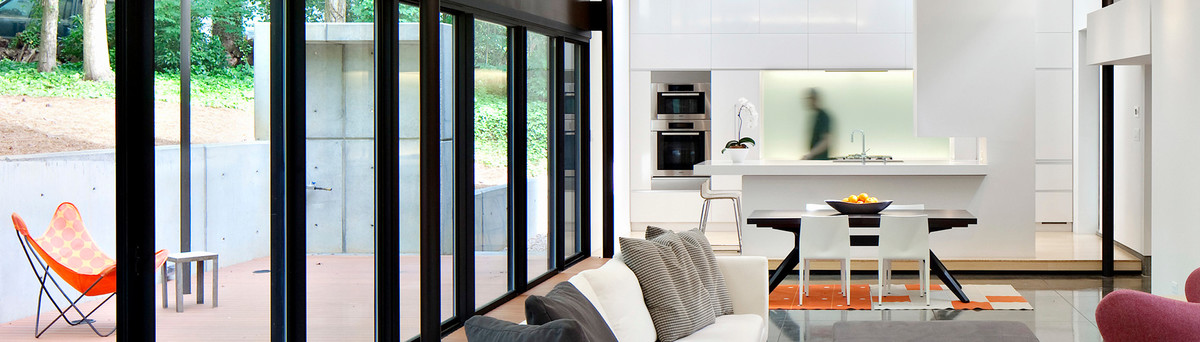
The interior architecture is a modern, utilitarian interpretation of the former fresh market. The main living space is an open loft-like plan. A floating palette-like platform defines the main living zone and an exposed-face concrete block wall surrounds the commercial kitchen (a reference to the old store's huge penny candy counter.) A cylindrical fireplace is reminiscent of a pot-bellied stove, translucent polycarbonate panels glide on barn tracks providing filtered daylight and functional privacy from the street without being unsociable. Open cabinets, similar to display cases, expose utensils and books as merchandise.
Although the original building was not architecturally historical or significant, its service to the community as a family-owned business and its cultural memory as a neighborhood 'place' is worth sustaining.
Originally constructed (ca. 1917) as a working class, two-story general store and neighborhood meeting hall, the "Nordon Grocery & Mart" (named in 1938 by its long-time owners Alexander and Myrtle Nordon)
'sold everything and anything except whiskey' until 1974. The couple raised their children there, converting the back half of the building into their family apartment. After the death of their parents, the Nordon heirs leased the apartment until they sold the building in 1999.
The rehabilitated exterior retains the building's original massing and architectural character. The structure is a "balloon-type" frame supported by a central beam and columns. The original look and proportions of the second floor elevations were maintained, however, the patch-worked elevations at the ground floor were redesigned to compliment the upper story. The foundation, originally constructed without footings, required the entire building to be hoisted up to dig a new crawl-space. The original corner entrance, long since filled in, was restructured and mirrored at the opposite end. A covered porch, added during a previous renovation, was removed. Windows were re-aligned and replaced with insulated units and a screened porch was carved out. Cementious siding and masonry retaining walls wrap the property and border the urban sidewalk.
The interior architecture is a modern, utilitarian interpretation of the former fresh market. The main living space is an open loft-like plan. A floating palette-like platform defines the main living zone and an exposed-face concrete block wall surrounds the commercial kitchen (a reference to the old store's huge penny candy counter.) A cylindrical fireplace is reminiscent of a pot-bellied stove, translucent polycarbonate panels glide on barn tracks providing filtered daylight and functional privacy from the street without being unsociable. Open cabinets, similar to display cases, expose utensils and books as merchandise.
Although the original building was not architecturally historical or significant, its service to the community as a family-owned business and its cultural memory as a neighborhood 'place' is worth sustaining.