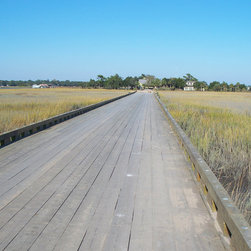

Private Residential Timber Vehicular Bridge
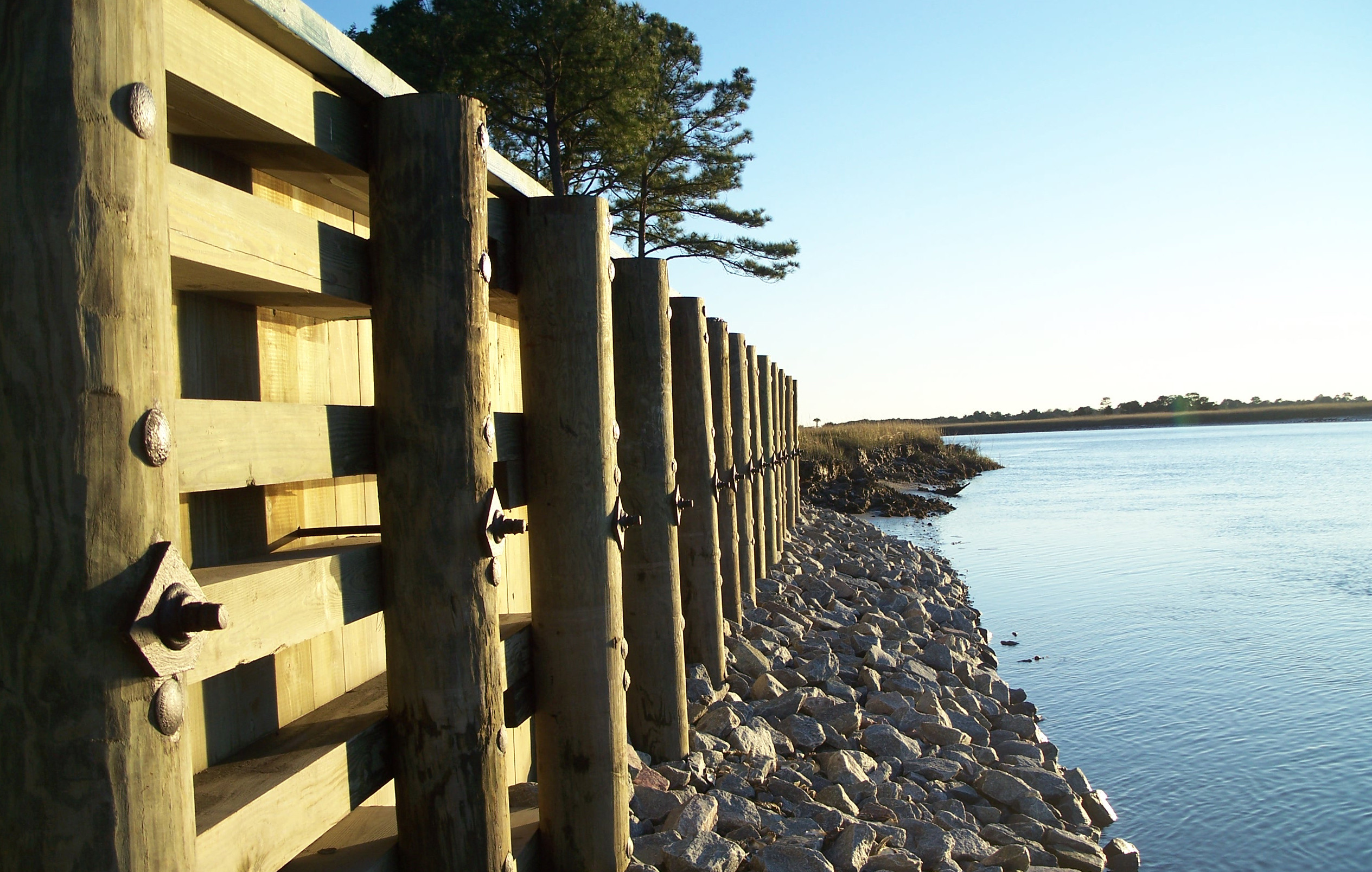
While overseeing the construction of a new timber bulkhead along a causeway to a private residence, Jon Guerry Taylor & Associates, Inc. (JGT) was asked by the Owners to evaluate and inspect the condition of the two existing concrete causeway bridges that were approximately 25 years old. During the structural inspection of all 600 feet of bridges, it was discovered that large chunks of concrete had broken off and some of the pre-stress cables had broken. The deck, pile cap and piles were thoroughly inspected and a complete report along with recommendation was developed for the Owner. It was determined that replacement of the bridges was the best and most cost efficient alternative.
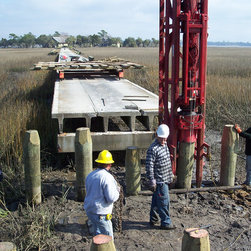
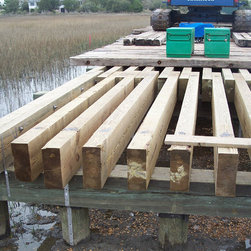
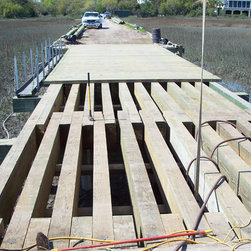
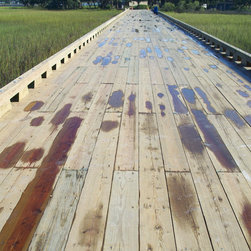
JGT was commissioned to permit and design the bridge replacement immediately. Through preliminary design and cost estimates it was determined that timber was the best option for the new bridges. Since the existing causeway leading to the island was one-lane wide and the Owners did not want to disturb the marsh, it was decided that the old bridge would be removed while the new bridge was being built and that the new bridge would be used as a base for the construction operations. With this construction method the new bridge was designed to support the 60 ton crane that would be used to construct the it and remove the old bridge. Although this is a much higher design load than the new bridge would normally be designed for, it allowed for an efficient and environmentally sensitive solution. The construction began in January 2010.
JGT was commissioned to permit and design the bridge replacement immediately. Through preliminary design and cost estimates it was determined that timber was the best option for the new bridges. Since the existing causeway leading to the island was one-lane wide and the Owners did not want to disturb the marsh, it was decided that the old bridge would be removed while the new bridge was being built and that the new bridge would be used as a base for the construction operations. With this construction method the new bridge was designed to support the 60 ton crane that would be used to construct the it and remove the old bridge. Although this is a much higher design load than the new bridge would normally be designed for, it allowed for an efficient and environmentally sensitive solution. The construction began in January 2010.
Country: United States