

Terrace House
The owner and the architect sought to “create the house of the future today”, reducing dependency on the power grid with a focus on nature. In design development, passive systems (natural daylighting, ventilation, shading, a high performance building envelope),and the integration of passive systems (solar energy capture, recycling/renewable materials, water collection, indoor air purification, and data system integration/automation) were identified as key components in creating “the house of the future today”.
Originally built in 1963, the Terrace House is situated in Southgate, a neighborhood within Sarasota, Florida known for its ranch-style residences carved from more than 1,200 acres of orange groves in the late 1950s and ’60s.The challenge was to reimagine the home’s existing concept of livability, while embracing its mid-century origins and incorporating sustainable principles. Designed for a writer and a botanist, elements of the home needed to reflect their interests.
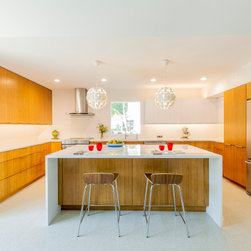
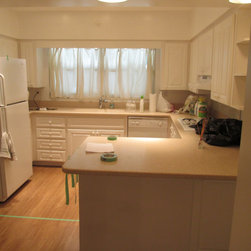
Before, the ranch home had small, dark rooms with little connection to the outdoors. Thus, the renovation focused on maximizing openness, incorporating natural light, and creating an organic flow throughout. The new layout of the floorplan opens to a grand covered terrace, maximizing indoor/outdoor living. The kitchen was relocated to be fully integrated with the great room, featuring stainless steel, bamboo cabinets, and quartzite surfaces. The original terrazzo flooring and breeze blocks, characteristic of the 1960s, were saved. The project also focused on the use of recycled materials.
The sun path informed the placement of apertures to bring natural light into all rooms – even the closets. Built-in bookshelves house an ample collection of books while the indoor/outdoor plan connects the interior spaces with lush garden views. A focal point for entertaining, the new terrace is sculptural in nature with simple forms and clean lines, a built-in bench, and a light well that scoops in the morning sun.
The landscape was designed to create a visually impactful outdoor space while creating wildlife habitat, minimizing the dependency on irrigation and mitigating storm water runoff. The result is a diverse collection of primarily native trees, shrubs, grasses and wildflowers that play with texture and color and provide valuable resources for a range of birds, butterflies and pollinators. The selection of wildflowers produces colorful and textural interest throughout the year with their blooms and eventual seed pods. Within the collection are a range of host specific larval sources ensuring multiple species of butterflies. Additionally, the variety of shrubs help create privacy, serve as a source of food, and are nesting space for birds. Integrated into the design, is a system for collecting rainwater and large drainage swale planted with multiple species that helps alleviate runoff. A small kitchen garden provides seasonal fruits, vegetables and herbs to incorporate into meals. In conjunction, the landscaping harmonizes with the existing canopy to provide textural balance, screening, and visual interest.
The result is a LEED Platinum home that works in concert with the surrounding neighborhood and is as inviting for butterflies and birds as it is for its owners and guests.
Originally built in 1963, the Terrace House is situated in Southgate, a neighborhood within Sarasota, Florida known for its ranch-style residences carved from more than 1,200 acres of orange groves in the late 1950s and ’60s.The challenge was to reimagine the home’s existing concept of livability, while embracing its mid-century origins and incorporating sustainable principles. Designed for a writer and a botanist, elements of the home needed to reflect their interests.
Before, the ranch home had small, dark rooms with little connection to the outdoors. Thus, the renovation focused on maximizing openness, incorporating natural light, and creating an organic flow throughout. The new layout of the floorplan opens to a grand covered terrace, maximizing indoor/outdoor living. The kitchen was relocated to be fully integrated with the great room, featuring stainless steel, bamboo cabinets, and quartzite surfaces. The original terrazzo flooring and breeze blocks, characteristic of the 1960s, were saved. The project also focused on the use of recycled materials.
The sun path informed the placement of apertures to bring natural light into all rooms – even the closets. Built-in bookshelves house an ample collection of books while the indoor/outdoor plan connects the interior spaces with lush garden views. A focal point for entertaining, the new terrace is sculptural in nature with simple forms and clean lines, a built-in bench, and a light well that scoops in the morning sun.
The landscape was designed to create a visually impactful outdoor space while creating wildlife habitat, minimizing the dependency on irrigation and mitigating storm water runoff. The result is a diverse collection of primarily native trees, shrubs, grasses and wildflowers that play with texture and color and provide valuable resources for a range of birds, butterflies and pollinators. The selection of wildflowers produces colorful and textural interest throughout the year with their blooms and eventual seed pods. Within the collection are a range of host specific larval sources ensuring multiple species of butterflies. Additionally, the variety of shrubs help create privacy, serve as a source of food, and are nesting space for birds. Integrated into the design, is a system for collecting rainwater and large drainage swale planted with multiple species that helps alleviate runoff. A small kitchen garden provides seasonal fruits, vegetables and herbs to incorporate into meals. In conjunction, the landscaping harmonizes with the existing canopy to provide textural balance, screening, and visual interest.
The result is a LEED Platinum home that works in concert with the surrounding neighborhood and is as inviting for butterflies and birds as it is for its owners and guests.
Project Year: 2020
Project Cost: $150,001 - $200,000
Country: United States
Zip Code: 34239