

Japanese tea house
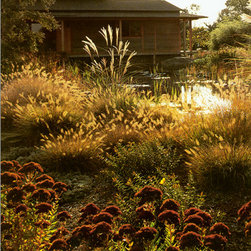
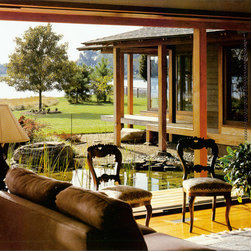
This architectural design attempts to express the ideals of "wabi," which converted the tea ceremony into an occasion for withdrawal from material concerns and worship of purity and refinement. Planned on a traditional "tatami" grid (approximately 3 feet x 6 feet), the resulting design is a hybrid with influences from many historic, as well as contemporary examples of actual "Sukiya" houses in Japan.
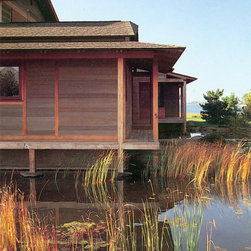
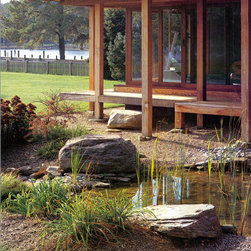
While the house and appendages were constructed by employing typical western platform framing techniques, the surrounding "engawa," or porch structure, was fabricated in a post-and-beam manner by craftsmen with experience in Japanese joinery.
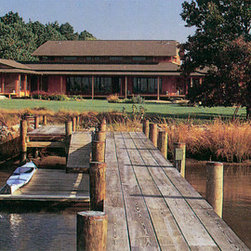
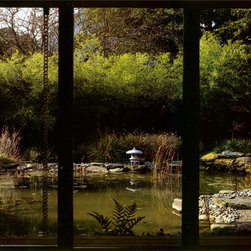
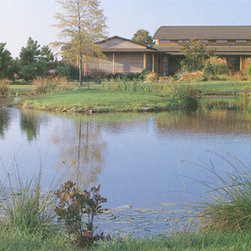
The site is situated approximately 3 miles west of Easton, Maryland, on the Miles River in Talbot County. A unique aspect of the site is its position, which enjoys a long 4-mile southwesterly view down the river to the Chesapeake Bay. The site itself was previously a flat characterless soybean field. All of the ponds and landscape were created as part of the project.
While the house and appendages were constructed by employing typical western platform framing techniques, the surrounding "engawa," or porch structure, was fabricated in a post-and-beam manner by craftsmen with experience in Japanese joinery.
The site is situated approximately 3 miles west of Easton, Maryland, on the Miles River in Talbot County. A unique aspect of the site is its position, which enjoys a long 4-mile southwesterly view down the river to the Chesapeake Bay. The site itself was previously a flat characterless soybean field. All of the ponds and landscape were created as part of the project.
Country: United States