

Hermitage
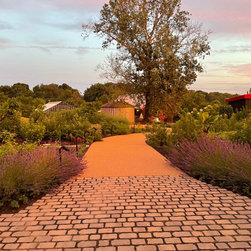
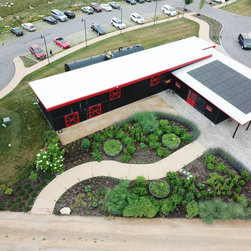
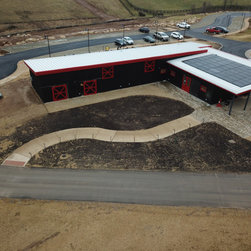
We created a functional, lush, edible and medicinal garden that complimented the new Barn 8 restaurant, the visitor’s center, and farm. Visitors can stroll through the garden when at the farm. The farm setting and new galvanized roof of the barns and incorporating perennial edible plants drove the design. With the site housing a farm to table restaurant and store, the plants are used for both food and product to sell.
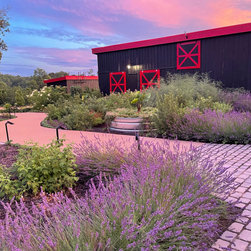
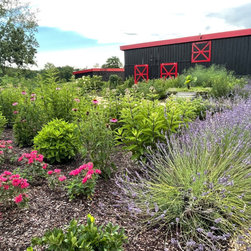
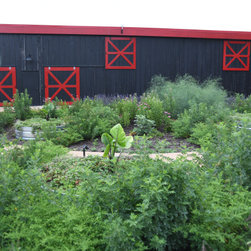
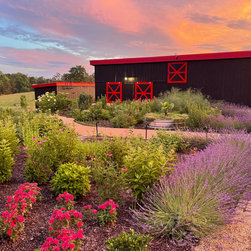
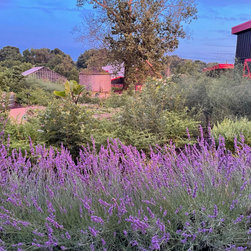
The edible garden was created utilizing primarily a mixture of perennial plants including material native to our area (blueberry, chokeberry, serviceberry, redbud, pawpaw, hazelnut, wintergreen, aster, bee balm, coneflower, black eyed susan, phlox, virginia rose, elderberry, joe pye weed, wild ginger, violet, hyssop, and more), lavender hedges, edible roots of Jerusalem artichoke, hardy fig, asparagus, and a variety of herbs for use in the restaurant/gift shop. Many of the edibles, such as ginger, bee balm, and wintergreen, were used as groundcover under fig and hazelnut trees. The lavender hedge, feathery asparagus, bronze fennel, along with the bright blooms of ‘Lipstick’ Strawberry make a bold statement against the black barn with red accents. The initial planting included a few annual edibles such as elephant ear, dinosaur kale, pineapple sage, peppers, and herbs; the farm staff is responsible for annuals after initial installation. Various textures, forms, and colors of plants were designed to increase the aesthetic appeal of the space throughout all seasons.
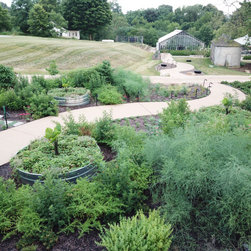
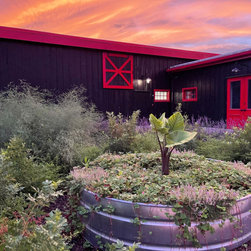
Galvanized troughs were used as focal points and structure in the garden to complement the farm setting and tie into the metal material of existing main building, barn, greenhouse, and agricultural storage silo. Troughs contain elephant ears as focal points as well as strawberries and thyme to creep over and fill in. Mulch paths circle the troughs for maintenance and harvest access, as well as for visitors to get closer to the plants.
The edible garden was created utilizing primarily a mixture of perennial plants including material native to our area (blueberry, chokeberry, serviceberry, redbud, pawpaw, hazelnut, wintergreen, aster, bee balm, coneflower, black eyed susan, phlox, virginia rose, elderberry, joe pye weed, wild ginger, violet, hyssop, and more), lavender hedges, edible roots of Jerusalem artichoke, hardy fig, asparagus, and a variety of herbs for use in the restaurant/gift shop. Many of the edibles, such as ginger, bee balm, and wintergreen, were used as groundcover under fig and hazelnut trees. The lavender hedge, feathery asparagus, bronze fennel, along with the bright blooms of ‘Lipstick’ Strawberry make a bold statement against the black barn with red accents. The initial planting included a few annual edibles such as elephant ear, dinosaur kale, pineapple sage, peppers, and herbs; the farm staff is responsible for annuals after initial installation. Various textures, forms, and colors of plants were designed to increase the aesthetic appeal of the space throughout all seasons.
Galvanized troughs were used as focal points and structure in the garden to complement the farm setting and tie into the metal material of existing main building, barn, greenhouse, and agricultural storage silo. Troughs contain elephant ears as focal points as well as strawberries and thyme to creep over and fill in. Mulch paths circle the troughs for maintenance and harvest access, as well as for visitors to get closer to the plants.
Project Year: 2020
Country: United States
Zip Code: 40026